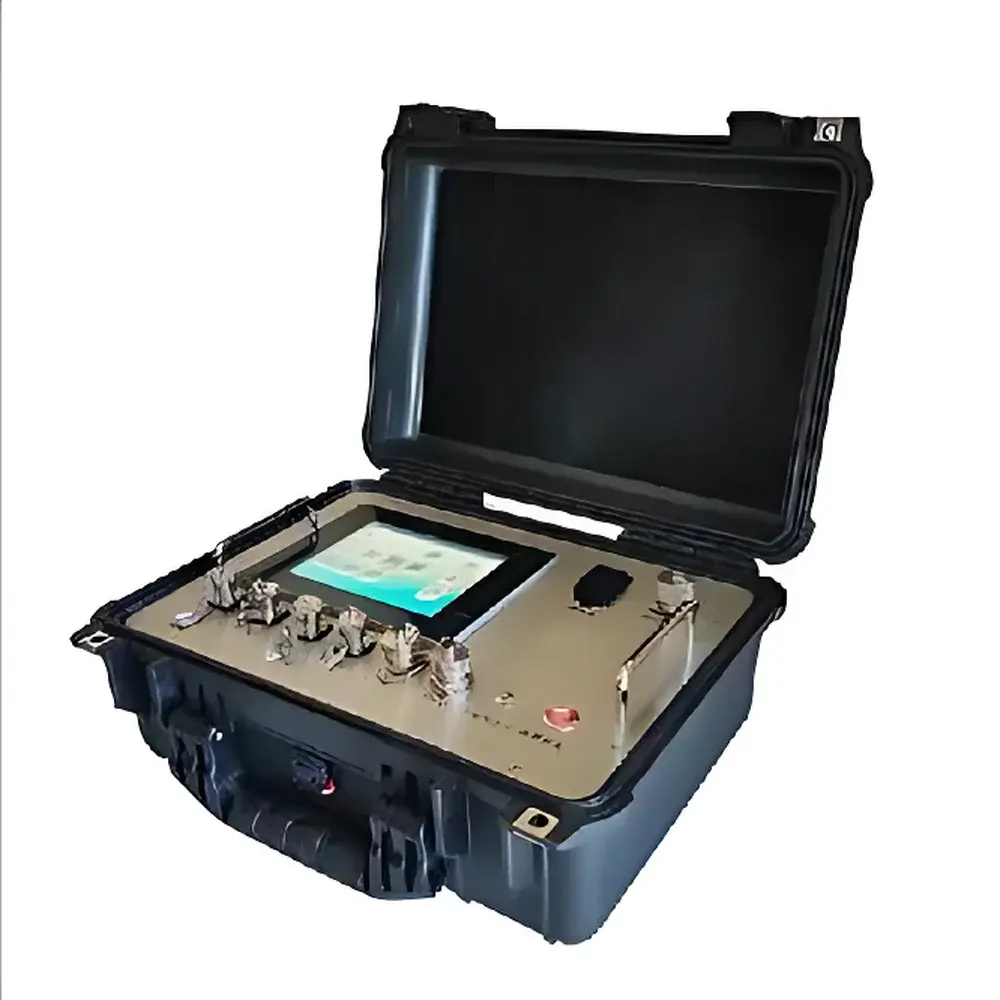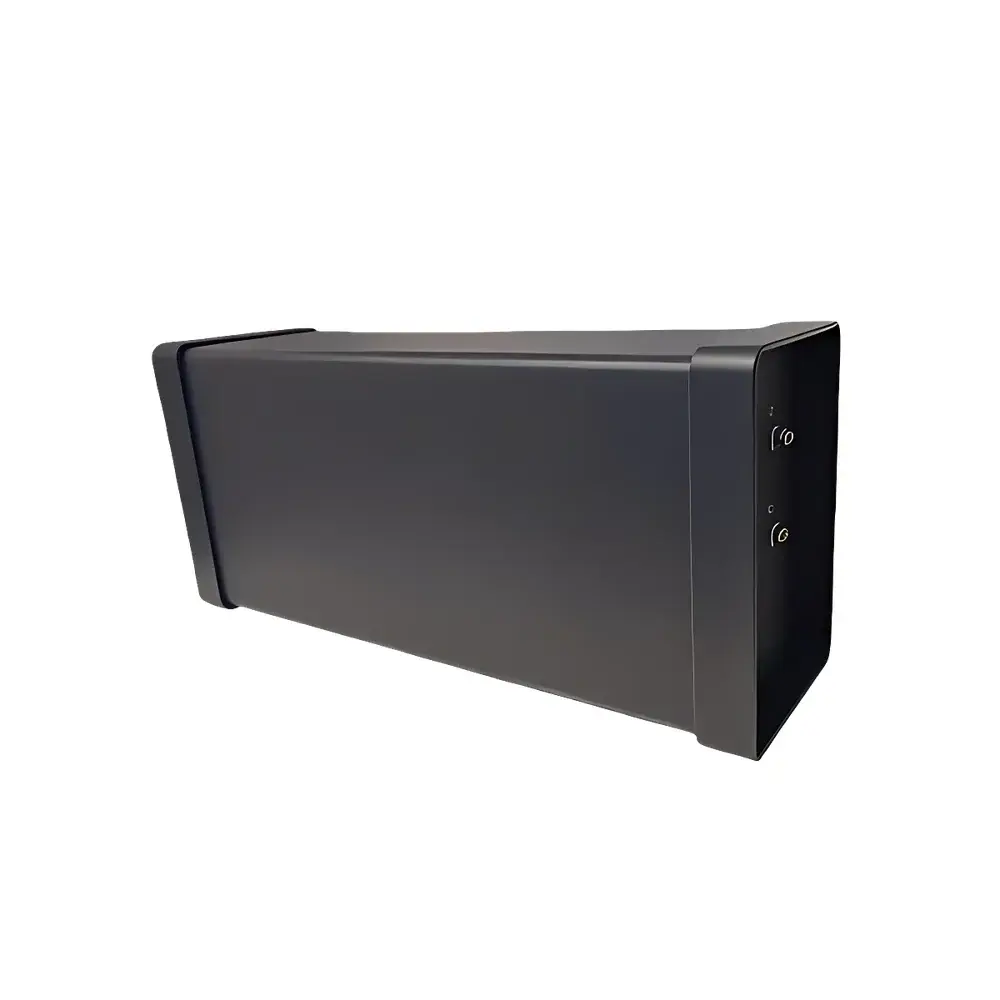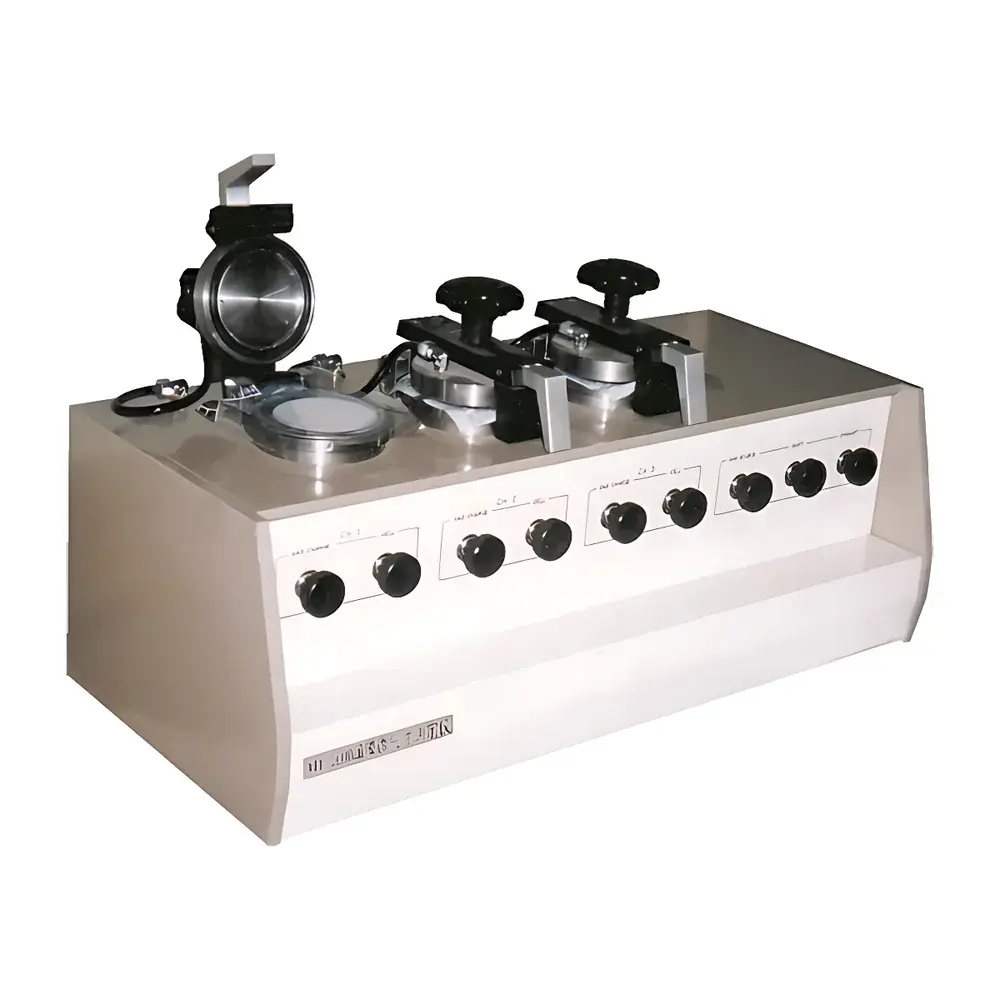
HARKE HK-T-391 Mixed-Gas Permeability Analyzer
| Brand | HARKE |
|---|---|
| Model | HK-T-391 |
| Origin | Beijing, China |
| Manufacturer | Yes |
| Type | Domestic |
| Measurement Range | 1×10⁻⁵ – 1×10⁻¹⁴ cm³(STP)·mm/cm²·s·cmHg |
| Test Method | TCD Detection + Chromatographic Calibration Curve |
| Max Sample Thickness | ≤1 mm |
| Detection Sensitivity | ≥3000 mV·mL/mg (for benzene & H₂) |
| Test Area | 50 cm² |
| Sample Capacity | 1 standard specimen (multi-specimen option available) |
| Test Chamber Temp. Range | 5–95 °C |
| Temp. Control Accuracy | ±0.1 °C |
| Carrier Gas Line Temp. Range | RT+5–100 °C |
| Carrier Gas | He or H₂ (selectable) |
| Carrier Pressure | 0.05–0.5 MPa |
| Test Gas Pressure Differential | −0.1 to +0.1 MPa |
| Vacuum Level in Test Chamber | <20 Pa |
| Applicable Gases | Air, O₂, N₂, CO, CO₂, CH₄, H₂, He, NH₃, C₃H₈, C₄H₁₀ (custom gases available |
| Dimensions | 330 × 380 × 410 mm (L×W×H) |
| Power Supply | AC 220 V, 50 Hz |
| Net Weight | 46 kg |
| Compliance | GB/T 1038, ISO 15105-1, ISO 2556, ASTM D1434, JIS K7126-1, YBB00082003 |
Overview
The HARKE HK-T-391 Mixed-Gas Permeability Analyzer is a high-precision vacuum-pressure differential instrument engineered for quantitative determination of gas transmission rates (GTR), permeability coefficients (P), diffusion coefficients (D), and solubility coefficients (S) of packaging and barrier materials under controlled thermal and pressure conditions. It operates on the principle of vacuum-manometric measurement combined with thermal conductivity detection (TCD), where gas molecules permeating through a film specimen are swept by carrier gas (He or H₂) into a chromatographic detection system. A pre-calibrated TCD response curve—established using certified standard gases—enables trace-level quantification of mixed-gas components across ultra-low permeation ranges (1×10⁻⁵ to 1×10⁻¹⁴ cm³[STP]·mm/cm²·s·cmHg). The system’s dual-zone temperature control (test chamber and carrier line, both ±0.1 °C stability) ensures thermodynamic reproducibility critical for Arrhenius-based diffusion modeling and regulatory-compliant barrier characterization.
Key Features
- Vacuum-based test chamber achieving <20 Pa base pressure, minimizing back-diffusion and enabling accurate low-flux measurements
- Independent dual-temperature control: test cavity (5–95 °C) and carrier gas line (RT+5–100 °C), supporting accelerated aging and real-world storage condition simulation
- TCD detector with ≥3000 mV·mL/mg sensitivity for H₂ and benzene—validated per IEC 60747-14 for signal linearity and drift stability
- Standardized 50 cm² test area compliant with ISO 15105-1 and ASTM D1434 geometrical requirements
- Modular gas handling architecture: supports up to eight programmable gas channels (O₂, CO₂, N₂, CH₄, etc.), with optional explosion-proof configuration for Class I, Division 1 hazardous gas service
- Robust mechanical design: stainless-steel gas pathways, electropolished fittings, and leak-tight sealing verified per ISO 15105 Annex B helium leak testing protocol
Sample Compatibility & Compliance
The HK-T-391 accommodates rigid and flexible films up to 1 mm thickness—including aluminum foil laminates, PVDC-coated PET, coextruded medical pouches, lithium-ion battery separators, biodegradable PLA films, aerospace-grade polyimide composites, and synthetic skin analogs. All sample fixtures conform to ISO 2556 Annex A dimensional tolerances. The analyzer is fully aligned with global regulatory frameworks: test procedures satisfy GB/T 1038 (China), ISO 15105-1 (gas transmission rate), ISO 2556 (differential pressure method), ASTM D1434 (standard test method for gas permeability), JIS K7126-1 (Japanese industrial standard), and YBB00082003 (Chinese pharmaceutical packaging guidance). Data acquisition meets ALCOA+ principles, with audit-trail-enabled operation logs suitable for GLP and GMP environments.
Software & Data Management
Bundled HARKE PermeaSoft v3.2 provides ISO/IEC 17025-compliant data acquisition, real-time permeation curve visualization, and automated calculation of P, D, and S via Fickian regression. Software features include user-defined test templates, multi-gas mixture deconvolution algorithms, calibration certificate import (NIST-traceable standards), and export to CSV, PDF, and XML formats. All electronic records comply with FDA 21 CFR Part 11 requirements: role-based access control, electronic signatures, and immutable audit trails with time-stamped operator actions. Raw sensor outputs (TCD voltage, pressure transducer readings, temperature logs) are retained at 10 Hz sampling resolution for full traceability.
Applications
- Quantifying oxygen transmission rate (OTR) of retort pouches and blister packs under accelerated shelf-life conditions (e.g., 40 °C/75% RH)
- Determining CO₂ permeability of carbonated beverage bottle preforms and PET thermoformed trays
- Evaluating hydrogen permeation through fuel cell membrane electrode assemblies (MEAs)
- Characterizing methane barrier performance of landfill liner geomembranes per ASTM D882
- Validating water vapor and gas co-permeation behavior in breathable medical packaging per ISO 11607-1
- Supporting development of solid-state battery separators via multi-gas (Li⁺-inert gas) diffusion coefficient mapping
FAQ
What carrier gases are supported, and how is selection determined?
Helium and hydrogen are factory-configured carrier gases. Selection depends on TCD sensitivity requirements and safety protocols: H₂ offers higher thermal conductivity but requires leak detection and ventilation per NFPA 55; He is inert and preferred for routine QC labs.
Can the system quantify individual components in a multi-gas mixture?
Yes—via pre-established TCD response factors and retention time alignment with certified gas standards. Quantification accuracy is ±3.5% RSD for binary mixtures (e.g., O₂/N₂) at 10⁻⁸ cm³(STP)/m²·day·kPa.
Is validation documentation provided for regulatory submissions?
All instruments ship with Factory Acceptance Test (FAT) report, IQ/OQ protocols, and metrological traceability certificates to national standards (CNAS-accredited calibration).
How is vacuum integrity maintained during long-duration tests (e.g., >72 h)?
The chamber employs dual-stage oil-free scroll vacuum pump with integrated Pirani/capacitance manometer feedback loop, ensuring <20 Pa hold pressure with <0.5 Pa/h drift over 100-hour cycles.