
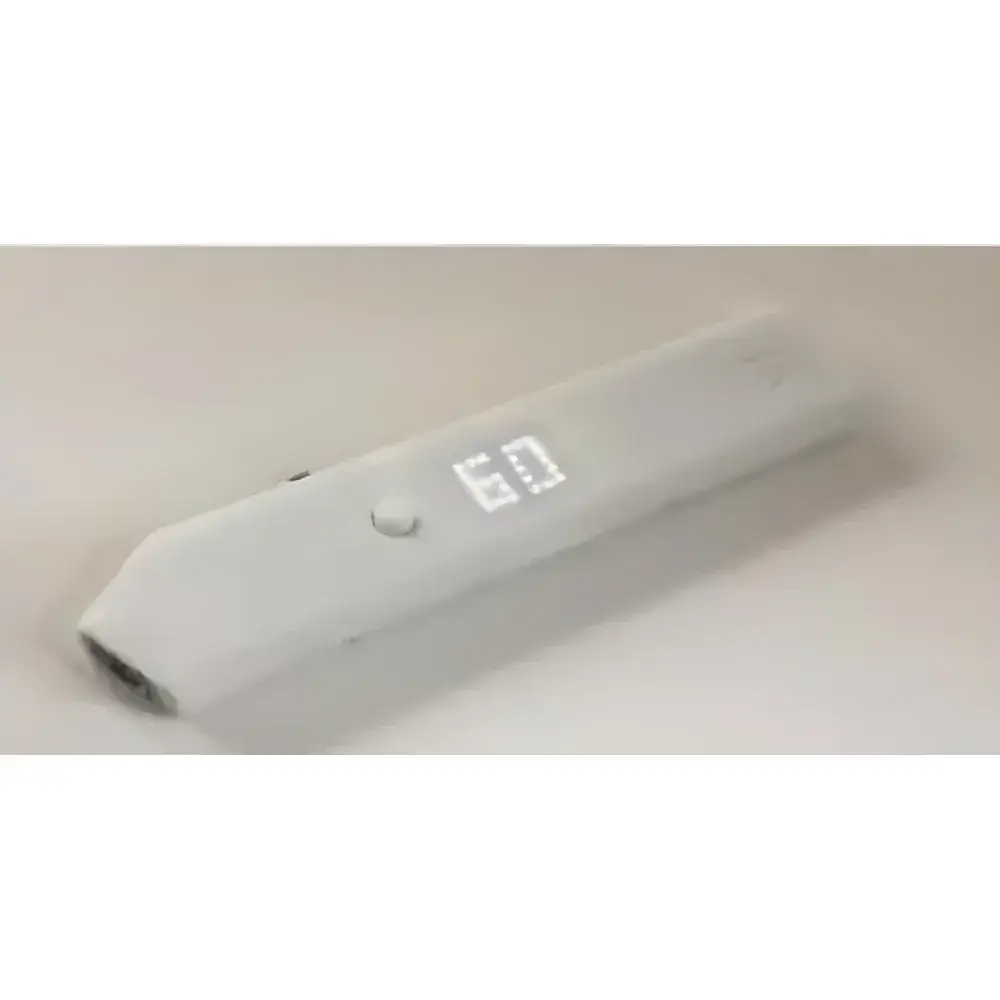
DERMO Skin Collagen Analyzer by CK Instruments
| Brand | CK |
|---|---|
| Origin | France |
| Manufacturer Status | Authorized Distributor |
| Origin Category | Imported |
| Model | DERMO |
| Pricing | Upon Request |
Overview
The DERMO Skin Collagen Analyzer, developed by CK Instruments (France), is a non-invasive, optical biomedical measurement system engineered for quantitative assessment of dermal collagen density and water content in human skin. It operates on the principle of spatially resolved near-infrared (NIR) spectroscopy combined with inverse light transport modeling. The device emits multiple discrete wavelengths within the 700–1100 nm range—selected to maximize differential sensitivity to collagen’s characteristic absorption features and water’s overtone bands—while simultaneously capturing depth-resolved reflectance profiles via a calibrated multi-detector probe array. By fitting measured spatial reflectance decay curves to a validated two-layer Monte Carlo–based optical diffusion model (accounting for epidermal scattering heterogeneity and dermal chromophore distribution), the system computes wavelength-specific reduced scattering (μ′s) and absorption (μa) coefficients. These optical parameters are then translated into quantitative estimates of collagen concentration (expressed as relative volume fraction or μg/mg tissue equivalent) and water content (% w/w), with analytical specificity validated against histomorphometric reference standards.
Key Features
- Non-contact, real-time acquisition with <15 s per measurement site, minimizing motion artifact and enabling longitudinal monitoring
- Multi-wavelength NIR source (785 nm, 850 nm, 940 nm, 1064 nm) optimized for collagen triple-helix vibrational overtones and water H–O–H bending modes
- Integrated spatially resolved detection geometry (source–detector separations: 0.3–2.5 mm) enabling partial discrimination of epidermal vs. papillary/reticular dermal contributions
- Factory-calibrated using NIST-traceable tissue-simulating phantoms with controlled collagen and water concentrations
- Ruggedized handheld probe with temperature-stabilized optics and automatic ambient light compensation
- Compliant with IEC 60601-1 (medical electrical equipment safety) and IEC 62471 (photobiological safety)
Sample Compatibility & Compliance
The DERMO analyzer is validated for use on Fitzpatrick skin types I–IV under controlled ambient lighting and room temperature (20–24°C). Measurements require minimal operator training and no skin preparation beyond standard cleansing. It supports standardized anatomical mapping (e.g., volar forearm, cheek, dorsal hand) with integrated coordinate referencing. Data output conforms to ASTM E2500-22 (standard guide for specification, design, and verification of pharmaceutical and biopharmaceutical manufacturing systems) for instrument qualification documentation. The system meets essential requirements for Good Clinical Practice (GCP) and Good Laboratory Practice (GLP) environments, including audit-ready measurement logs with timestamp, operator ID, and environmental metadata. While not a diagnostic device per FDA 21 CFR §809.3, it is intended for investigational use in dermatological research, cosmetic efficacy trials, and preclinical dermato-pharmacokinetic studies.
Software & Data Management
Acquisition and analysis are managed via CK’s proprietary DERMO Studio software (v4.2+), running on Windows 10/11 x64 platforms. The software provides real-time spectral visualization, automated baseline correction, and batch processing of multi-site datasets. All raw reflectance spectra, model-fitting residuals, and derived parameter maps are stored in HDF5 format with embedded metadata (per ISO/IEC 11179). Audit trail functionality complies with FDA 21 CFR Part 11 requirements—including electronic signatures, user access levels, and immutable change logs. Export options include CSV (for statistical packages), PDF reports (with configurable templates), and DICOM-SR for integration into clinical research repositories. Software validation documentation (IQ/OQ/PQ protocols) is available upon request for regulated environments.
Applications
- Quantitative evaluation of anti-aging interventions (topical retinoids, peptides, energy-based devices) via longitudinal collagen density tracking
- Assessment of hydration dynamics in atopic dermatitis, psoriasis, and xerosis under therapeutic regimens
- Supporting formulation development for cosmeceuticals targeting dermal matrix synthesis or barrier repair
- Objective endpoint measurement in Phase IIa dermatology clinical trials requiring non-invasive biomarkers
- Correlative analysis with high-frequency ultrasound (HFUS) or multiphoton microscopy for multimodal tissue characterization
FAQ
Is the DERMO analyzer cleared by regulatory agencies for clinical diagnosis?
No. It is designated for research use only (RUO) and not intended to diagnose, prevent, monitor, treat, or mitigate any disease.
Can measurements be performed on pigmented or tanned skin?
Yes, but accuracy is optimized for Fitzpatrick I–IV. For type V–VI, signal-to-noise ratio decreases; protocol adjustments (e.g., increased integration time, region-of-interest averaging) are recommended.
Does the system require routine recalibration by the user?
No. Factory calibration is stable for 12 months under normal operating conditions. Annual verification using CK-provided reference phantoms is advised.
How is data traceability ensured in GLP-compliant studies?
Each measurement file contains embedded digital signatures, hardware serial numbers, firmware versions, and full environmental sensor logs (temperature, humidity), satisfying ALCOA+ principles.
Is third-party software integration supported?
Yes—via documented REST API for integration with LIMS, ELN, or custom analytics pipelines. MATLAB and Python SDKs are available under NDA.




