
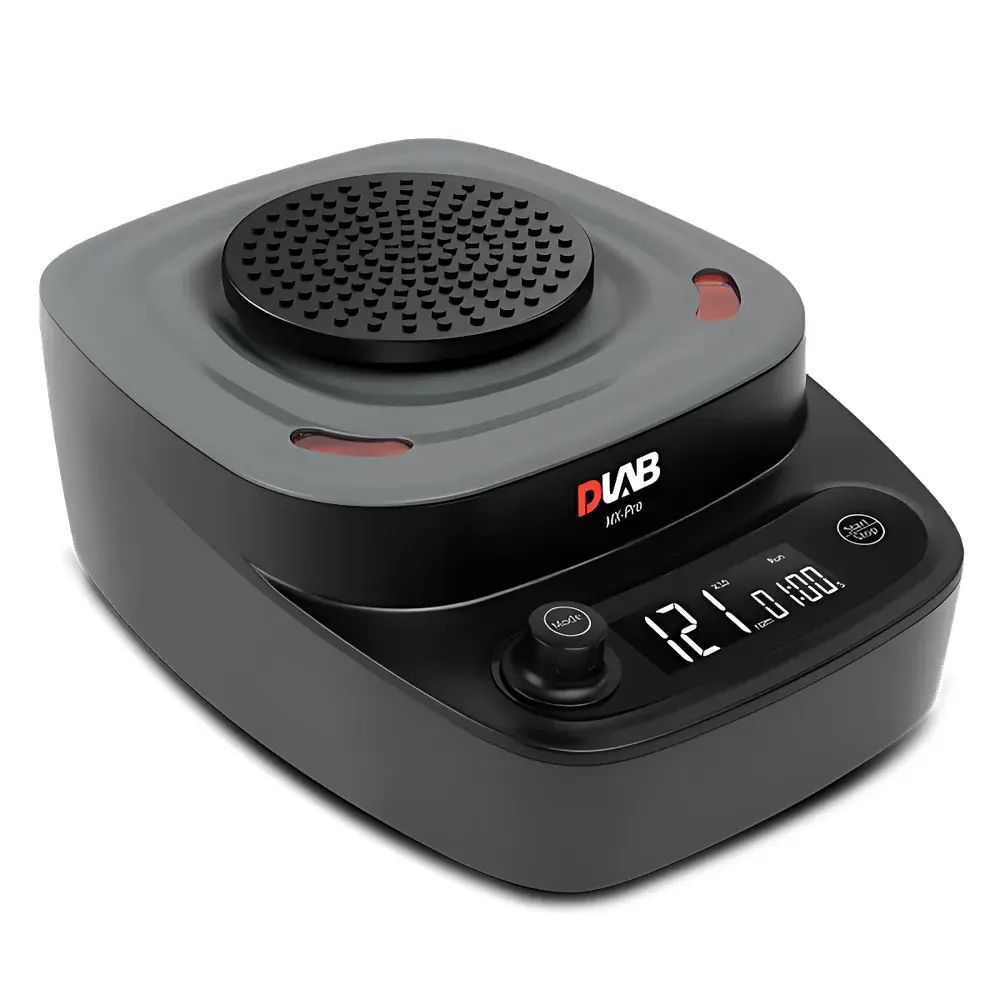
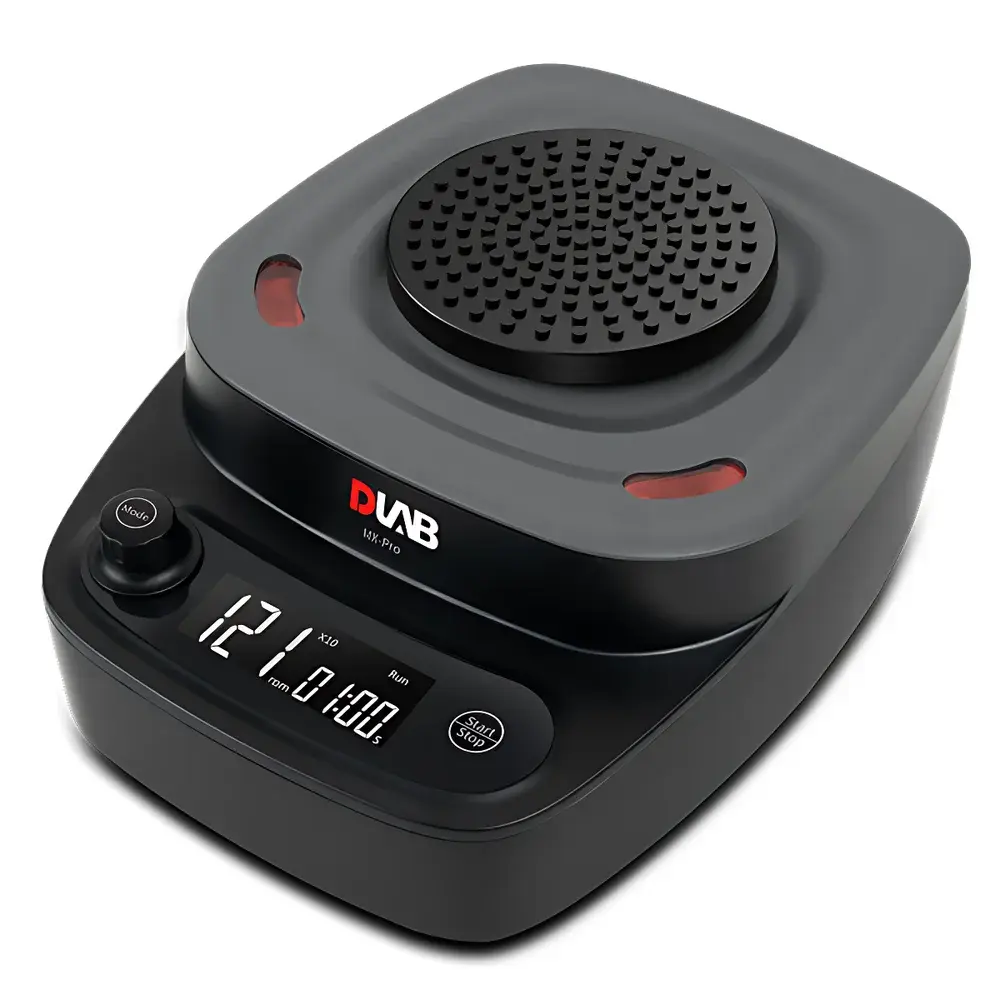
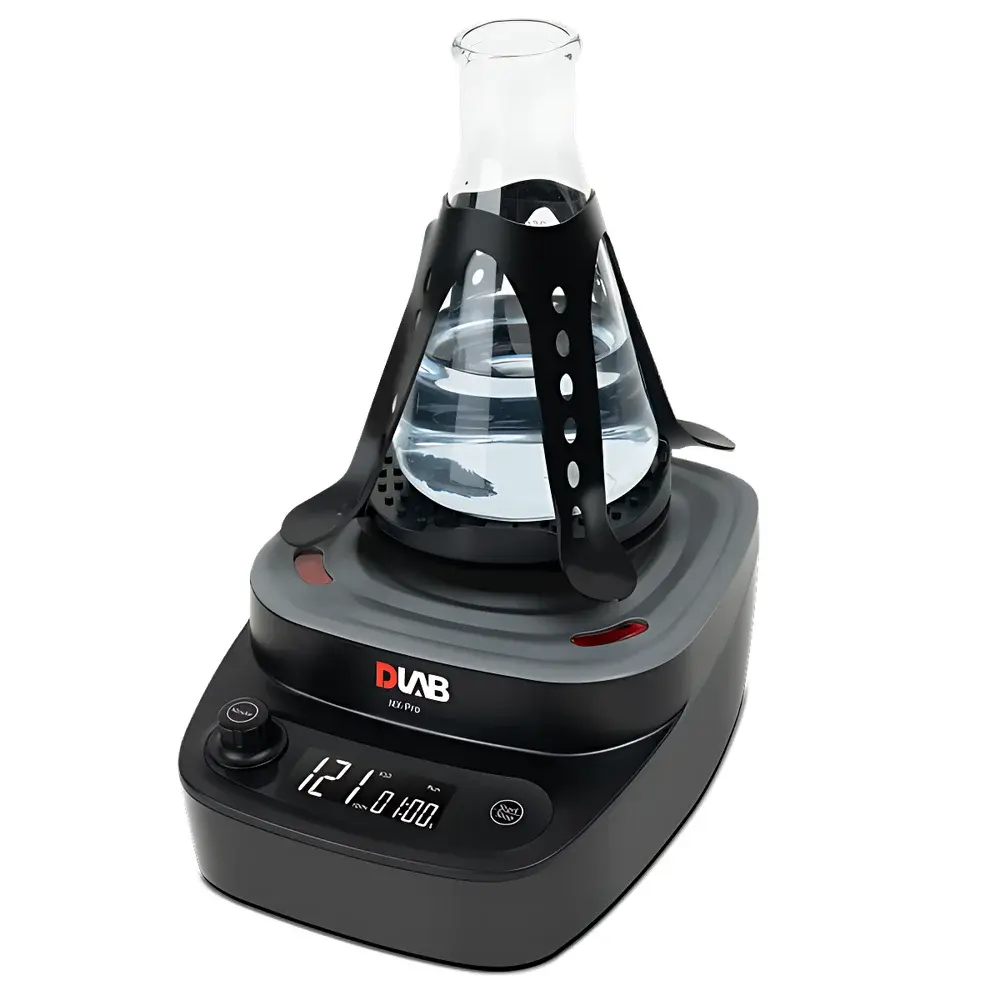
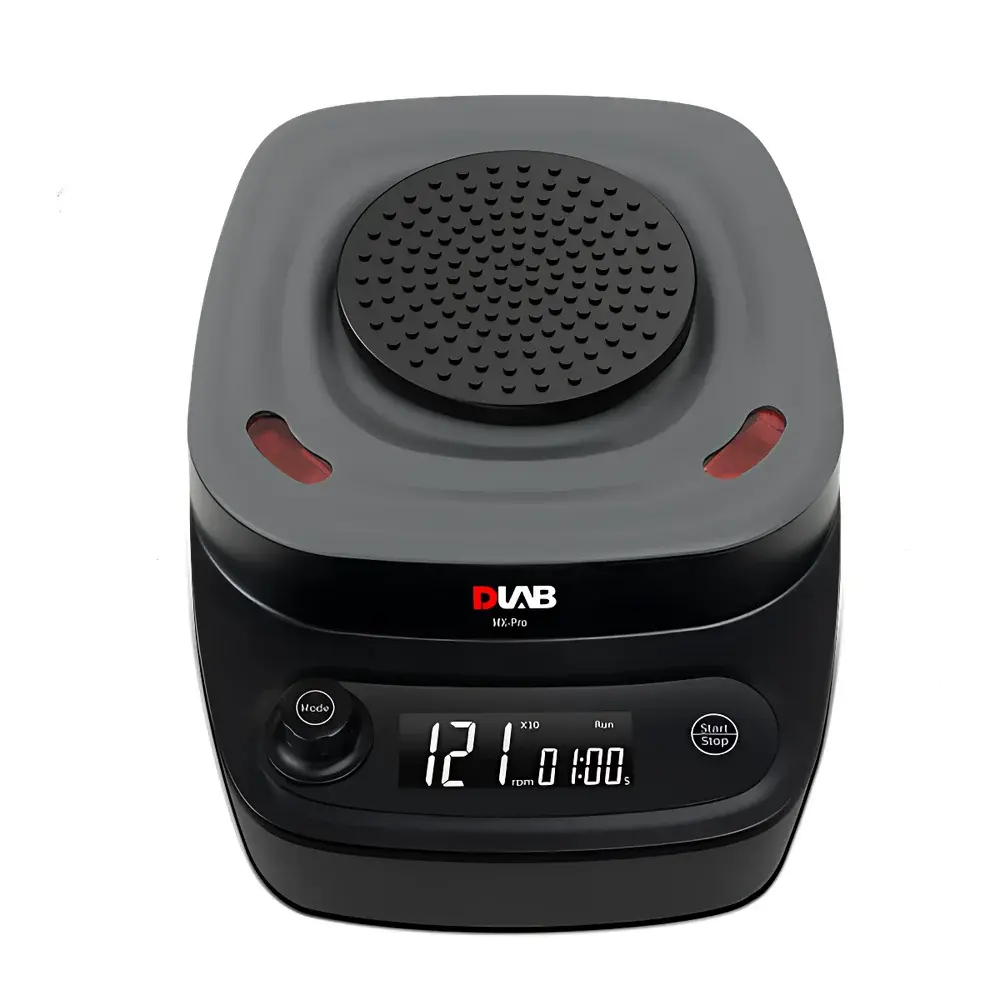
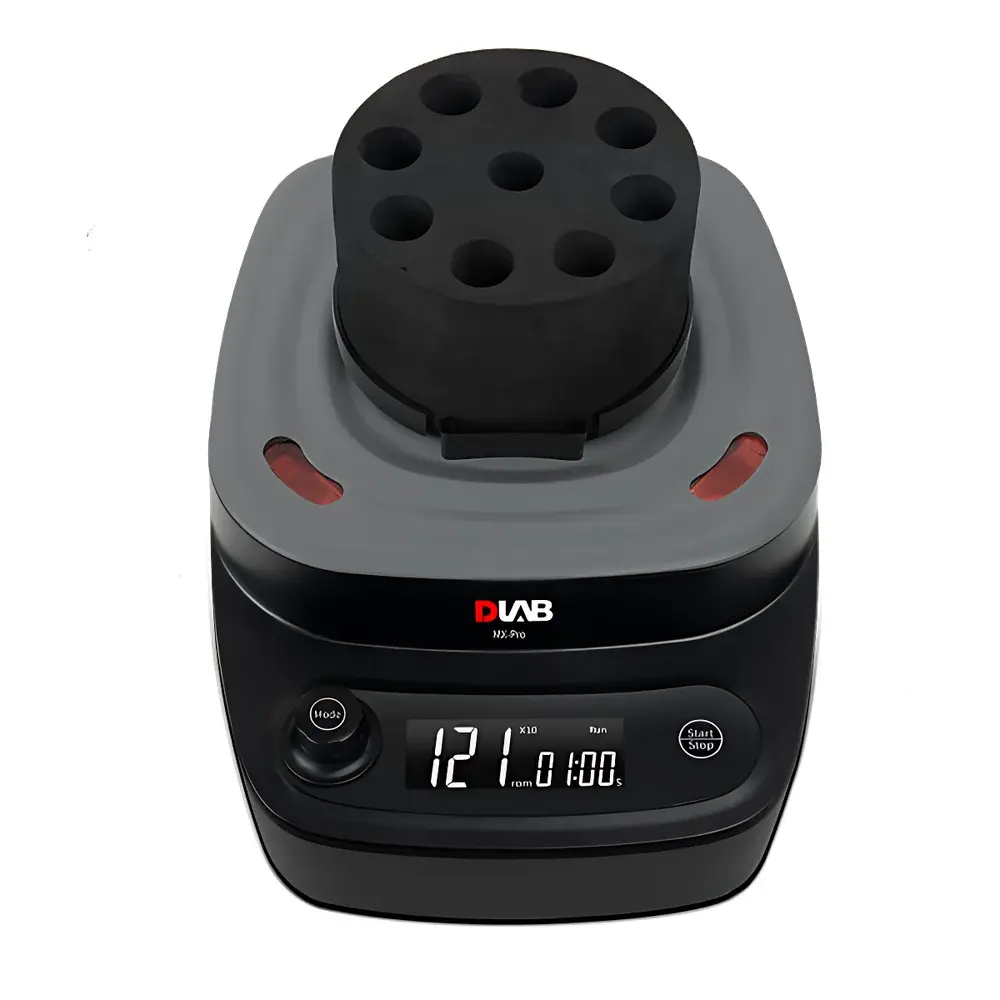
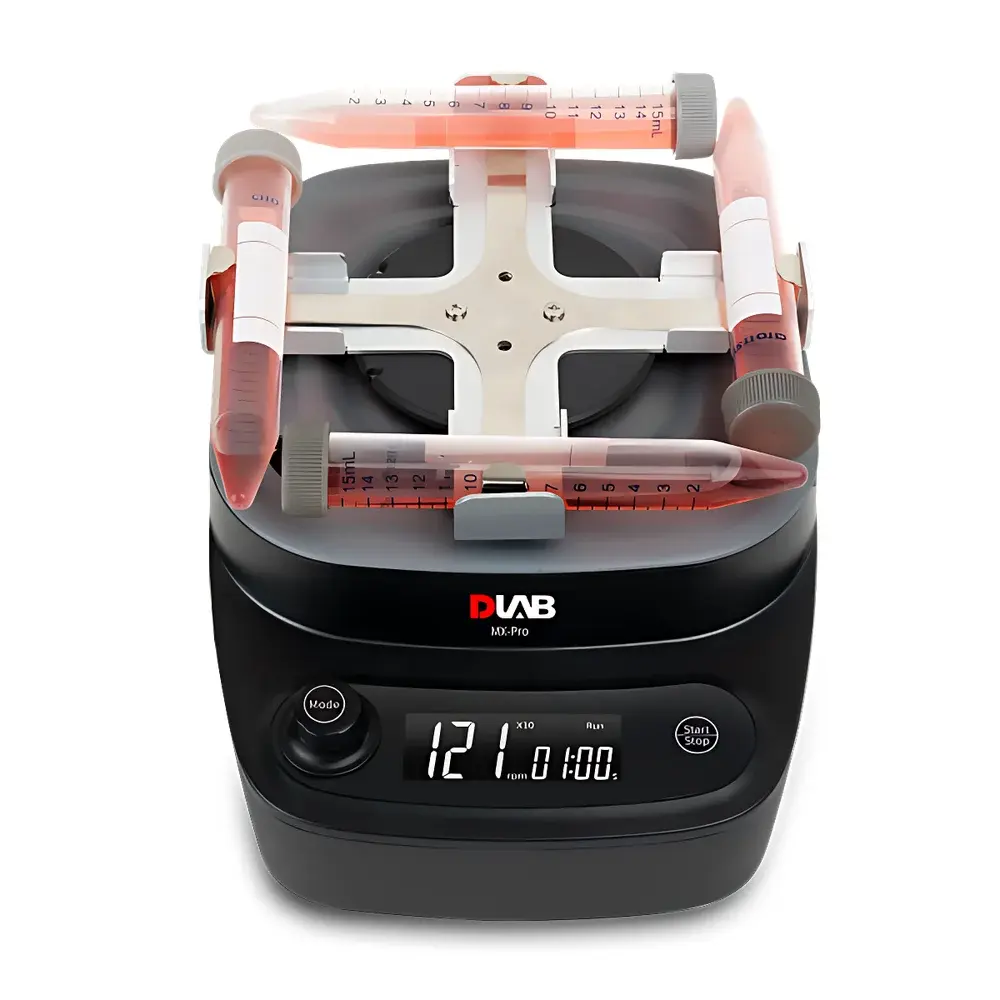
DLAB MX-Pro Optical-Sensing Digital Vortex Mixer
| Brand | DLAB |
|---|---|
| Origin | Beijing, China |
| Manufacturer Type | Manufacturer |
| Product Category | Domestic |
| Model | MX-Pro |
| Instrument Type | Vortex Mixer |
| Temperature Control Range | 5–40 °C |
| Motion Type | Circular Orbit |
| Orbit Diameter | 4.5 mm |
| Speed Range | 100–3000 rpm |
| Speed Display | LCD |
| Operating Modes | Optical-Sensing Activation & Continuous Mode |
| Motor Type | Brushless DC Motor |
| Input Power | 24 W |
| Output Power | 12 W |
| Rated Voltage | 100–240 V AC |
| Frequency | 50/60 Hz |
| Dimensions (L×W×H) | 160 × 145 × 145 mm |
| Weight | 3.9 kg |
| Ambient Operating Temperature | 5–40 °C |
| Relative Humidity Limit | ≤80% RH |
| Enclosure Protection Rating | IP21 |
Overview
The DLAB MX-Pro Optical-Sensing Digital Vortex Mixer is an engineered solution for precise, reproducible sample homogenization in life science laboratories. Utilizing a controlled circular orbital motion with a fixed 4.5 mm displacement diameter, the instrument generates consistent vortexing forces across a wide speed range (100–3000 rpm), enabling reliable suspension of particulates, resuspension of pellets, and thorough mixing of low-volume liquid samples in tubes and microplates. Its core operational principle relies on mechanical energy transfer via a brushless DC motor coupled to a balanced eccentric drive mechanism—ensuring minimal vibration transmission, high rotational stability, and long-term torque consistency without degradation. Designed for routine use in molecular biology, clinical diagnostics, pharmaceutical QC, and academic research labs, the MX-Pro meets functional requirements for GLP-compliant workflows where traceable parameter setting and repeatable mixing performance are essential.
Key Features
- Optical-sensing activation system with dual-side infrared emitters and detectors—enables automatic start/stop upon tube placement or removal, accommodating both left- and right-handed users without physical contact.
- Digital LCD interface displaying real-time speed (rpm) and elapsed time (0–99 min 59 s), supporting precise parameter recall and monitoring during operation.
- Brushless DC motor delivering 12 W mechanical output power with zero carbon brush wear—eliminating scheduled maintenance and ensuring stable speed regulation across the full operating range.
- Robust aluminum-alloy housing and weighted base design (3.9 kg mass, low center of gravity) prevent lateral displacement or tipping—even during high-speed vortexing of unbalanced loads.
- Tool-free accessory mounting system using spring-loaded pressure clamps—secures adapters firmly without slippage or sample ejection under dynamic load conditions.
- Acoustically optimized mechanical architecture achieving <45 dB(A) sound pressure level at 1 m distance—supporting quiet operation in shared laboratory environments.
Sample Compatibility & Compliance
The MX-Pro supports a broad spectrum of standard labware through interchangeable platform adapters—including 0.2–50 mL conical tubes, PCR strip holders, 96-well microtiter plates (flat-bottom and U/V-bottom), and deep-well plates. All accessories are manufactured from chemically resistant, autoclavable polypropylene or stainless steel. The device complies with IEC 61010-1:2010 for electrical safety in laboratory equipment and carries IP21 ingress protection rating, safeguarding internal electronics against vertically falling drips and solid objects ≥12.5 mm. While not intrinsically temperature-controlled, its specified ambient operating range (5–40 °C) aligns with ISO/IEC 17025:2017 environmental condition requirements for accredited testing laboratories.
Software & Data Management
As a stand-alone benchtop mixer, the MX-Pro does not integrate with external software or networked data systems. All operational parameters are set and monitored locally via the front-panel LCD. However, its digital control architecture supports audit-ready usage logs when paired with external laboratory information management systems (LIMS) via manual entry or barcode-scanned protocol referencing. For regulated environments requiring electronic records, the instrument’s deterministic behavior—repeatable speed accuracy ±2% of setpoint, timer resolution of 1 second, and non-volatile parameter memory—facilitates validation under FDA 21 CFR Part 11 guidelines when documented within a defined SOP framework.
Applications
- Molecular biology: Resuspension of lyophilized DNA/RNA reagents, homogenization of bacterial cell lysates prior to centrifugation, and mixing of restriction enzyme digestion reactions.
- Clinical microbiology: Uniform dispersion of blood culture specimens in aerobic/anaerobic bottles prior to incubation.
- Pharmaceutical QA: Blending of reference standards and diluent solutions for HPLC calibration curves.
- Immunology: Reconstitution of antibody conjugates and antigen preparations in assay buffer matrices.
- Cell culture: Gentle mixing of transfection reagent–DNA complexes before addition to adherent monolayers.
FAQ
Does the MX-Pro support temperature-controlled vortexing?
No—the MX-Pro is a non-thermostatic mixer. It operates within ambient conditions of 5–40 °C but does not incorporate active heating or cooling elements.
Can the optical sensor detect all tube materials?
The infrared sensing system reliably detects standard polypropylene, polycarbonate, and glass tubes; however, opaque or metallized containers may interfere with detection and require manual activation via the START button.
Is the device compatible with 24-well or 384-well plates?
Yes—customizable plate adapters (sold separately) enable secure mounting of 24-well deep-well plates and 384-well PCR plates, provided they conform to ANSI/SBS dimensional standards.
What safety certifications does the MX-Pro hold?
It conforms to IEC 61010-1:2010 for laboratory electrical equipment safety and bears CE marking per the EU Low Voltage Directive (2014/35/EU) and EMC Directive (2014/30/EU).
How is speed accuracy verified during IQ/OQ qualification?
Speed calibration is performed using a traceable optical tachometer; deviation must remain within ±2% of the displayed rpm value across three points (500, 1500, and 3000 rpm) as part of installation and operational qualification protocols.



