
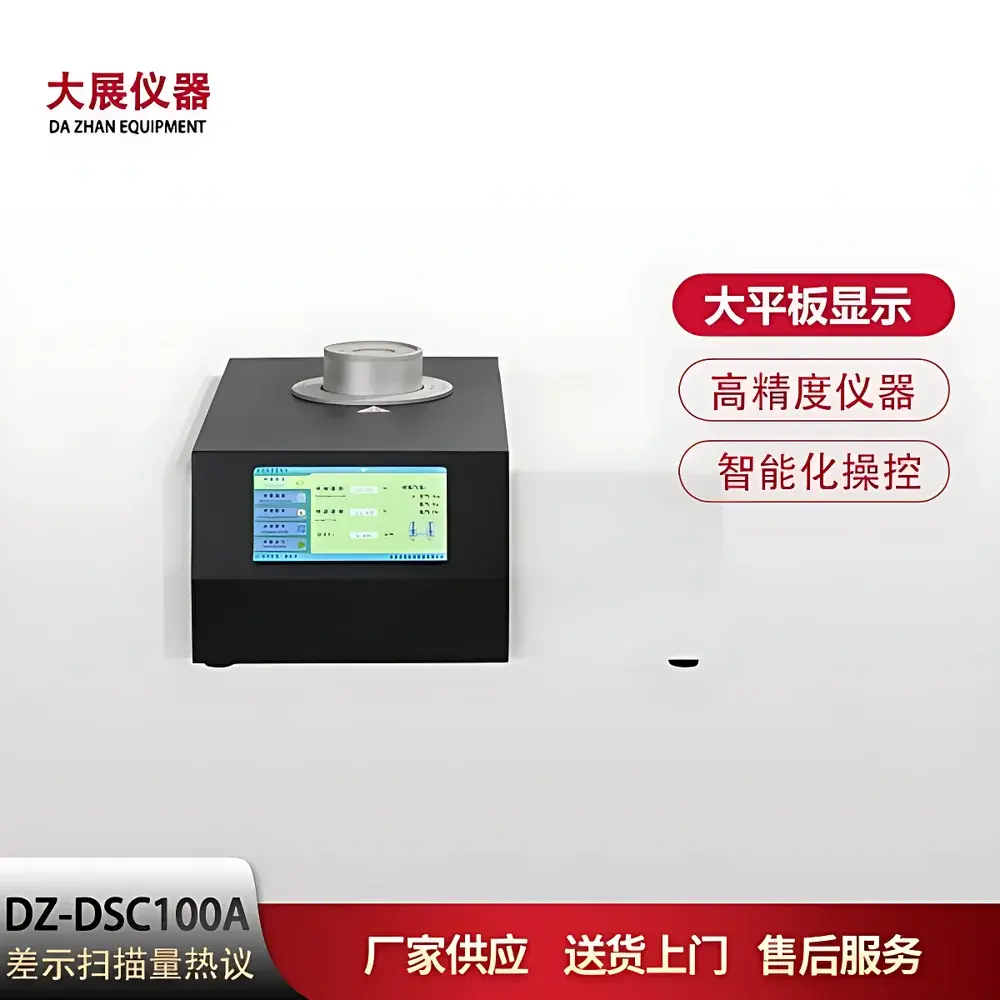
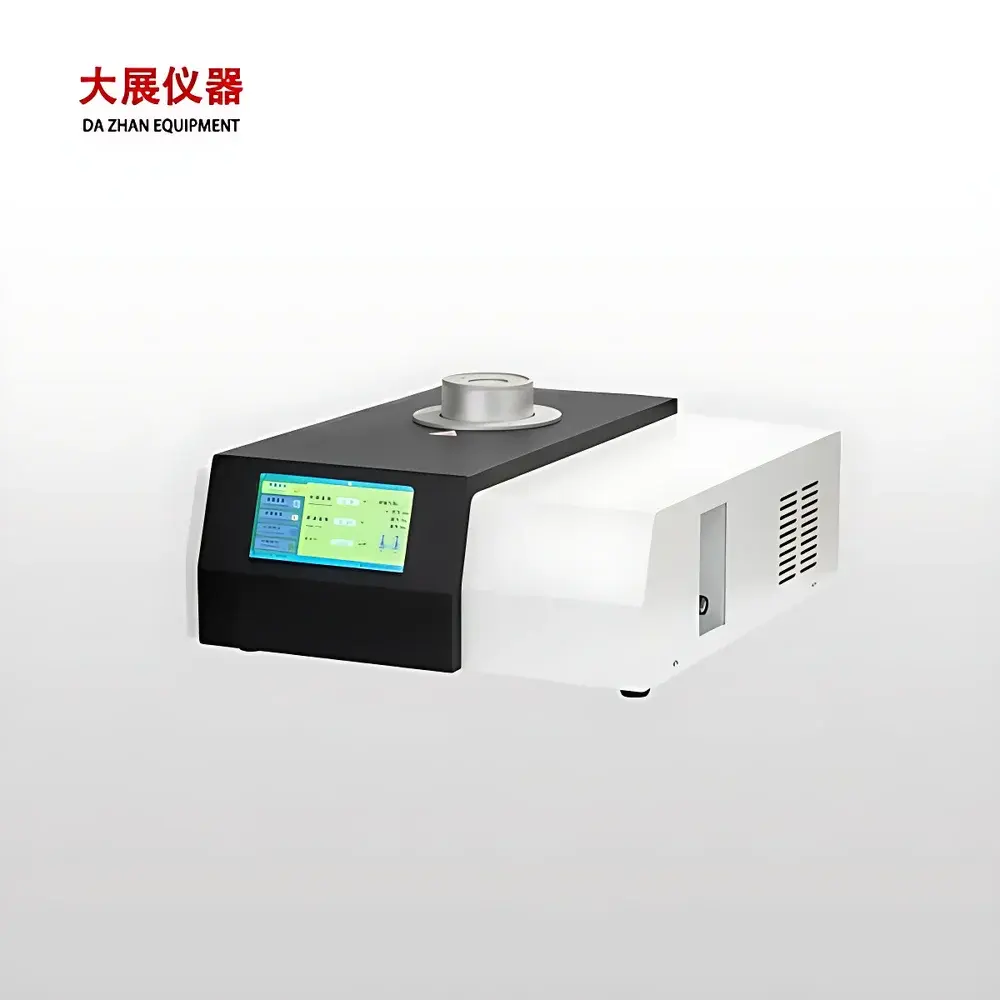
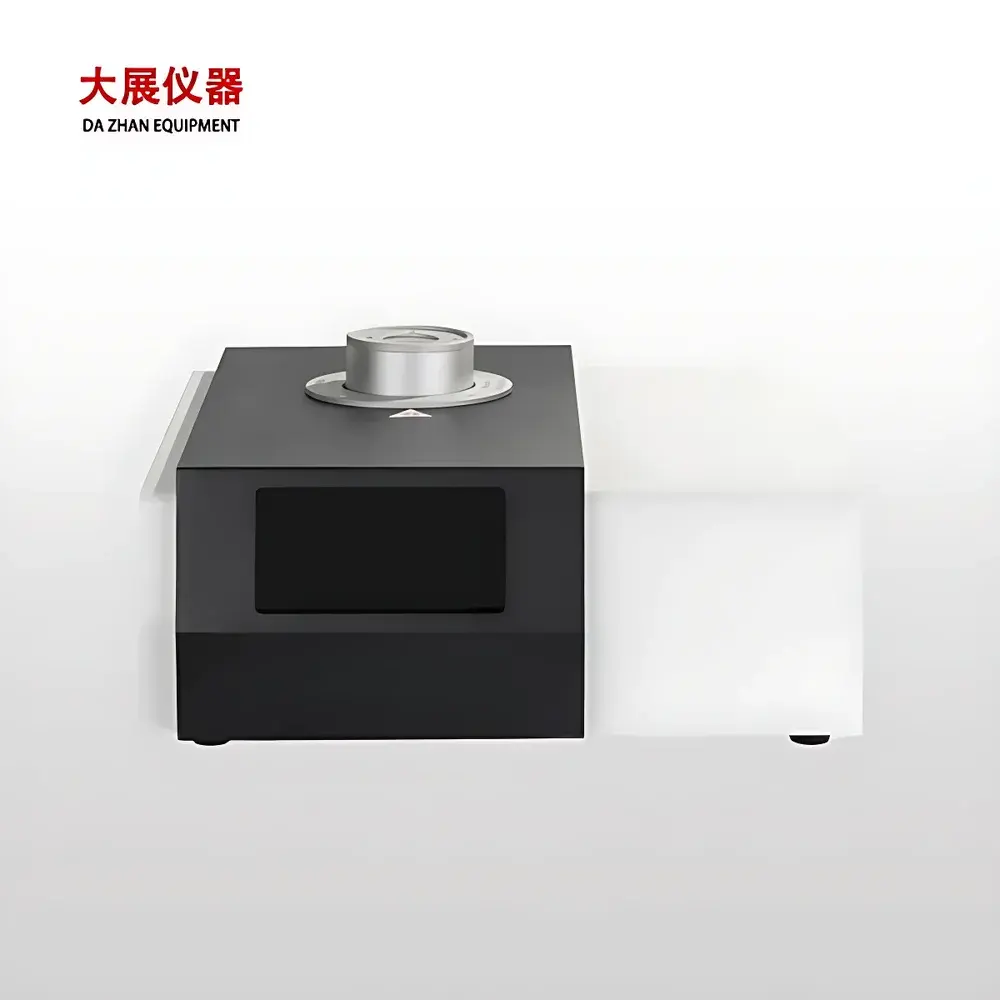
Oxidation Induction Time (OIT) Analyzer – NANJING DAZHAN DSC 100A Differential Scanning Calorimeter
| Brand | NANJING DAZHAN |
|---|---|
| Origin | Jiangsu, China |
| Manufacturer Type | Direct Manufacturer |
| Instrument Type | Differential Scanning Calorimeter (DSC) |
| Model | DSC 100A |
| Sample Capacity | Single-sample |
| Temperature Range | Ambient to 600 °C |
| Heating/Cooling Rate | 0.1–100 K/min |
| Temperature Accuracy | ±0.01 °C |
| DSC Signal Range | 0–±600 mW |
| Temperature Stability | ±0.01 °C |
| Temperature Resolution | 0.01 °C |
| DSC Noise Level | 0.01 μW |
| DSC Sensitivity | 0.001 mW |
| DSC Resolution | 0.01 μW |
| Temperature Repeatability | ±0.1 °C |
| Gas Flow Control | Digital Mass Flow Controller |
| Interface | USB 2.0 Bidirectional Communication |
| Display | 7-inch 24-bit Color TFT Touchscreen |
| Sensor Material | Corrosion-Resistant Alloy |
| Calibration | Onboard Standard Reference Materials with One-Touch Thermal & Enthalpy Calibration |
Overview
The NANJING DAZHAN DSC 100A is a high-stability, single-sample differential scanning calorimeter engineered for precise determination of oxidation induction time (OIT) and oxidation induction temperature (OITT) in polymeric, elastomeric, and lubricant materials. Operating on the fundamental principle of heat-flux DSC, the instrument measures the difference in heat flow between a sample and an inert reference as both are subjected to identical, programmable thermal profiles under controlled oxidative or inert atmospheres. OIT analysis—conducted per ASTM D3895, ISO 11357-6, and EN 728—is performed by heating the specimen to a specified isothermal hold temperature (e.g., 190 °C or 200 °C) under oxygen flow, then monitoring the exothermic onset associated with rapid auto-oxidation. The time elapsed from gas switch to onset defines OIT, a critical metric for evaluating antioxidant efficacy, material shelf life, and thermal aging resistance in quality assurance and R&D laboratories.
Key Features
- Optimized furnace architecture featuring low-thermal-mass design and symmetric sensor placement, delivering enhanced baseline stability (<±0.01 °C drift over 30 min), improved peak resolution, and reduced thermal lag during rapid heating cycles.
- Digital mass flow controller (MFC) for precise, traceable purge gas regulation (N2, O2, or synthetic air); flow rate data logged synchronously with thermal events in the raw data file for full method reproducibility.
- Dual-mode operation: fully functional standalone mode via integrated 7-inch 24-bit color touchscreen interface, or PC-controlled mode using USB 2.0 bidirectional communication for advanced method scripting and remote diagnostics.
- Embedded ARM Cortex-M3 microcontroller enabling real-time PID temperature regulation, sub-millisecond sampling of DSC signal, and deterministic response to thermal transients—critical for accurate OIT onset detection.
- High-fidelity alloy-based heat-flux sensor with enhanced corrosion and oxidation resistance, ensuring long-term signal integrity when analyzing halogenated polymers or additives containing metal stearates.
- Onboard calibration suite with certified reference materials (e.g., high-purity indium, tin, zinc) supporting automated temperature and enthalpy verification—compliant with ISO 11357-1 and USP requirements for instrument qualification.
Sample Compatibility & Compliance
The DSC 100A accommodates standard aluminum, gold-plated aluminum, or high-pressure stainless-steel crucibles (40 µL capacity), enabling analysis of solid pellets, powders, films, and viscous melts. Its ambient-to-600 °C operating range supports OIT testing across commodity plastics (PP, PE), engineering thermoplastics (PA6, PBT), thermosets (epoxy, phenolic), and specialty elastomers (EPDM, HNBR). The system meets essential regulatory expectations for GLP and GMP environments: audit-trail-enabled software (optional), electronic signature support, and data integrity aligned with FDA 21 CFR Part 11 principles. All OIT protocols adhere to internationally recognized standards including ASTM D3895 (plastics), ASTM D5885 (elastomers), ISO 11357-6 (polymers), and IEC 60811-509 (cable insulation).
Software & Data Management
Comprehensive Windows-based acquisition and analysis software provides full control over multi-step temperature programs (ramp-hold-ramp, modulated DSC, step-isothermal), automatic OIT onset detection via tangent-intersection or derivative-threshold algorithms, and comparative overlay of multiple runs. Raw data files (.dsc) store metadata including gas type, flow rate, crucible ID, operator name, and calibration timestamps. Export formats include CSV, TXT, and universal .tdms for integration into LIMS or statistical process control platforms. Software validation documentation (IQ/OQ/PQ templates) and electronic record retention policies are available upon request to support regulated laboratory workflows.
Applications
- Quantitative assessment of antioxidant depletion kinetics in polyolefins prior to extrusion or molding.
- Comparative screening of hindered phenol vs. phosphite stabilizer systems in automotive-grade PP compounds.
- Stability profiling of biodegradable polymers (PLA, PHA) under accelerated oxidative conditions.
- OITT mapping for failure analysis of cable jacketing exposed to elevated service temperatures.
- Thermal aging studies correlating OIT decay with mechanical property loss in recycled polymer blends.
- Quality release testing of medical-grade silicone elastomers per ISO 10993-12 biocompatibility guidelines.
FAQ
What is the minimum detectable OIT value on the DSC 100A?
The instrument reliably detects OIT values ≥ 2 minutes under standard ASTM D3895 conditions (200 °C, 50 mL/min O2), limited primarily by baseline noise (0.01 μW) and thermal equilibration time.
Can the DSC 100A perform both oxidative and inert-atmosphere measurements in one run?
Yes—gas switching is fully automated via solenoid valves; the system supports sequential N2 → O2 transitions within a single thermal program, enabling direct comparison of crystallinity (under N2) and oxidation onset (under O2) without sample repositioning.
Is third-party software integration supported?
Standard .csv and .tdms exports enable seamless import into MATLAB, Python (via pandas), JMP, or LabVIEW; optional OPC UA server module available for real-time data streaming to MES/SCADA systems.
How often must the sensor be recalibrated?
Annual calibration is recommended; however, daily or per-batch verification using indium (Tm = 156.598 °C, ΔHf = 28.45 J/g) satisfies ISO 17025 internal verification requirements.
Does the system comply with GLP audit requirements?
When used with validated software and documented SOPs, the DSC 100A meets core GLP elements: secure user access control, electronic signatures, audit trail generation, and raw data archiving—subject to site-specific validation protocols.



