
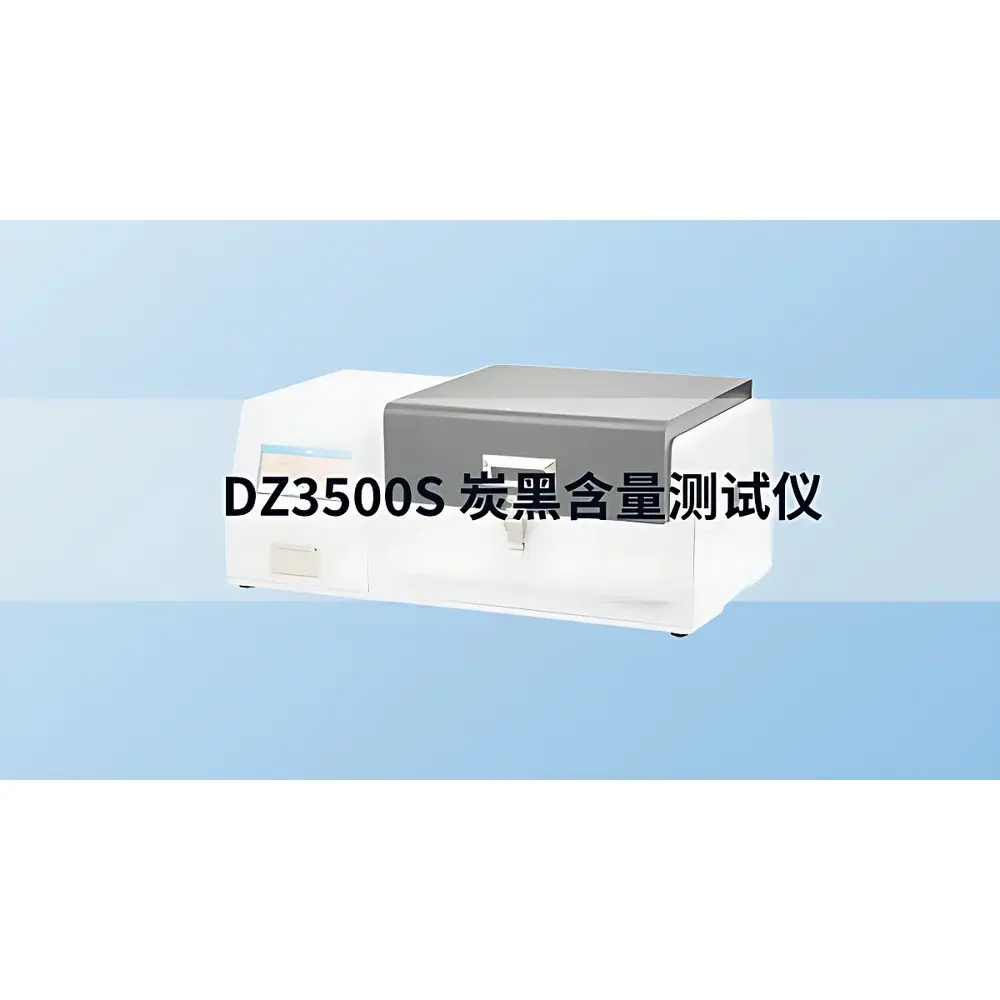
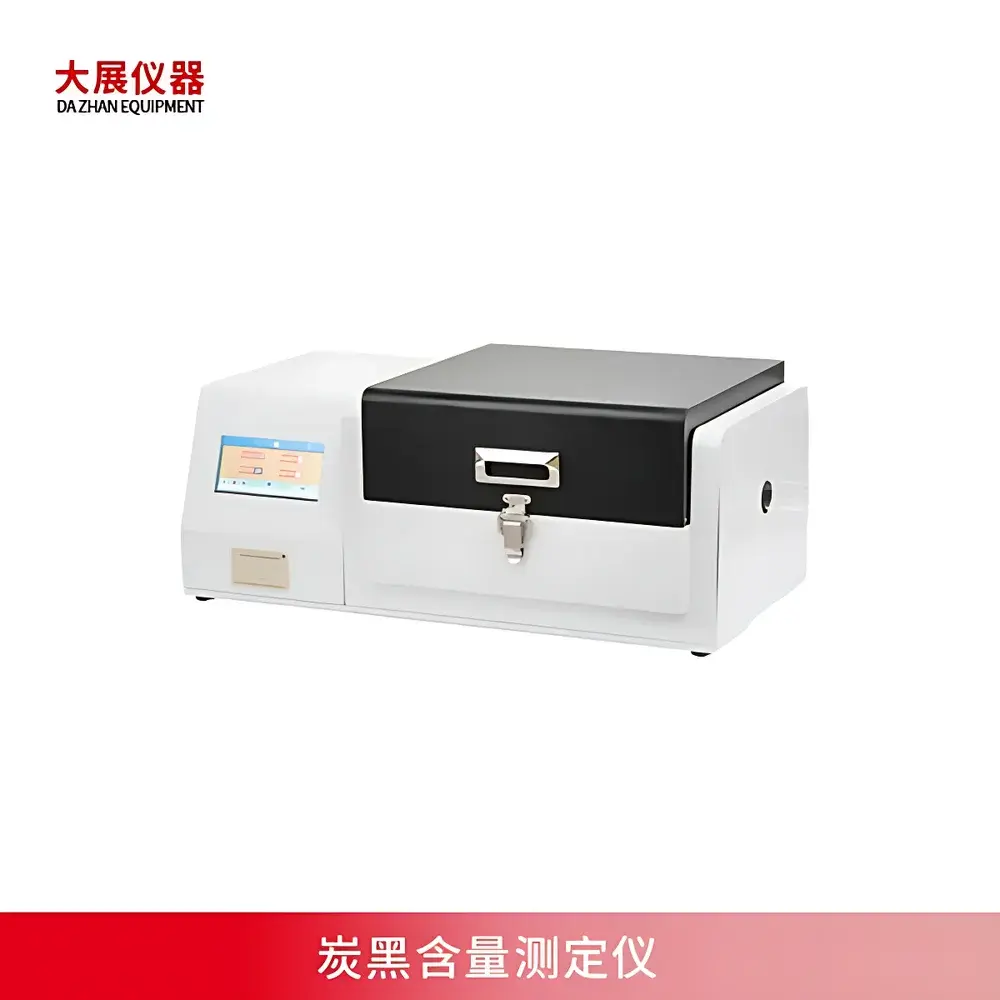
Nanjing Dazhan DZ3500S Carbon Black Content Analyzer
| Brand | Nanjing Dazhan |
|---|---|
| Origin | Jiangsu, China |
| Manufacturer Type | Manufacturer |
| Country of Origin | Domestic (China) |
| Model | DZ3500S |
| Display | 7-inch capacitive touchscreen |
| Quartz Tube Dimensions | φ44 × 600 ± 5 mm |
| Furnace Chamber Dimensions | Φ45 × 360 ± 5 mm |
| Heating Element | High-temperature alloy wire |
| Heating Zone Length | 300 mm |
| Operating Temperature Range | Ambient to 1200 °C |
| Temperature Control | Intelligent programmable controller with multi-segment ramp/soak capability |
| Power Supply | AC 220 V / 50 Hz or 60 Hz |
| Temperature Sensor Sensitivity | 0.1 °C |
| Gas Flow Control | Dual-channel, program-automated switching |
| Cooling Time | ≤20 min (from 900 °C to ambient) |
| Sample Capacity | 4 positions per run |
| Sample Holder | Custom rail-mounted, open-lid design for rapid loading/unloading |
| Exhaust Treatment | Optional particulate filter |
| Output | Built-in thermal printer (standard) |
| Data Processing | Onboard software with one-click calculation of carbon black content and ash content |
Overview
The Nanjing Dazhan DZ3500S Carbon Black Content Analyzer is a dedicated thermal gravimetric instrument engineered for precise quantification of carbon black concentration in polymer-based materials—primarily polyethylene (PE), polypropylene (PP), polybutene (PB), cable insulation and jacketing compounds, and elastomeric formulations. It operates on the principle of controlled pyrolysis under inert atmosphere (typically nitrogen), followed by oxidative ashing in air, enabling sequential mass loss measurement corresponding to volatile organic matrix, carbon black residue, and inorganic ash. This two-stage thermogravimetric protocol conforms to standardized test methods including ASTM D1606, ISO 6964, and GB/T 3512—widely adopted across rubber and plastic manufacturing, quality control laboratories, and cable certification facilities. The DZ3500S integrates furnace hardware, gas management, real-time mass monitoring, and embedded computation into a single compact platform, eliminating reliance on external balances or third-party software for routine reporting.
Key Features
- Open-lid furnace architecture with rail-guided sample tray: Enables rapid, ergonomic placement and retrieval of up to four crucibles without tooling or alignment—reducing operator fatigue and minimizing thermal exposure during handling.
- Dual-gas flow system with automated switching: Programmatically transitions between nitrogen (for pyrolysis) and ambient air (for oxidation) at pre-defined temperature thresholds, ensuring reproducible atmospheric control without manual valve intervention.
- High-efficiency cooling module: Achieves ≤20-minute cooldown from 900 °C to ambient temperature via forced convection and optimized thermal mass design—cutting cycle time by ~40% compared to conventional muffle furnaces.
- Intelligent temperature profiling: Supports multi-segment heating programs (ramp, hold, cooling) with ±1 °C accuracy across the full 25–1200 °C range; integrated 0.1 °C resolution Pt100 sensor enables fine-grained thermal validation.
- Onboard computational engine: Calculates carbon black content (wt%) and ash content (wt%) directly from raw mass data using user-configurable formulas aligned with ASTM D1606 Annex A1; results are timestamped and stored with full audit trail.
- Integrated thermal printer: Generates hard-copy reports containing sample ID, test parameters, mass readings (initial, post-pyrolysis, post-ashing), calculated values, operator name, and date/time stamp—supporting GLP documentation requirements.
Sample Compatibility & Compliance
The DZ3500S is validated for use with standard ceramic or platinum crucibles (capacity: 15–30 mL) and accommodates solid granules, pellets, or thin sheet specimens up to 2 g per crucible. It meets mechanical and electrical safety requirements per IEC 61010-1 and complies with electromagnetic compatibility standards EN 61326-1. Its operational methodology aligns with ASTM D1606 “Standard Test Method for Carbon Black Content of Olefin Polymers” and ISO 6964 “Rubber—Determination of carbon black content—Thermogravimetric method.” For regulated environments, the instrument supports 21 CFR Part 11–compliant data integrity when paired with optional networked data export (CSV/Excel) and external LIMS integration. All firmware logs—including method execution history, parameter changes, and calibration events—are retained onboard for ≥12 months.
Software & Data Management
The 7-inch capacitive touchscreen interface runs a deterministic real-time OS with dedicated TGA application firmware. Users define test protocols via intuitive drag-and-drop temperature segments, set gas-switch points, assign sample IDs, and configure calculation templates. All raw mass vs. time datasets are stored locally in non-volatile memory with SHA-256 checksum verification. Export options include USB flash drive (CSV format), direct thermal printout, or RS-232 serial output to lab PCs. Audit trails record every user action—including login/logout, method modification, result approval, and calibration events—with immutable timestamps. Optional firmware upgrade enables encrypted cloud backup and role-based access control (admin/operator modes), facilitating compliance with ISO/IEC 17025 internal audit requirements.
Applications
- Quality assurance of carbon black–filled PE/PP compounds used in pipe extrusion and geomembrane production.
- Verification of filler loading consistency in halogen-free flame-retardant (HFFR) cable jackets per IEC 60754-2.
- Batch release testing of EPDM and SBR compounds where carbon black dispersion affects UV resistance and tensile hysteresis.
- Root-cause analysis of premature insulation cracking linked to insufficient carbon black content or thermal degradation during processing.
- Supplier qualification audits requiring traceable, repeatable carbon black quantification independent of FTIR or EDX mapping.
FAQ
What standards does the DZ3500S support for carbon black determination?
It implements ASTM D1606, ISO 6964, and GB/T 3512 methodologies through programmable dual-atmosphere thermal cycles.
Can the instrument distinguish between carbon black and other carbonaceous residues?
No—it reports total residual carbon after pyrolysis; differentiation from coke or incomplete combustion products requires complementary techniques such as Raman spectroscopy or TEM.
Is calibration traceable to national standards?
Yes—mass calibration uses NIST-traceable weights; temperature calibration is verified using certified ITS-90 reference materials (e.g., Al₂O₃, Ni).
What maintenance is required for long-term accuracy?
Annual verification of thermocouple drift, quartz tube integrity inspection, and gas flow rate validation using calibrated rotameters are recommended.
Does the system support unattended overnight operation?
Yes—programmable start delay, automatic shutdown upon completion, and over-temperature cut-off ensure safe extended runs.





