
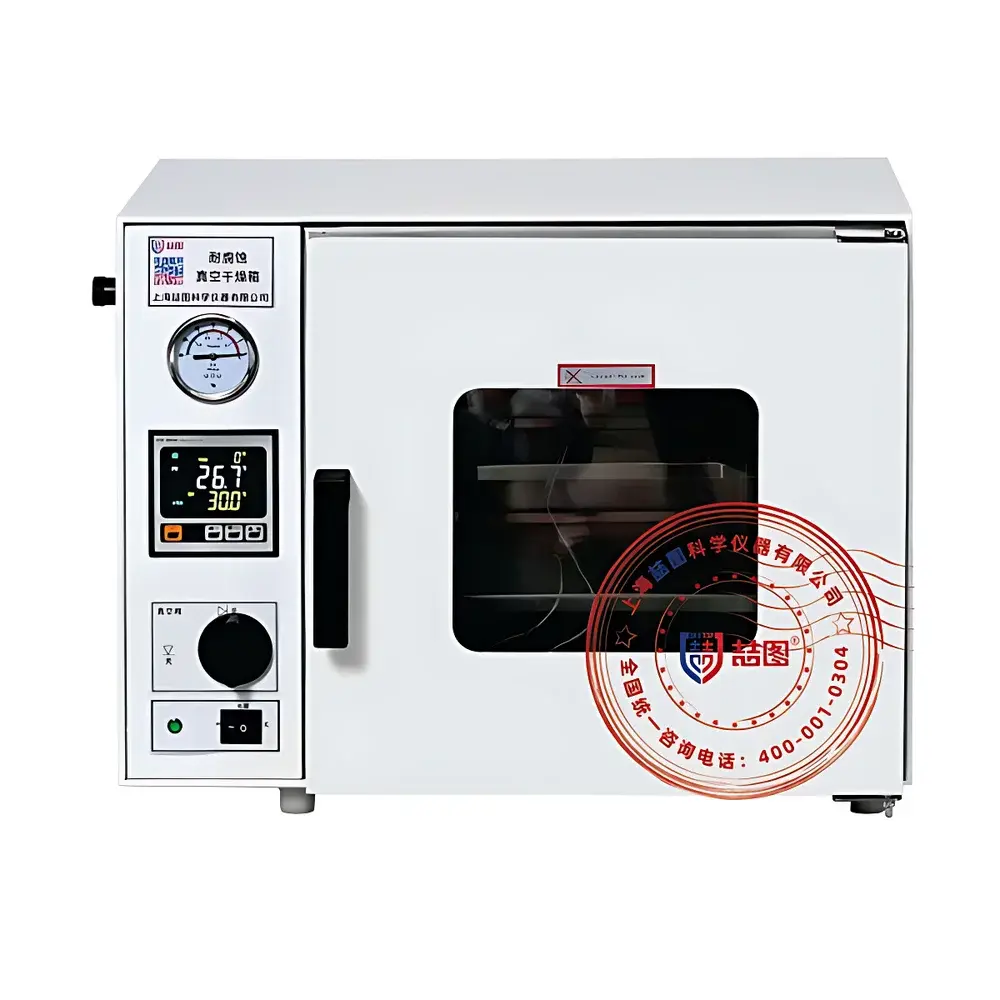
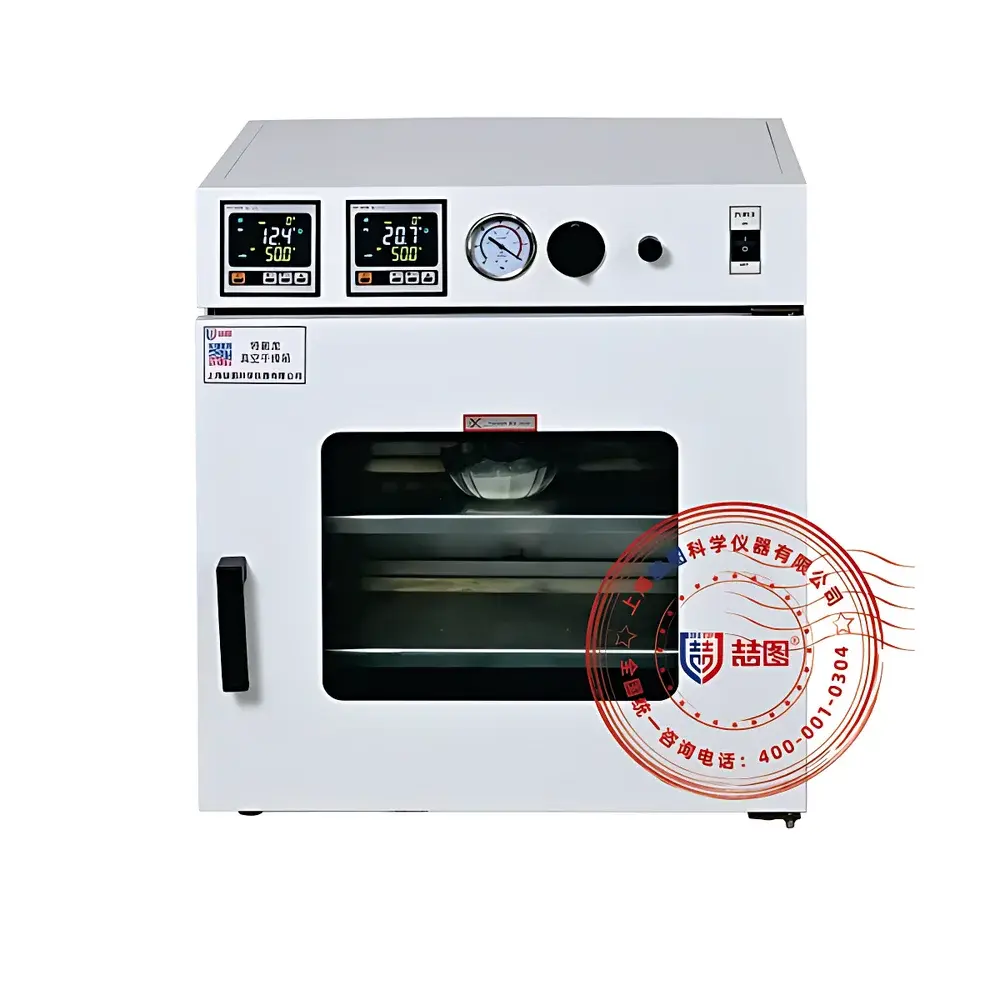
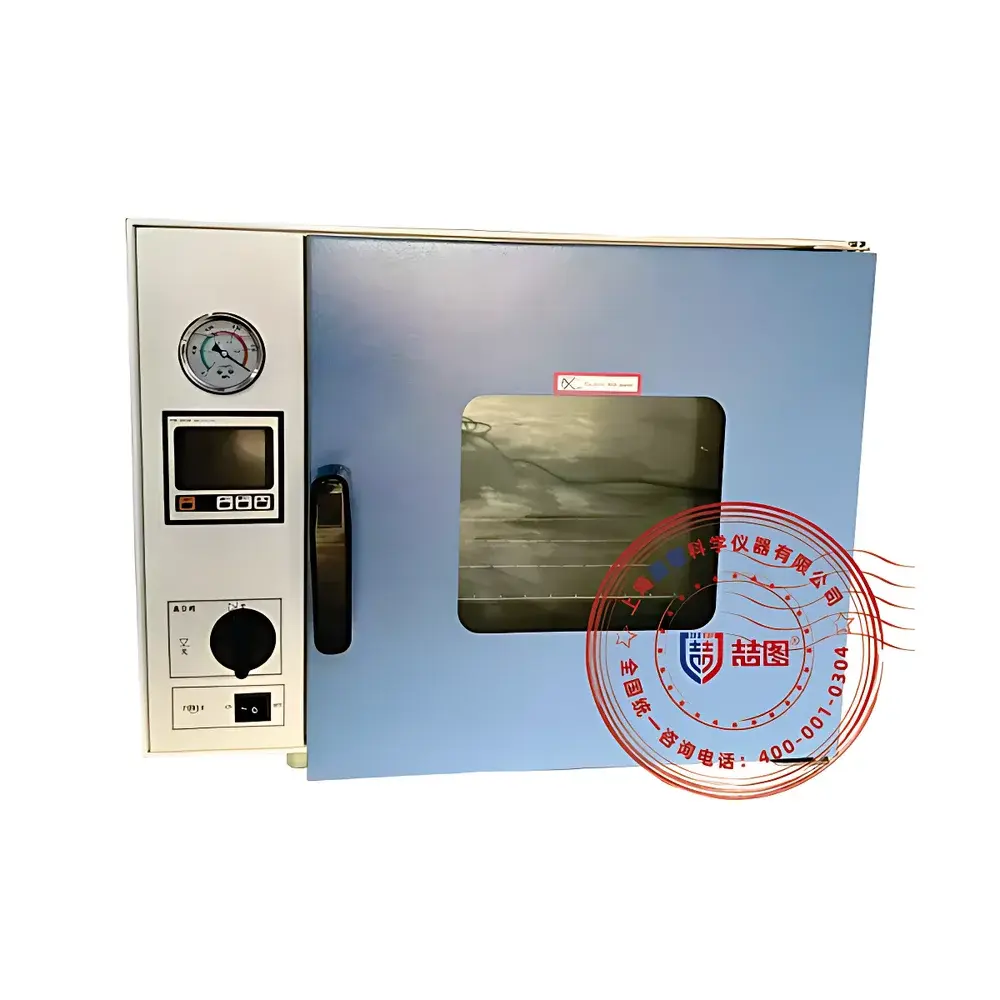
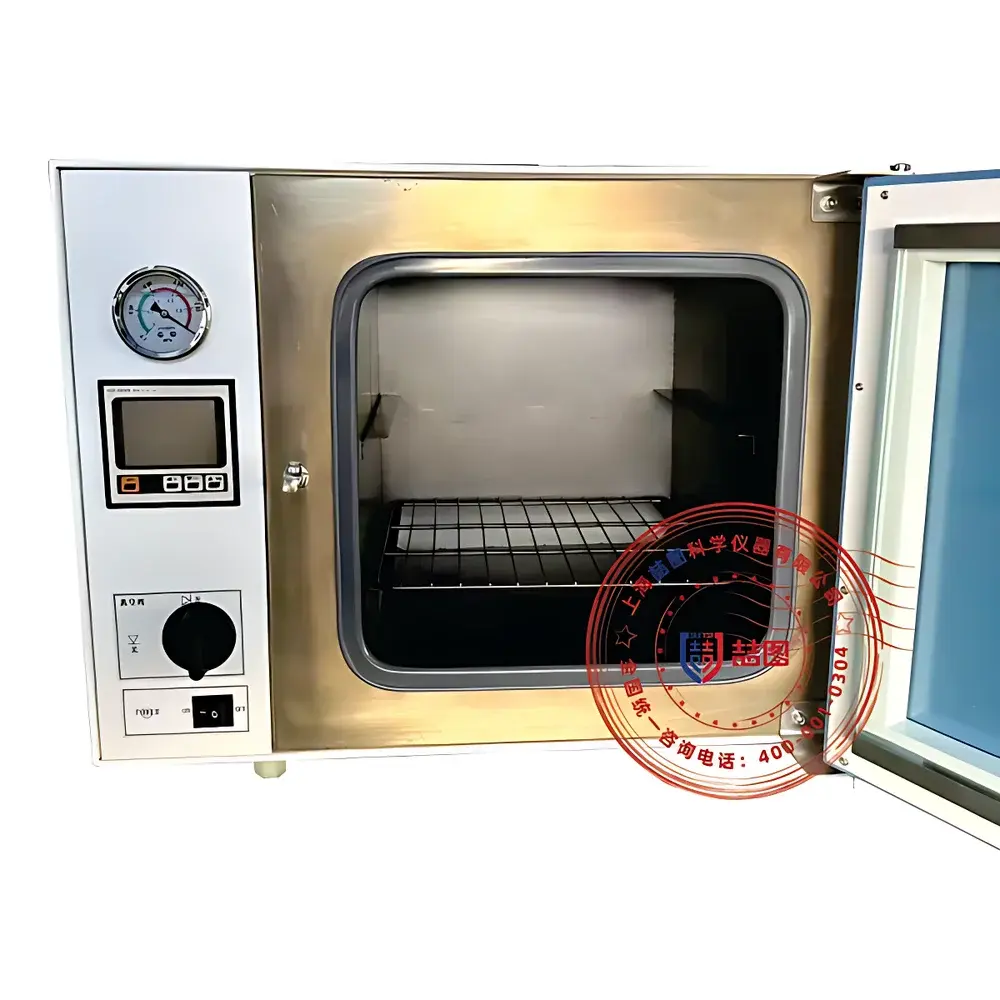
DRETOP PFA-30VC-II Fully Corrosion-Resistant PFA Vacuum Drying Oven
| Brand | DRETOP |
|---|---|
| Origin | Shanghai, China |
| Model | PFA-30VC-II |
| Instrument Type | Vacuum Oven |
| Temperature Range | RT+10°C to 150°C |
| Temperature Uniformity | ±0.5°C |
| Temperature Resolution | 0.1°C |
| Vacuum Level | ≤133 Pa |
| Interior Dimensions (W×D×H) | 320×320×300 mm |
| Chamber Material | PFA-coated 316L stainless steel interior |
| Heating Method | Forced-air convection |
| Operating Ambient Temperature | RT+5°C to 45°C |
| Compliance | Configurable for GLP/GMP environments with IQ/OQ/PQ documentation support |
Overview
The DRETOP PFA-30VC-II Fully Corrosion-Resistant Vacuum Drying Oven is an engineered solution for laboratories and production facilities handling highly aggressive chemical media. Designed around the fundamental principle of vacuum-assisted thermal dehydration—where reduced ambient pressure lowers the boiling point of solvents and moisture—the oven enables precise, low-temperature drying of thermolabile, oxidation-sensitive, or purity-critical materials. Its core architecture integrates a vacuum-sealed chamber with a fully PFA (perfluoroalkoxy) coated 316L stainless steel interior, delivering exceptional resistance to concentrated mineral acids (e.g., HCl, HNO₃, H₂SO₄), strong alkalis (e.g., NaOH, KOH), halogenated solvents (e.g., chloroform, dichloromethane), and polar organics (e.g., methanol, acetonitrile). Unlike conventional stainless-steel or enamel-lined ovens, the PFA coating eliminates metal ion leaching, surface adhesion, and cross-contamination—making it suitable for applications demanding ultra-high chemical inertness and trace-metal-free processing.
Key Features
- Full PFA coating applied to all internal wetted surfaces—including chamber walls, door seal interface, and adjustable shelf supports—ensuring continuous chemical integrity across repeated exposure cycles.
- Forced-air convection heating system with optimized airflow distribution achieves rapid thermal equilibration and maintains ±0.5°C temperature stability across the 30 L working volume (320 × 320 × 300 mm).
- High-resolution 7-inch color LCD touchscreen interface with intuitive navigation supports real-time parameter monitoring, alarm logging, and multi-point setpoint recall.
- Double-layer anti-explosion tempered glass observation window with integrated resistive heating prevents condensation and fogging during high-humidity or cryogenic vacuum transitions—enabling uninterrupted visual inspection without chamber breach.
- Comprehensive safety architecture includes over-temperature cutoff, sensor fault diagnostics, power-loss memory retention, and automatic vacuum release upon critical failure.
- Modular shelf design accommodates both externally heated adjustable shelves (standard) and optional internally heated fixed shelves for enhanced thermal coupling with powder, film, or wafer substrates.
Sample Compatibility & Compliance
The PFA-30VC-II is validated for use with samples exhibiting extreme chemical reactivity or stringent purity requirements. It complies with material compatibility standards referenced in ASTM D543 (resistance of plastics to chemical reagents) and ISO 15190 (laboratory safety—general requirements). For regulated environments, the system supports configuration with audit-trail-enabled controllers compliant with FDA 21 CFR Part 11, including electronic signature capability, user access levels, and immutable event logs. Optional IQ/OQ/PQ documentation packages are available to satisfy GMP/GLP validation protocols required in pharmaceutical API manufacturing, semiconductor packaging, and nuclear analytical labs. The absence of metallic leachables meets ICH Q5D criteria for biopharmaceutical excipient drying and USP specifications for polymer-based container systems.
Software & Data Management
The embedded control firmware provides native support for time-stamped temperature and vacuum profile recording at user-defined intervals (1–60 sec resolution). Data export is enabled via USB 2.0 port in CSV format, compatible with LIMS integration and statistical process control (SPC) platforms such as JMP or Minitab. Optional multi-segment programmable ramp-soak cycles allow automated execution of complex drying sequences—for example: initial low-vacuum degassing at 40°C, followed by gradual ramp to 85°C under deep vacuum (<50 Pa), then final hold at 120°C for residual solvent removal. All operational events—including vacuum pump activation, door interlock status, and thermal deviation alerts—are timestamped and retained for ≥12 months in non-volatile memory.
Applications
- Pharmaceutical R&D: Drying of acid-labile antibiotics intermediates, lyophilization pre-treatment of monoclonal antibody formulations, and moisture removal from hygroscopic excipients without Maillard degradation.
- Energy Materials: Solvent stripping from lithium nickel manganese cobalt oxide (NMC) cathodes and graphite anodes under inert gas purged vacuum, preventing transition metal reduction and SEI layer disruption.
- Semiconductor Processing: Post-wet-etch drying of silicon wafers and photomask substrates; elimination of watermarks and particle adhesion during photoresist bake-out.
- Advanced Catalysis: Activation of supported platinum-group metal catalysts in corrosive precursor solutions (e.g., H₂PtCl₆ in HCl), where chloride residue must be removed without thermal decomposition.
- Trace Analysis Standards: Preparation and long-term storage of certified reference materials (CRMs) for ICP-MS analysis, where sub-ppt metal contamination must be excluded.
- Electronics Manufacturing: Moisture desorption from PCB assemblies prior to conformal coating, meeting IPC-J-STD-033B moisture sensitivity level (MSL) requirements.
FAQ
What vacuum pumps are compatible with the PFA-30VC-II?
The unit is supplied with a corrosion-resistant oil-sealed rotary vane pump rated for continuous operation at ≤133 Pa. Optional upgrades include chemically resistant diaphragm pumps (for halogenated solvent compatibility) and hybrid turbo-molecular pump systems for ultra-high vacuum (<10⁻³ Pa) applications.
Can the oven operate under inert gas purge conditions?
Yes—dual-port gas inlet/outlet fittings (¼” VCR) are standard, supporting N₂ or Ar backfilling, vacuum-inert cycling, and controlled atmosphere drying per ASTM E1545.
Is PFA superior to PTFE for vacuum drying applications?
PFA offers higher thermal stability (continuous use up to 260°C vs. PTFE’s 260°C short-term limit), improved melt-processability for uniform coating thickness, and lower extractables—making it preferred for GMP-grade and semiconductor-grade processes.
How is temperature uniformity verified across the chamber?
DRETOP performs factory calibration using nine calibrated PT100 sensors positioned per ISO 14644-3 Annex B, with results documented in the Certificate of Conformance supplied with each unit.
Does the system support remote monitoring and control?
RS-485 Modbus RTU and optional Ethernet/IP interfaces enable integration into SCADA and MES platforms; third-party software drivers are provided for LabVIEW and Python-based automation frameworks.



