
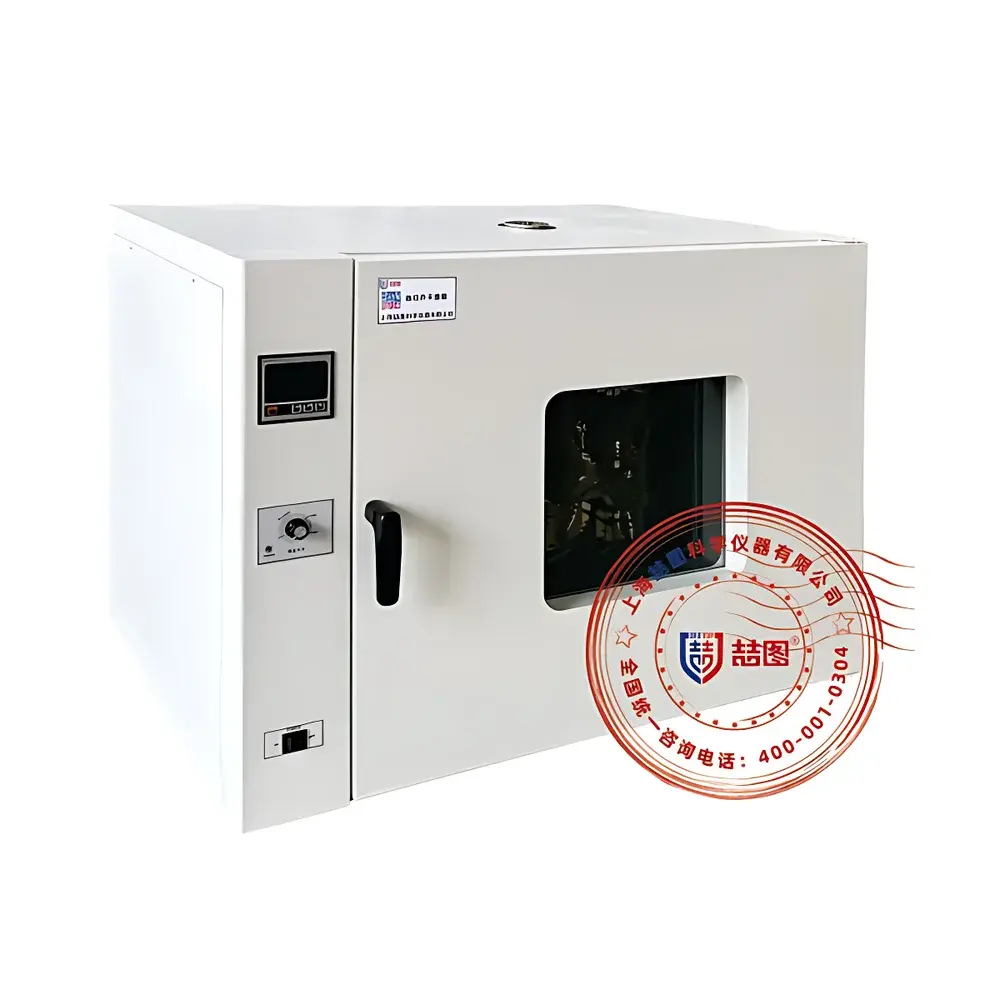
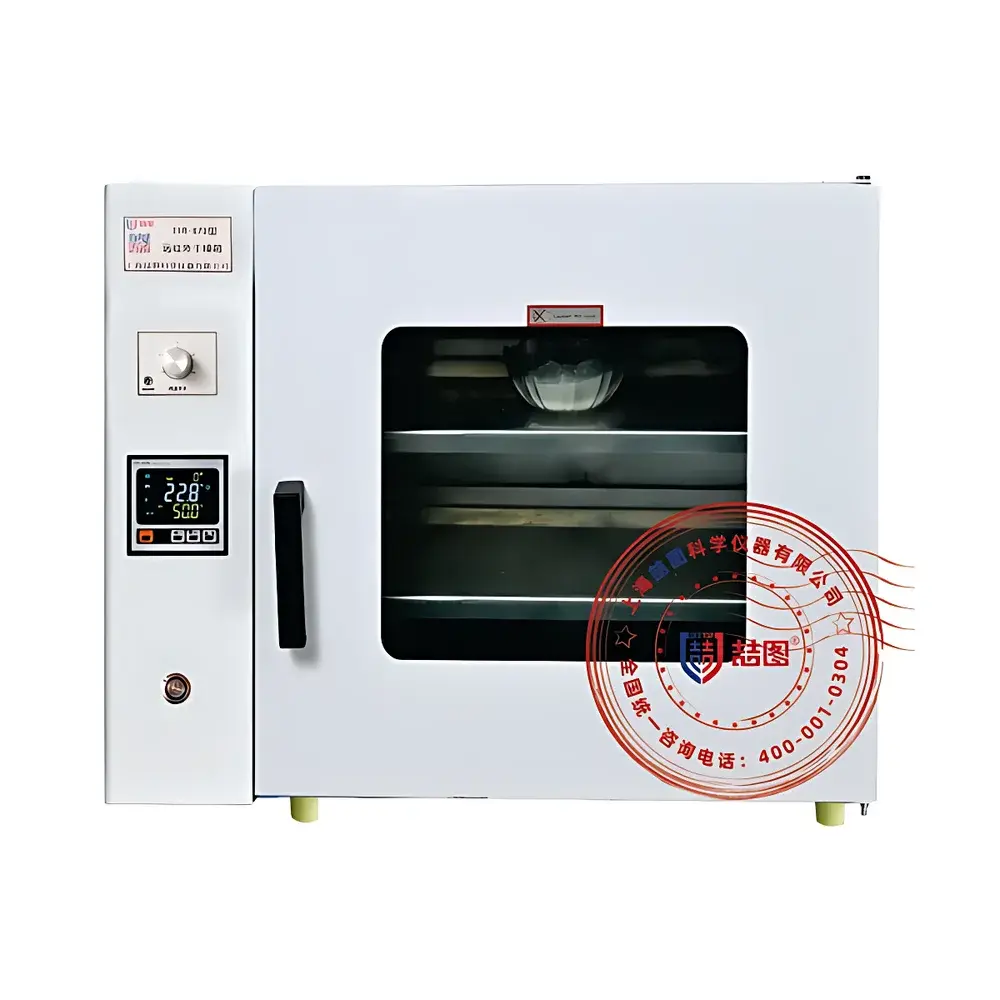
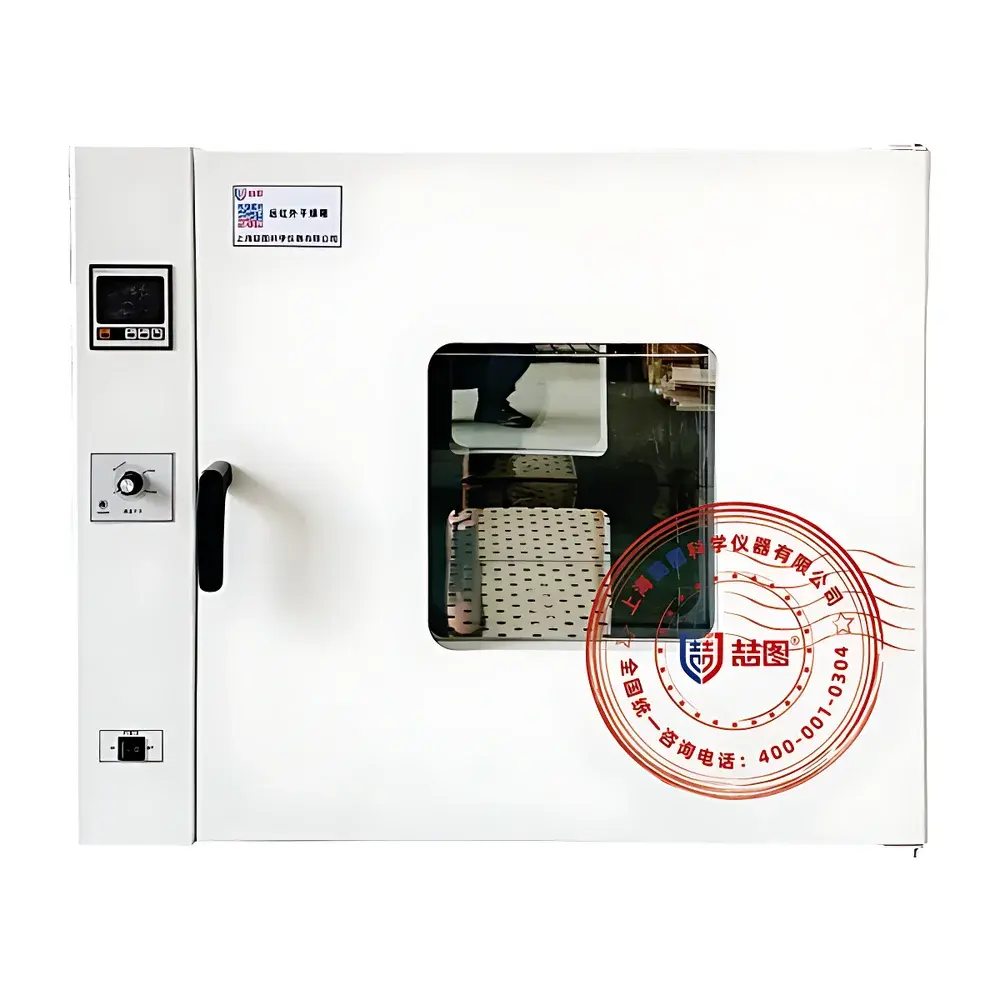
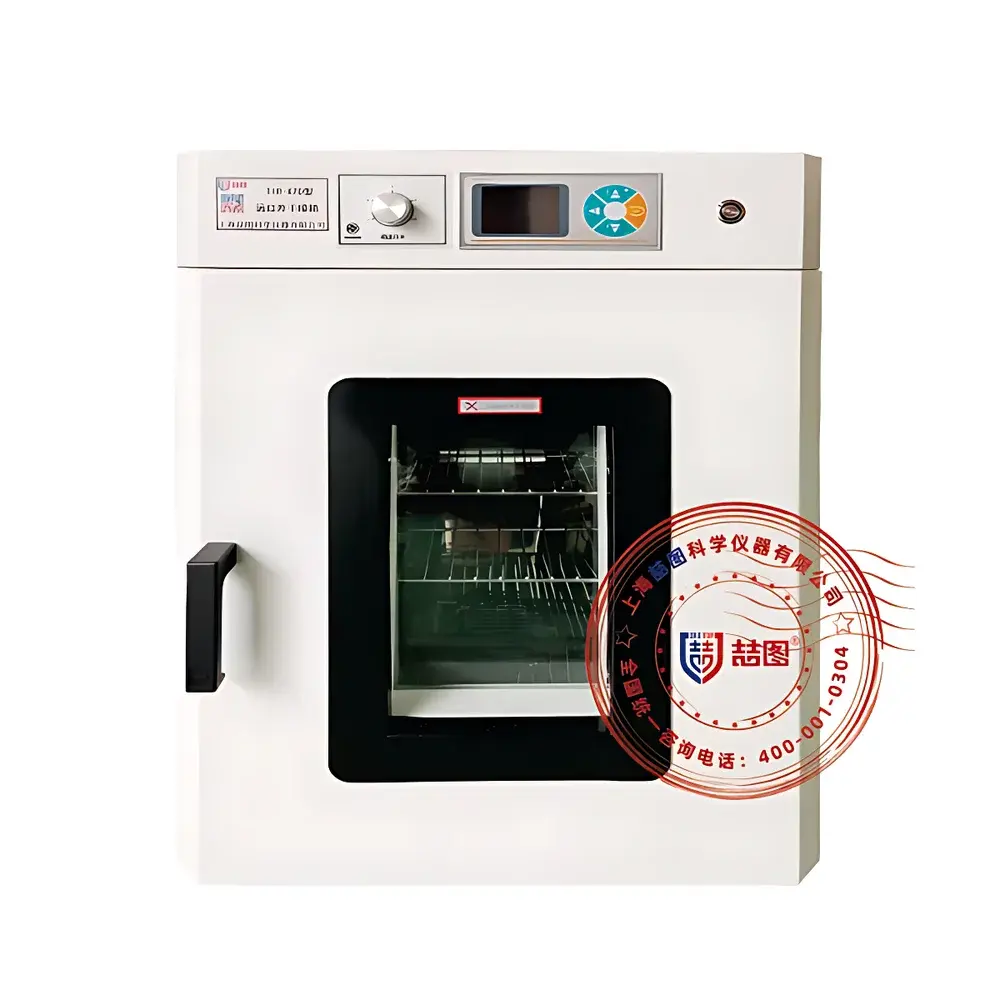
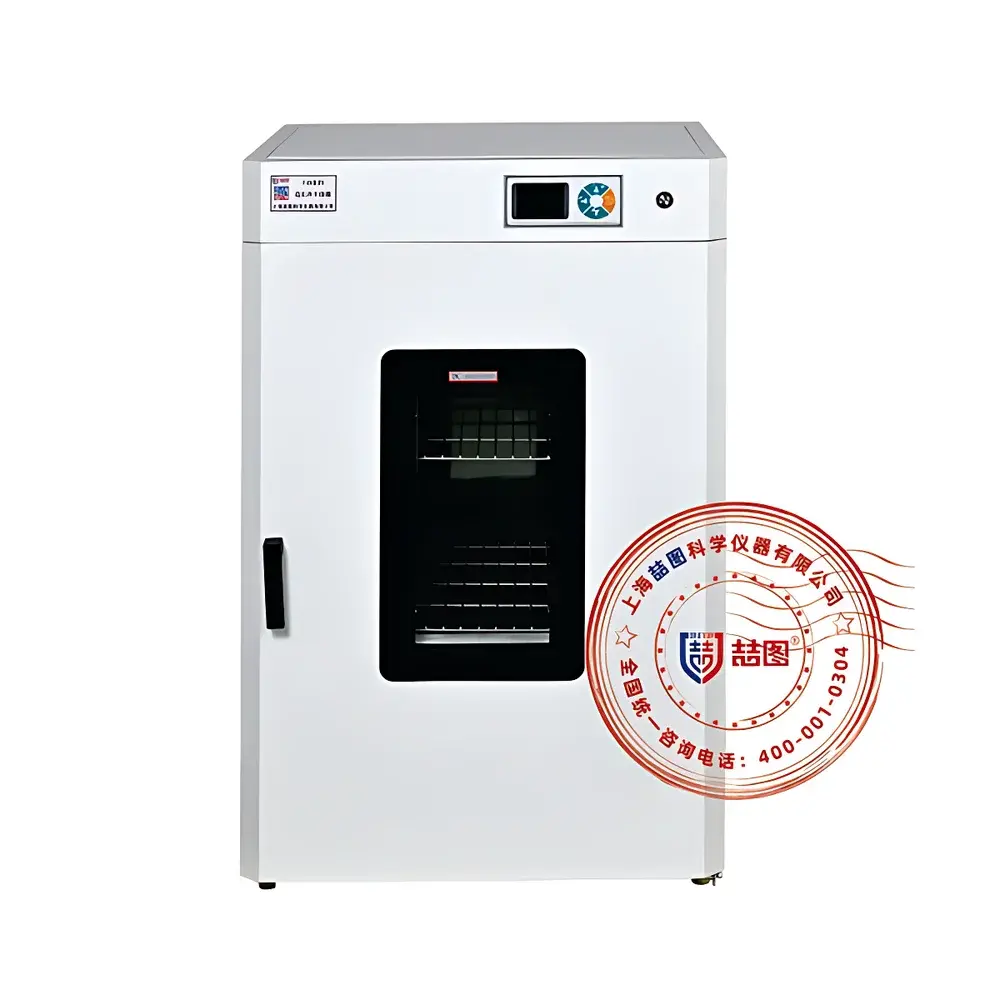
DRETOP TIR-148AP Far-Infrared Drying Oven
| Brand | DRETOP |
|---|---|
| Model | TIR-148AP |
| Type | Standard Forced-Air Drying Oven |
| Temperature Range | RT+10°C to 250°C |
| Temperature Uniformity | ±1°C (at 100°C, measured per ISO 17025-compliant internal validation protocol) |
| Temperature Resolution | 0.1°C |
| Chamber Dimensions (W×D×H) | 600 × 450 × 550 mm |
| External Dimensions (W×D×H) | 915 × 630 × 725 mm |
| Interior Material | AISI 304 Stainless Steel |
| Heating Method | Far-Infrared Radiant Emitters with Adjustable Air Circulation |
| Power Supply | AC 220 V, 50 Hz |
| Rated Power | 2600 W |
| Operating Ambient Temperature | +5°C to +45°C |
| Fan Control | Continuously Variable Speed (0–100%, including zero-airflow mode) |
| Safety Features | Dual-limit overtemperature protection, thermal cutoff fuse, leakage current protection, data retention on power loss, audible/visual alarm for deviation >±3°C |
Overview
The DRETOP TIR-148AP Far-Infrared Drying Oven is an engineered solution for precise, repeatable thermal processing in non-vacuum laboratory and industrial environments. Unlike conventional convection ovens that rely solely on forced air circulation—often disruptive to delicate particulate or powder-based samples—the TIR-148AP integrates far-infrared (FIR) radiant heating elements with a fully adjustable, low-turbulence airflow system. This hybrid thermal delivery architecture enables rapid, energy-efficient heating while minimizing mechanical disturbance to samples during drying, curing, conditioning, or moisture loss analysis. The oven operates within a validated temperature range of RT+10°C to 250°C, with microprocessor-controlled PID regulation ensuring stability and reproducibility across extended dwell periods. Its design adheres to foundational thermal engineering principles defined in ASTM E145–22 (Standard Specification for Gravity-Convection and Forced-Ventilation Ovens) and supports routine calibration traceability per ISO/IEC 17025 requirements when used with accredited reference thermometers.
Key Features
- Far-infrared radiant heating system with high emissivity ceramic emitters—provides rapid thermal response, minimal thermal inertia, and stable long-term radiative output without spectral degradation.
- Continuously variable-speed fan (0–100% range), enabling true zero-airflow operation for heat-sensitive powders or granular materials, and optimized convective uniformity at higher setpoints.
- 3D-refractive thermal field design: strategically angled internal reflectors and multi-path air channels ensure ≥90% spatial temperature uniformity across the working chamber (per internal DQ/IQ test reports).
- Microcomputer-based PID controller with 0.1°C resolution, ±1°C uniformity specification, and programmable ramp-hold profiles via optional upgrade kits.
- Dual independent overtemperature safeguards: primary control loop limit + secondary hardware cutoff at 270°C, compliant with IEC 61010-1 safety standards.
- Stainless steel (AISI 304) interior chamber and slide-out adjustable shelves; electrostatically coated cold-rolled steel exterior; large-view tempered glass door with silicone gasket seal rated to 250°C.
- Self-diagnostic firmware: displays alphanumeric fault codes (e.g., E01 = sensor open circuit, E03 = heater short) directly on the LCD interface for rapid troubleshooting.
Sample Compatibility & Compliance
The TIR-148AP accommodates standard laboratory sample formats—including Petri dishes, weighing boats, crucibles, glassware, polymer films, and ceramic substrates—within its 148 L stainless steel chamber. Its absence of vacuum capability restricts use to atmospheric-pressure thermal applications only. The unit complies with CE marking directives (2014/30/EU EMC, 2014/35/EU LVD), RoHS 2011/65/EU, and meets basic functional safety requirements outlined in UL 61010-1 (3rd Ed.) for laboratory equipment. While not certified for GMP manufacturing environments, it supports GLP-aligned workflows through optional audit-trail-capable controllers (with timestamped event logging) and is routinely deployed in QC labs performing USP , ISO 787-2, and ASTM D2244 moisture content determinations.
Software & Data Management
The base configuration features a 4.3-inch monochrome LCD interface with intuitive menu navigation and real-time dual-display of setpoint/actual temperature. Optional upgrades include:
- USB data export module: logs time-stamped temperature readings to FAT32-formatted USB drives at user-defined intervals (1 s to 60 min).
- RS-485 Modbus RTU interface: enables integration into SCADA or LIMS platforms for centralized monitoring and remote parameter adjustment.
- Programmable multi-segment controller (up to 30 segments): supports complex thermal profiles with ramp rates from 0.1°C/min to 10°C/min and hold durations up to 9999 minutes.
- Thermal printer interface (via optional serial adapter): generates hard-copy records of temperature vs. time curves, satisfying 21 CFR Part 11 documentation requirements when paired with electronic signature-enabled software.
Applications
This drying oven serves critical roles in materials science, pharmaceutical development, food quality assurance, and environmental testing laboratories. Typical applications include:
- Moisture content determination per AOAC 950.46 and ISO 5530-1 protocols using gravimetric loss-on-drying methodology.
- Pre-conditioning of polymers, composites, and adhesives prior to tensile or rheological testing.
- Drying of filter papers, soil samples, and botanical specimens without particle displacement.
- Heat treatment of catalyst supports, battery electrode coatings, and thin-film substrates under controlled oxidative atmospheres.
- Stability studies of excipients and active pharmaceutical ingredients (APIs) at accelerated aging conditions (ICH Q1A).
FAQ
Does the TIR-148AP support vacuum operation?
No. It is a standard atmospheric-pressure drying oven and lacks vacuum sealing, pumping, or pressure monitoring components.
What is the maximum recommended continuous operating temperature?
250°C. Sustained operation above this threshold may accelerate degradation of seals and insulation integrity.
Can temperature uniformity be independently verified?
Yes. The chamber includes three standardized sensor ports (optional accessories) for placement of calibrated PT100 probes per ISO 17025 internal validation procedures.
Is the stainless steel interior electropolished?
No. The AISI 304 chamber is passivated and mechanically polished to Ra ≤ 0.8 µm, suitable for general lab use but not sterile-grade applications.
What calibration documentation is provided with shipment?
A factory-issued temperature verification report (at 100°C and 200°C) using NIST-traceable reference thermometers is included. Full IQ/OQ documentation packages are available upon request.



