
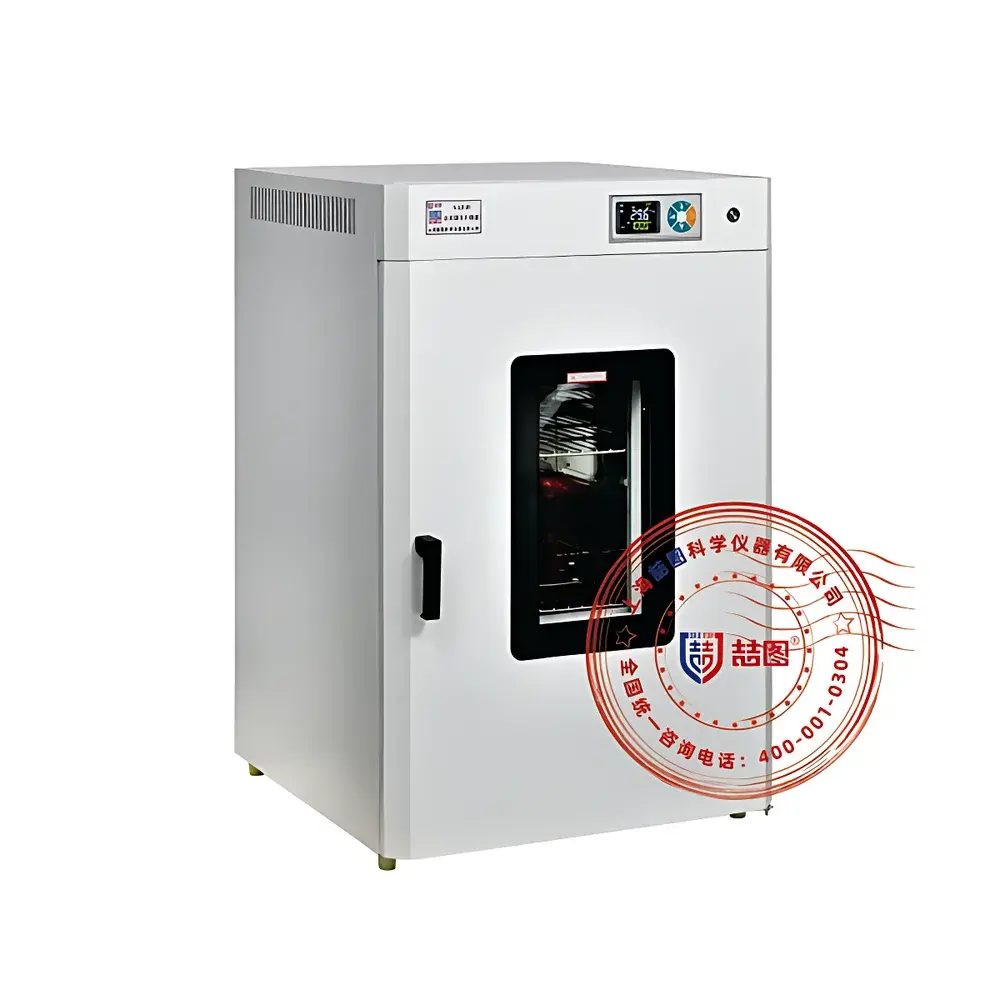
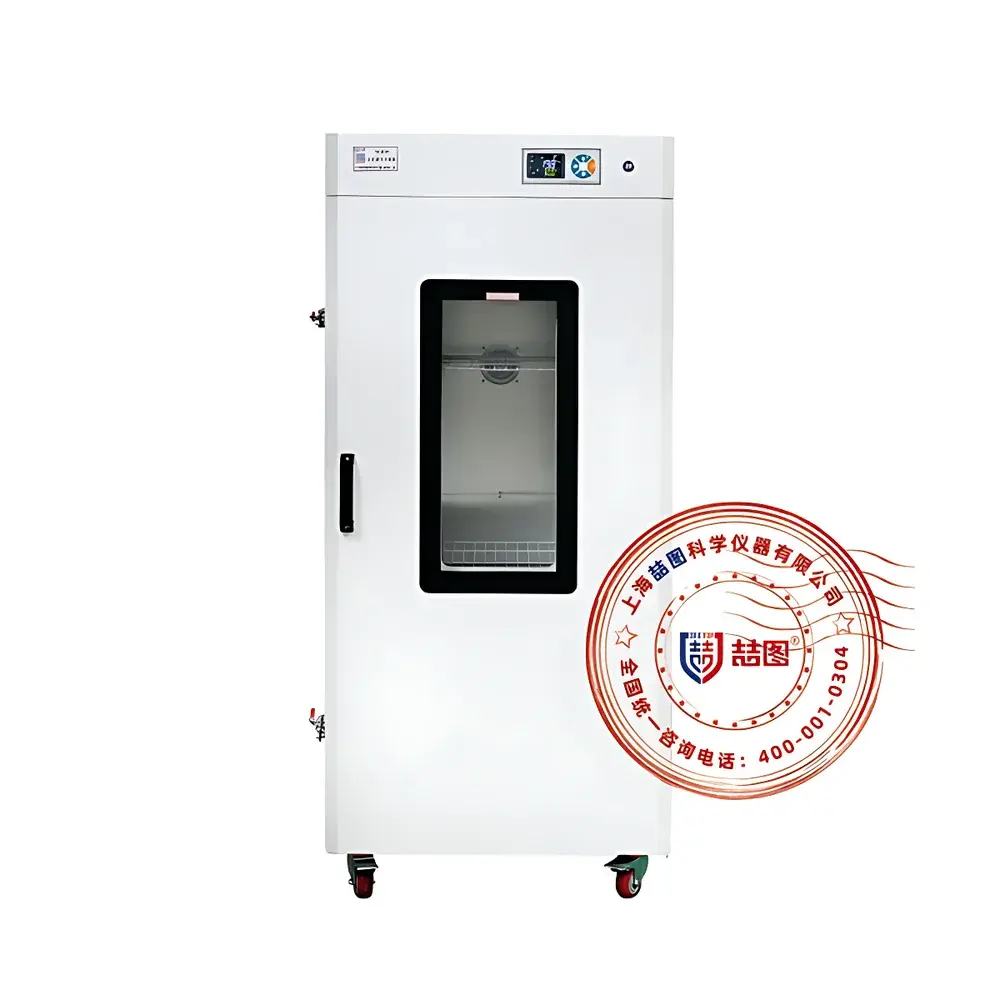
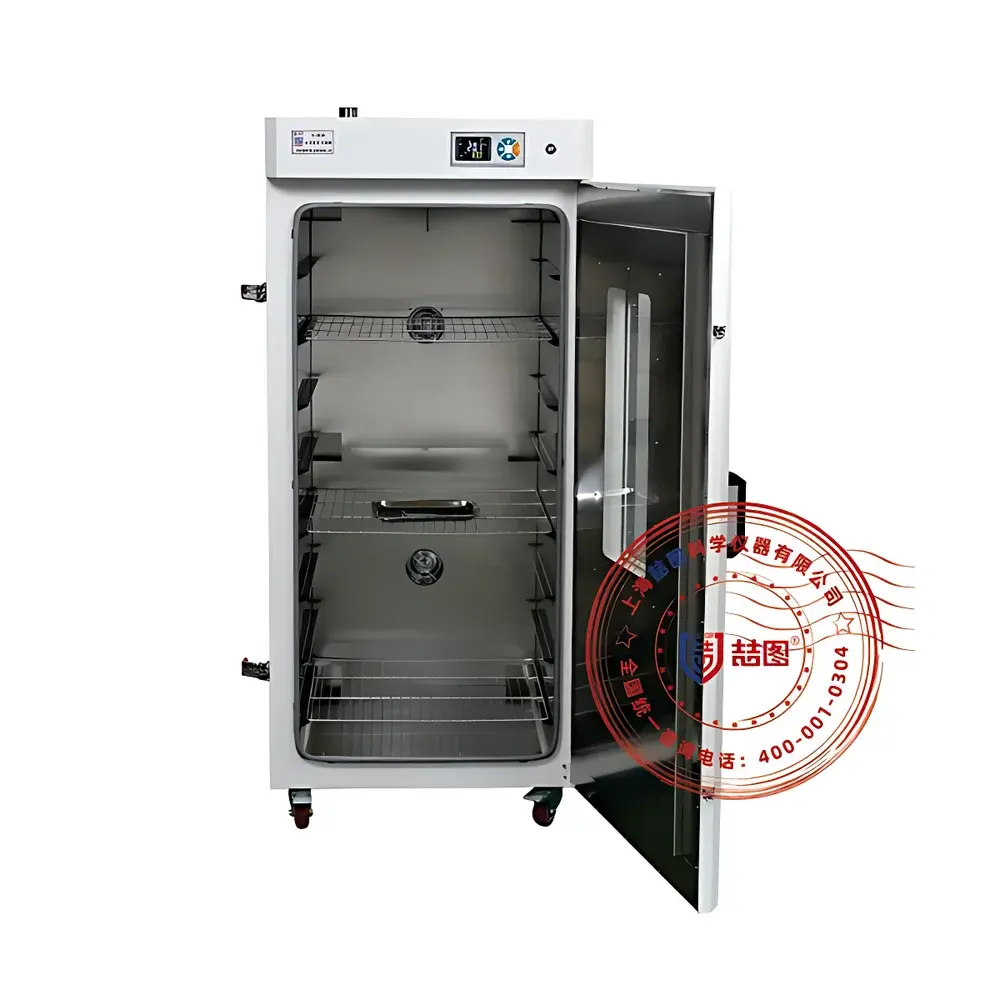
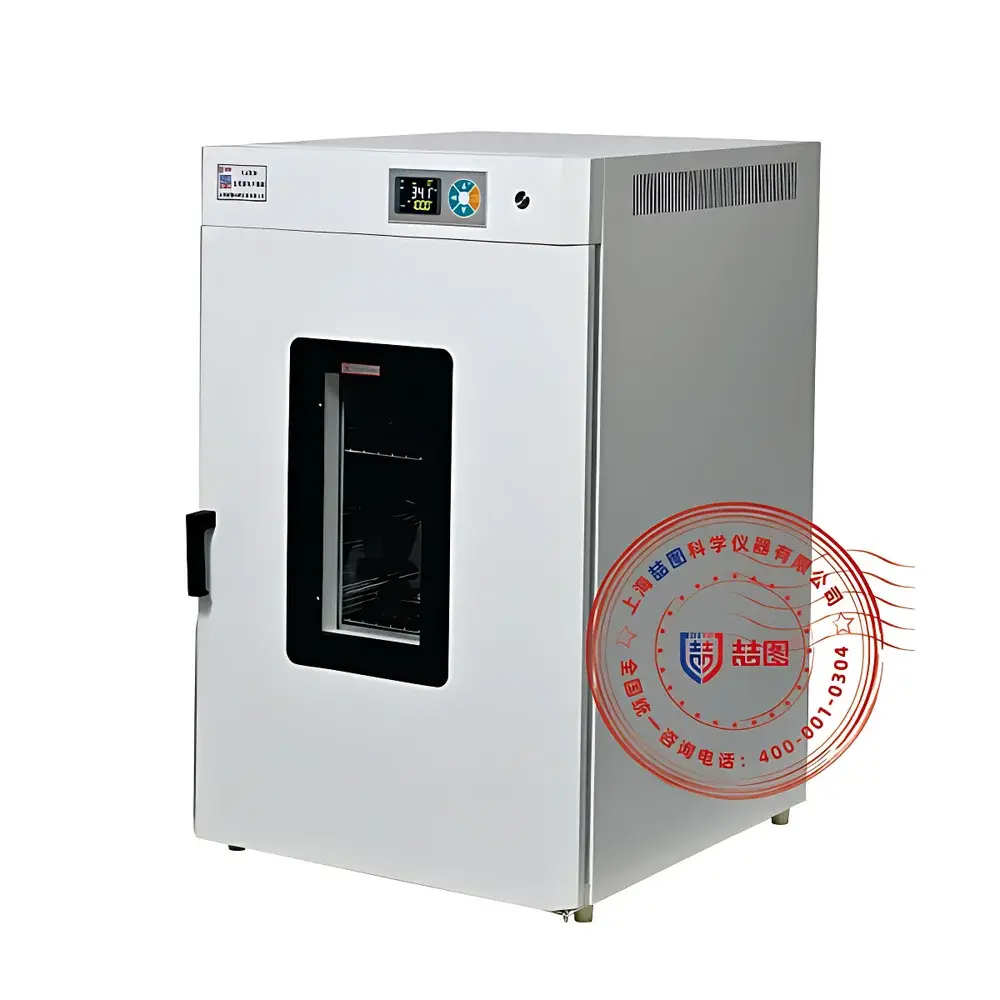
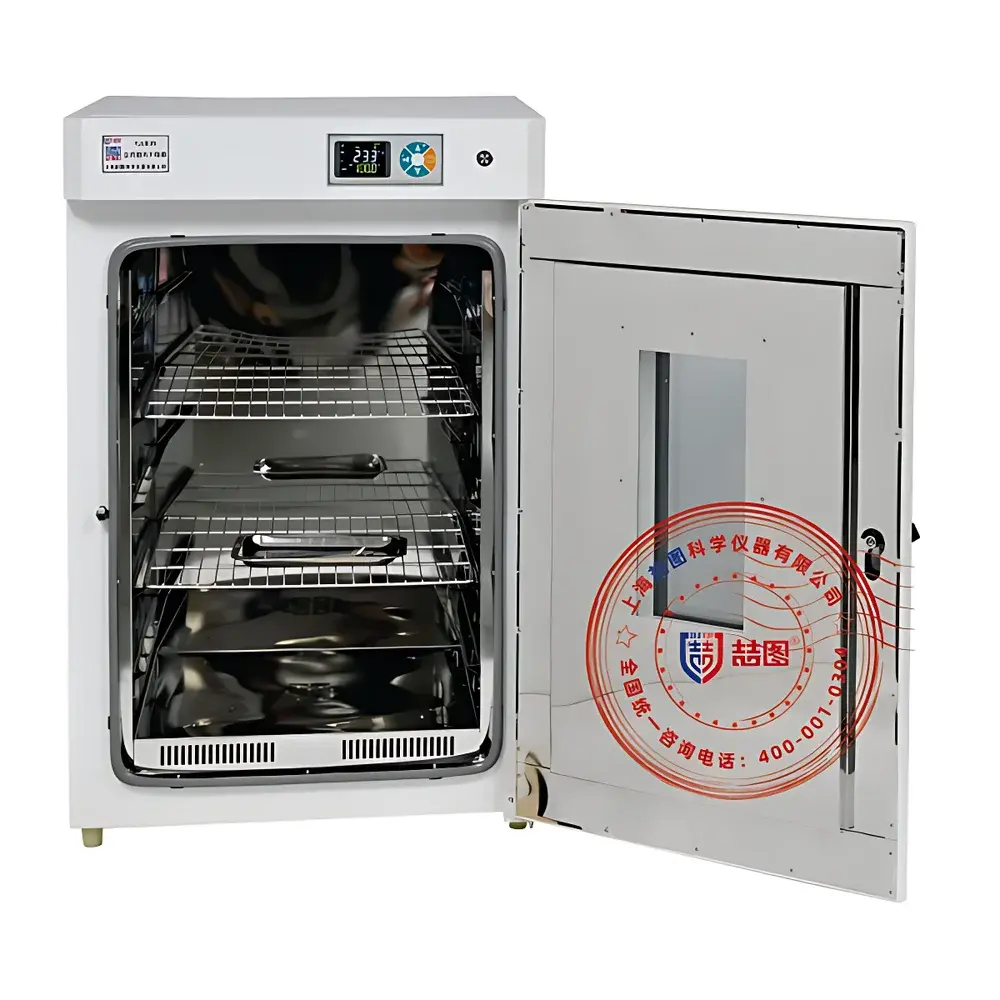
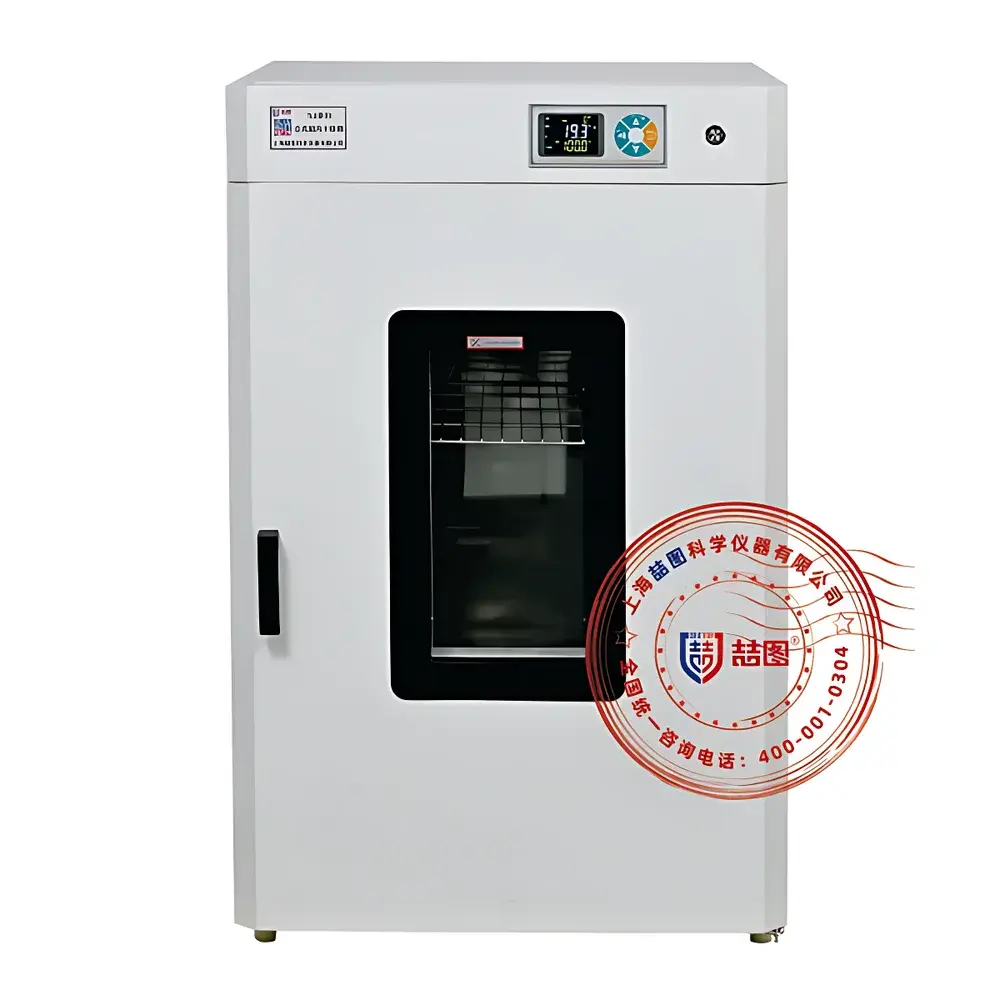
DRETOP TLG Series Vertical Forced-Air Drying Oven
| Brand | DRETOP |
|---|---|
| Origin | Shanghai, China |
| Model | TLG Series |
| Instrument Type | General-Purpose Forced-Convection Oven |
| Temperature Range | RT+10°C to 300°C |
| Temperature Uniformity | ±2.5°C (empty chamber, at 100°C) |
| Temperature Fluctuation | ±0.5°C |
| Temperature Resolution | 0.1°C |
| Internal Dimensions (W×D×H) | 300×300×345 mm to 1000×800×1300 mm |
| External Dimensions (W×D×H) | 445×420×700 mm to 1180×910×1750 mm |
| Chamber Material | Stainless Steel (SUS304) |
| Heating Method | Forced-Air Circulation via High-Temperature Fan |
| Power Supply | AC 220 V / 50 Hz or AC 380 V / 50 Hz |
| Input Power | 800 W to 6500 W |
| Standard Shelving | 2–4 Adjustable Stainless Steel Trays |
| Timer Range | 1–9999 minutes |
| Compliance | Designed for GLP-compliant laboratory environments |
Overview
The DRETOP TLG Series Vertical Forced-Air Drying Oven is an engineered solution for precise, reproducible thermal processing in research, quality control, and production laboratories. Based on the principle of forced convection—where a high-temperature-rated centrifugal fan circulates heated air through optimized internal ducts—the TLG series ensures rapid temperature ramp-up and stable thermal equilibrium across the entire working chamber. Unlike natural-convection ovens, this design eliminates stratification and cold spots by maintaining uniform airflow velocity and directional consistency, critical for applications requiring strict adherence to ASTM D1654 (coating drying), ISO 5725 (precision testing), or pharmacopeial drying protocols. The vertical architecture maximizes floor space efficiency while accommodating both benchtop-scale and large-volume drying tasks—from moisture loss determination in pharmaceutical excipients to pre-baking of electronic substrates prior to coating.
Key Features
- Microprocessor-based P.I.D. temperature controller with digital LCD interface, offering three-color screen display for simultaneous monitoring of setpoint, real-time chamber temperature, and elapsed time.
- Self-diagnostic system with fault-code reporting (e.g., E01 for sensor open-circuit, E02 for overtemperature), enabling rapid troubleshooting without external service tools.
- Dual-stage mechanical door lock with zinc-alloy handle and high-elasticity silicone gasket (rated to 350°C), ensuring long-term sealing integrity and minimizing thermal leakage.
- Double-layer tempered glass observation window with anti-fog coating, providing unobstructed visual access while maintaining thermal insulation performance (U-value ≤ 1.8 W/m²·K).
- Modular stainless steel interior (SUS304, 1.2 mm thickness) and adjustable, slide-out trays with 25 mm pitch increments—facilitating cleaning, reconfiguration, and compatibility with ISO-standard sample racks.
- Back-mounted exhaust port (Ø30 mm) with optional ducting connection for controlled venting of volatile organic compounds (VOCs), residual solvents, or process-generated moisture.
Sample Compatibility & Compliance
The TLG series accommodates a broad spectrum of sample types—including polymeric films, metal components, ceramic powders, biological tissue sections, and packaged medical devices—without compromising thermal fidelity. Its stainless steel chamber resists corrosion from saline mists, acidic vapors, and alkaline residues commonly encountered during accelerated aging tests per IEC 60068-2-2 (dry heat) or MIL-STD-810H Method 501.5. All models are designed to support GLP/GMP audit readiness: temperature logging (via optional USB or RS485) meets FDA 21 CFR Part 11 data integrity requirements when paired with compliant software; independent overtemperature cut-off circuitry satisfies IEC 61010-1 safety mandates; and chamber uniformity mapping reports can be generated per ISO/IEC 17025 clause 5.4.4 for method validation.
Software & Data Management
While the base configuration includes standalone microcontroller operation, optional digital interfaces significantly extend traceability and automation capability. The USB data export module records timestamped temperature logs onto standard FAT32-formatted USB drives, supporting post-run analysis in Excel or MATLAB. For regulated environments, the RS485 serial interface enables integration into SCADA or LIMS platforms using Modbus RTU protocol. Optional color touchscreen controllers support up to 30 programmable segments with ramp/soak profiles—essential for thermal cycling tests per ASTM E1530 or IPC-TM-650 2.6.25. All firmware versions maintain full backward compatibility and include built-in audit trail functions that log user actions, parameter changes, and alarm events with ISO 8601 timestamps.
Applications
- Moisture content determination in raw materials (e.g., APIs, excipients, food ingredients) per AOAC 950.46 and USP .
- Curing of epoxy adhesives, conformal coatings, and solder pastes under controlled ramp-hold-cool cycles.
- Pre-conditioning of test specimens prior to tensile, impact, or dielectric strength evaluation (ASTM D638, D256, D149).
- Drying of filter papers, chromatography media, and microbiological agar plates in clinical and environmental labs.
- Stabilization of hygroscopic standards and reference materials in metrology labs operating under ISO/IEC 17025 accreditation.
- Accelerated shelf-life testing of packaged consumer goods under elevated temperature stress conditions (ISTA 2A, ASTM D3103).
FAQ
What is the maximum operating temperature for the TLG series?
The standard configuration supports continuous operation up to 300°C; models rated for 250°C use lower-power heating elements and are designated with suffix “A” (e.g., TLG-9030A).
Can the oven be validated for GMP compliance?
Yes—when equipped with optional data logging and used with documented IQ/OQ protocols, it fulfills Annex 15 qualification requirements for ancillary equipment.
Is the stainless steel chamber electropolished?
No; the interior uses brushed-finish SUS304 for optimal cleanability and resistance to thermal cycling fatigue.
Does the TLG series support nitrogen purging?
Not natively—but the rear exhaust port allows integration with inert gas manifolds using third-party flow regulators and pressure relief valves.
How is temperature uniformity verified during factory calibration?
Each unit undergoes 9-point mapping (per ISO 17025 Annex C) at 100°C using NIST-traceable PT100 probes; a certificate of uniformity is included with shipment.



