
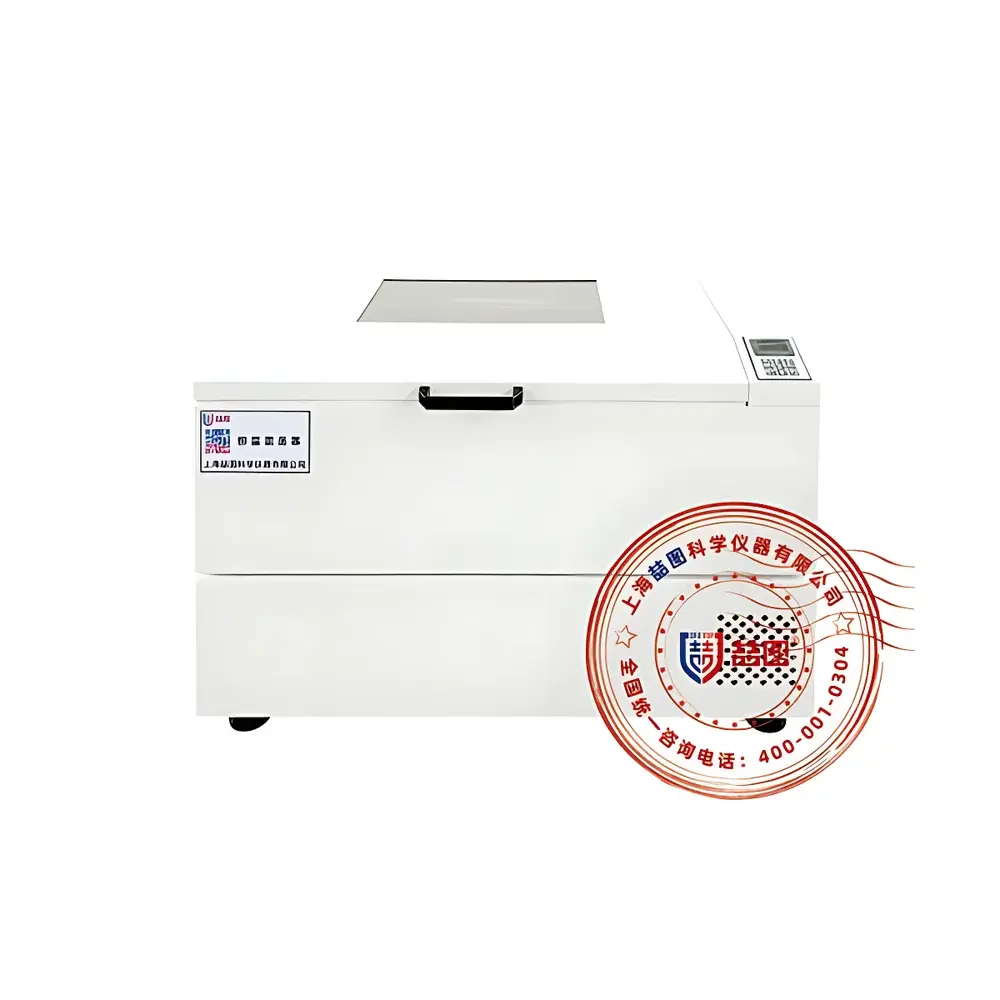
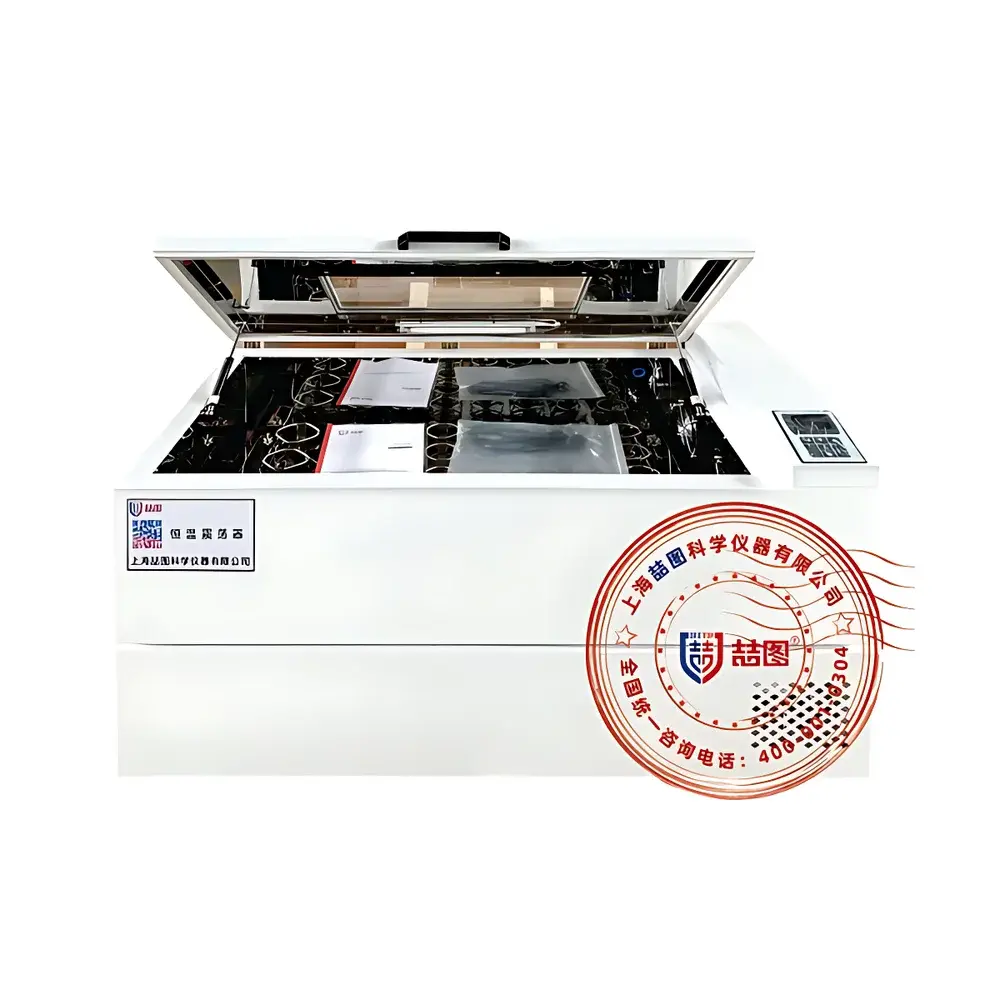
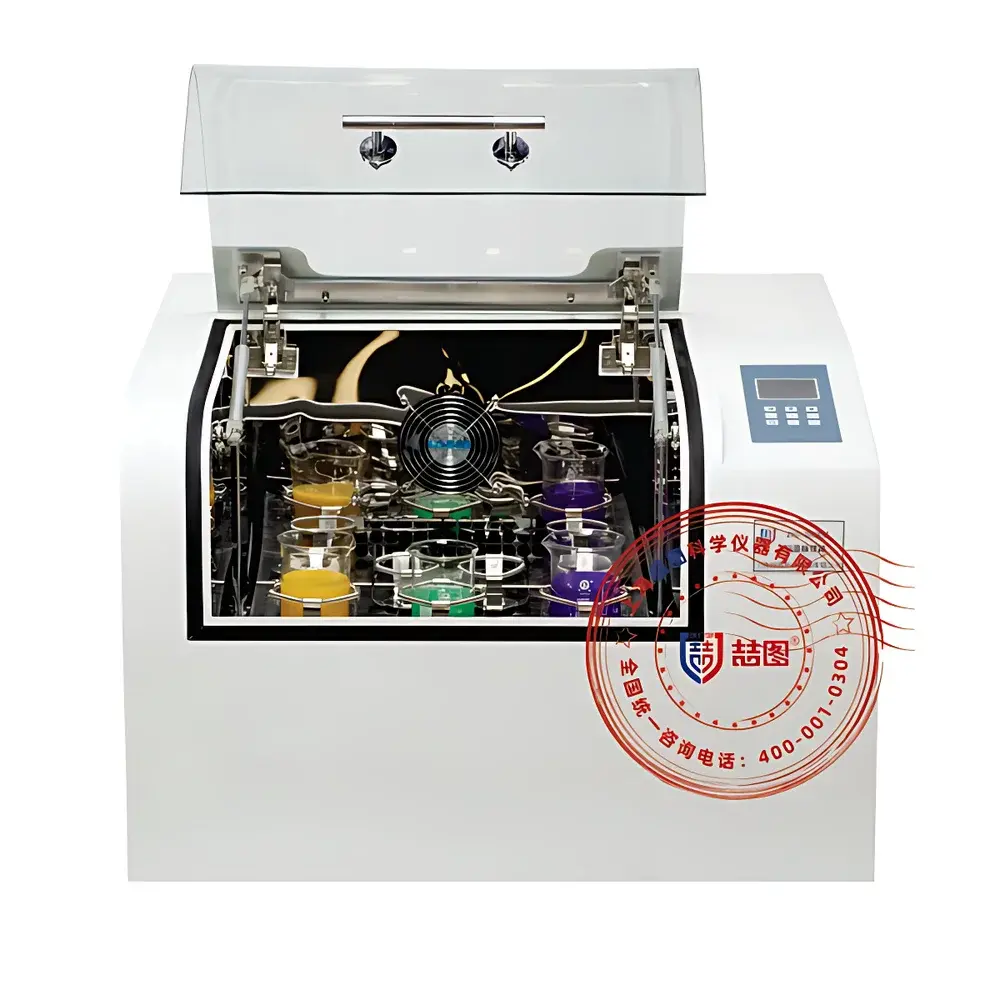
DRETOP ZYC-100BR Low-Temperature Incubated Orbital Shaker
| Key | Brand: DRETOP |
|---|---|
| Origin | Shanghai, China |
| Model | ZYC-100BR |
| Temperature Range | 4–60 °C |
| Oscillation Frequency | 0–300 rpm |
| Amplitude | 26 mm |
| Timer Range | 1–999 min |
| Platform Quantity | 1 |
| Type | Air-Jacketed Incubated Shaker |
| Power Supply | AC 220 V, 50 Hz |
Overview
The DRETOP ZYC-100BR Low-Temperature Incubated Orbital Shaker is an integrated laboratory instrument engineered for precise temperature-controlled agitation of biological and biochemical samples. It operates on the principle of orbital (circular) motion with a fixed 26 mm amplitude, enabling uniform suspension and oxygenation of cultures while maintaining thermal stability across a broad range from 4 °C to 60 °C — including sub-ambient capability via integrated compressor-based refrigeration. Designed for applications requiring strict environmental control — such as microbial growth, enzyme kinetics, cell line expansion, and molecular hybridization — the unit combines incubator-grade thermal uniformity with shaker-grade mechanical reproducibility. Its air-jacketed chamber architecture ensures rapid temperature equilibration and minimal gradient deviation (< ±0.3 °C at setpoint), validated under steady-state conditions per ISO 17025-aligned internal calibration protocols.
Key Features
- Microprocessor-based PID temperature and speed control system with real-time digital display (backlit LCD), showing simultaneous readouts of chamber temperature (±0.1 °C resolution), rotational speed (±1 rpm accuracy), and elapsed time.
- Brushless DC motor drive delivering consistent torque across the full 0–300 rpm range; maintenance-free operation with no carbon brushes or lubrication requirements.
- Three-dimensional eccentric drive mechanism with soft-start functionality to prevent sample splashing during acceleration and ensure mechanical stability at high speeds.
- Reinforced stainless-steel chamber interior and platform surface (AISI 304), corrosion-resistant electrostatically coated exterior housing, and tempered glass observation window with integrated LED illumination.
- Comprehensive safety suite including over-temperature cutoff, over-speed shutdown, timer auto-stop, power-failure recovery, and parameter lockout with password protection to prevent unauthorized configuration changes.
- Optional accessories support method flexibility: universal spring clamps, fixed Erlenmeyer flask holders, test tube racks, custom bottle adapters, and optional UV-C germicidal irradiation module (254 nm) for periodic chamber decontamination.
Sample Compatibility & Compliance
The ZYC-100BR accommodates standard laboratory vessels up to 2 L capacity on its 450 × 410 mm platform, supporting common configurations including 100 mL × 4, 500 mL × 3, or 2 L × 1. Its temperature and agitation performance complies with routine validation requirements for GLP and GMP environments, particularly in QC microbiology and bioprocess development workflows. While not certified to IEC 61000-4 electromagnetic immunity standards out-of-box, the unit meets CE marking essential requirements for laboratory equipment (2014/30/EU EMC Directive and 2014/35/EU LVD). It supports audit-ready documentation practices when paired with optional USB data logging (timestamped temperature/speed profiles), aligning with FDA 21 CFR Part 11 expectations for electronic record integrity where local IT infrastructure permits secure data handling.
Software & Data Management
The ZYC-100BR includes embedded firmware supporting non-volatile parameter memory (retains settings after power cycle) and configurable alarm thresholds. Optional USB interface enables direct export of time-stamped operational logs (.csv format) containing temperature setpoint, actual chamber temperature, rotational speed, and runtime — suitable for trend analysis in Excel or integration into LIMS via script-based ingestion. No proprietary software installation is required; exported files are natively readable and compatible with ISO/IEC 17025 traceability frameworks. For laboratories implementing electronic lab notebooks (ELN), the device’s deterministic behavior and repeatable setpoint response facilitate metadata linkage between experimental batches and instrument logs.
Applications
This shaker serves critical roles in academic research, pharmaceutical quality control, and industrial biotechnology. Typical use cases include: aerobic bacterial culture (e.g., E. coli, Bacillus spp.) under defined thermal regimes; yeast fermentation optimization; mammalian cell suspension adaptation; plasmid amplification and protein expression studies; immunoassay plate coating agitation; and environmental isolate enrichment at low temperatures (e.g., psychrotrophic bacteria screening at 8–12 °C). Its 4 °C minimum operating point makes it suitable for cold-adapted enzyme assays and stabilization of thermolabile reagents during extended incubation. The absence of forced convection fans eliminates vibration coupling into sensitive optical detection setups, distinguishing it from hybrid CO₂-capable units.
FAQ
Does the ZYC-100BR support programmable multi-step temperature or speed profiles?
No — it features single-setpoint control only. For multi-stage protocols, external timers or process controllers must be used in conjunction with the unit’s analog output signals (if equipped with optional IO module).
Is the refrigeration system hermetically sealed or serviceable?
Yes — the R134a-based vapor-compression system uses a sealed rotary compressor; field servicing requires certified HVAC-R technicians and adherence to local refrigerant handling regulations.
Can the shaker operate continuously for >72 hours without intervention?
Yes — rated for unattended operation under nominal load conditions; however, periodic visual inspection of condensate drainage (for models with active defrost) and platform fastener integrity is recommended per preventive maintenance schedule.
What is the maximum permissible ambient temperature for stable 4 °C operation?
Ambient temperature should not exceed 25 °C. At 30 °C ambient, minimum achievable chamber temperature rises to approximately 7 °C due to thermal load limitations.
Are calibration certificates available for temperature and speed sensors?
Factory calibration reports (traceable to NIM China) are provided with each unit; accredited third-party calibration (e.g., ISO/IEC 17025) can be arranged separately upon request.



