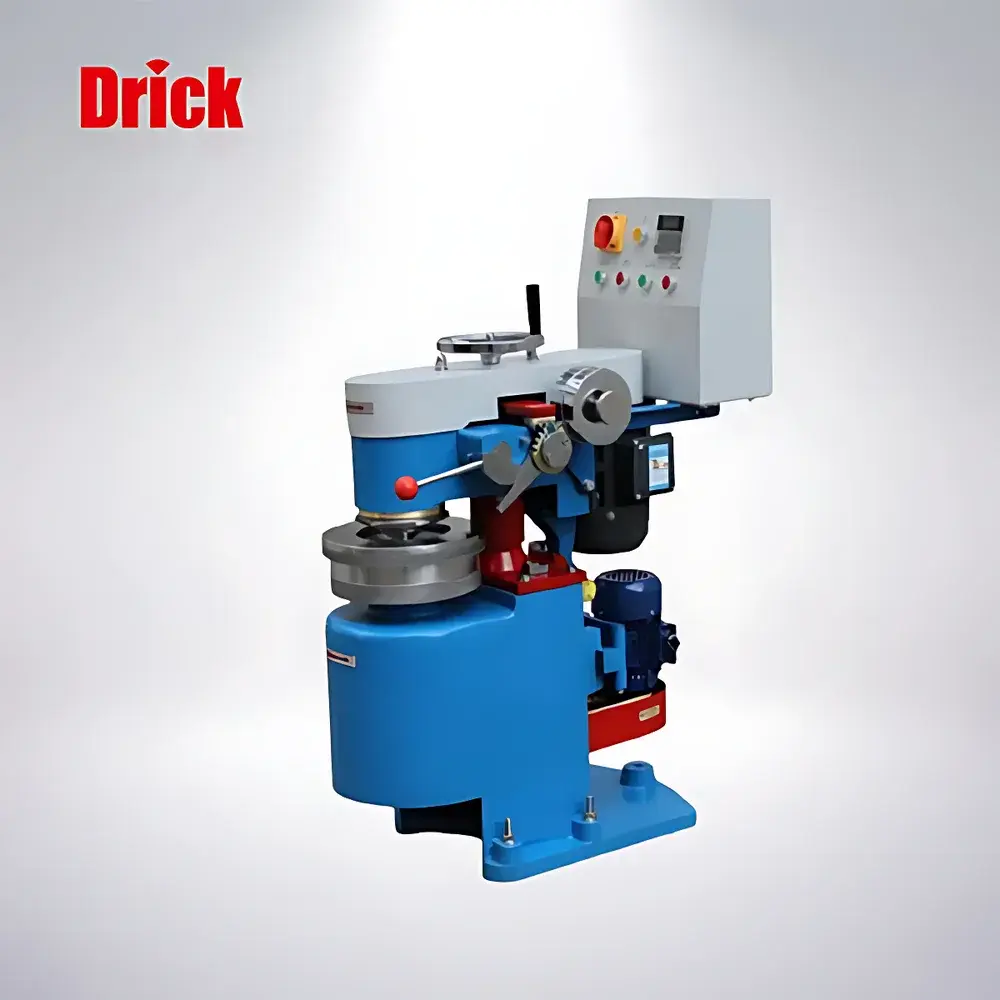
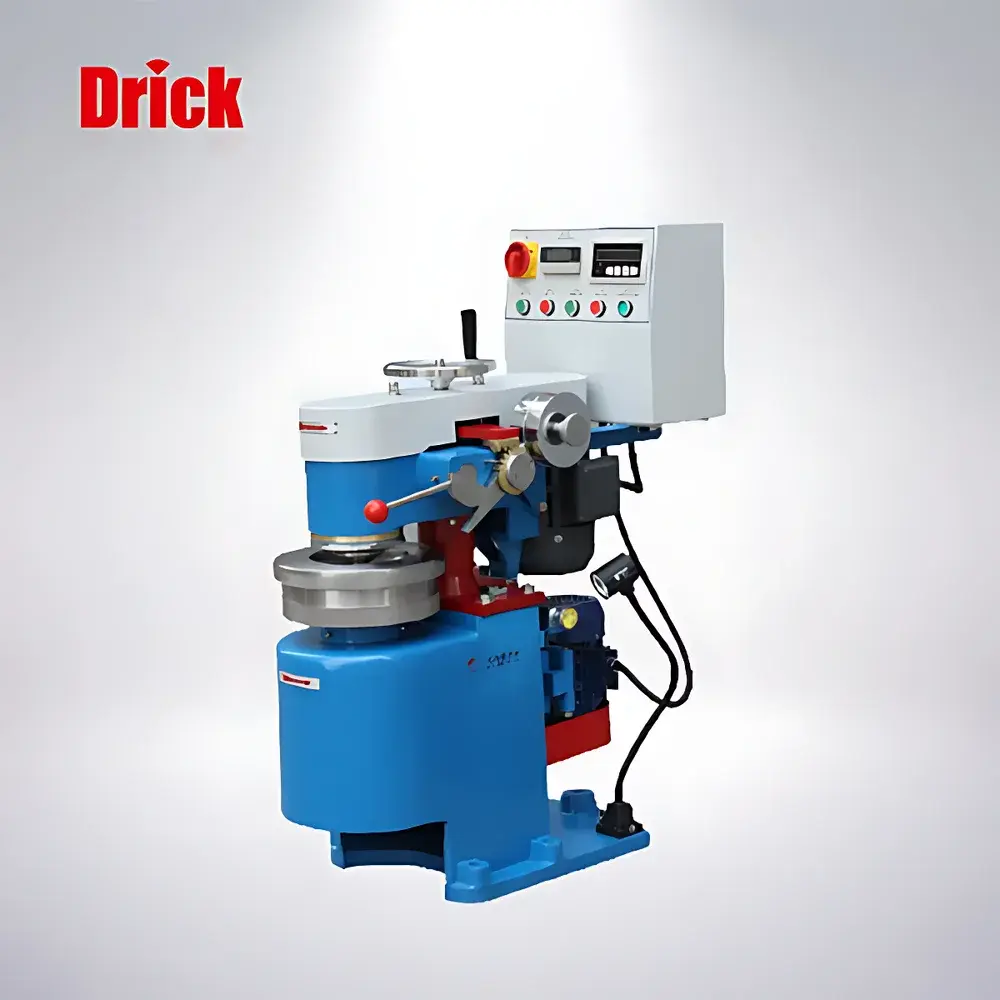
Drick DRK-PFI11 PFI Refiner for Laboratory Pulping and Papermaking Testing
| Brand | Drick |
|---|---|
| Origin | Shandong, China |
| Manufacturer Type | Direct Manufacturer |
| Model | DRK-PFI11 |
| Drum Diameter | 250 mm |
| Rotor Outer Diameter | 200 mm |
| Rotor Height | 50 mm |
| Blade Thickness | 5 mm |
| Rotor Motor Power | 1.1 kW / 380 V |
| Beater Gap Adjustment Range | 0–25 mm |
| Slurry Tank Motor | 370 W / 380 V |
| Counter Range | 0–999,999 revolutions |
| Slurry Consistency | 5–50% (w/w) |
| Oven-Dry Fiber Mass per Run | 5–30 g (standard: 10 g) |
| Standard Beating Pressures | 3.33 ± 0.1 N/mm, 1.77 ± 0.1 N/mm, and 4.89 ± 0.1 N/mm (per mm blade length) |
| Dimensions (L×W×H) | 860 × 450 × 1100 mm |
| Net Weight | 251 kg |
| Gross Weight | 310 kg |
Overview
The Drick DRK-PFI11 PFI Refiner is a precision-engineered laboratory-scale refining instrument designed specifically for standardized pulping and beating operations in paper science research and quality control laboratories. It operates on the principle of controlled mechanical fibrillation—where a rotating fly-knife rotor engages with a stationary smooth beater bowl under precisely regulated gap and pressure conditions. This configuration generates shear, compression, and impact forces that replicate industrial refining action at a microscale, enabling reproducible fiber development critical for evaluating pulp freeness (CSF), drainage rate, fiber flexibility, and sheet formation behavior. The DRK-PFI11 strictly conforms to ISO 5264-2:1979 (“Pulps — Laboratory beating — Part 2: PFI mill method”), as well as TAPPI T 248 “Standard Method for Laboratory Beating of Pulp Using the PFI Mill”, ensuring full traceability and inter-laboratory comparability of test results.
Key Features
- Rigid cast-iron base structure with vibration-damping design ensures long-term mechanical stability and minimal operational noise during high-torque refining cycles.
- Three pre-calibrated standard beating pressure configurations (3.33, 1.77, and 4.89 N/mm per mm blade length) allow rapid switching between defined mechanical intensity levels without recalibration.
- Manually adjustable fly-knife-to-bowl clearance (0–25 mm range) enables fine-tuned control over fiber cutting versus fibrillation balance—critical for simulating different refining strategies (e.g., low-consistency vs. high-consistency refining).
- Digital revolution counter (0–999,999) with high-brightness LED display provides accurate, non-volatile recording of total rotor revolutions—essential for compliance with ISO and TAPPI protocols requiring fixed revolution counts per test.
- Independent dual-motor drive system: 1.1 kW main rotor motor (380 V, 50 Hz) and 370 W slurry tank agitator motor ensure consistent pulp suspension and uniform fiber presentation throughout the beating cycle.
- Quick-access, tool-free disassembly design facilitates thorough cleaning and inspection of the beater bowl, rotor assembly, and slurry chamber—minimizing cross-contamination between samples and supporting GLP-aligned lab practices.
Sample Compatibility & Compliance
The DRK-PFI11 accommodates a wide range of wood-based and non-wood pulps—including kraft, sulfite, mechanical, CTMP, and recycled fiber suspensions—at concentrations from 5% to 50% (w/w). Each test uses a precisely weighed oven-dry fiber mass (5–30 g, standard 10 g), ensuring statistical robustness across replicate runs. Its mechanical geometry—including 250 mm inner bowl diameter, 200 mm rotor OD, and 5 mm blade thickness—is dimensionally aligned with ISO 5264-2 Annex A specifications. All pressure calibration data are traceable to national metrology standards. The instrument supports full documentation of operating parameters (gap setting, revolutions, consistency, dry mass, ambient temperature/humidity) required for audit-ready reporting under ISO/IEC 17025-accredited testing environments.
Software & Data Management
While the DRK-PFI11 operates via hardware-based digital control (no embedded OS or proprietary software), its interface is fully compatible with external LIMS and ELN platforms via RS-232 or optional USB-to-serial adapter. All critical process variables—including actual revolutions, elapsed time, motor status, and manual gap position—are logged in real time by external acquisition systems. For labs operating under FDA 21 CFR Part 11 or EU Annex 11 requirements, third-party validation packages are available to establish electronic record integrity, user access controls, and audit trail functionality. Raw data export (CSV/TXT) supports statistical analysis in JMP, Minitab, or Python-based QA workflows.
Applications
- Standardized PFI beating for CSF (Canadian Standard Freeness) and Schopper-Riegler (SR) testing per ISO 5267-1 and TAPPI T 227.
- Controlled fiber modification studies: quantifying changes in fiber length distribution (fiber analyzer), fines content (screening), and water retention value (WRV) post-refining.
- Correlation modeling between refining energy input (revolutions × torque) and paper strength properties (tensile index, burst index, tear resistance).
- Development and validation of alternative pulping processes (e.g., enzymatic pretreatment, bio-refining) where mechanical beating serves as a benchmark comparator.
- QC testing of commercial pulp lots against internal specifications or supplier agreements using fixed-revolution protocols.
FAQ
What standards does the DRK-PFI11 comply with?
It complies with ISO 5264-2:1979, TAPPI T 248, and related pulp characterization standards including ISO 5267-1 (freeness) and ISO 5263-1 (consistency determination).
Can the DRK-PFI11 be used for high-consistency refining?
Yes—it supports slurry concentrations up to 50% w/w, making it suitable for both low-consistency (LC) and medium-consistency (MC) laboratory refining simulations.
Is calibration certification included with delivery?
Each unit ships with a factory-verified mechanical gap gauge and pressure verification report; third-party ISO/IEC 17025 calibration services are available upon request.
How is operator safety ensured during operation?
The machine features a fully enclosed rotor housing with interlocked safety guard, emergency stop button, and manually actuated knife positioning—eliminating exposure to rotating components during setup or cleaning.
What maintenance is required for long-term accuracy?
Annual verification of gap setting repeatability, rotor concentricity, and motor torque output is recommended; all wear parts (blades, bowl liner) are replaceable and documented in the technical manual.
Related Products