
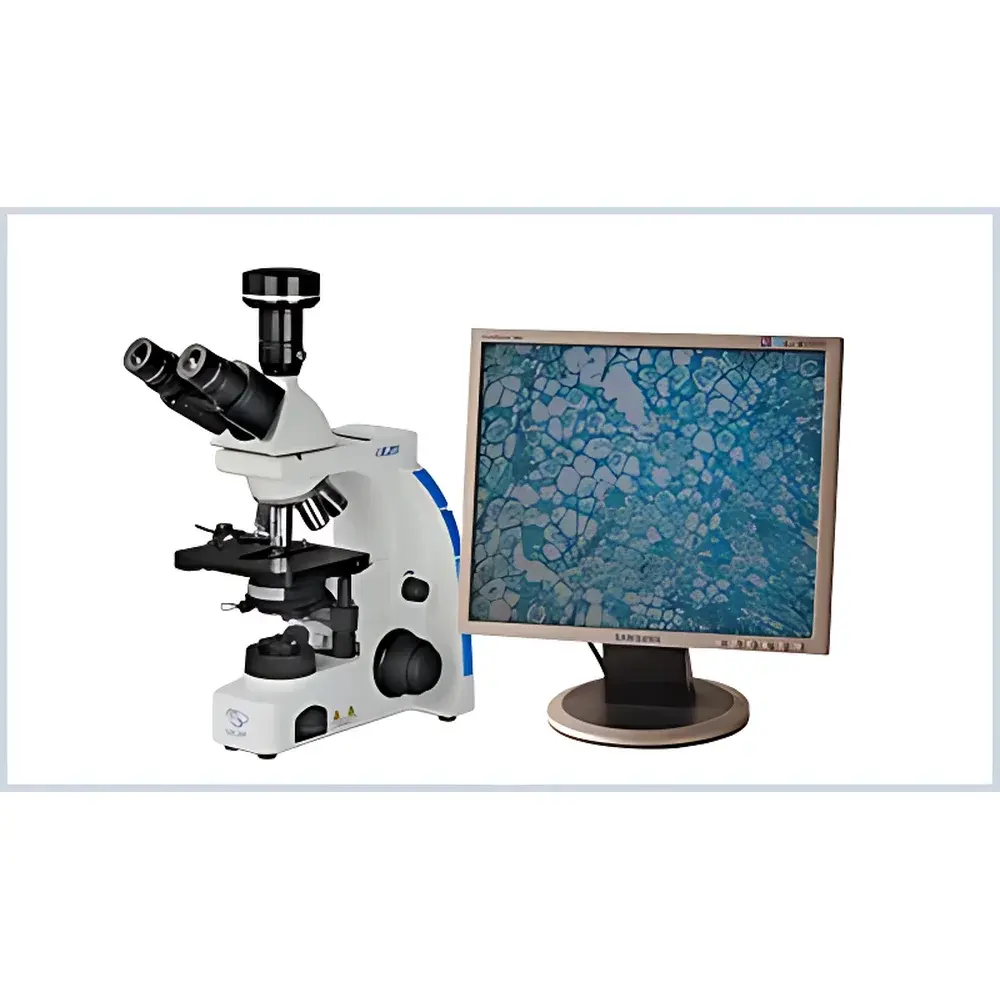
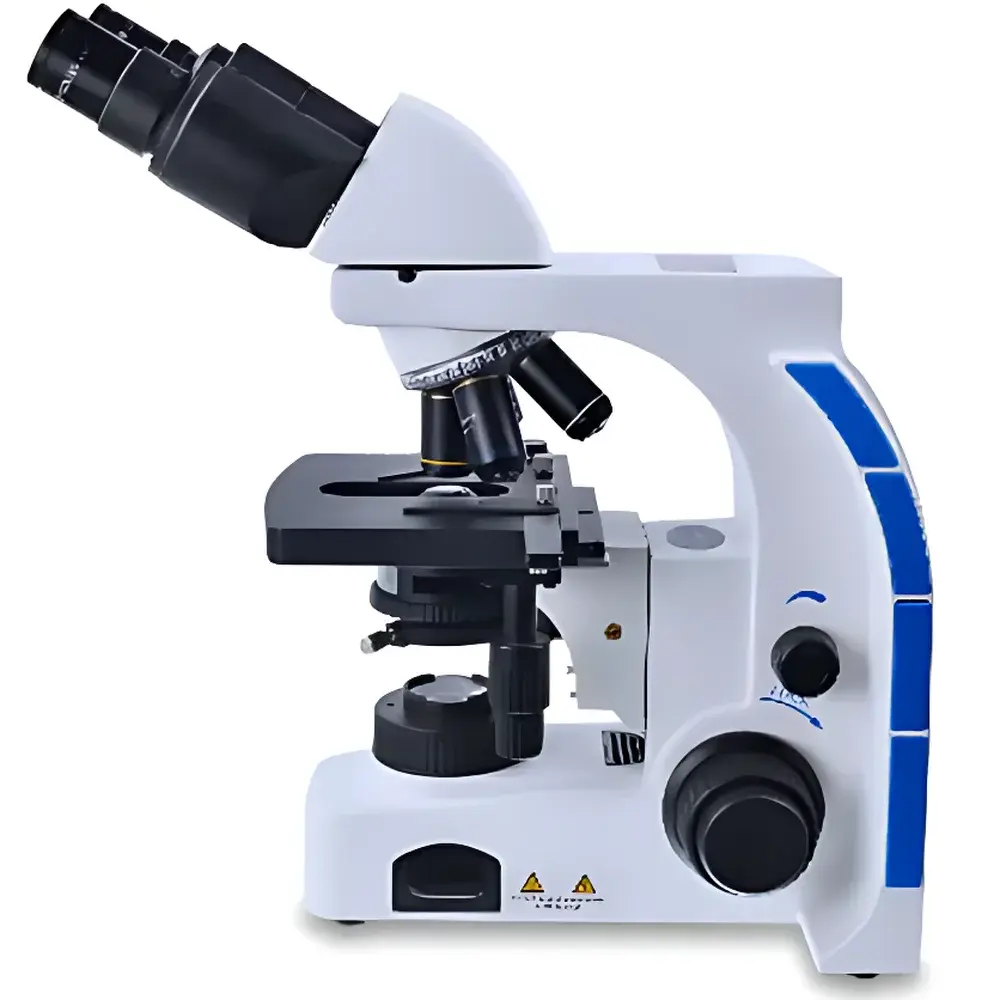
DS BS500 Biological Microscope
| Brand | DS |
|---|---|
| Origin | Beijing, China |
| Microscope Type | Upright |
| Eyepiece Configuration | Binocular |
| Optical System | UCIS Infinity-Corrected Achromatic Optical System |
| Standard Objective Set | 4×, 10×, 40×, 100× (oil immersion) |
| Eyepieces | Widefield 10×/Φ20 mm (high-eye-point) |
| Interpupillary Distance | 48–75 mm |
| Tilting Angle | 30° |
| Rotatable Head | 360° |
| Diopter Adjustment | ±5 |
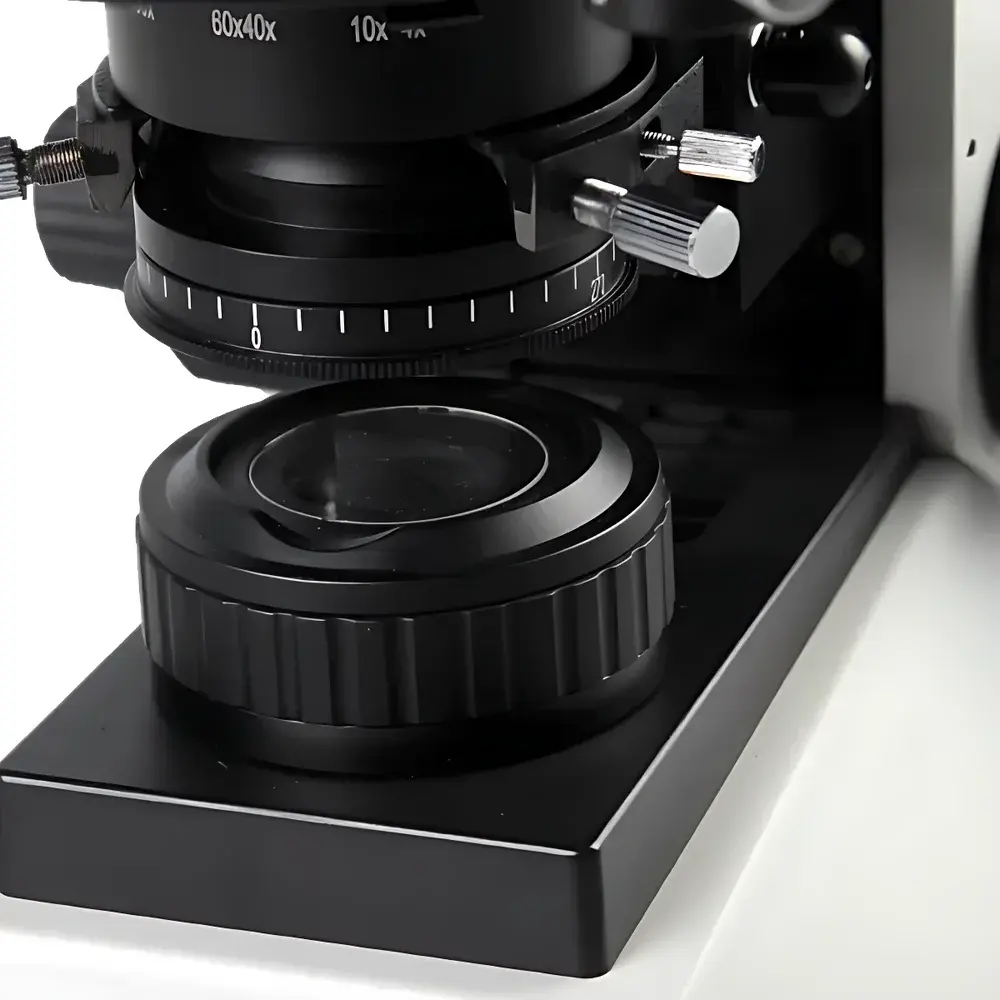
| Condenser | Abbe condenser, NA 1.25 |
| Stage | Mechanical stage, 156 × 138 mm, 76 × 54 mm travel |
| Nosepiece | Four-position internal centering turret |
| Illumination | 6 V / 20 W or 30 W halogen lamp with intensity control |
| Filter Set | Blue filter included |
| Accessories | Dust cover, immersion oil, 1 MP digital imaging module |
Overview
The DS BS500 Biological Microscope is an upright, infinity-corrected, achromatic optical instrument engineered for routine and advanced life science applications in academic teaching laboratories, clinical diagnostics, pharmaceutical quality control, and basic biomedical research. It employs the UCIS (Universal Contrast and Infinity System) optical architecture—designed to deliver high-resolution, flat-field, low-aberration imaging across the entire visual field. The system supports Köhler illumination via its NA 1.25 Abbe condenser, ensuring uniform brightness and optimal contrast for both brightfield and optional phase contrast configurations. Its rigid mechanical design, precision-ground optics, and standardized DIN-compliant mounting interfaces ensure long-term alignment stability and compatibility with third-party accessories—including digital cameras, fluorescence modules, and motorized stages.
Key Features
- UCIS infinity-corrected achromatic optical system providing enhanced resolution, chromatic fidelity, and field flatness over conventional finite-conjugate designs
- Binocular observation tube with 30° inclination, 360° rotation, and adjustable interpupillary distance (48–75 mm) for ergonomic user positioning
- Diopter compensation (±5) on both eyepieces to accommodate individual visual acuity differences
- Standard widefield high-eye-point 10×/Φ20 mm eyepieces—compatible with eyeglasses and enabling extended observation sessions
- Four-position internal centering nosepiece with precise click-stop indexing for repeatable objective alignment
- Reversible mechanical stage (156 × 138 mm) with 76 × 54 mm X–Y travel range and coaxial coarse/fine focus controls (2 mm coarse travel, 0.002 mm fine increment)
- Adjustable 6 V / 20 W halogen illumination system with continuous brightness control and integrated blue filter for enhanced contrast in unstained specimens
- Optimized for oil immersion work using the 100×/1.25 NA objective; includes immersion oil and dust cover as standard accessories
- Integrated 1-megapixel digital imaging module supporting static capture and time-lapse acquisition via USB 2.0 interface
Sample Compatibility & Compliance
The DS BS500 accommodates standard 1 mm-thick glass microscope slides (76 × 26 mm) and coverslips (0.13–0.17 mm), supporting common specimen preparation methods including wet mounts, stained histological sections, bacterial smears, and live-cell suspensions in chambered slides. Its optical path is compatible with ISO 8578-compliant objectives and adheres to DIN 6123-1 specifications for eyepiece field numbers and tube lens focal length (200 mm). While not certified for GLP/GMP-regulated environments out-of-the-box, the instrument’s stable illumination, calibrated focus mechanism, and reproducible magnification steps support documentation workflows aligned with ASTM E2877-21 (Standard Guide for Microscopic Examination of Biological Specimens) and ISO/IEC 17025 traceability requirements when paired with validated calibration tools and SOPs.
Software & Data Management
The included 1 MP imaging module operates via vendor-neutral USB 2.0 connectivity and is compatible with cross-platform image acquisition software supporting TIFF, JPEG, and BMP export formats. Metadata embedding (magnification, objective ID, exposure time, timestamp) is supported through compliant drivers. For regulated environments, the system can be integrated into laboratory information management systems (LIMS) via batch-exported CSV logs or custom API extensions. Audit trail functionality—including user login timestamps, image modification history, and acquisition parameter logs—is available through third-party compliant software packages meeting FDA 21 CFR Part 11 requirements for electronic records and signatures.
Applications
- Undergraduate and graduate-level biology instruction: cell morphology, mitosis staging, tissue architecture, and microbial identification
- Clinical microbiology: Gram staining evaluation, yeast/bacterial colony characterization, and peripheral blood smear analysis
- Pharmaceutical QC: excipient particle inspection, tablet coating homogeneity assessment, and dissolution matrix examination
- Botanical and zoological research: pollen grain analysis, insect cuticle structure, and vascular tissue sectioning
- Preclinical pathology support: frozen section screening and intraoperative consultation imaging
- Quality assurance in diagnostic reagent manufacturing: verification of bead-based assay uniformity and lateral flow strip line integrity
FAQ
Is the DS BS500 compatible with fluorescence imaging?
The base configuration does not include fluorescence excitation sources or emission filters; however, the infinity-corrected optical pathway and standardized C-mount adapter port allow integration of aftermarket epi-fluorescence illuminators and filter cubes.
What is the maximum usable magnification with the 100× oil immersion objective?
With a 10× eyepiece and 100× objective, total magnification is 1000×—within the practical resolution limit (~0.2 µm) of visible-light brightfield microscopy under optimal Köhler illumination and immersion oil application.
Can the mechanical stage be upgraded to a motorized version?
Yes—third-party motorized XY stages with serial or USB control interfaces are mechanically and optically compatible, provided they maintain the same stage aperture and Z-clearance specifications.
Does the microscope support digital image calibration for measurement?
Yes—when used with a certified stage micrometer and the included imaging software, pixel-to-micron scaling can be established and saved per objective for quantitative morphometric analysis.
Is service and technical support available outside mainland China?
DS provides international distributor networks with certified field service engineers; warranty coverage and spare parts logistics are administered regionally through authorized partners listed on the official DS Life Sciences website.
Related Products



