
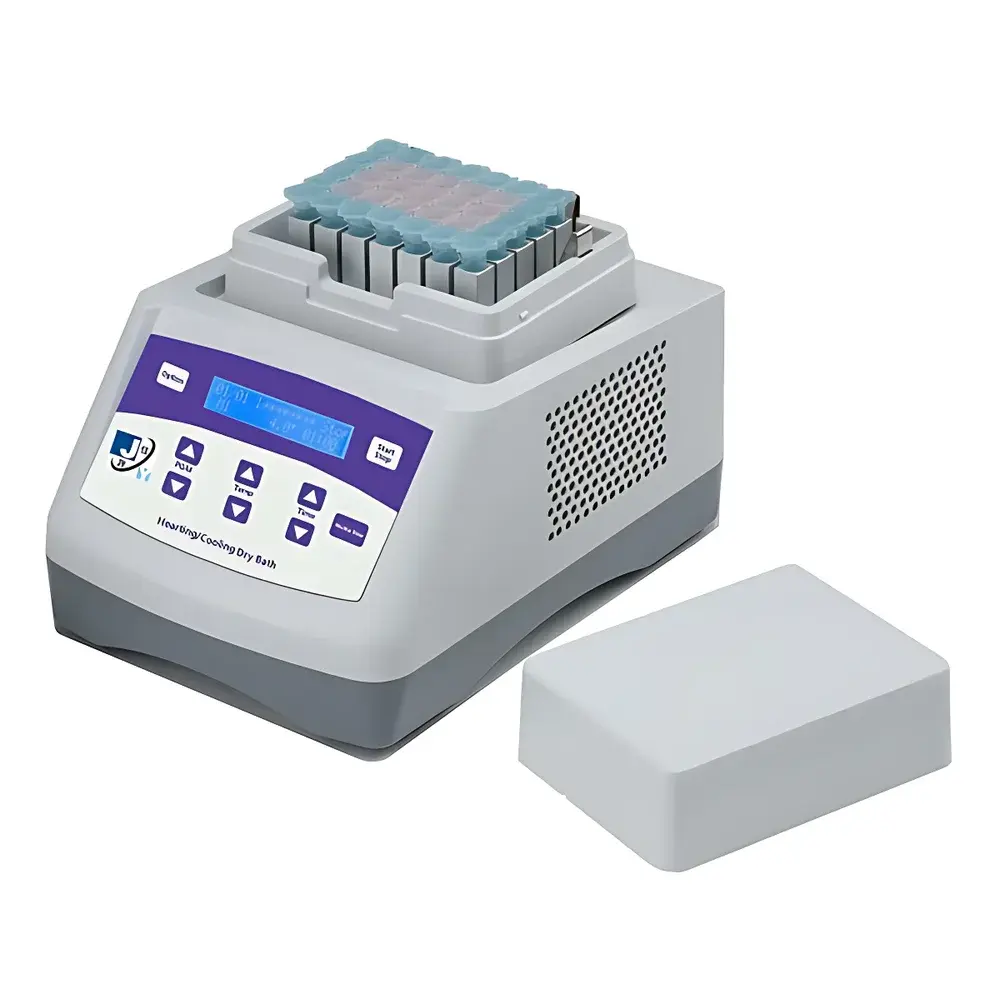
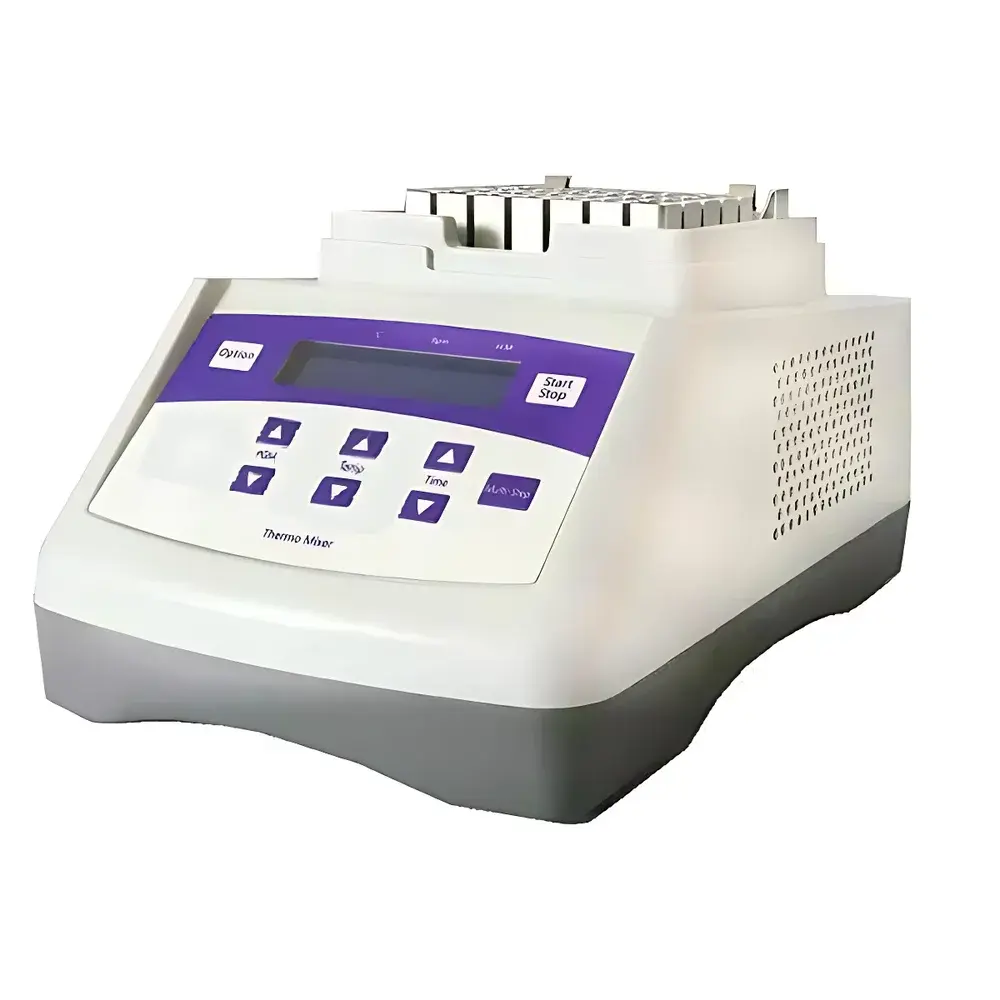
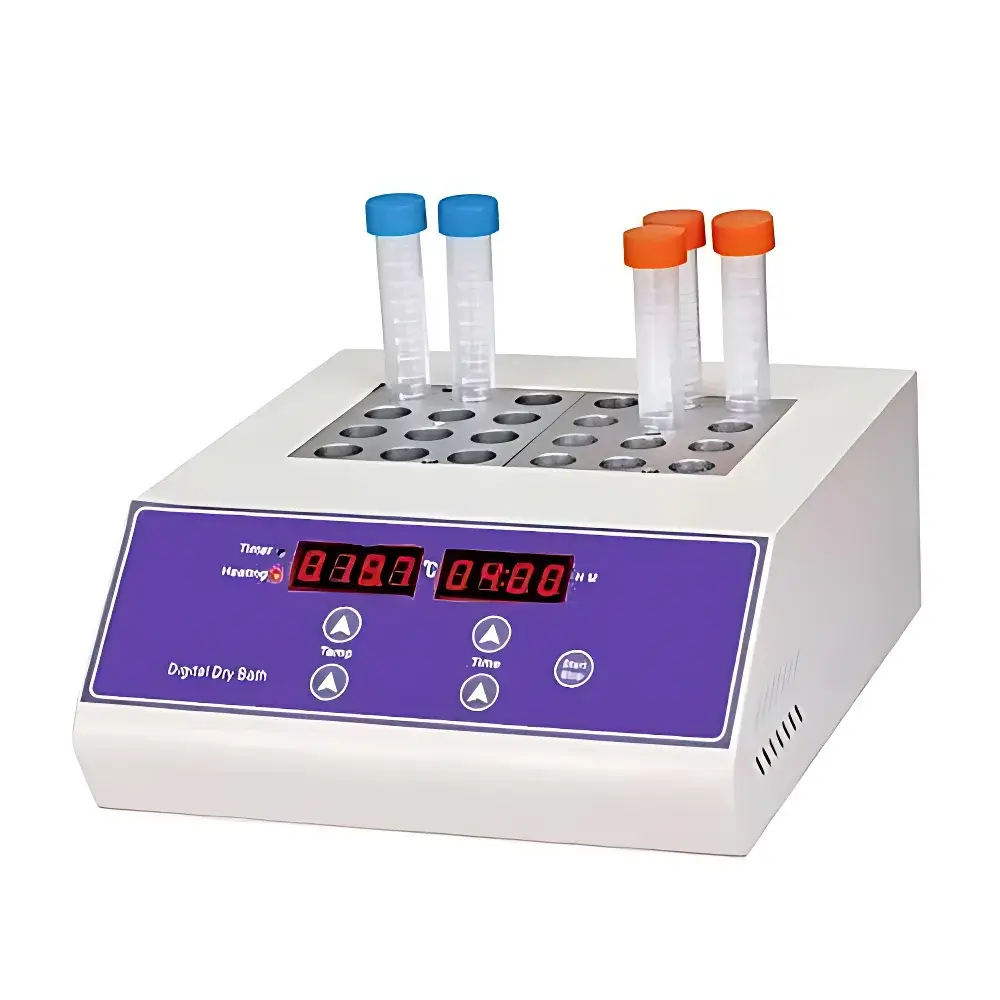
DS JYC-100 Refrigerated Dry Block Heater
| Brand | DS |
|---|---|
| Model | JYC-100 |
| Temperature Range | −10 °C to 100 °C |
| Temperature Accuracy | ±0.1 °C |
| Heating Time | ≤10 min (25 °C → 100 °C) |
| Cooling Time | ≤30 min (ambient → ambient −30 °C, at ≤26 °C ambient) |
| Dimensions | 260 × 195 × 150 mm |
| Net Weight | 4.5 kg |
| Power Consumption | 150 W |
| Display Resolution | 0.1 °C |
| Timer Range | 0–99 h 59 min |
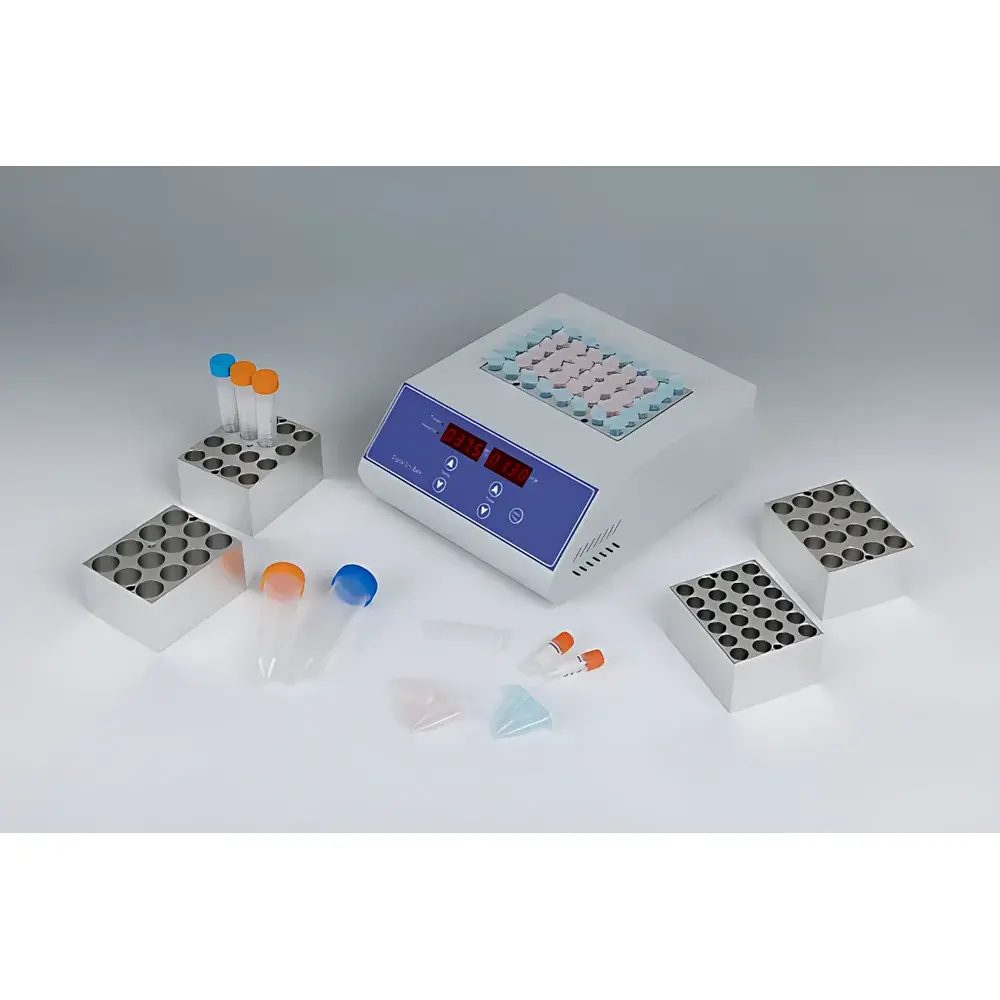
| Module Compatibility | Interchangeable aluminum blocks (0.2–50 mL formats) |
| Safety Compliance | CE-certified with overtemperature protection, auto-failure detection, and audible alarm |
Overview
The DS JYC-100 Refrigerated Dry Block Heater is a microprocessor-controlled, Peltier-based thermal management system engineered for precise, rapid, and uniform temperature control across a wide operational range (−10 °C to 100 °C). Unlike traditional water baths—prone to contamination, evaporation, and inconsistent heat transfer—the JYC-100 employs high-purity aluminum heating/cooling blocks as its primary thermal interface. This dry-block architecture eliminates liquid handling risks while delivering superior thermal stability (≤±0.3 °C at 100 °C), rapid thermal response, and long-term repeatability essential for molecular biology, clinical diagnostics, and quality control workflows. Its dual-mode capability—simultaneous heating and active refrigeration—enables applications requiring both thermocycling pre-conditioning and cold-step stabilization, such as serum coagulation assays, enzyme reaction quenching, and nucleic acid denaturation protocols.
Key Features
- Peltier thermoelectric module enabling bidirectional temperature control (heating + cooling) without external chillers or cryogens
- High-thermal-conductivity anodized aluminum block with precision-machined wells; optimized for minimal inter-well temperature variance (≤0.3 °C at 40 °C)
- 0.1 °C resolution digital display with real-time temperature readout and countdown timer (0–99 h 59 min)
- Integrated safety architecture: overtemperature cutoff, automatic fault detection with audible alarm, and self-diagnostic startup sequence
- Modular design supporting 11 interchangeable block configurations—from 96-well PCR plates (0.2 mL) to 50 mL centrifuge tubes—each rated for continuous operation up to 100 °C
- User-configurable calibration offset per module type to compensate for minor thermal drift across load conditions
- Power-loss recovery function: resumes prior setpoint and timer upon grid restoration, ensuring protocol continuity in unattended runs
- CE-marked construction compliant with IEC 61010-1 for laboratory electrical safety and electromagnetic compatibility
Sample Compatibility & Compliance
The JYC-100 accommodates standard laboratory consumables including microcentrifuge tubes (0.5–2.0 mL), PCR strips, deep-well plates, and serum collection tubes. All aluminum blocks are autoclavable (121 °C, 20 min) and chemically resistant to common decontaminants (e.g., 70% ethanol, 10% bleach). The instrument meets ISO/IEC 17025-relevant requirements for thermal validation of analytical sample preparation steps and supports GLP/GMP documentation needs through traceable temperature logging (when paired with optional RS232/USB data export). While not FDA 21 CFR Part 11–certified out-of-box, its audit-ready features—including tamper-evident calibration logs and time-stamped error records—facilitate integration into regulated QC environments where temperature-critical incubation steps require documented reproducibility.
Software & Data Management
The JYC-100 operates via embedded firmware with no external software dependency. All parameters—including setpoint, ramp rate, hold duration, and calibration offsets—are stored in non-volatile memory. Optional serial (RS232) or USB interface enables connection to third-party LIMS or ELN platforms for automated data capture. When interfaced, the unit transmits timestamped temperature readings at user-defined intervals (1–60 s), along with status flags (e.g., “Stabilized”, “Alarm Active”, “Timer Expired”). Firmware supports firmware update via USB drive, ensuring long-term compatibility with evolving laboratory informatics standards. No cloud connectivity or proprietary drivers are required; raw ASCII data streams conform to ASTM E2500-18 guidelines for instrument-generated measurement records.
Applications
- Serum coagulation testing per CLSI H20-A2: precise 37 °C incubation followed by controlled cooling to 4 °C for clot retraction analysis
- DNA denaturation and annealing in pre-PCR setup, including hot-start Taq activation at 95 °C and rapid cooldown to 4 °C for primer storage
- Enzyme kinetic assays requiring strict thermal staging: e.g., 25 °C activation → 4 °C quenching within <60 s
- Stability testing of reference standards and calibration materials under accelerated thermal stress (−10 °C to 100 °C cycling)
- Cell lysis optimization using temperature-gradient incubation across parallel tube arrays
- QC release testing for pharmaceutical excipients where viscosity-temperature profiles must be assessed per USP
FAQ
What is the maximum cooling capacity relative to ambient temperature?
The JYC-100 achieves ≥30 °C sub-ambient cooling (e.g., 26 °C ambient → −4 °C block) within 30 minutes, verified per IEC 60068-2-14 test conditions.
Can multiple modules be calibrated independently?
Yes—each block type (A–K) supports individual offset calibration via front-panel menu, compensating for geometry-specific thermal lag.
Is the unit suitable for overnight unattended operation?
Yes—integrated overtemperature protection, power-fail recovery, and audible/visual alarm escalation ensure safe extended use per ISO 15197:2013 Annex B guidance.
Does the aluminum block retain residual magnetism that could interfere with magnetic bead protocols?
No—6061-T6 aluminum is non-ferromagnetic and does not generate eddy currents or field distortion during magnetic separation workflows.
How frequently should temperature uniformity be verified?
Per CLSI EP25-A, verification is recommended before first use, after relocation, and at least monthly during routine operation using NIST-traceable PT100 probes placed in ≥3 representative wells.



