
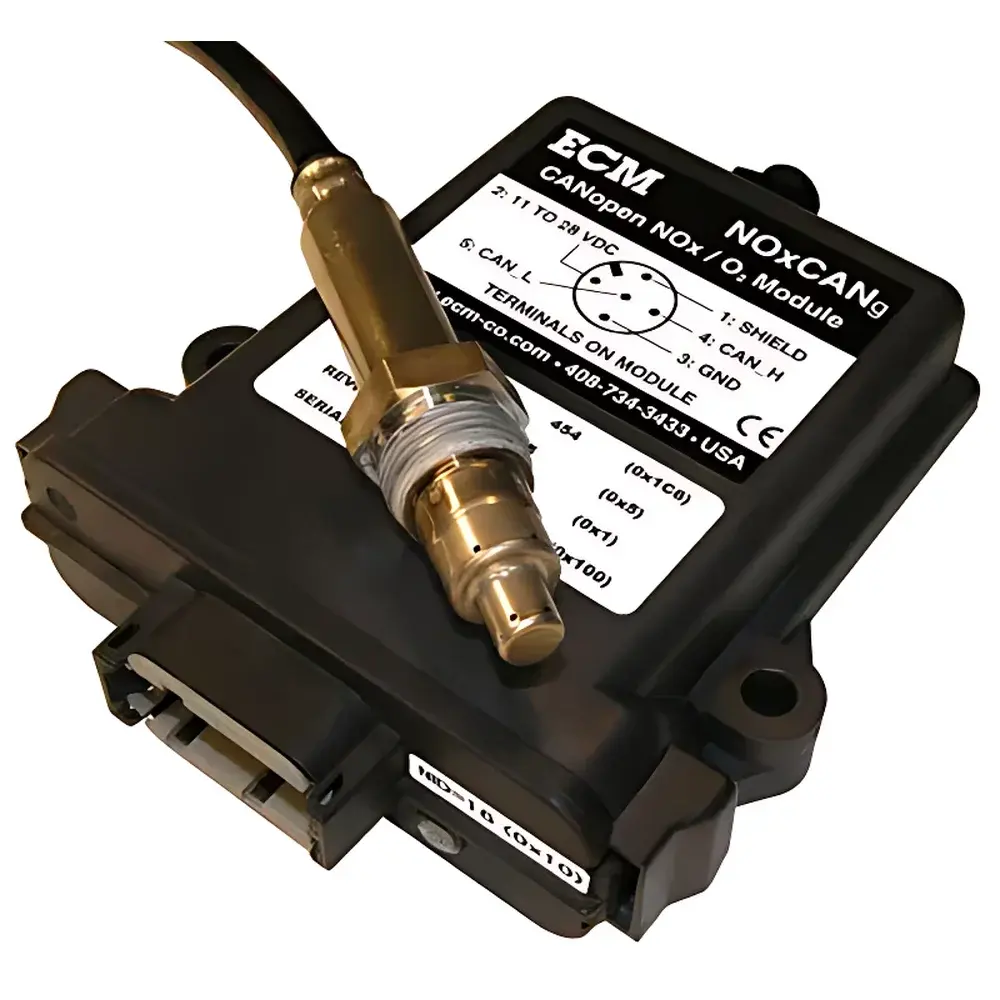
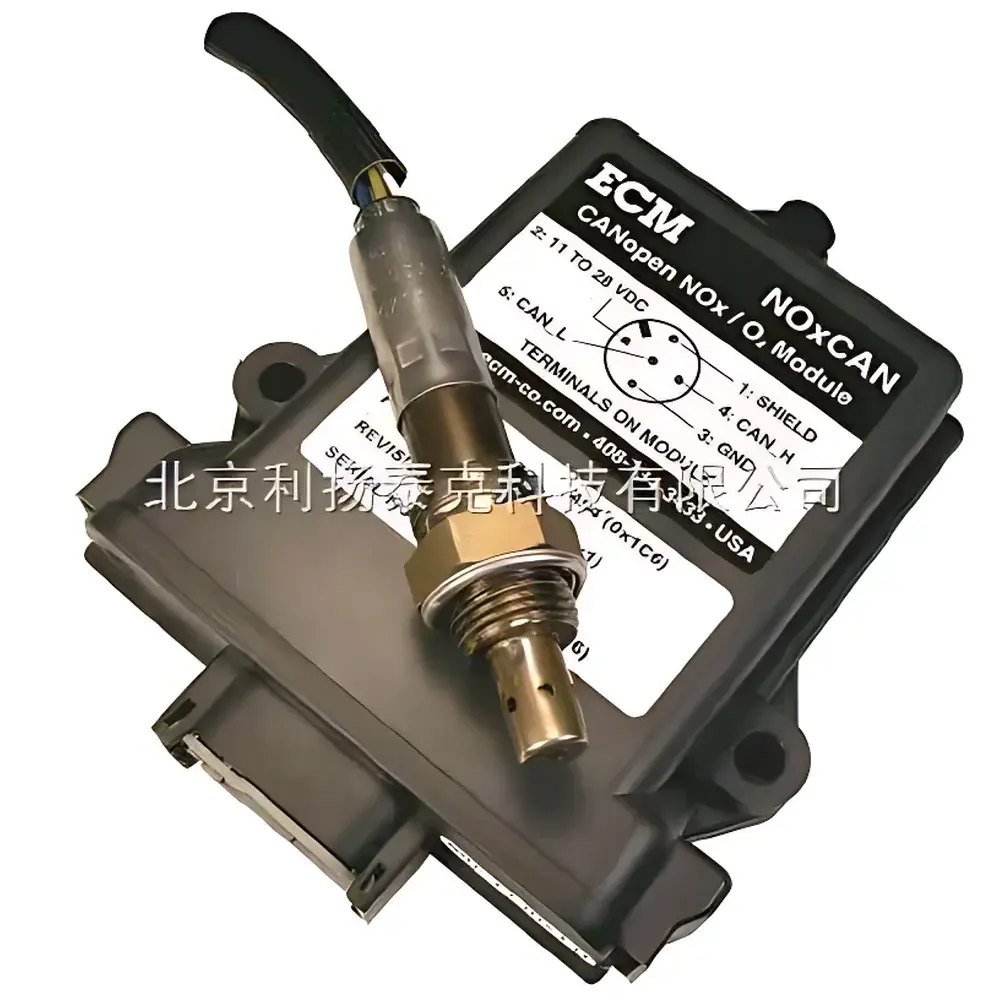
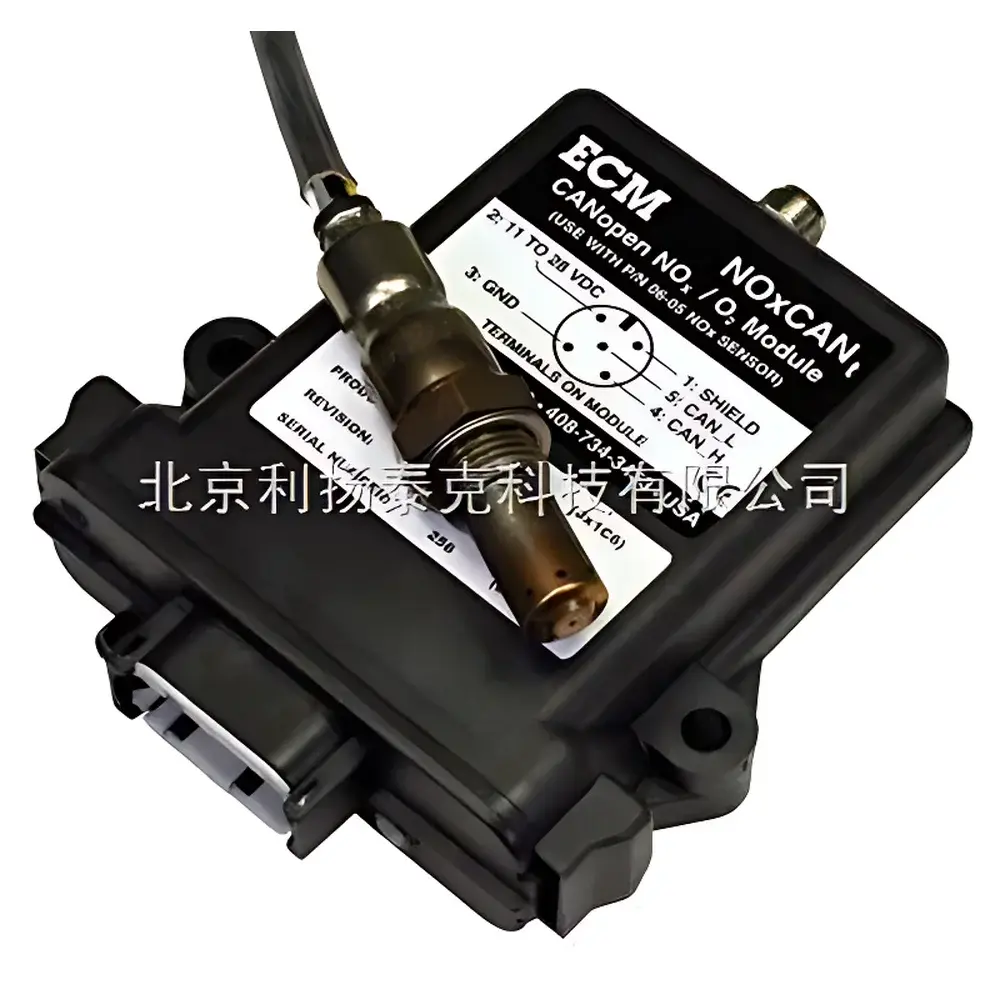
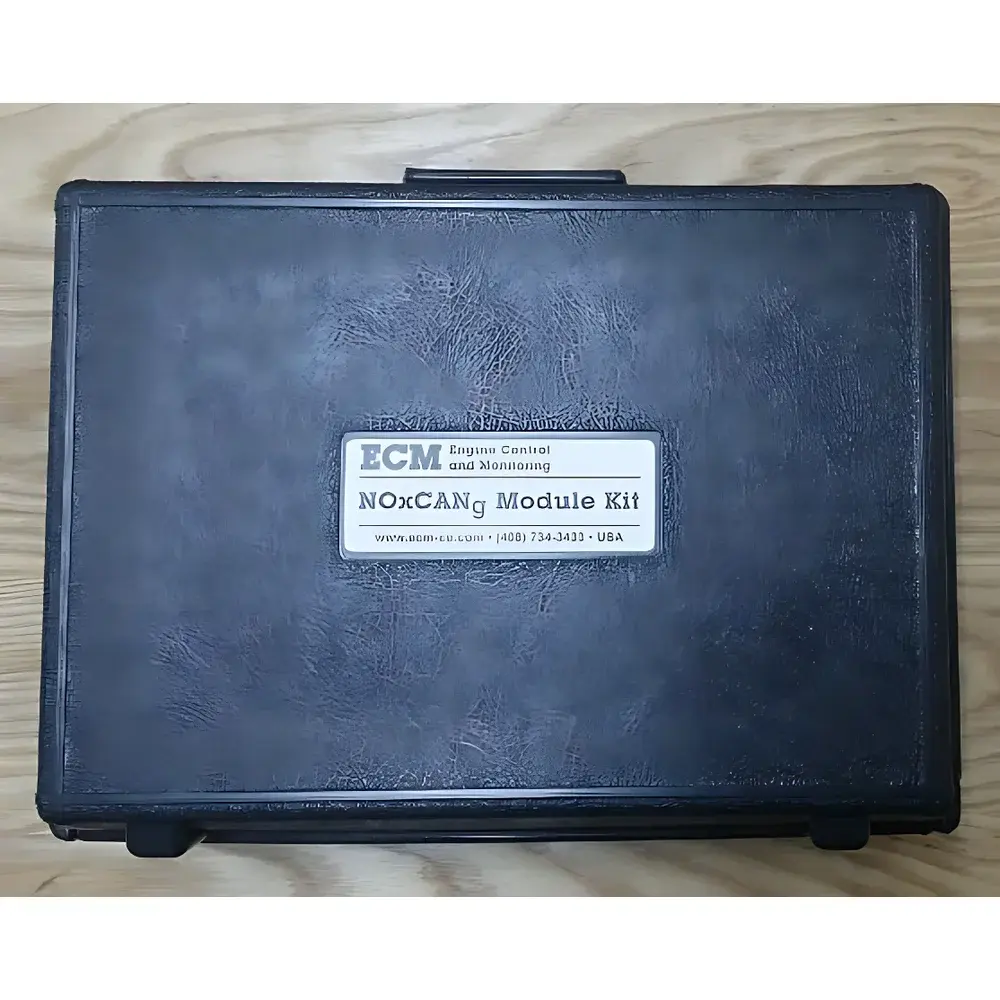
ECM NOxCANg NOx/Lambda/O₂ Measurement Module
| Brand | ECM |
|---|---|
| Origin | USA |
| Manufacturer Type | Authorized Distributor |
| Product Origin | Imported |
| Model | NOxCANg |
| Instrument Type | Online |
| Detection Principle | Electrochemical Sensing |
| Input | 1× NGK-type Ceramic NOx Sensor, 1× Optional Pressure Sensor |
| Range | NOx: 0–5000 ppm (λ > 1) |
| Lambda | 0.40–25 |
| AFR | 6.0–364 |
| O₂ | 0–25% vol |
| Pressure | 0–517 kPa (0–75 psia) |
| Accuracy | NOx: ±15 ppm (0–1000 ppm), ±1.5% FS (other) |
| Lambda | ±0.008 (λ = 1), ±0.016 (λ = 0.8–1.2), ±0.018 (other) |
| AFR | ±0.15 (14.6 AFR), ±0.4 (12–18 AFR), ±1.0 (other) |
| O₂ | ±0.4% (0–2% O₂), ±0.8% (other) |
| Pressure | ±5.2 kPa / ±0.75 psia |
| Response Time | <1 s (NOx), <150 ms (Lambda/AFR/O₂/Φ) |
| Fuel Composition Settings | Adjustable H:C, O:C, N:C, and H₂ ratios |
| CAN Interface | High-Speed CAN per ISO 11898 |
| Configuration | Via CAN bus and PC configuration software (CAN adapter not included) |
| Node ID | User-assignable |
| Dimensions | 145 × 120 × 40 mm |
| IP Rating | IP67 |
| Operating Temperature | −55 °C to +125 °C |
| Sensor Cable | Standard 1 m (2 m optional) |
| Power Supply | 11–28 VDC (AC/DC adapter optional) |
| Sensor Thread | 20 mm × 1.5 mm (NOx), 1/4" NPT (pressure) |
Overview
The ECM NOxCANg is a high-integrity, embedded-grade NOx/Lambda/O2 measurement module engineered for real-time, in-situ combustion exhaust analysis in internal combustion engine development, aftertreatment system validation, and regulatory emissions testing. Based on electrochemical sensing technology, the module interfaces directly with NGK-type ceramic NOx sensors mounted via threaded insertion into exhaust manifolds or downstream of catalytic converters. Its core architecture supports simultaneous, synchronized acquisition of nitrogen oxides (NO + NO2), air-fuel equivalence ratio (Lambda), oxygen concentration (%O2), and optional absolute exhaust pressure — all output via standardized high-speed Controller Area Network (CAN) frames compliant with ISO 11898-2. Unlike benchtop analyzers, the NOxCANg operates as a deterministic edge node: it performs on-board signal conditioning, temperature compensation, and stoichiometric calculation using user-defined fuel composition parameters (H:C, O:C, N:C, and H2 content), enabling traceable, engine-agnostic equivalence ratio determination across gasoline, diesel, ethanol blends, and hydrogen-enriched fuels.
Key Features
- Direct-mount NGK ceramic NOx sensor interface with integrated thermal management for stable operation up to +125 °C ambient
- On-sensor EEPROM storage for factory calibration data, enabling plug-and-play sensor replacement without reconfiguration
- User-configurable CAN Node ID and message arbitration priority — supports daisy-chained deployment of multiple NOxCANg modules on a single CAN bus
- Real-time Lambda calculation with dynamic fuel composition compensation (H:C, O:C, N:C, H2) per ISO 14396 and SAE J1930 standards
- IP67-rated aluminum housing with conformal-coated PCBs, qualified for under-hood and exhaust proximity environments
- Sub-150 ms response time for Lambda, AFR, and O2; <1 s for full NOx range — suitable for transient engine cycle capture (e.g., WLTC, FTP-75)
- Optional analog display head supporting dual-module input with local readout and alarm thresholds
Sample Compatibility & Compliance
The NOxCANg is designed for continuous monitoring of hot, humid, and particulate-laden exhaust streams from light-duty and heavy-duty engines. Its NGK sensor interface meets OEM requirements for durability in exhaust gas environments containing CO, CO2, H2O, SO2, and unburned hydrocarbons. The module complies with electromagnetic compatibility (EMC) requirements per CISPR 25 Class 5 and automotive vibration standards per ISO 16750-3. While not a certified reference method per EPA 40 CFR Part 1065 or EU Regulation (EU) 2017/1151, its measurement uncertainty profiles align with engineering-grade validation protocols used in R&D labs conducting GLP-compliant engine mapping, catalyst light-off studies, and OBD-II strategy verification. Calibration traceability is maintained through sensor EEPROM-stored coefficients and documented zero/span procedures executable via the PC configuration tool.
Software & Data Management
Configuration, calibration, and live data visualization are performed using ECM’s Windows-based NOxCANg Configuration Suite (v3.2+), which supports both manual parameter entry and batch import/export of sensor and engine-specific settings. The software enables full control over CAN message rate (10–100 Hz), diagnostic flag reporting (e.g., sensor fault, temperature out-of-range), and user-defined alarm thresholds. All calibration actions — including zero adjustment and span verification — are logged with timestamp, operator ID, and environmental context (ambient T/P), satisfying basic audit trail requirements for internal QA systems. For integration into test cell DAQ platforms (e.g., ETAS INCA, AVL PUMA), ECM provides open CAN database (.dbc) files and API documentation supporting custom scripting in Python, MATLAB, or LabVIEW. Note: A compatible ISO 11898-compliant CAN interface adapter (e.g., Vector VN1630, Kvaser Leaf Light) is required but sold separately.
Applications
- Real-time NOx and Lambda feedback control in closed-loop SCR and LNT aftertreatment systems
- Engine calibration for lean-burn and stoichiometric strategies across variable fuel compositions
- Exhaust gas recirculation (EGR) rate validation and diagnostics
- Development and certification testing of Euro 7 and US Tier 4 emissions control architectures
- In-vehicle OBD-II monitor readiness checks and fault code correlation (P0420, P0171, P229F)
- Portable emissions measurement systems (PEMS) for on-road RDE compliance assessment
FAQ
Is the NOxCANg module certified for regulatory emissions testing?
No — it is an engineering-grade measurement module intended for development, validation, and diagnostic applications. It is not approved as a primary reference analyzer under EPA 40 CFR Part 1065 or UN ECE R49.
Can the module operate without a PC after initial configuration?
Yes. Once calibrated and configured via CAN, the NOxCANg runs autonomously. All operational parameters are retained in non-volatile memory and persist across power cycles.
What pressure sensor options are supported?
The module accepts any 1/4″ NPT-threaded absolute pressure transducer with 0–517 kPa output and ratiometric or analog voltage (0–5 V) interface. ECM recommends Honeywell ABP series or TE Connectivity MS5837 for optimal thermal stability.
Does the module support CAN FD?
No — it implements classical high-speed CAN (ISO 11898-2) at 500 kbit/s or 1 Mbit/s. CAN FD is not supported in current firmware.
How is sensor drift compensated during long-term operation?
Drift mitigation relies on periodic zero/span calibration using certified gas standards and the built-in EEPROM-stored baseline correction algorithm. No automatic baseline correction is performed during runtime.







