
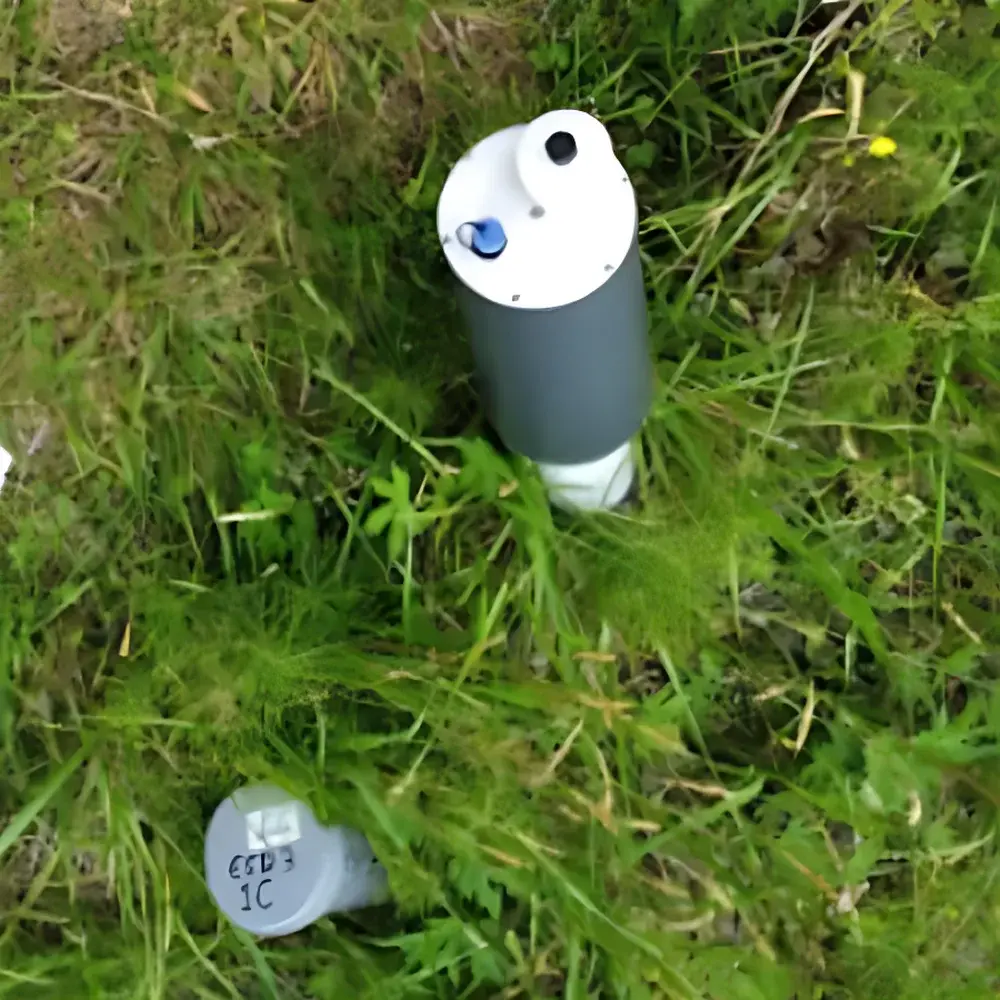
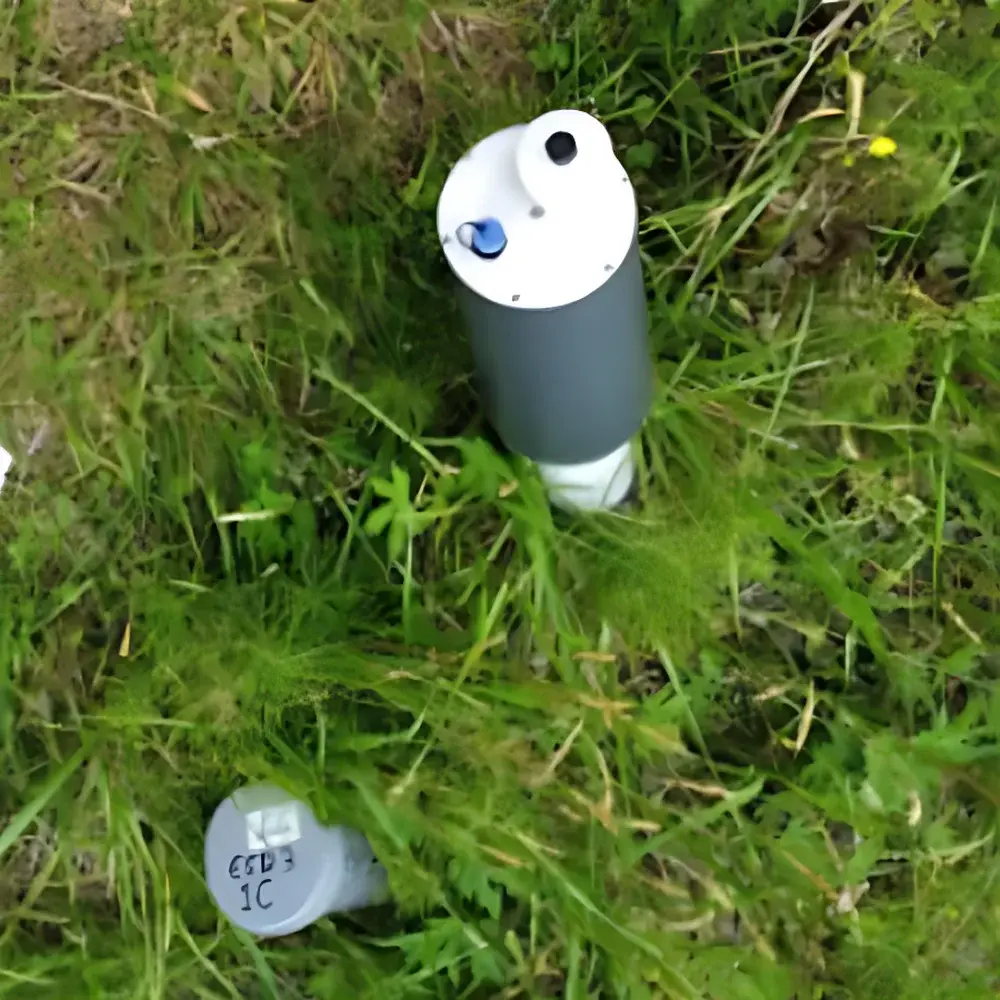
EcoTech AC-21 Automated Minirhizotron Imaging System
| Brand | EcoTech |
|---|---|
| Origin | Austria |
| Model | AC-21 |
| Camera Resolution | 8 MP (3280 × 2464) |
| Optical Resolution | 2500 dpi |
| Image Capture Time | <1 s per frame |
| Root Tube Dimensions | OD 70 mm, ID 64 mm |
| Field of View | 40 mm × 30 mm (full), 20 mm × 20 mm (cropped) |
| Illumination | Dual-row COB LED (3 W each, 330 lm @ 6500 K, adjustable) |
| Power Supply | 24 V DC, max 72 W, standby <1 W |
| System Weight | 4–5 kg |
| Software | MR Editor + In-situ Root Morphology Analysis Suite |
Overview
The EcoTech AC-21 Automated Minirhizotron Imaging System is a field-deployable, fully autonomous root observation platform engineered for long-term, non-destructive monitoring of belowground plant dynamics. It operates on the minirhizotron principle—optical imaging through transparent, vertically installed root tubes embedded in soil—enabling high-fidelity temporal tracking of root growth, turnover, branching architecture, and rhizosphere interactions. Unlike manual systems (e.g., MS-190), the AC-21 integrates a motorized camera carriage that traverses a precision-guided rail inside the root tube, capturing sequential, spatially registered images without human intervention. This eliminates operator-induced positioning variability and ensures consistent sampling geometry across time series—critical for longitudinal studies requiring statistical rigor in root phenotyping, carbon allocation modeling, or drought response assessment.
Key Features
- Fully automated 24/7 imaging cycle with programmable start/stop times, interval scheduling, and battery- or solar-compatible power management.
- 360° circumferential coverage achieved via continuous rotational image acquisition along the full length of the root tube, ensuring no blind zones in lateral root detection.
- 8-megapixel CMOS sensor delivering native resolution of 3280 × 2464 pixels at 2500 dpi optical density—sufficient to resolve fine lateral roots down to ~80 µm diameter under optimal illumination and soil transparency conditions.
- Integrated dual COB LED array (6 W total, 330 lm @ 6500 K) with real-time intensity control—automatically compensating for soil turbidity, moisture gradients, or root exudate accumulation that affect contrast.
- Real-time lens distortion correction applied during acquisition using factory-calibrated polynomial coefficients, eliminating post-processing geometric warping artifacts common in cylindrical tube imaging.
- Self-homing mechanism with optical encoder feedback ensures repeatable zero-position initialization prior to each imaging sequence—essential for pixel-level registration across months or years of data collection.
- MR Editor software enables wireless configuration via tablet interface: defining scan depth ranges, exposure parameters, naming conventions (ICAP format), and metadata tagging (site ID, treatment group, timestamp).
Sample Compatibility & Compliance
The AC-21 is compatible with standard acrylic or quartz minirhizotron tubes (OD 70 mm, ID 64 mm), conforming to ASTM D7928-21 guidelines for subsurface observation conduit installation. Its sealed, IP65-rated camera module withstands ambient temperature fluctuations (−20 °C to +50 °C), humidity up to 95% RH non-condensing, and UV-exposed outdoor deployment when paired with optional weatherproof enclosures. Data integrity meets GLP-compliant documentation standards: all images are timestamped, geotagged (when GPS-enabled tablet used), and stored with immutable acquisition metadata. The system supports audit-trail generation within MR Editor for regulatory submissions aligned with OECD Test Guidelines 208 (Terrestrial Plant Toxicity) and ISO 17403:2019 (Soil biology — Guidance on root observation methods).
Software & Data Management
The bundled MR Editor provides a unified interface for experiment setup, remote diagnostics, and batch image ingestion. Raw TIFF files are saved directly to USB storage with ICAP-named sequences (e.g., “ICAP_20240512_142237_TubeA_Scan047.tif”), enabling traceability and integration into LIMS or ELN platforms. The in-situ root morphology analysis suite performs sub-pixel edge detection, skeletonization, and topological graph reconstruction. Quantitative outputs include total root length (cm), projected area (cm²), surface area (cm²), volume estimation (mm³), diameter-class distribution histograms, and branching frequency per unit length. Multi-frame synchronization allows comparative analysis across timepoints—including root elongation rate calculation via displacement vector mapping—and supports export of CSV, JSON, and annotated PNG formats compliant with FAIR data principles.
Applications
- Long-term root phenotyping in agronomic trials (e.g., maize genotype screening under water-limited conditions).
- Belowground carbon flux estimation via root turnover quantification in forest soil carbon sequestration studies.
- Rhizosphere microbiome–root interaction monitoring in controlled-environment phytobiomes (growth chambers, greenhouses).
- Evaluation of mycorrhizal colonization dynamics and ectomycorrhizal mantle development on fine roots.
- Validation of root architectural models (e.g., CRootBox, OpenSimRoot) using empirically derived topology and growth rate constraints.
- Regulatory ecotoxicology assessments where root inhibition serves as an endpoint (e.g., pesticide leaching impact on perennial grass species).
FAQ
Can the AC-21 be deployed in saturated or clay-rich soils?
Yes—the COB LED illumination and real-time exposure optimization maintain usable contrast in high-moisture, low-light transmission environments; however, image clarity remains dependent on tube-soil contact quality and absence of air gaps.
Is the system compatible with third-party analysis software such as WinRHIZO Tron or RootNav?
Raw TIFF outputs are universally compatible; users may import sequences into external tools, though native MR Editor algorithms are optimized for minirhizotron-specific noise profiles and cylindrical projection geometry.
What maintenance is required for extended field operation?
Annual verification of rail lubrication, LED output calibration (using supplied reference chart), and tube cleaning protocol adherence—no firmware updates require physical access; remote diagnostics and parameter reconfiguration are supported over Wi-Fi.
Does the system support time-lapse video generation?
While designed for discrete high-resolution still capture, MR Editor includes frame-stitching utilities to generate navigable panoramic scroll composites or annotated GIF summaries for presentation purposes.
How is positional accuracy ensured across repeated scans over multiple seasons?
Each scan initiates from a hardware-referenced origin point defined by optical end-stop sensors; combined with encoder-based carriage position logging, spatial repeatability is maintained within ±0.15 mm across >10,000 operational cycles.





