
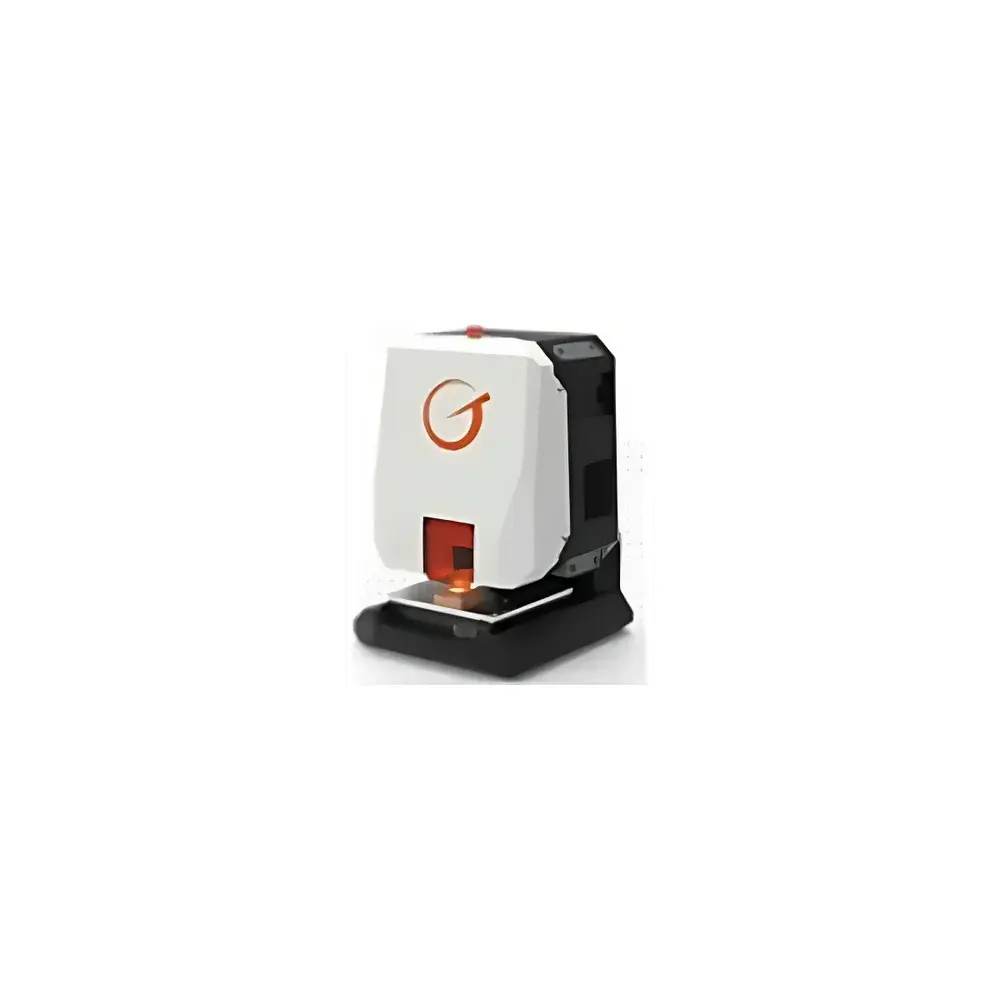
EcoTech miniFly Laboratory LIBS Elemental Analysis System
| Brand | EcoTech |
|---|---|
| Origin | Czech Republic |
| Model | miniFly |
| Type | Desktop Laser-Induced Breakdown Spectroscopy (LIBS) Imaging and Elemental Analyzer |
| Detector | High-Sensitivity CCD Spectrometer |
| Spectral Range | UV–NIR (190–1000 nm) |
| Laser | Air-Cooled DPSS Pulsed Laser (1064 nm, <10 ns pulse width) |
| Repetition Rate | Up to 100 Hz |
| Spatial Resolution | ≤5 µm (with Plan APO microscope objective) |
| Detection Limits | 1–100 ppm (element-dependent) |
| Sample Stage | Motorized X-Y-Z (2-axis horizontal + automated Z-focus) |
| Safety Certification | Class I Laser Product (IEC 60825-1) |
| Dimensions | <400 × 600 × 250 mm³ |
| Weight | <10 kg |
| Imaging | Integrated Digital Microscope with Auto-Stitching |
| Analysis Modes | Single-point, Line Scan, Area Mapping, Depth Profiling |
| Elemental Coverage | H to U (including light elements Li, Be, B, C, N, O, F) |
| Software | Lightigo Control Suite with Real-Time Chemical Imaging, Automated Element Identification, Quantitative Calibration Tools, and Customizable Material Database Support |
| Compliance | Designed for GLP-compliant workflows |
Overview
The EcoTech miniFly Laboratory LIBS Elemental Analysis System is a compact, desktop-grade laser-induced breakdown spectroscopy (LIBS) platform engineered for rapid, non-contact, multi-elemental characterization of solid materials. Unlike conventional XRF or SEM-EDS systems, miniFly utilizes nanosecond-pulsed laser ablation to generate transient microplasmas on sample surfaces; emitted atomic and ionic line spectra are collected in real time across the full UV–NIR range (190–1000 nm) via a high-resolution CCD spectrometer. This enables simultaneous detection of all elements—from hydrogen to uranium—including light elements (Li, Be, B, C, N, O, F) that are inaccessible to many vacuum-dependent techniques. The system integrates a precision digital microscope with motorized XYZ stage control, allowing sub-5 µm spatial resolution imaging and automated mosaic stitching for extended-area analysis. Its modular architecture supports seamless adaptation from academic research labs to industrial QA/QC environments—without requiring vacuum chambers, conductive coating, or extensive sample preparation.
Key Features
- Real-time elemental imaging with spectral acquisition at up to 100 Hz repetition rate
- Integrated Plan APO-corrected digital microscope with dual-mode illumination (brightfield & coaxial)
- Motorized X-Y stage and automated Z-axis focusing for reproducible positioning and depth profiling
- Class I laser safety certification (IEC 60825-1), eliminating need for interlocked enclosures or laser safety officers
- Full UV–NIR spectrometer with high signal-to-noise ratio CCD detector and thermoelectric cooling
- Diode aiming laser for precise ablation spot targeting and visual alignment
- Compact footprint (<400 × 600 × 250 mm³) and low mass (<10 kg) for benchtop deployment in space-constrained laboratories
- Modular expansion support: gas-purged ablation cell, robotic sample handling, Profinet/Ethernet industrial interface, and near-field/far-field optical configurations
Sample Compatibility & Compliance
The miniFly Laboratory system accommodates a broad range of solid samples—including metals, alloys, ceramics, geological specimens, polymers, thin films, and biological tissues—without conductive coating or vacuum requirements. It operates robustly in ambient air, though optional inert-gas purging (N₂ or Ar) enhances sensitivity for light elements and reduces oxide interference. All hardware and software components are designed in accordance with ISO/IEC 17025 guidelines for testing laboratories. The Lightigo control software supports configurable audit trails, electronic signatures, and data integrity features aligned with FDA 21 CFR Part 11 for regulated environments. Instrument calibration protocols follow ASTM E2793–21 (Standard Guide for Use of LIBS in Elemental Analysis) and are compatible with internal standardization methods required under ISO 11885 for environmental solid matrices.
Software & Data Management
The Lightigo Control Suite provides an intuitive, Windows-based interface for instrument operation, spectral acquisition, and quantitative interpretation. Core capabilities include real-time spectral visualization, automatic peak identification against NIST Atomic Spectra Database references, and multivariate regression models for matrix-matched quantification. Users can define custom material databases with certified reference standards, assign spectral libraries to specific sample classes, and export fully annotated reports in PDF, CSV, or HDF5 formats. Data files retain complete metadata—including laser energy, gate delay, integration time, stage coordinates, and environmental conditions—for traceability. The software architecture supports remote monitoring via Ethernet and integrates with LIMS platforms through standardized OPC UA or RESTful API interfaces.
Applications
- Metallurgical QC: Rapid alloy verification, inclusion analysis, and coating thickness estimation via depth profiling
- Geoscience: In-situ mineral mapping of rock thin sections and soil core samples
- Electronics: Solder composition screening, PCB contamination detection, and trace metal impurity analysis
- Pharmaceuticals: Excipient homogeneity assessment and elemental impurity screening per ICH Q3D guidelines
- Forensics: Paint chip layering analysis, glass fragment discrimination, and gunshot residue characterization
- Academic research: Development of calibration-free LIBS models, plasma diagnostics, and fundamental ablation studies
FAQ
Does miniFly require vacuum or inert gas for routine operation?
No—miniFly is optimized for ambient-air operation. Inert gas purging is optional and recommended only when analyzing light elements (e.g., Li, Be, C) or seeking improved signal stability in demanding applications.
Can miniFly quantify elements without certified reference standards?
Yes—semi-quantitative results are generated using internal normalization and NIST-referenced line intensities. Fully quantitative analysis requires matrix-matched standards and user-defined calibration curves.
Is the system compliant with regulatory data integrity requirements?
Yes—the Lightigo software supports 21 CFR Part 11-compliant audit trails, role-based access control, and electronic signature functionality when configured per laboratory SOPs.
What is the typical analysis time per measurement point?
A single spectrum acquisition takes <10 ms at 100 Hz; full area mapping (e.g., 100 × 100 µm at 5 µm step) typically completes in under 2 minutes including stage motion and averaging.
How is spectral calibration maintained over time?
The system includes automated wavelength calibration using built-in Ne/Ar emission lines before each session, with optional daily recalibration routines and drift compensation algorithms.




