
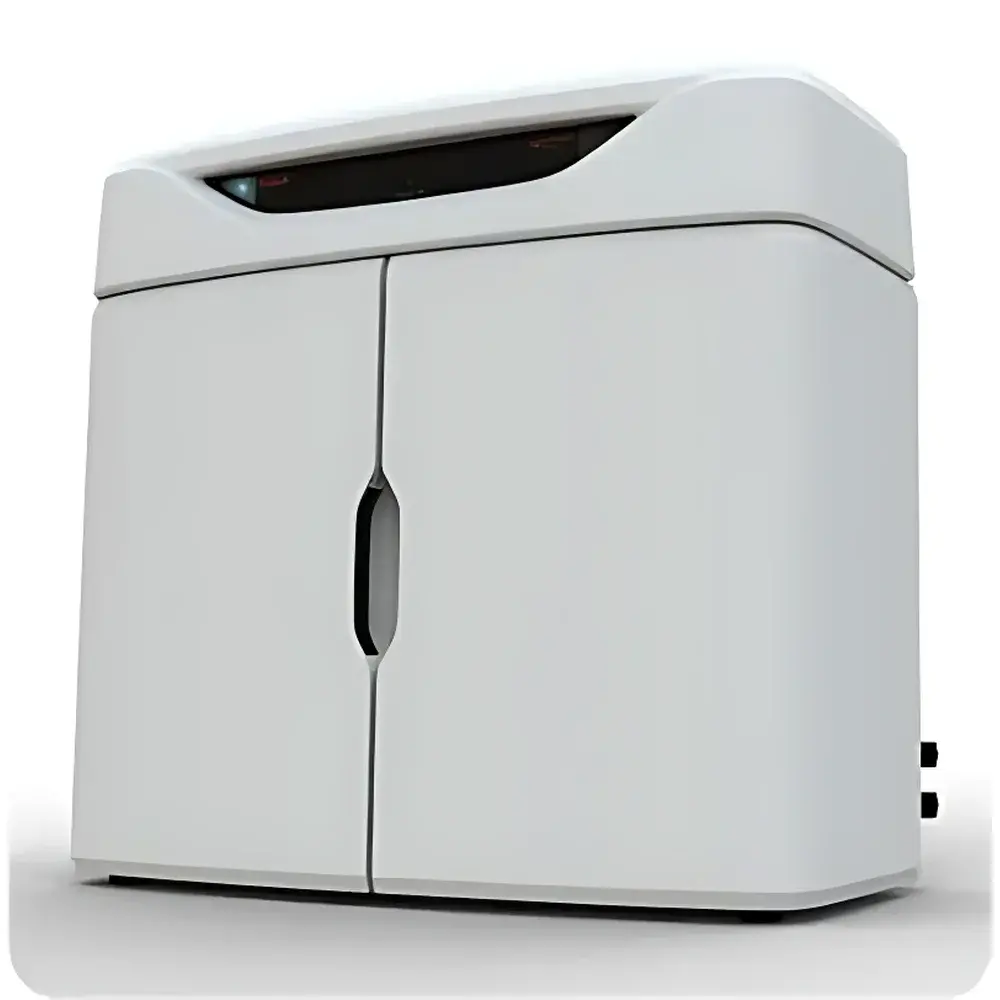
ELGA PURELAB Micra Ultra-Pure Water System
| Brand | ELGA (Veolia) |
|---|---|
| Origin | Shanghai, China |
| Manufacturer Type | OEM Manufacturer |
| Origin Category | Domestic |
| Model | PURELAB Micra |
| Pure Water Grade | Type II (ASTM D1193-20) |
| Resistivity | >2 MΩ·cm (typically >10 MΩ·cm at 25 °C) |
| Heavy Metals & Soluble Silica | <0.1 ppb |
| Total Organic Carbon (TOC) | <50 ppb |
| Microbial/Endotoxin | Not Specified |
| Particulates (>0.1 µm) | RO-grade rejection ≥98% |
| Flow Rate | Up to 10 L/h |
| Feed Water Conductivity | <2000 µS/cm |
| Feed Temperature | 4–40 °C (optimal 15–25 °C) |
| Feed Pressure | 1–2 bar (15–30 psi) |
| Power Input | 100–240 VAC, 50–60 Hz |
| Noise Level | <40 dBA |
| Dimensions (W×D×H) | 505 × 230 × 335 mm |
| Weight (dry) | 15 kg |
Overview
The ELGA PURELAB Micra is a compact, benchtop ultra-pure water system engineered for consistent production of Type II laboratory water per ASTM D1193-20 and ISO 3696:1995 standards. It employs a multi-stage purification architecture—integrating pre-filtration, reverse osmosis (RO), ion exchange, and optional UV oxidation—to transform municipal tap water into high-purity water suitable for general analytical, preparative, and diagnostic applications. Unlike energy-intensive distillation units, the Micra operates on low-voltage DC power with peak consumption of only 50 VA, achieving up to 90% lower energy use than conventional steam distillers. Its modular design eliminates quartz glassware, heating elements, or steam condensers, removing routine descaling, cleaning, and thermal maintenance. The system delivers stable resistivity >2 MΩ·cm (typically >10 MΩ·cm at 25 °C), TOC <50 ppb, and heavy metals/silica <0.1 ppb—meeting or exceeding specifications for reagent-grade water used in spectrophotometry, buffer preparation, media formulation, and HPLC mobile phase dilution.
Key Features
- Continuous, on-demand supply of Type II water at up to 10 L/h—no storage dependency or batch delays
- Integrated RO membrane with ≥98% rejection of particulates (>0.1 µm), divalent ions, colloids, and microorganisms
- Low-power 24 VDC architecture and passive heat dissipation enabling silent operation (<40 dBA) and compatibility with shared lab benches
- Flexible mounting options: floor-standing, countertop, or wall-mounted via standard 1″ BSP threaded interface
- Modular consumables—including dual-stage carbon block, RO membrane, and mixed-bed ion exchange cartridge—with extended service life and tool-free replacement
- User-configurable real-time water quality indicators: visual status LEDs and programmable alarm outputs for resistivity, TOC, or flow interruption
- Feed water adaptability: accepts municipal tap water with conductivity ≤2000 µS/cm, free chlorine ≤0.5 ppm, silica ≤30 ppm, and turbidity ≤10 NTU
Sample Compatibility & Compliance
The PURELAB Micra is validated for use with common laboratory feed sources meeting WHO and local drinking water guidelines. Its purification train ensures compliance with critical regulatory benchmarks for non-critical applications: ASTM D1193-20 Type II, ISO 3696 Grade 2, and CLSI EP23-A for water purity in clinical testing. While not certified for USP Purified Water or EU Ph. Eur. 2.2.47 monographs, its output supports GLP-compliant sample prep, QC reference standard dilution, and instrument rinsing where endotoxin or bacterial enumeration is not required. The system includes no internal recirculation loop or air-exposed reservoir—minimizing biofilm risk—and avoids stainless-steel wetted parts that may leach nickel or chromium under low-conductivity conditions.
Software & Data Management
The Micra operates as a standalone hardware platform without embedded firmware or network connectivity. All operational parameters—including feed pressure, flow rate, and real-time resistivity—are monitored via analog circuitry and displayed through front-panel LED indicators. Optional external alarm relays support integration into facility monitoring systems (e.g., BMS or LabVantage) for event logging. No software installation, license management, or cybersecurity validation is required. Audit trails are maintained manually via logbooks per ISO/IEC 17025:2017 Clause 7.5.2, and calibration records for resistivity sensors follow manufacturer-recommended intervals (typically semi-annual verification using NIST-traceable KCl standards).
Applications
- Preparation of buffers, reagents, and culture media in molecular biology and cell culture labs
- Dilution of standards and calibrants for UV-Vis, AAS, and ICP-OES analysis
- Rinsing of glassware and pipettes prior to trace-metal or organic residue-sensitive assays
- Mobile phase make-up for HPLC and UHPLC systems where Type II water is specified
- Feed water for downstream ultrapure systems (e.g., PURELAB Option or CENTRA platforms)
- General-purpose washing and equipment cooling in teaching and industrial QA/QC laboratories
FAQ
What feed water quality is required for optimal performance?
The Micra requires potable tap water with conductivity ≤2000 µS/cm, free chlorine ≤0.5 ppm, calcium hardness ≤250 ppm (as CaCO₃), silica ≤30 ppm, turbidity ≤10 NTU, and temperature between 4–40 °C (15–25 °C preferred).
Can the Micra produce water compliant with USP Purified Water or EP Water for Injection (WFI) standards?
No. The PURELAB Micra is designed for Type II water per ASTM D1193. It does not incorporate distillation, ultrafiltration, or endotoxin-retentive membranes required for pharmacopeial grades.
How often must consumables be replaced?
Carbon prefilter: every 6 months or 1000 L; RO membrane: every 12–24 months depending on feed quality; ion exchange cartridge: every 6–12 months or upon resistivity drop below 2 MΩ·cm.
Is the system compatible with third-party water storage tanks?
Yes. It connects via standard 1″ BSP male thread and supports gravity-fed or pressurized tank configurations with air-gap discharge.
Does the Micra require annual certification or third-party validation?
Not inherently. However, users operating under ISO/IEC 17025, GLP, or GMP frameworks should perform periodic verification of resistivity, TOC, and microbial content per their internal SOPs and accreditation body requirements.



