
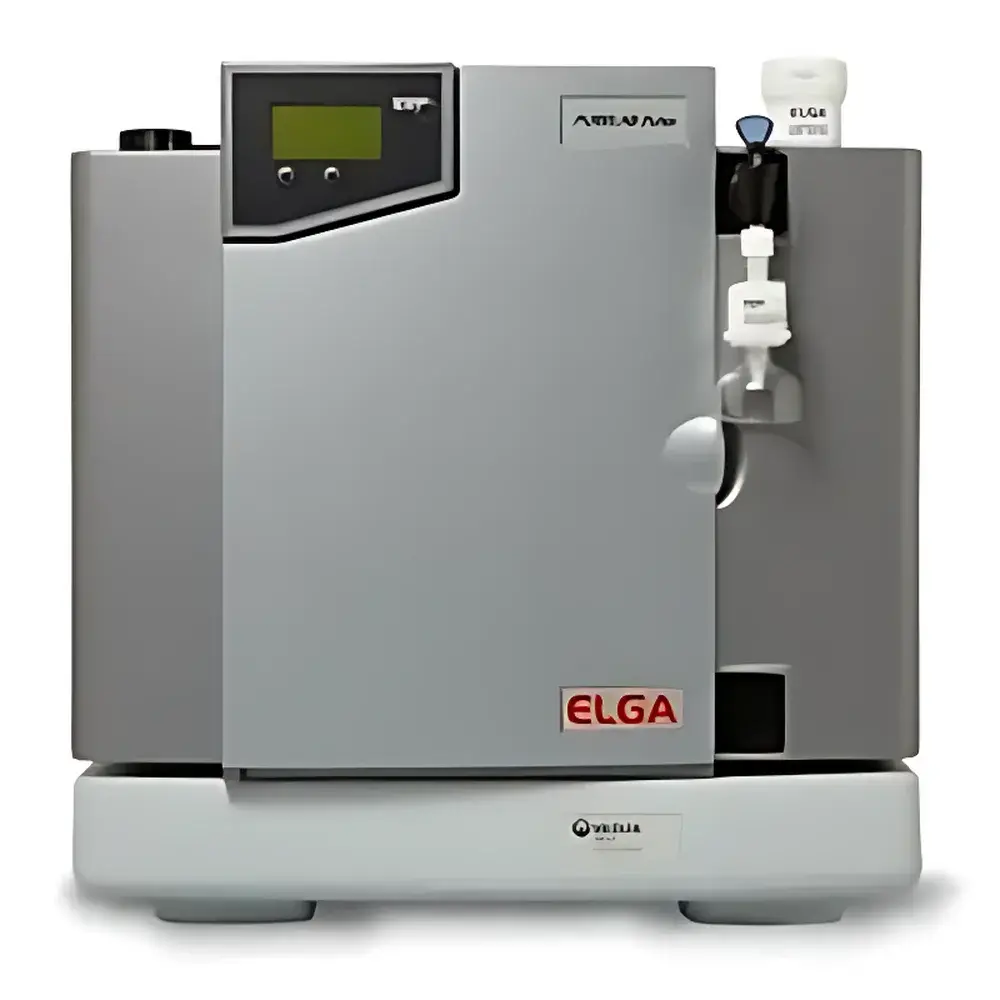
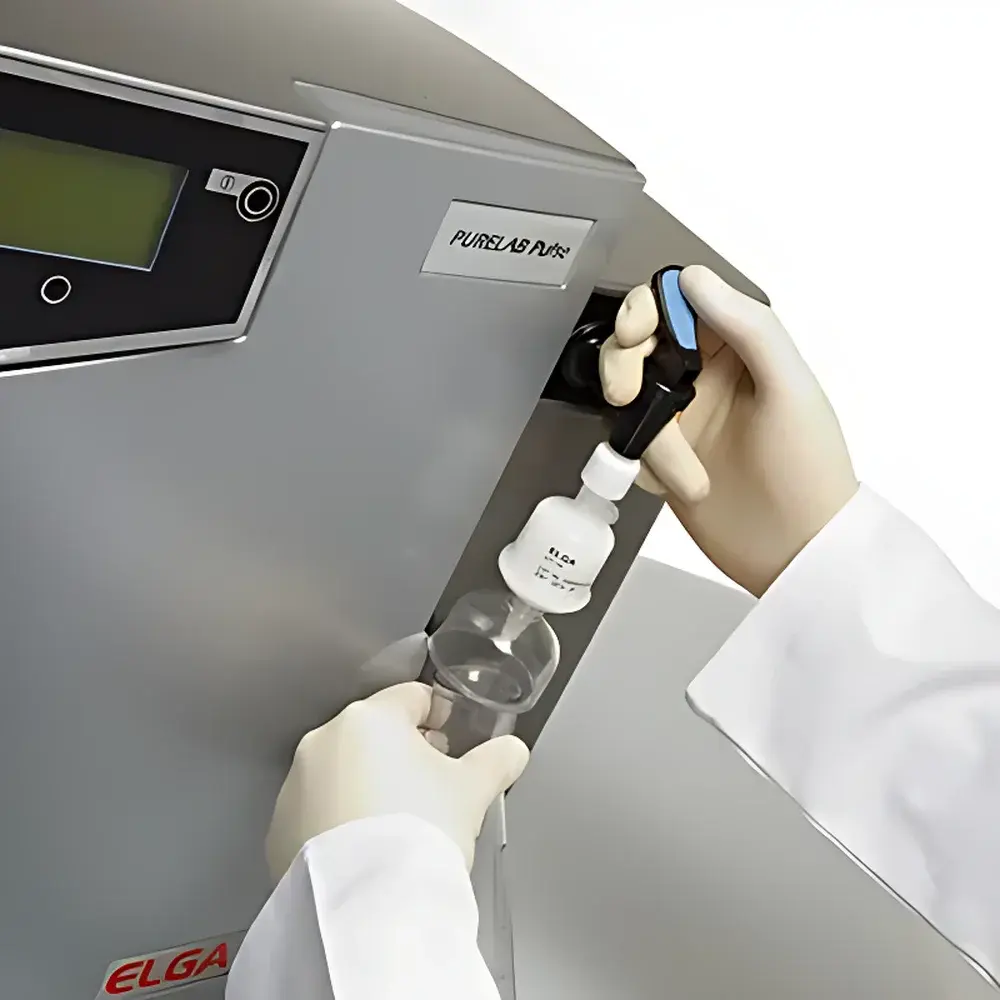
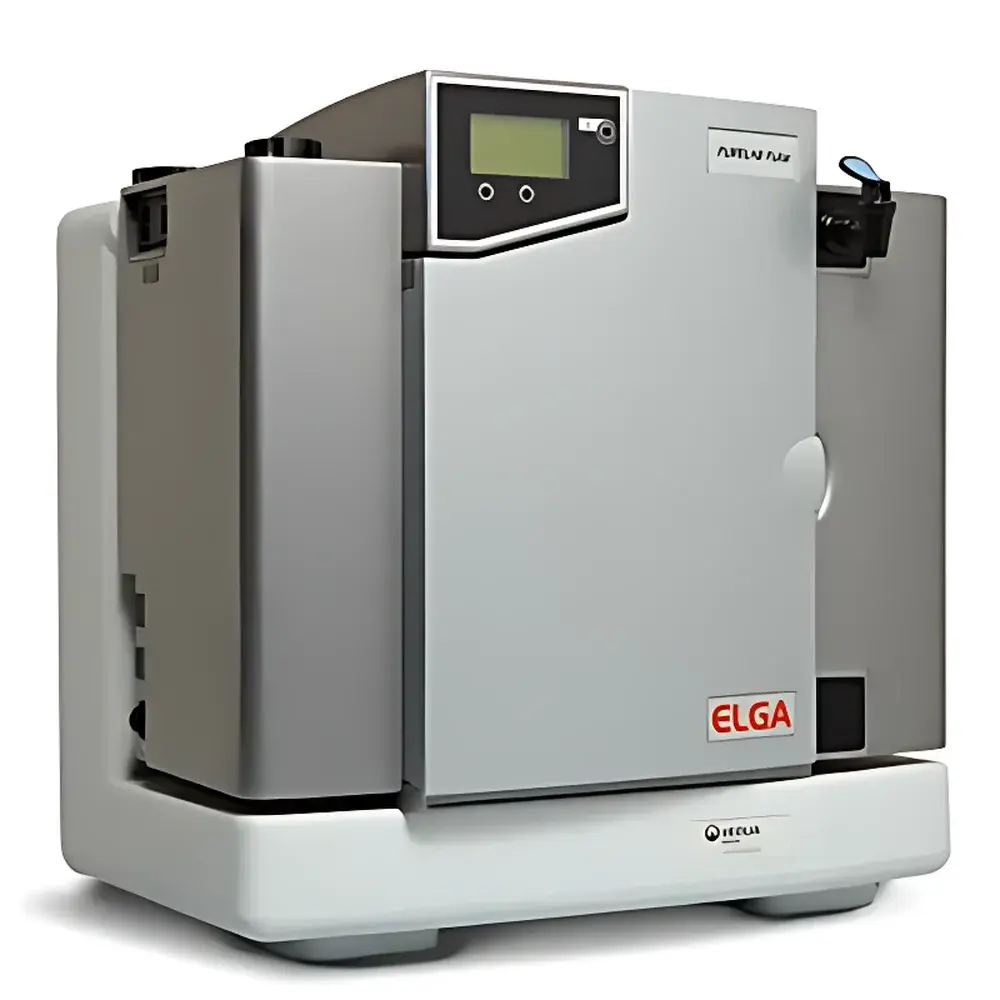
ELGA PURELAB Pulse Ultra-Pure Water System
| Brand | ELGA (Veolia) |
|---|---|
| Origin | United Kingdom |
| Manufacturer | Veolia Water Technologies |
| Product Type | Imported Ultra-Pure Water System |
| Model | PURELAB Pulse |
| Pure Water Grade | ASTM Type II / ISO 3696 Grade 2 |
| Resistivity | 10–15 MΩ·cm @ 25 °C |
| Heavy Metals & Soluble Silica | <0.1 ppb |
| Total Organic Carbon (TOC) | <20 ppb |
| Microbial Count | <1 CFU/10 mL |
| Endotoxin | <0.001 EU/mL |
| Particles (>0.1 µm) | <0.2 particles/mL |
| Flow Rate | Pulse 1 — Max 10 L/hr |
| Technology | Integrated Recirculating Electrodeionization (EDI) with “Pulse Pure” Patented Control Architecture |
Overview
The ELGA PURELAB Pulse is a discontinued yet fully supported ultra-pure water system engineered for laboratories requiring consistent, high-reliability Type II pure water in moderate daily volumes (up to ~100 L/day). Designed and originally manufactured in the UK by Veolia’s ELGA division, the system employs a proprietary “Pulse Pure” control architecture combined with integrated recirculating electrodeionization (EDI) technology. Unlike conventional batch-mode deionization units, the Pulse system maintains continuous internal circulation through its EDI module and distribution loop—enabling dynamic stabilization of resistivity, TOC, and microbial load at the point-of-use (POU). This architecture minimizes ionic drift and suppresses biofilm nucleation in stagnant zones, delivering stable 10–15 MΩ·cm water without reliance on post-EDI polishing cartridges under nominal feedwater conditions (inlet conductivity ≤700 µS/cm, CO₂ ≤20 ppm). The system is not intended for primary production of ASTM Type I water but serves as a robust, low-maintenance source for applications where Type II purity suffices and operational continuity is critical.
Key Features
- Patented “Pulse Pure” recirculating EDI architecture ensures real-time resistivity stabilization and eliminates off-specification start-up transients.
- Integrated loop design with continuous internal circulation reduces microbial proliferation risk and extends consumable service intervals.
- Modular POU filtration options—including 0.22 µm sterilizing-grade membrane filters and optional endotoxin-retentive cartridges—allow customization per application sensitivity.
- Tool-free consumable replacement: Cartridge-based pre-treatment modules (activated carbon, softener, reverse osmosis membrane) and EDI stack assemblies are designed for rapid field exchange with minimal downtime.
- Reduced disinfection frequency: Validated loop hygiene management enables extended sanitization cycles (typically 3–6 months) when operated within specified feedwater parameters and usage profiles.
- Compact footprint and wall-mountable configuration optimized for benchtop or under-bench installation in space-constrained labs.
Sample Compatibility & Compliance
The PURELAB Pulse delivers water compliant with ASTM D1193-20 Type II, ISO 3696:1987 Grade 2, and CLSI EP23-A standards for general laboratory use. Its output meets the feedwater requirements for flame atomic absorption spectroscopy (FAAS), UV-Vis spectrophotometry, buffer preparation, HPLC mobile phase dilution, and cell culture media formulation (when paired with appropriate POU endotoxin removal). While not certified for USP purified water or pharmacopeial water-for-injection (WFI), the system supports GLP and GMP-aligned workflows when deployed with documented maintenance logs, periodic performance qualification (PQ), and audit-trail-capable data recording (via optional analog/digital outputs). Endotoxin levels (<0.001 EU/mL) and particle counts (0.1 µm) satisfy stringent criteria for electrophysiology and immunocytochemistry applications.
Software & Data Management
The PURELAB Pulse operates via an embedded microcontroller with LED status interface—no onboard touchscreen or network connectivity. All operational parameters (flow rate, cumulative volume, cartridge life estimation, and alarm history) are accessible via front-panel indicators and non-volatile memory logging. For regulated environments, optional 4–20 mA or 0–10 V analog outputs enable integration into centralized lab monitoring systems (e.g., DeltaV, LabVantage). While the unit does not natively support FDA 21 CFR Part 11 electronic signatures or full audit trails, its deterministic behavior, calibrated sensor inputs (resistivity, TOC proxy), and traceable maintenance records (including serial-numbered consumables) facilitate compliance with ISO/IEC 17025 and ISO 9001 quality management systems when incorporated into documented SOPs.
Applications
- Flame atomic absorption spectroscopy (FAAS) sample and standard dilution
- Preparation of buffers and reagents for histology, cytology, and tissue culture
- Mobile phase preparation and instrument rinsing for HPLC and GC systems
- Feedwater for downstream Type I purification units (e.g., UV oxidation + ion exchange)
- Electrochemical cell filling and patch-clamp electrophysiology solutions
- Routine water analysis (conductivity, TOC baseline verification) and calibration reference preparation
FAQ
Is the PURELAB Pulse still in active production?
No—the PURELAB Pulse was discontinued at Veolia’s UK manufacturing facility in 2022. Limited inventory may remain available through authorized distributors in China; however, no new units are being produced.
Will spare parts and consumables remain available?
Yes—Veolia guarantees availability of all OEM consumables (EDI stacks, RO membranes, carbon/softener cartridges) and mechanical spare parts until December 31, 2026, subject to standard lead times and contractual terms.
Can the system produce Type I ultrapure water?
No—by design, the PURELAB Pulse delivers Type II water. Achieving ASTM Type I specifications (≥18.2 MΩ·cm, TOC <5 ppb) requires additional polishing stages (e.g., dual-wavelength UV oxidation, final 0.1 µm filtration) not integrated into this platform.
What feedwater quality is required to maintain stated specifications?
Optimal performance requires inlet water with conductivity ≤700 µS/cm and dissolved CO₂ ≤20 ppm. Higher ionic load or CO₂ content will reduce achievable resistivity and increase TOC variability; pretreatment (e.g., degasification, secondary RO) is recommended in such cases.
Does the system support remote monitoring or data export?
It offers analog output signals (4–20 mA) for resistivity and flow rate, enabling connection to SCADA or LIMS platforms. Native digital communication (Ethernet, Modbus) is not supported.



