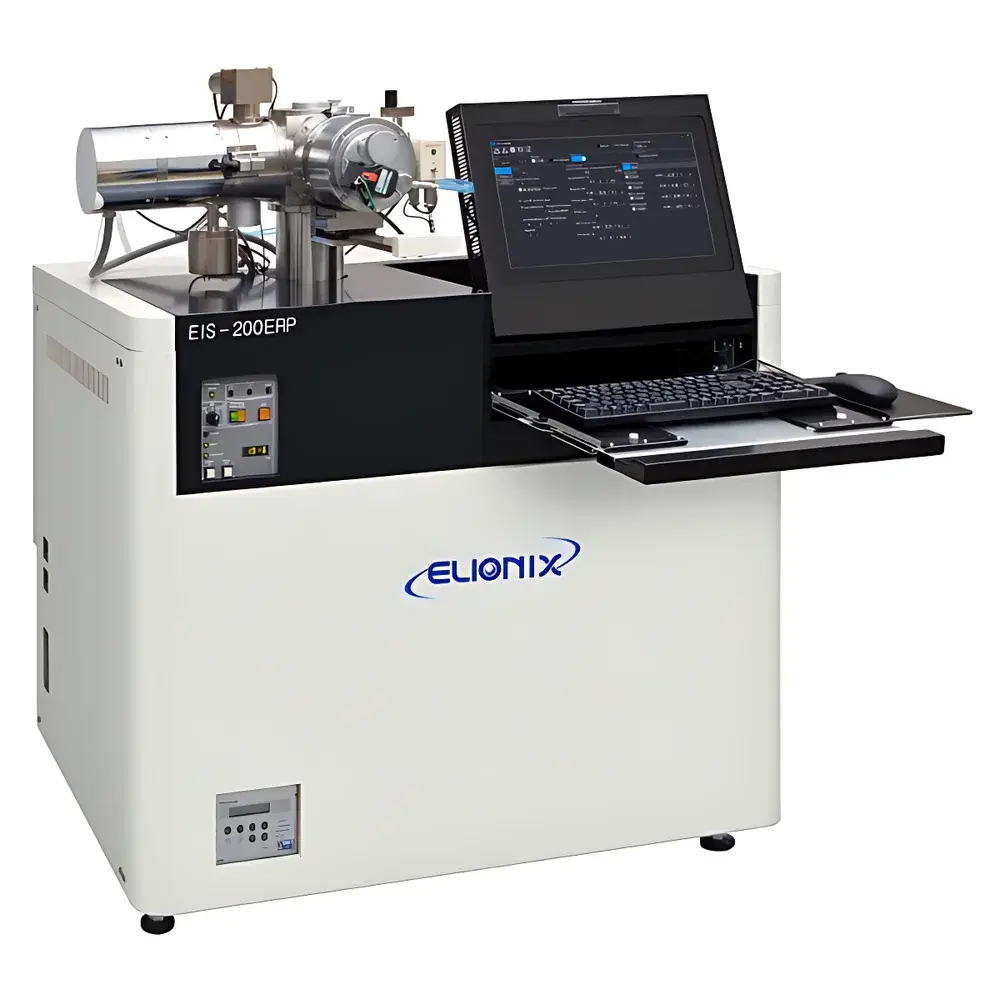
Elionix EIS-200 Electron Cyclotron Resonance Ion Beam Etching System
| Origin | Japan |
|---|---|
| Manufacturer Type | Authorized Distributor |
| Origin Category | Imported |
| Model | EIS-200 |
| Pricing | Available Upon Request |
Overview
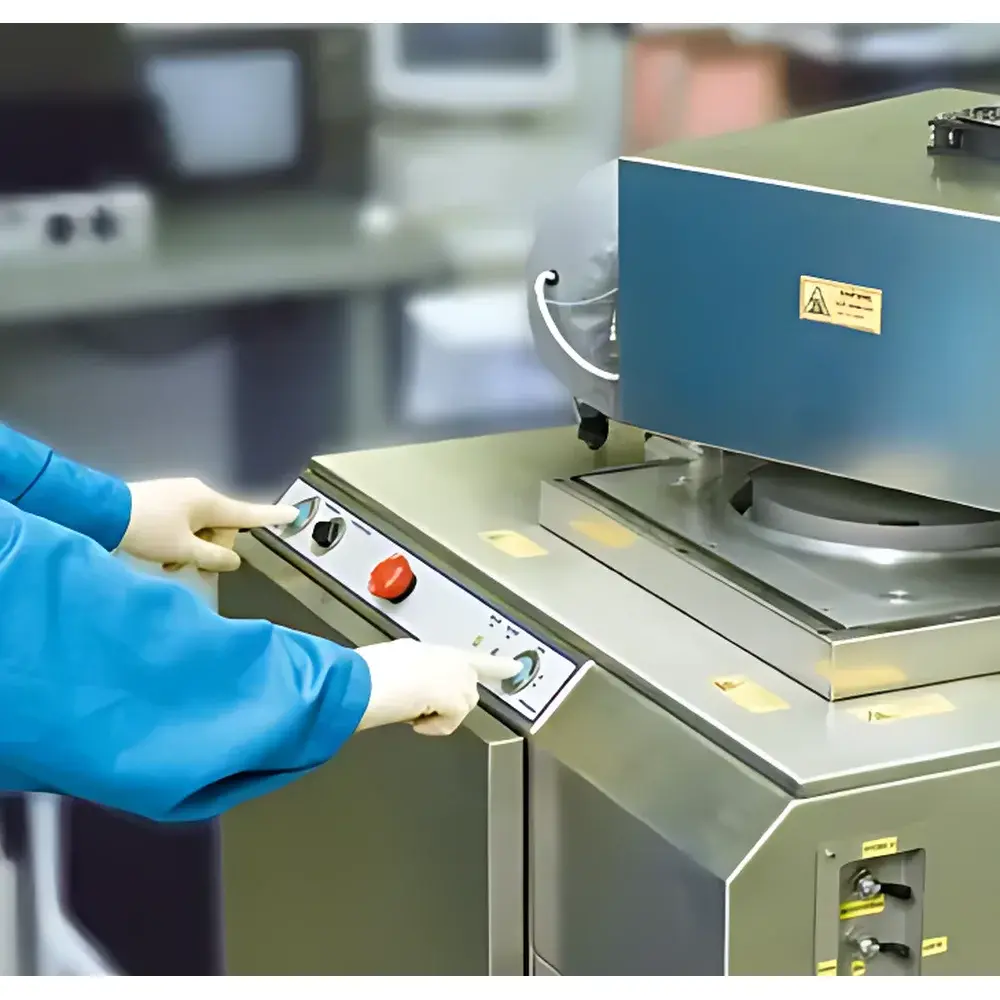
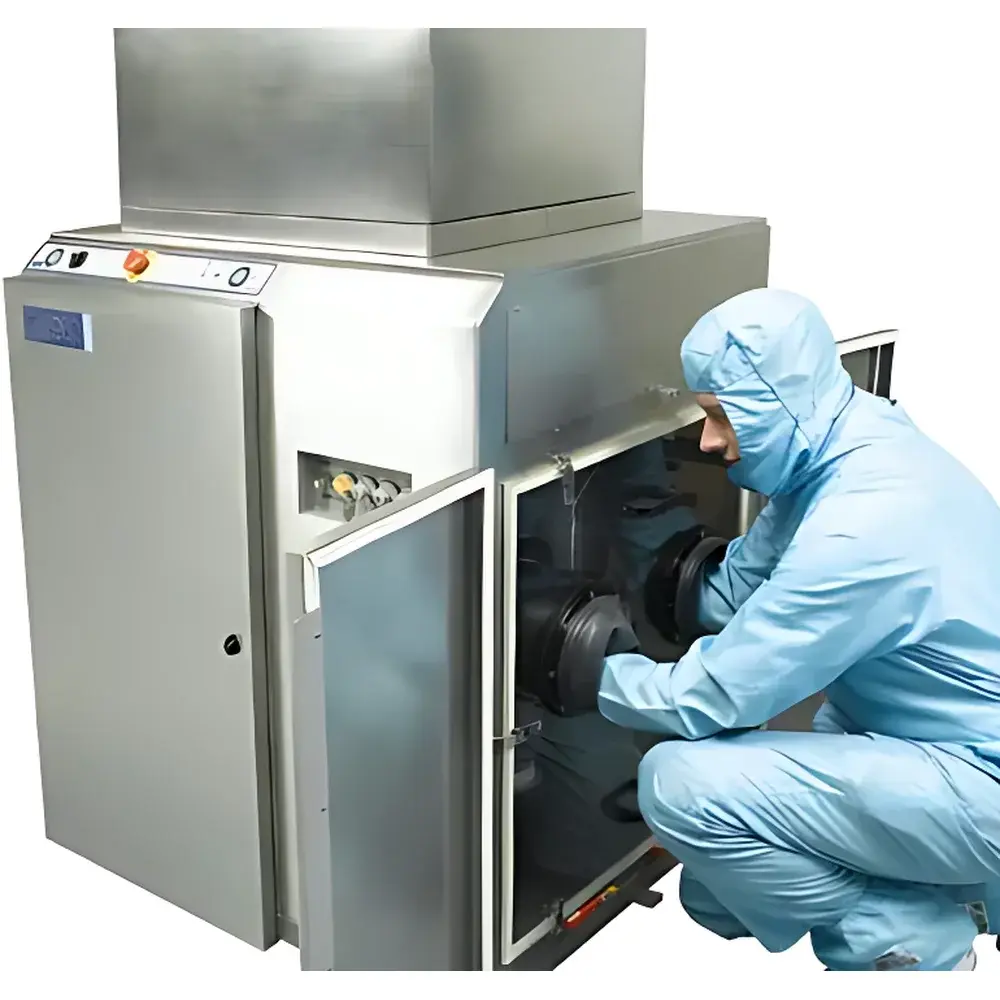
The Elionix EIS-200 is a compact, high-precision Electron Cyclotron Resonance (ECR) ion beam etching system engineered for advanced nanofabrication and materials surface modification in research and development environments. Unlike reactive plasma etching or chemical vapor etching methods, the EIS-200 operates on pure physical sputtering principles: a stable, high-density plasma is generated via microwave excitation (2.45 GHz) under magnetic confinement (ECR condition), producing energetic inert gas ions—primarily Ar⁺—which are electrostatically accelerated toward the sample surface. This directional, non-reactive bombardment enables deterministic material removal with exceptional anisotropy, minimal lateral etching, and negligible substrate heating or chemical contamination. The system is particularly suited for applications demanding atomic-level control over topography, such as TEM sample preparation, mask fabrication, and hard-material patterning where conventional wet or RIE processes fail.
Key Features
- ECR plasma source delivering stable, high-brightness ion beams with low energy spread and excellent angular collimation
- Adjustable acceleration voltage range from 100 V to 3,000 V (optional extended range available), enabling precise control over ion kinetic energy and sputter yield
- Ion beam current density ≥1.5 mA/cm² (Ar⁺ at 2 kV); ≥2.0 mA/cm² (O₂⁺ at 2 kV), ensuring efficient etch rates across diverse materials
- Effective beam diameter of Φ20 mm (FWHM: 35 mm), optimized for uniform etching over standard 4-inch wafers
- Beam stability ≤±3% over 2 hours—critical for reproducible, long-duration processes such as ion thinning or taper-angle-controlled profiling
- Multi-gas compatibility: inert gases (Ar, Xe), reactive gases (O₂, N₂), and process gases (CF₄) support both physical sputtering and hybrid ion-assisted etching
- Integrated beam diagnostics including Faraday cup and retarding field energy analyzer (optional) for real-time ion flux and energy distribution monitoring
Sample Compatibility & Compliance
The EIS-200 accommodates substrates up to 100 mm (4-inch) in diameter and supports rigid, brittle, and radiation-sensitive materials—including fused silica (quartz), single-crystal diamond, SiO₂-on-Si wafers, oriented PET films, and ceramic masks—without requiring conductive coatings or complex masking schemes. Its non-thermal, charge-neutralized operation avoids charging damage on insulating surfaces. The system complies with ISO 14644-1 Class 5 cleanroom integration standards and meets electromagnetic compatibility (EMC) requirements per IEC 61326-1. Vacuum architecture adheres to ISO 27893 for ultra-high vacuum (UHV)-compatible components, with base pressure <5×10⁻⁷ Pa achievable using turbomolecular pumping. All operational parameters are logged with timestamped audit trails, supporting GLP-compliant documentation workflows.
Software & Data Management
Control is executed via Elionix’s proprietary Windows-based GUI, featuring synchronized parameter scripting (voltage, gas flow, dwell time, beam rastering), real-time ion current monitoring, and automated recipe storage. Data export conforms to ASTM E1392 and ISO/IEC 17025 reporting formats, with CSV and HDF5 output options. Optional integration with LabVIEW or Python APIs enables custom automation and synchronization with external metrology tools (e.g., AFM, SEM). Full compliance with FDA 21 CFR Part 11 is supported through electronic signature authentication, role-based access control, and immutable audit logs for all process executions.
Applications
- Nanopatterning of high-aspect-ratio structures in quartz and diamond substrates for photonic crystal and quantum device fabrication
- Site-specific thinning of TEM specimens with controlled taper angles (5°–30°) and sub-nanometer thickness uniformity
- Surface cleaning and native oxide removal prior to epitaxial growth or bonding without introducing interfacial contaminants
- Mask repair and direct-write lithography mask trimming with sub-100 nm edge fidelity
- Ion-beam-assisted deposition (IBAD) when coupled with optional thermal evaporation sources
- Surface functionalization of polymer films (e.g., oriented PET) via controlled ion-induced chain scission and crosslinking
FAQ
What vacuum level is required for stable ECR plasma ignition?
Stable ECR plasma generation requires a base pressure below 1×10⁻⁴ Pa; typical operating pressure during Ar⁺ etching ranges from 1×10⁻³ to 5×10⁻³ Pa.
Can the EIS-200 perform reactive ion etching (RIE)?
While primarily designed for physical ion beam etching, the system supports limited reactive etching using O₂, CF₄, or N₂ when combined with substrate biasing (optional accessory); however, it does not provide RF-driven plasma coupling like conventional RIE tools.
Is beam uniformity verified across the full 4-inch sample area?
Yes—beam profile mapping is performed using a movable Faraday cup array; uniformity within ±5% is confirmed over Φ80 mm, sufficient for standard wafer-scale processing.
Does the system support automated multi-step recipes with gas switching?
Yes—up to 99 sequential steps with independent gas selection, voltage ramping, and dwell timing can be programmed and repeated with cycle-to-cycle repeatability better than ±1.5%.
What maintenance intervals are recommended for the ECR source and ion optics?
Source magnet alignment and microwave window inspection are recommended every 1,000 operating hours; ion lens cleaning and calibration are advised every 500 hours under continuous use.