
English Product Name
| Brand | Nanjing Dazhan |
|---|---|
| Origin | Jiangsu, China |
| Manufacturer Type | Direct Manufacturer |
| Country of Origin | China |
| Model | DZ3500S |
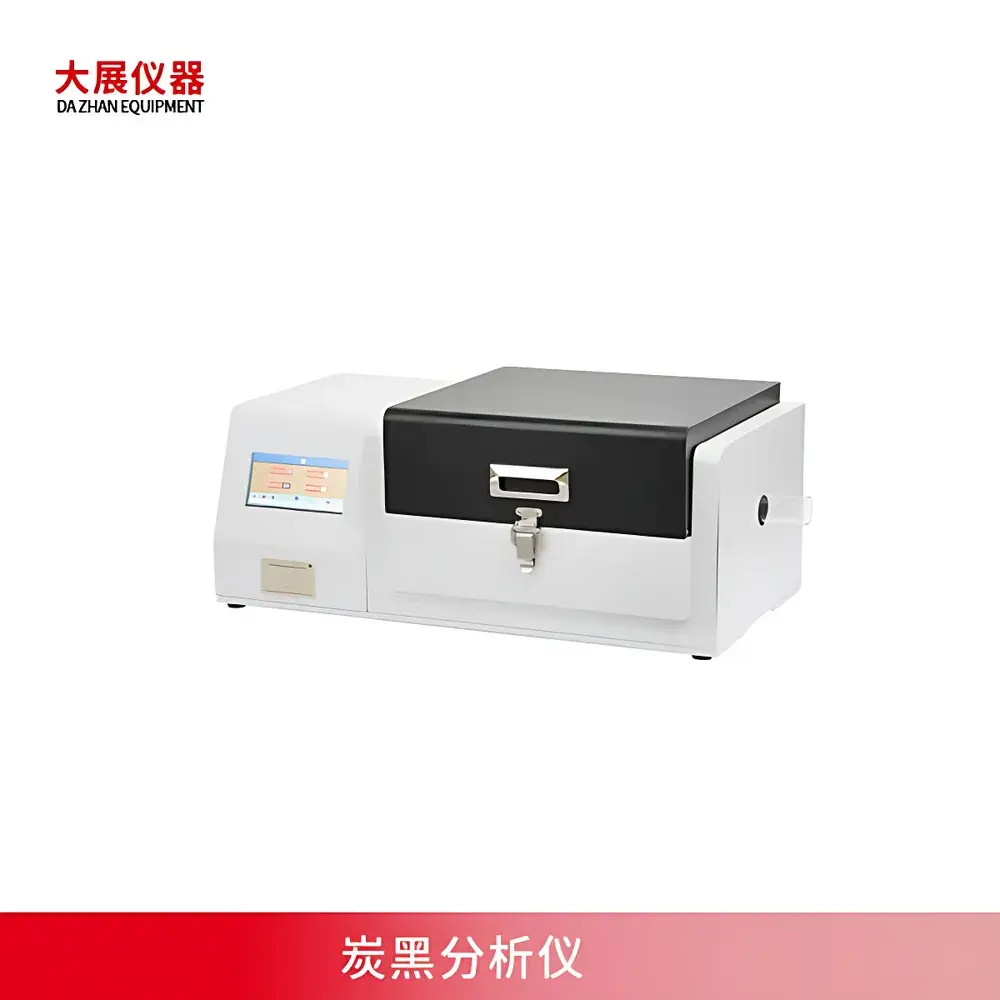
| Display | 7-inch capacitive touchscreen |
| Quartz Tube Dimensions | φ44 × 600 ± 5 mm |
| Furnace Chamber Dimensions | φ45 × 360 ± 5 mm |
| Heating Element | High-temperature alloy wire |
| Heating Zone Length | 300 mm |
| Operating Temperature Range | Ambient to 1200 °C |
| Temperature Control | Intelligent programmable multi-segment ramp/soak profile |
| Temperature Sensitivity | 0.1 °C |
| Power Supply | AC 220 V, 50/60 Hz |
| Gas Flow Control | Dual-channel, software-automated switching |
| Cooling Time | ≤20 min (from 900 °C to ambient) |
| Sample Capacity | 4 positions per run |
| Data Output | Built-in calculation engine for carbon black content and ash content |
| Optional Accessories | Exhaust filtration unit, thermal printer |
Overview
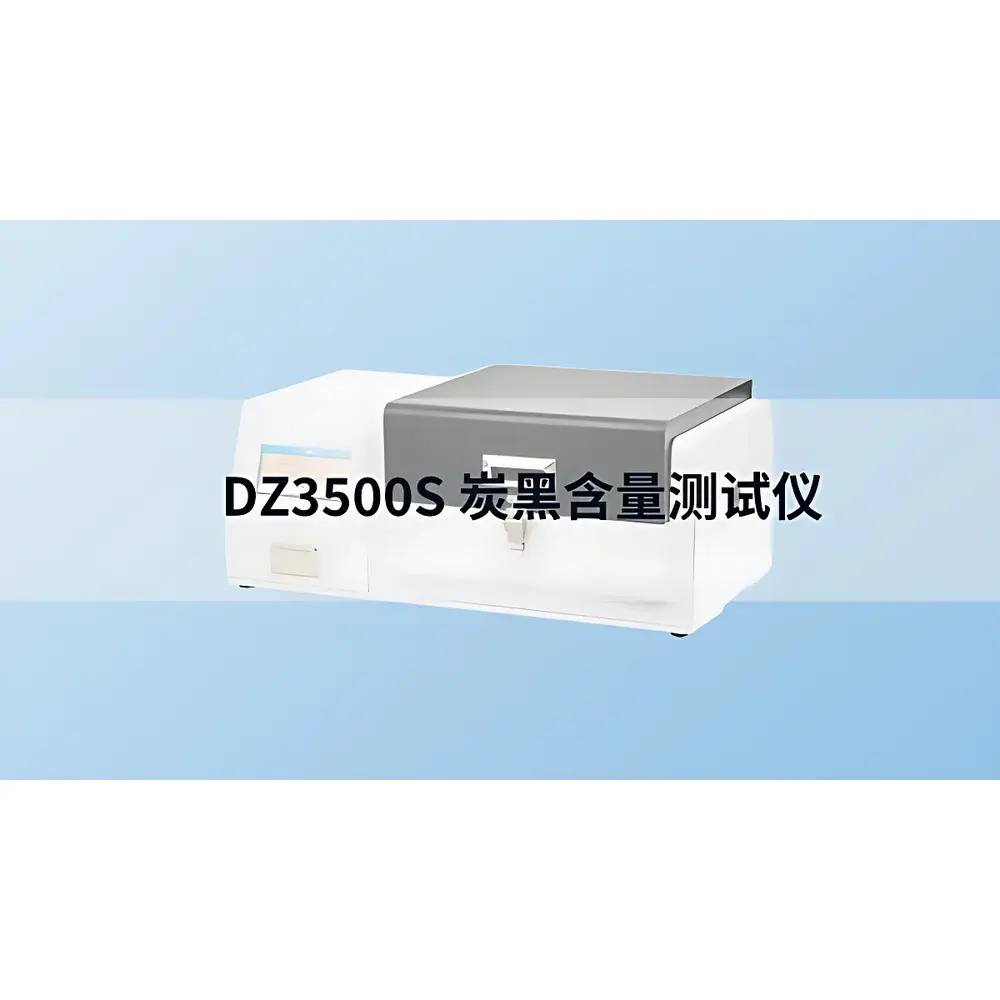
The Nanjing Dazhan DZ3500S Carbon Black Content Analyzer is a dedicated thermal gravimetric instrument engineered for precise quantification of carbon black loading and residual ash in polymer and elastomer matrices. It operates on the principle of controlled pyrolysis under inert atmosphere (typically nitrogen), followed by oxidative ashing—aligning with standardized test methods such as ASTM D1606, ISO 6964, and GB/T 3512. Designed specifically for quality control laboratories in rubber compounding, cable manufacturing, and thermoplastic compound development, the DZ3500S delivers reproducible results across polyolefin-based materials—including polyethylene (PE), polypropylene (PP), polybutene (PB), and cross-linked elastomers—where carbon black serves as both reinforcing filler and UV stabilizer. Its dual-stage thermal protocol enables sequential determination of volatile organic content (carbon black + polymer matrix) and inorganic residue (ash), supporting full mass-balance validation per ISO 11358-1.
Key Features
- Quadruple-sample configuration: Simultaneous processing of four specimens maximizes throughput without compromising inter-sample thermal uniformity.
- Top-opening furnace architecture: Facilitates rapid sample loading/unloading and enhances convective heat dissipation during cooldown cycles.
- Programmable multi-step temperature profiling: Supports customizable pyrolysis (e.g., 550 °C N₂ hold) and ash oxidation (e.g., 600 °C air switch) sequences with ramp rate precision of ±1 °C/min.
- Integrated thermal management: Dual-gas channel system automatically toggles between nitrogen (pyrolysis) and compressed air (ashing) based on preloaded stage logic; includes optional particulate and acid-gas filtration for exhaust compliance.
- High-fidelity temperature control: PID-regulated heating with 0.1 °C sensor resolution and ±2 °C uniformity across the 300-mm hot zone.
- Automated data reduction: Onboard software computes carbon black content (wt%) and ash content (wt%) directly from raw mass loss curves, eliminating manual spreadsheet entry and reducing operator-induced error.
Sample Compatibility & Compliance
The DZ3500S accommodates standard crucibles (alumina or platinum) compatible with ASTM D1606 specimen dimensions (≤1 g, thickness ≤2 mm). It supports heterogeneous samples including extruded cable jackets, molded rubber seals, granulated masterbatches, and calendered sheets—provided material geometry permits uniform heat penetration. Instrument design conforms to IEC 61000-6-3 (EMC) and IEC 61010-1 (safety). When operated per validated SOPs, data output meets GLP documentation requirements, including timestamped audit trails for method parameters, calibration logs, and result exports. Optional thermal printer integration provides CFR Part 11–compliant hardcopy reports with operator ID, batch ID, and instrument serial number.
Software & Data Management
The embedded 7-inch capacitive touchscreen interface runs a deterministic real-time OS with non-volatile storage for ≥10,000 test records. All thermal profiles, mass readings (0.1 mg resolution), and calculated outputs are stored with metadata (date/time, operator, sample ID, method version). Export options include CSV for LIMS ingestion and PDF report generation with embedded calibration certificates. Firmware supports over-the-air updates via Ethernet or USB; user-defined method templates can be password-protected and assigned role-based access levels (e.g., technician vs. QA supervisor).
Applications
- Quality assurance of carbon black–filled PE/PP compounds used in pipe extrusion and geomembrane production.
- Batch release testing of EPDM and SBR compounds for automotive sealing systems.
- Verification of pigment dispersion homogeneity in conductive cable jacket formulations.
- Failure analysis of degraded insulation layers where carbon black migration or oxidation state changes affect dielectric performance.
- Raw material qualification of carbon black masterbatches against supplier specifications (e.g., N110–N990 series).
FAQ
What standards does the DZ3500S comply with for carbon black analysis?
It supports methodology alignment with ASTM D1606, ISO 6964, GB/T 3512, and DIN 53521—subject to laboratory-specific validation per ISO/IEC 17025.
Can the instrument distinguish between carbon black and other organic fillers?
No—carbon black content is inferred from total organic volatiles under inert pyrolysis; differentiation requires complementary techniques such as Raman spectroscopy or TEM.
Is calibration traceable to national standards?
Yes—temperature calibration uses NIST-traceable thermocouples; mass calibration employs certified weights compliant with OIML R111 Class E2.
What maintenance is required for long-term accuracy?
Quarterly quartz tube inspection, annual thermocouple verification, and biannual gas flow calibration using certified mass flow meters.
Does the system support networked data transfer to enterprise LIMS?
Yes—via TCP/IP with configurable MODBUS RTU or RESTful API endpoints for automated result ingestion.





