
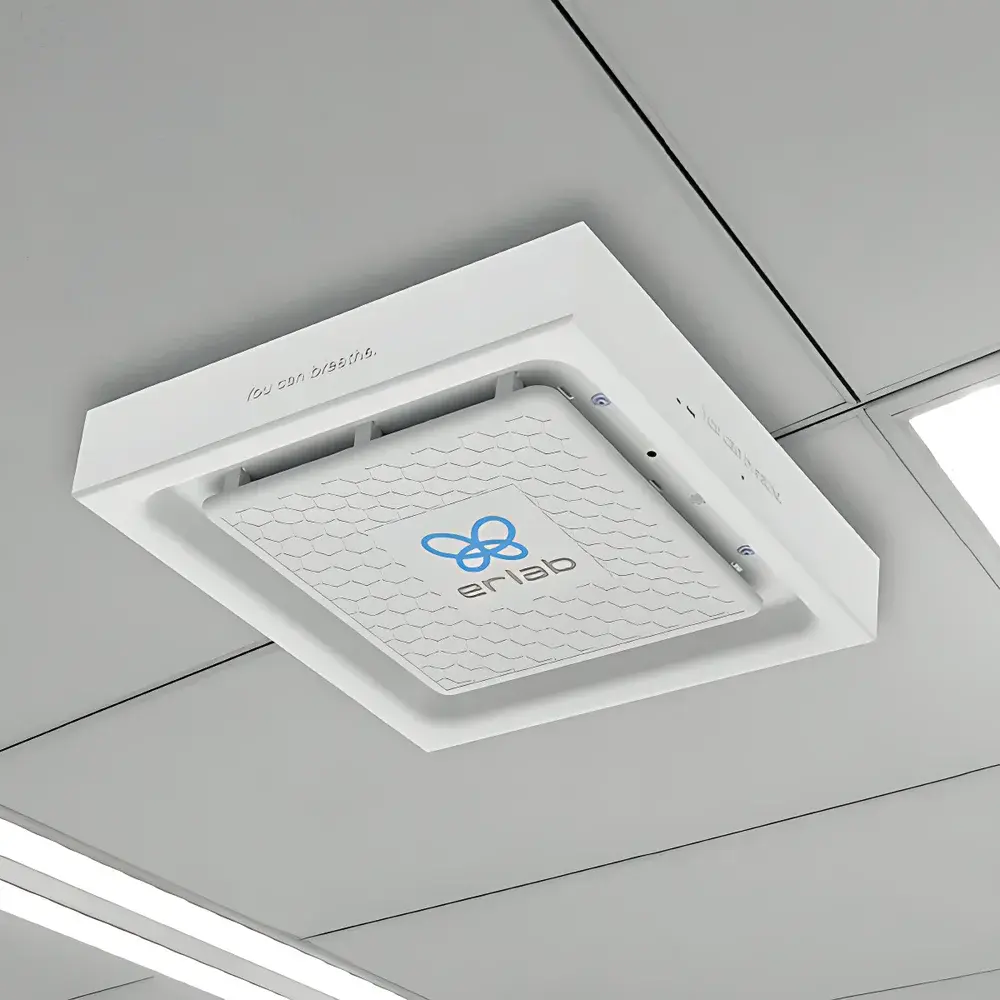
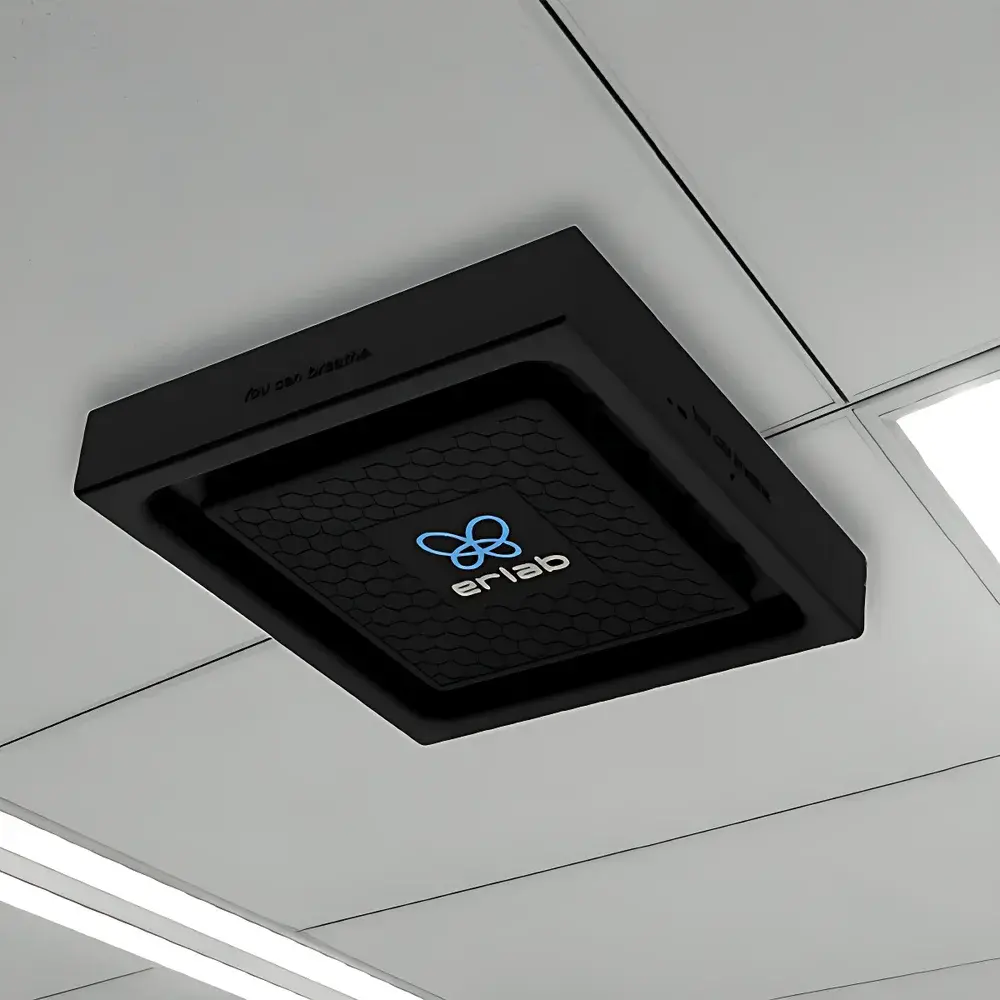
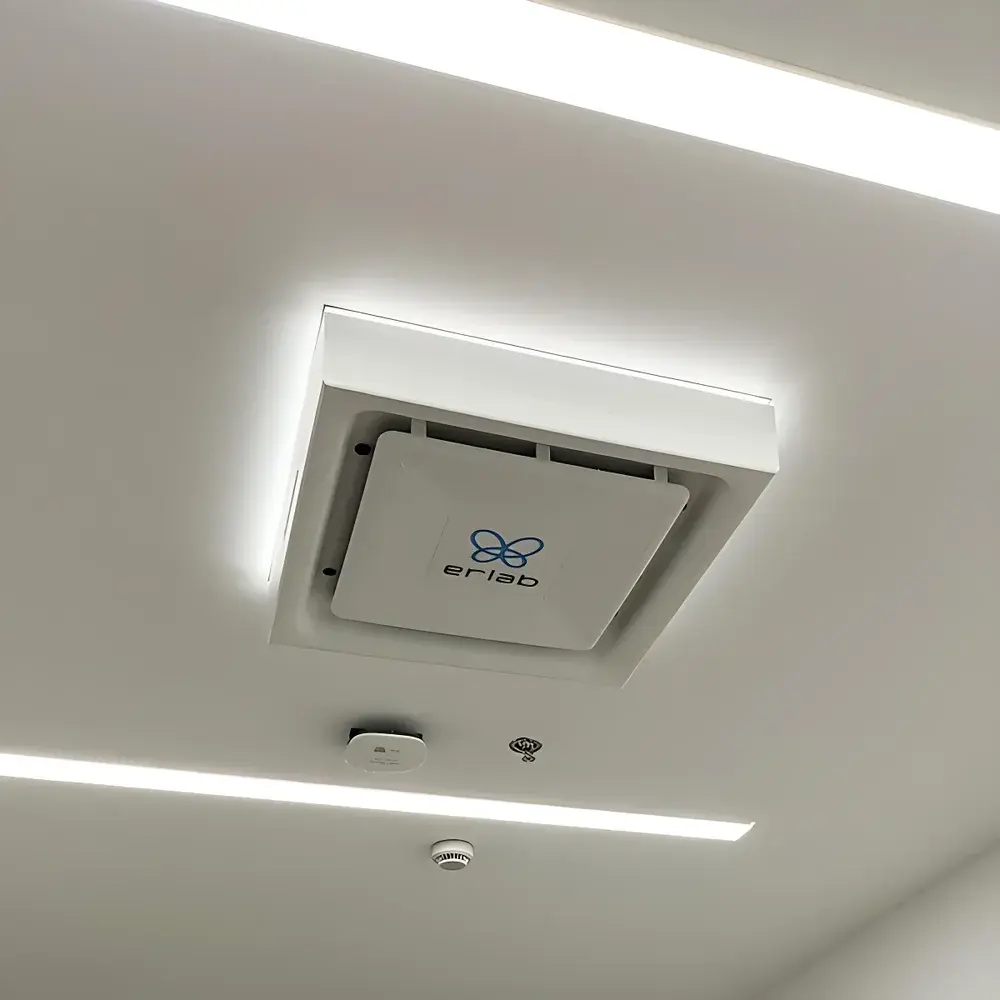
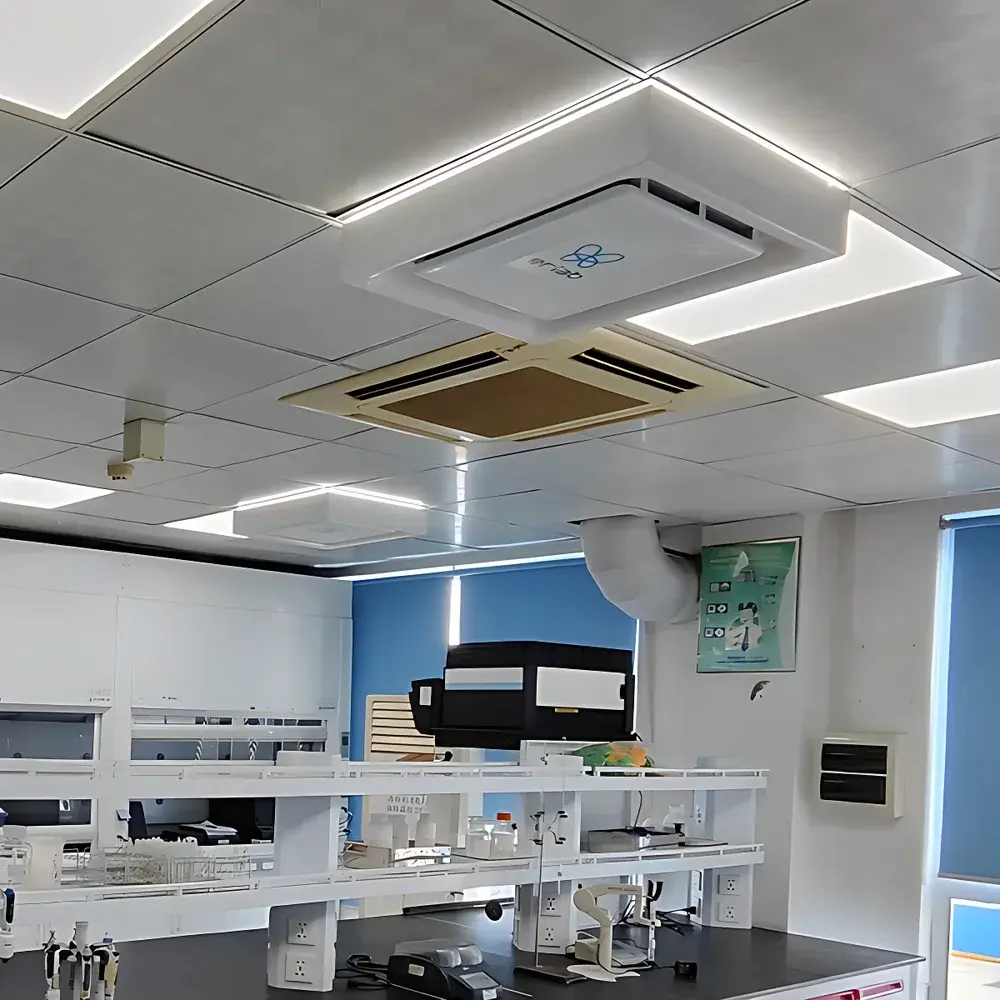
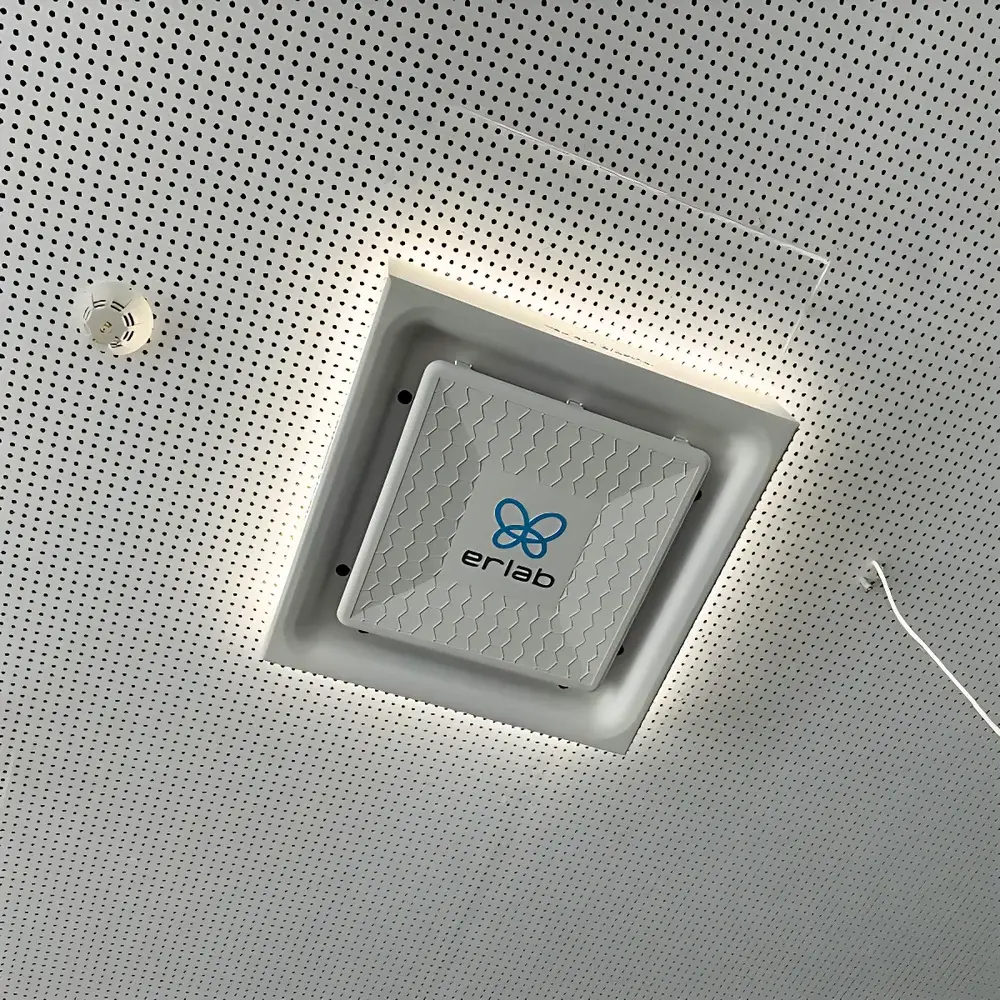
Erlab Halo 25 Smart Professional Laboratory-Grade Air Purification System
| Brand | Erlab |
|---|---|
| Origin | Jiangsu, China |
| Manufacturer Type | Authorized Distributor |
| Country of Origin | China |
| Model | Halo 25 Smart |
| Price Range | USD 1,400 – 4,200 |
| Filter Options | Molecular (VOC/Formaldehyde/Chemplus), Particulate (HEPA H14), Combined Molecular + Particulate (VOC/Formaldehyde/Chemplus/HEPA) |
| External Dimensions (W×D×H) | 615 × 615 × 350 mm |
| Internal Width | 565 mm |
| Safety & Compliance | AFNOR NF X 15-211:2009 (air purification efficacy monitoring), JG/T 385–2012 (Chinese standard for air purifiers in controlled environments), EN 1822:1998 (HEPA H14 classification), CE marking per EN 61010-1 (electrical safety), RoHS Directive 2011/65/EU |
Overview
The Erlab Halo 25 Smart is a certified professional-grade air purification system engineered for continuous, real-time decontamination of airborne chemical vapors, bioaerosols, and particulate matter in sensitive laboratory and clinical environments. Unlike consumer-grade units, the Halo 25 Smart operates on a dual-stage filtration architecture grounded in validated adsorption kinetics and mechanical retention principles. Its core design adheres to the fundamental requirements of ISO 14644-1 Class 5–7 cleanroom support applications and aligns with the operational hygiene expectations of analytical laboratories, pharmaceutical formulation suites, and diagnostic clinics. The system is not intended for general HVAC integration but functions as a localized, recirculating air treatment unit—ensuring consistent air exchange rates (ACH ≥ 12 in ≤25 m³ spaces) while maintaining laminar airflow integrity near critical work zones such as fume hood sashes, biosafety cabinet perimeters, or sterile compounding stations.
Key Features
- Modular filter configuration supporting three certified filtration pathways: molecular-only (activated carbon + impregnated chemisorbents for VOCs, formaldehyde, and acid gases), particulate-only (EN 1822-compliant H14 HEPA filter with ≥99.995% efficiency at 0.1–0.3 µm), or hybrid (dual-cassette arrangement enabling simultaneous removal of submicron particles and reactive gaseous pollutants).
- Real-time filter life monitoring via integrated differential pressure sensors and cumulative runtime tracking—calibrated against AFNOR NF X 15-211:2009 test protocols for dynamic loading conditions.
- Robust enclosure constructed from powder-coated steel with sealed internal ducting to prevent bypass leakage; external dimensions optimized for under-bench or freestanding deployment in constrained lab footprints.
- Low-noise axial fan assembly (≤48 dB(A) at 1 m) delivering stable airflow of 280 m³/h at rated static pressure (120 Pa), independently verified per ISO 5801.
- Compliance-ready electrical architecture meeting EN 61010-1 Edition 3 for laboratory equipment, including reinforced insulation, overcurrent protection, and grounding continuity validation.
Sample Compatibility & Compliance
The Halo 25 Smart is validated for use in environments requiring documented air quality control per internationally recognized frameworks. It supports compliance with JG/T 385–2012 for air purification performance in controlled technical spaces, and its HEPA H14 element conforms strictly to EN 1822:1998 (now superseded by EN 1822-1:2019, with backward compatibility confirmed). For molecular filtration, breakthrough testing follows ASTM D6194-19 methodology for formaldehyde and toluene challenge concentrations. The unit’s operational logging capability—including filter usage duration, fan runtime, and alarm event timestamps—facilitates GLP/GMP-aligned recordkeeping. While not FDA-cleared as a medical device, its performance profile meets the environmental control benchmarks referenced in USP Annex and EU GMP Annex 1 for non-sterile and low-risk sterile preparation areas.
Software & Data Management
The Halo 25 Smart features an embedded microcontroller with non-volatile memory for storing up to 12 months of operational logs. Filter saturation alerts, fan speed deviations, and power interruption events are timestamped and exportable via USB-C interface in CSV format. No cloud connectivity or proprietary software is required; data files are human-readable and compatible with standard LIMS or QMS platforms. Audit trail functionality satisfies basic 21 CFR Part 11 expectations for electronic records—specifically, user-independent event logging, immutable timestamps, and tamper-evident file structure. Firmware updates are performed offline using signed binary packages distributed exclusively through Erlab’s authorized service network.
Applications
- Analytical laboratories: Mitigation of solvent vapors (e.g., acetone, hexane, chloroform) during GC sample prep and HPLC mobile phase handling.
- Pharmaceutical QC/QA labs: Reduction of ambient endotoxin-carrying particles and residual cleaning agent volatiles near stability chambers and dissolution testers.
- Dental and outpatient clinics: Continuous removal of aerosolized bacteria (e.g., Streptococcus mutans, Pseudomonas aeruginosa) and mercury vapor during restorative procedures.
- Industrial R&D workshops: Control of paint mist, welding fumes, and polishing compound residues in precision metrology labs.
- Textile and leather processing facilities: Adsorption of formaldehyde released during fabric finishing and shoe adhesive curing.
FAQ
Does the Halo 25 Smart meet ISO 14644-1 cleanroom classification requirements?
It does not classify space itself but supports ISO Class 5–7 environments when deployed as a supplemental air recirculation unit with appropriate ACH and placement strategy.
Can the HEPA H14 filter be replaced in-house without recalibration?
Yes—filter replacement requires only mechanical fastener access; no optical or flow sensor recalibration is needed due to fixed-pathway design and factory-trimmed fan curve.
Is third-party validation data available for VOC removal efficiency?
Erlab provides full test reports per ASTM D6194-19 and ISO 16000-23 upon request through authorized distributors, including formaldehyde, acetaldehyde, and benzene challenge results.
What maintenance intervals are recommended under continuous 24/7 operation?
Molecular filters: 6–12 months depending on total VOC load; HEPA H14: 18–24 months under typical lab particulate exposure; full preventive inspection every 12 months.
Does the unit comply with EU RoHS and REACH regulations?
Yes—material declarations and SVHC screening documentation are provided in the Technical File per Directive 2011/65/EU and Regulation (EC) No 1907/2006.



