
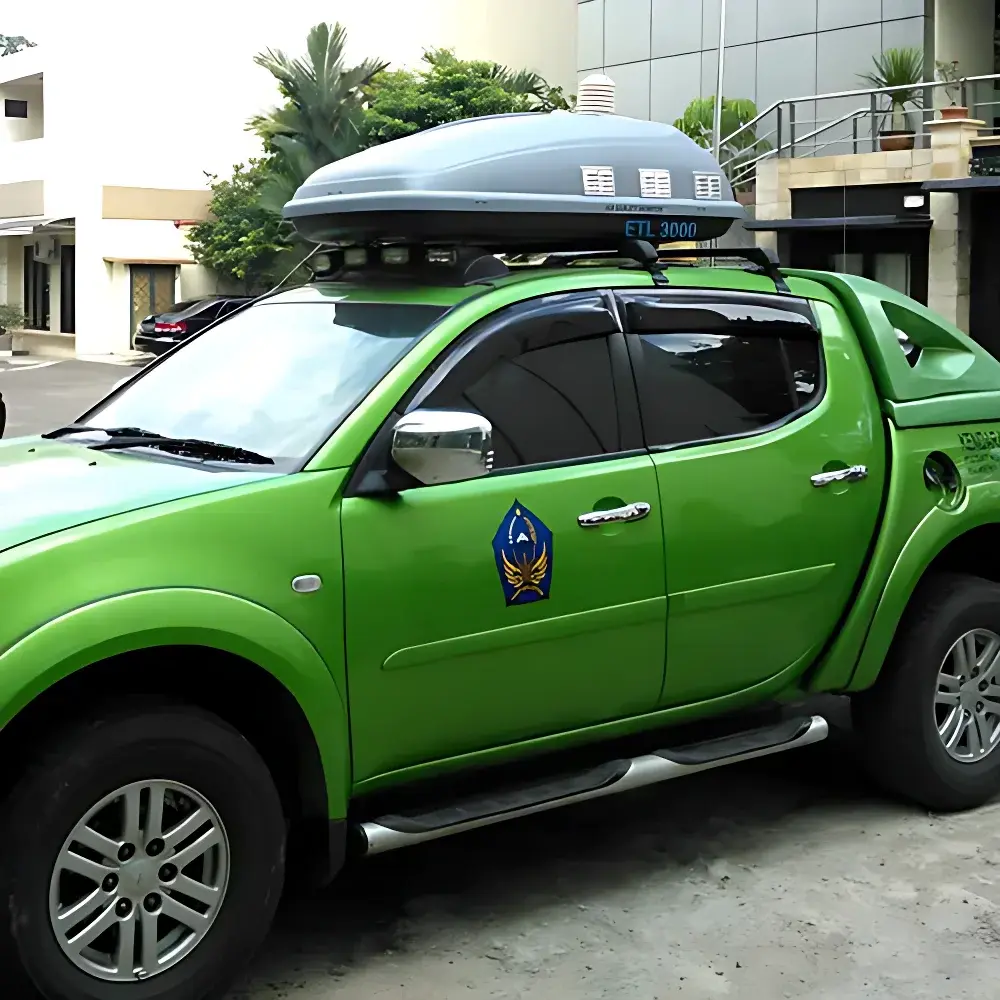
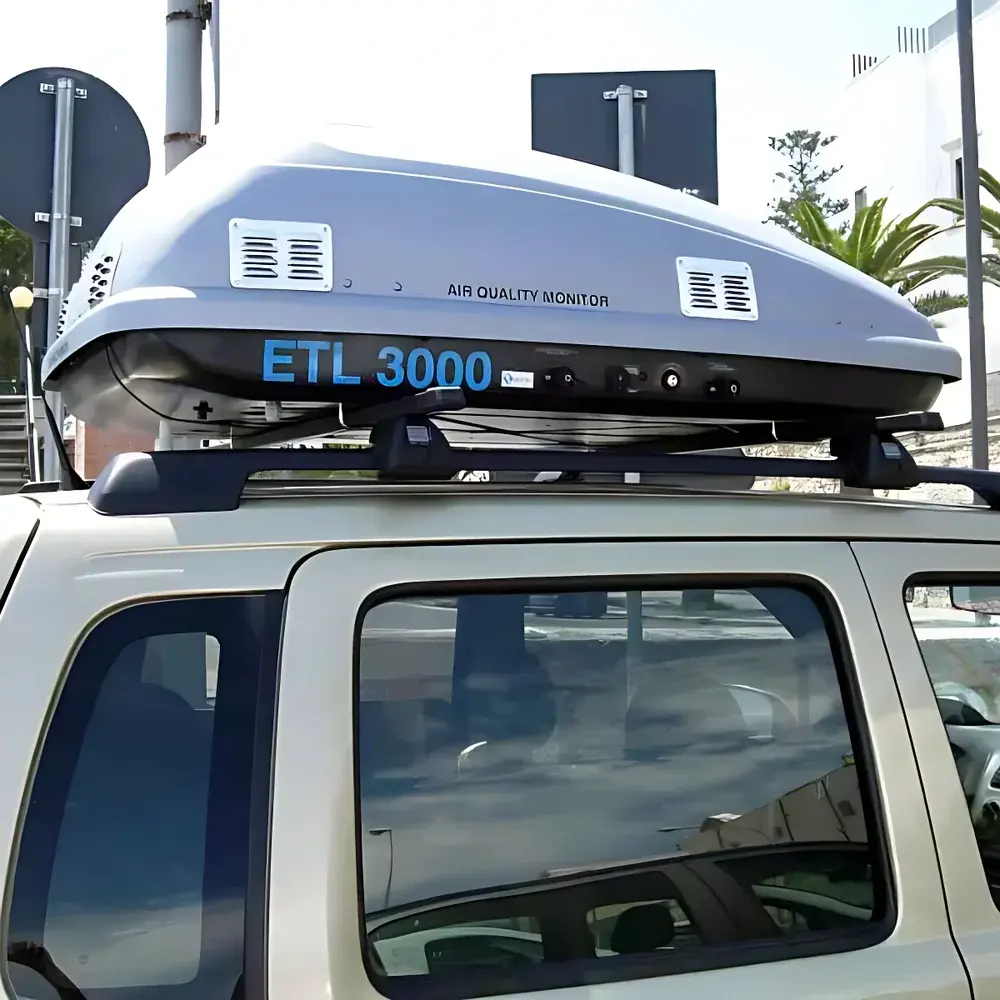
Unitec ETL-BUS Mobile Air Quality Monitoring System
| Brand | UNITEC |
|---|---|
| Origin | Italy |
| Model | ETL-BUS |
| Pollutants | SO₂, H₂S, NH₃, C₆H₆, VOCs, CO, NO₂, O₃, CH₄, CO₂ |
| PM Measurement | PM₁, PM₂.₅, PM₁₀ |
| Sensor Technologies | TF-MOS (Metal Oxide Semiconductor), Electrochemical (EC), NDIR (Infrared), Orthogonal Light Scattering (PM), OPC (Optical Particle Counter) |
| Operating Temperature | −20 to +50 °C |
| Humidity Range | 10–95% RH (non-condensing) |
| IP Rating | IP55 |
| Power Supply | 12 VDC (with internal battery & 220 V AC adapter) |
| Power Consumption | 50–70 W |
| Dimensions | 1400 × 900 × 400 mm |
| Weight | 20 kg |
| Compliance | EU Directive 2008/50/EC |
Overview
The Unitec ETL-BUS Mobile Air Quality Monitoring System is a fully integrated, vehicle-mounted environmental monitoring platform engineered for high-fidelity, real-time assessment of gaseous and particulate pollutants in dynamic urban and industrial environments. Designed and manufactured in Italy, the ETL-BUS implements a modular sensor architecture grounded in three validated detection principles: thick-film metal oxide semiconductor (TF-MOS) for oxidizing/reducing gases (e.g., CO, NO₂, O₃, C₆H₆), electrochemical (EC) cells for reactive species (NH₃, SO₂, H₂S, VOCs), and non-dispersive infrared (NDIR) for CO₂. Particulate matter is quantified via orthogonal light scattering for single-channel PM₁/PM₂.₅/PM₁ measurement or optionally via a calibrated optical particle counter (OPC) supporting simultaneous tri-channel resolution (PM₁, PM₂.₅, PM₁₀). The system operates without active air conditioning or sample pre-treatment—its IP55-rated enclosure enables direct rooftop mounting on buses, municipal vehicles, or mobile research platforms. It complies with the European Ambient Air Quality Directive 2008/50/EC for indicative monitoring, making it suitable for regulatory-grade supplementary data acquisition where fixed reference stations are sparse or temporally constrained.
Key Features
- Modular SENS-IT sensor architecture: Each gas-specific sensor is field-replaceable and connects to dedicated analog/digital interfaces on the central data acquisition unit—eliminating cross-sensitivity and simplifying calibration logistics.
- High-sensitivity detection: Sub-ppb resolution for key pollutants (e.g., 0.1 ppb for C₆H₆, 1 ppb for NO₂/O₃) enabled by low-noise signal conditioning and temperature-compensated algorithms.
- Dual PM monitoring capability: Standard orthogonal light scattering module (±2% full-scale accuracy) and optional OPC-based module (±1% full-scale accuracy) both feature automated zero-point correction cycles to suppress long-term drift.
- Autonomous operation: Integrated 12 VDC power management includes rechargeable battery backup and compatibility with solar charging kits—enabling unattended deployment for up to 72 hours during grid outage.
- Ruggedized outdoor design: IP55 ingress protection ensures reliable performance across −20 °C to +50 °C and 10–95% RH (non-condensing); no external cooling, filtration, or humidification required.
- Configurable telemetry: Optional GSM or UMTS modems support secure VPN tunneling (IPsec/IKEv2) for encrypted, bidirectional data transmission compliant with IT security policies in public-sector deployments.
Sample Compatibility & Compliance
The ETL-BUS is validated for ambient air sampling under representative urban, roadside, and peri-industrial conditions. Its gas sensors meet EN 14625 (O₃), EN 14626 (CO), EN 14627 (NO₂), and EN 15446 (VOCs) test protocols for indicative monitoring. Particulate modules conform to EN 12341 (PM₁₀) and EN 16450 (optical PM measurement principles). All firmware and data handling routines support audit-ready logging aligned with GLP principles, including timestamped sensor diagnostics, calibration event records, and hardware fault flags. While not certified as a reference method per EU 2008/50/EC Annex III, the system satisfies Annex VI requirements for “indicative measurements” when operated within specified environmental and maintenance intervals. Data output formats comply with ISO 17025 traceability frameworks through documented uncertainty budgets per analyte.
Software & Data Management
The @COM3000BUS software suite provides full lifecycle instrument control via Windows-based desktop application or web interface (HTTPS). Functions include remote configuration of sampling frequency (1–3600 s), averaging intervals (15- or 60-minute means), alarm thresholds, and zero-correction schedules. All raw sensor outputs—including temperature, RH, GPS coordinates, and meteorological inputs from optional on-board weather stations—are time-stamped with microsecond precision and stored in binary format on internal flash memory (≥12 months at 1-min resolution). ASCII export supports CSV, NetCDF, and EPA AQS-compatible schemas. Audit trails record user actions, firmware updates, and sensor swap events with SHA-256 hashing for integrity verification. Data encryption (AES-256) and role-based access control align with GDPR and national data sovereignty mandates.
Applications
- 3D spatiotemporal mapping of pollution gradients using synchronized GPS-tagged mobile transects across street canyons, transit corridors, and industrial perimeters.
- Supplemental monitoring for compliance reporting in municipalities lacking sufficient fixed-site reference stations—particularly during construction phases or temporary emission events.
- Real-time exposure assessment for epidemiological cohort studies requiring personal or near-roadway pollutant profiles.
- Industrial fence-line monitoring where stationary systems cannot capture plume dynamics due to wind variability or facility layout constraints.
- Calibration validation and spatial interpolation support for satellite-derived aerosol optical depth (AOD) products.
- Emergency response deployment for rapid hazard zone delineation following chemical releases or fire incidents.
FAQ
What regulatory standards does the ETL-BUS comply with?
The system meets the technical and operational criteria for indicative monitoring under EU Directive 2008/50/EC and references EN standards for individual analytes (e.g., EN 14625, EN 12341). It is not a certified reference method but fulfills Annex VI requirements for supplementary data collection.
Can the ETL-BUS operate without grid power?
Yes—it runs on 12 VDC with an internal rechargeable battery and includes a 220 V AC adapter; optional solar panel kits extend autonomy to ≥72 hours under typical load conditions.
How often do sensors require calibration?
SENS-IT sensors exhibit low drift due to embedded thermal stabilization and factory characterization; field calibration is recommended every 6 months for EC/TF-MOS sensors and annually for NDIR/OPC modules—guided by automatic diagnostic alerts.
Is GPS positioning integrated or optional?
A GPS module is standard on all ETL-BUS units and provides WGS84 coordinates at 1 Hz, embedded in every data packet for georeferenced analysis.
Does the system support remote firmware updates?
Yes—@COM3000BUS enables secure over-the-air (OTA) updates via authenticated HTTPS sessions, with rollback capability and cryptographic signature verification.
What meteorological parameters can be added?
An optional Class I weather station measures ambient temperature, relative humidity, wind speed/direction, and barometric pressure—fully synchronized with air quality readings in the data stream.







