
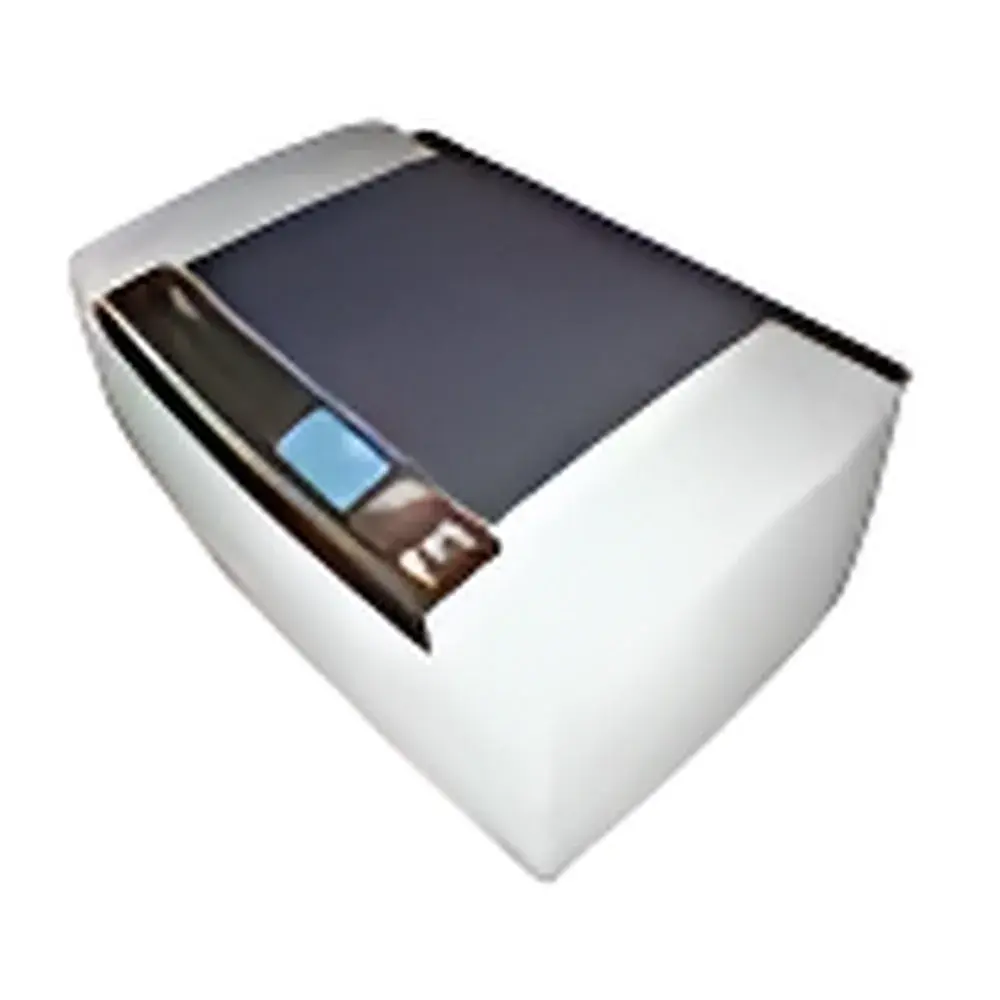
EURO TECH ET1200 Infrared Spectrophotometric Oil Analyzer
| Brand | EURO TECH |
|---|---|
| Origin | Shanghai, China |
| Manufacturer Type | Authorized Distributor |
| Country of Origin | China |
| Model | ET1200 |
| Pricing | Upon Request |
| Measurement Range | 0–1000 mg/L |
| Detection Limit | 0.2 mg/L (in CCl₄ extract) |
| Repeatability | RSD < 3% |
| Wavenumber Range | 3400–2400 cm⁻¹ |
| Wavenumber Accuracy | ±2 cm⁻¹ |
| Output Modes | Concentration, Absorbance, Transmittance |
| Interface | RS232 |
| Power Supply | 220 V ±10%, 50 Hz |
| Dimensions | 500 × 380 × 220 mm |
| Weight | 15 kg |
| Operating Temperature | 5–35 °C |
Overview
The EURO TECH ET1200 Infrared Spectrophotometric Oil Analyzer is a dedicated, regulatory-compliant instrument engineered for the quantitative determination of total petroleum hydrocarbons (TPH), animal and vegetable oils, and cooking oil fumes in aqueous and gaseous matrices. It operates on the principle of infrared absorption spectroscopy—specifically targeting characteristic C–H stretching vibrations at three critical wavenumbers: 3030 cm⁻¹ (aromatic C–H), 2960 cm⁻¹ (asymmetric CH₃ stretch), and 2930 cm⁻¹ (asymmetric CH₂ stretch)—in full accordance with the Chinese national standard GB/T 16488–1996. This tri-wavelength methodology enables selective quantification of hydrocarbon-based contaminants while minimizing interferences from non-petroleum organic matter. Unlike general-purpose FTIR systems, the ET1200 integrates optimized optical path design, temperature-compensated photodetection, and solvent-specific calibration protocols to deliver robust, field-deployable performance in environmental laboratories, wastewater treatment facilities, and industrial hygiene monitoring programs.
Key Features
- Triple-wavelength infrared photometry (3030, 2960, 2930 cm⁻¹) compliant with GB/T 16488–1996 for petroleum and biogenic oil differentiation
- Standalone operation mode: fully functional without PC connection—supports direct sample measurement, zero-point memory retention, and automated multi-read averaging
- Integrated temperature compensation algorithm ensuring stable absorbance response across 5–35 °C ambient range
- High-precision optical train featuring domestically sourced high-transmittance optics and a low-drift silicon photodiode detector
- Stepper motor-driven grating mechanism eliminating gear backlash and improving wavelength reproducibility
- Pre-calibrated with high-purity carbon tetrachloride (CCl₄) extractant; compatible with EURO TECH’s certified low-toxicity alternative solvents
- Measurement cycle ≤25 seconds per sample, including auto-zeroing, blank subtraction, and triplicate absorbance acquisition
- RS232 serial interface for bidirectional communication with LIMS or data logging systems
Sample Compatibility & Compliance
The ET1200 is validated for use with liquid-phase extracts prepared via liquid–liquid extraction (e.g., CCl₄ or approved substitutes) from surface water, groundwater, municipal wastewater, industrial effluents, and soil leachates. It also supports analysis of airborne油烟 (cooking oil fume) collected on quartz fiber filters, following standardized collection and desorption protocols. All operational parameters—including wavenumber accuracy (±2 cm⁻¹), detection limit (0.2 mg/L in CCl₄ extract), and repeatability (RSD < 3%)—are verified per GB/T 16488–1996 and aligned with ISO 8217 and ASTM D7066–17 methodological frameworks for hydrocarbon quantification. Instrument manufacturing adheres to ISO 9001:2015 quality management requirements, with incoming component inspection conducted per AQL II sampling plans (GB/T 2828.1). Final unit testing follows full-system functional verification against traceable NIST-traceable reference standards.
Software & Data Management
When connected to a Windows-based host PC, the ET1200 supports comprehensive spectral acquisition, baseline correction, peak integration, and calibration curve generation using EURO TECH’s proprietary AnalytSoft v3.x suite. The software enforces audit-trail functionality—including user login timestamps, parameter change logs, and raw absorbance file archiving—to support GLP-compliant workflows. All calibration files, sample IDs, and QC records are exportable in CSV or XML format for integration into enterprise-level LIMS platforms. The system supports 21 CFR Part 11–compatible electronic signatures when deployed with validated authentication modules. Internal memory retains up to 500 measurement records even during power interruption, ensuring data integrity during field deployment.
Applications
- Regulatory compliance monitoring of oil-in-water concentrations in discharge permits (e.g., EPA NPDES, China MEP Order No. 39)
- Routine QC testing in municipal drinking water treatment plants and sewage pumping stations
- Industrial source tracking in petrochemical refineries, metalworking fluid management, and food processing exhaust systems
- Environmental site assessment for hydrocarbon contamination in soil and sediment pore water
- Educational and research applications in analytical chemistry labs requiring benchtop IR spectrophotometry with trace-level sensitivity
- Occupational health surveillance of kitchen hood emissions in commercial catering facilities
FAQ
Does the ET1200 comply with international oil-in-water measurement standards beyond GB/T 16488?
Yes—the optical configuration and calibration protocol are functionally equivalent to ASTM D7066–17 and ISO 9377–2 methodologies for infrared hydrocarbon quantification.
Can the instrument operate without a computer for field measurements?
Yes—standalone mode supports full tri-wavelength measurement, automatic zero retention, and numeric concentration readout without external hardware.
Is carbon tetrachloride mandatory for extraction?
No—EURO TECH supplies a certified low-toxicity alternative solvent compatible with the ET1200’s calibration matrix and spectral response profile.
How is temperature drift mitigated during extended operation?
An embedded thermistor network feeds real-time thermal feedback to the signal processing module, dynamically adjusting gain and baseline offset to maintain absorbance linearity.
What is the expected service life of the optical detector under routine use?
The silicon photodiode is rated for ≥10,000 hours of continuous operation with <0.5% responsivity drift per year when operated within specified ambient conditions.







