
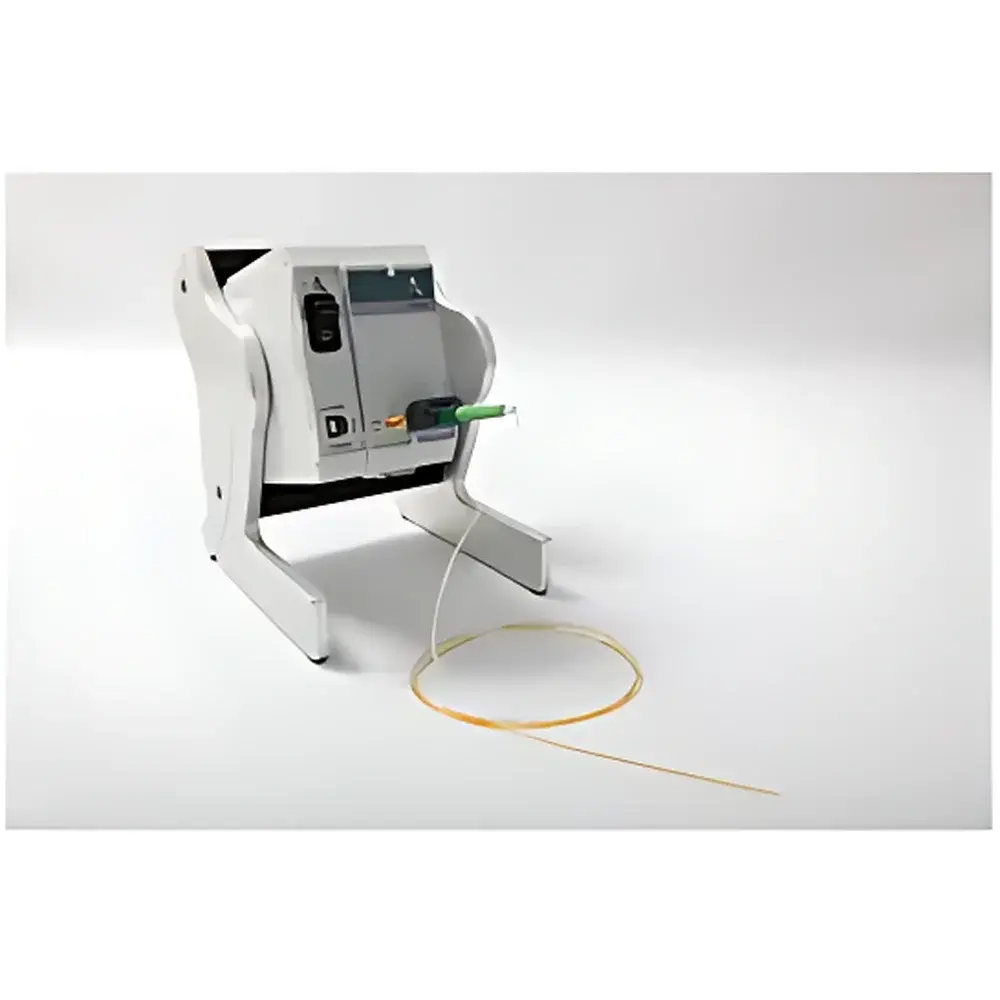
FISO FOP-LS-PT9-11 / FOP-LS-PT9-10 Miniature Fiber-Optic Intravascular Pressure Monitoring System
| Origin | Canada |
|---|---|
| Manufacturer Type | Authorized Distributor |
| Origin Category | Imported |
| Model | FOP-LS-PT9-11 / FOP-LS-PT9-10 |
| Pricing | Upon Request |
Overview
The FISO FOP-LS-PT9 Series is a preclinical, fiber-optic-based intravascular pressure monitoring system engineered for high-fidelity, real-time hemodynamic assessment in small and medium-sized laboratory animals. Unlike conventional electronic or piezoresistive catheters, this system employs extrinsic Fabry–Pérot interferometric (EFPI) sensing technology embedded within ultra-miniaturized optical fibers—enabling direct, continuous, and drift-free measurement of intracavitary pressures without electrical components at the sensor tip. The core principle relies on wavelength-encoded pressure-induced displacement of a micro-machined diaphragm, interrogated via broadband light source and spectrometer-based signal processing. This architecture eliminates electromagnetic interference (EMI), radiofrequency (RF) artifacts, and grounding-related noise—making it uniquely suitable for concurrent MRI, electrophysiology, or optogenetic studies where electromagnetic cleanliness is non-negotiable. Designed for longitudinal in vivo experiments, the system supports repeated implantation and chronic monitoring in conscious or anesthetized models, with validated performance across arterial, ventricular, urinary, gastrointestinal, intraocular, and intracranial compartments.
Key Features
- Ultra-miniaturized optical pressure sensors: 0.5 Fr (FOP-LS-PT9-11) and 0.9 Fr (FOP-LS-PT9-10) outer diameters—among the smallest clinically validated fiber-optic catheters commercially available for rodent cardiovascular research.
- MRI-compatible design: Fully passive optical sensing architecture; no metallic conductors or active electronics at the distal tip; certified for use in ≥3T MRI environments without signal distortion or thermal risk.
- Front-face pressure transduction: Sensor diaphragm oriented perpendicular to flow axis—ensuring accurate dynamic pressure capture without orientation-dependent artifact common in side-port configurations.
- Reusable catheter platform: Sterilizable via ethylene oxide (EtO) or low-temperature hydrogen peroxide plasma; validated for ≥5 independent implantation cycles in controlled preclinical settings.
- Modular signal conditioning: FPI-LS-10 single-channel fiber-optic interrogator provides calibrated analog (±10 V) and digital (USB 2.0) outputs; compatible with third-party data acquisition systems (e.g., LabChart, PowerLab, Spike2, MATLAB Data Acquisition Toolbox).
- Scalable experimental setup: Supported by EVO-SD-2 (dual-slot) and EVO-SD-5 (five-slot) mounting brackets for parallel multi-animal monitoring under standardized physiological conditions.
Sample Compatibility & Compliance
The FOP-LS-PT9 series is validated for use in Sprague-Dawley and Wistar rats, C57BL/6 and BALB/c mice, New Zealand White rabbits, guinea pigs, and domestic cats. Catheter sizing (0.5 Fr to 3 Fr) enables precise matching to anatomical vasculature—e.g., femoral or carotid artery cannulation in mice, ascending aorta access in rabbits, or left ventricular puncture in rat Langendorff preparations. All sensors comply with ISO 10993-1 (Biological Evaluation of Medical Devices) for cytotoxicity, sensitization, and intracutaneous reactivity. System-level documentation supports GLP-compliant study execution, including full traceability of calibration certificates (NIST-traceable reference standards), sensor lot-specific performance reports, and audit-ready electronic records when integrated with 21 CFR Part 11–enabled DAQ platforms.
Software & Data Management
The FPI-LS-10 interrogator delivers high-resolution pressure waveforms at up to 2 kHz sampling rate with 16-bit ADC resolution and ±0.1 mmHg typical static accuracy (full-scale range: ±1000 mmHg). Raw spectral data and processed pressure time-series are exportable in CSV, HDF5, and TDMS formats. Optional FISO DataStudio software provides real-time waveform visualization, beat-to-beat parameter extraction (systolic, diastolic, mean arterial pressure, dP/dtmax, pulse pressure), and automated arrhythmia detection based on R-wave morphology and inter-beat interval variability. All software modules support configurable audit trails, user role management, and electronic signature workflows aligned with FDA 21 CFR Part 11 requirements for regulated preclinical pharmacology and toxicology studies.
Applications
- Chronic arterial pressure telemetry replacement in genetically modified murine models where traditional telemetry implants induce surgical morbidity or signal dropout during MRI.
- High-temporal-resolution assessment of acute hemodynamic responses to vasoactive compounds (e.g., phenylephrine, nitroprusside) in dose–response pharmacodynamics.
- Left ventricular pressure–volume loop analysis in isolated heart or in situ preparations using synchronized PV catheter integration.
- Intra-abdominal pressure (IAP) and intravesical pressure monitoring during sepsis or abdominal compartment syndrome modeling.
- Combined neurovascular monitoring: simultaneous intracranial pressure (ICP) and cortical cerebral blood flow (CBF) measurements in stroke or traumatic brain injury models.
- Developmental cardiovascular phenotyping in embryonic or neonatal rodent models using microcatheter-guided transseptal access.
FAQ
What is the minimum measurable pressure resolution of the FOP-LS-PT9-11 catheter?
The system achieves ≤0.05 mmHg pressure resolution over its linear operating range (0–1000 mmHg), limited primarily by the interrogator’s spectral sampling fidelity and environmental thermal stability.
Can the catheter be used in saline-filled or blood-filled environments without signal degradation?
Yes—the EFPI sensor is hermetically sealed within biocompatible glass and polyimide tubing; validated for continuous immersion in whole blood, heparinized saline, and CSF for >72 hours without hysteresis or baseline drift.
Is sterilization required between animal subjects, and what methods are approved?
Sterilization is mandatory per IACUC protocol; EtO gas (450–600 mg/L, 3–6 hr exposure) and low-temperature hydrogen peroxide plasma (Sterrad® NX) are validated and do not compromise optical or mechanical integrity.
How does the system handle motion artifact during unrestrained or treadmill-based experiments?
The front-face sensor geometry and fiber-optic strain isolation minimize motion-induced artifact; however, for ambulatory applications, co-registration with accelerometry or video-based motion tracking is recommended for post-hoc artifact rejection.
Are calibration certificates provided with each catheter shipment?
Yes—each lot includes NIST-traceable calibration data (pressure vs. wavelength shift), temperature compensation coefficients, and individual sensor identification codes archived in FISO’s Quality Management System (QMS).




