
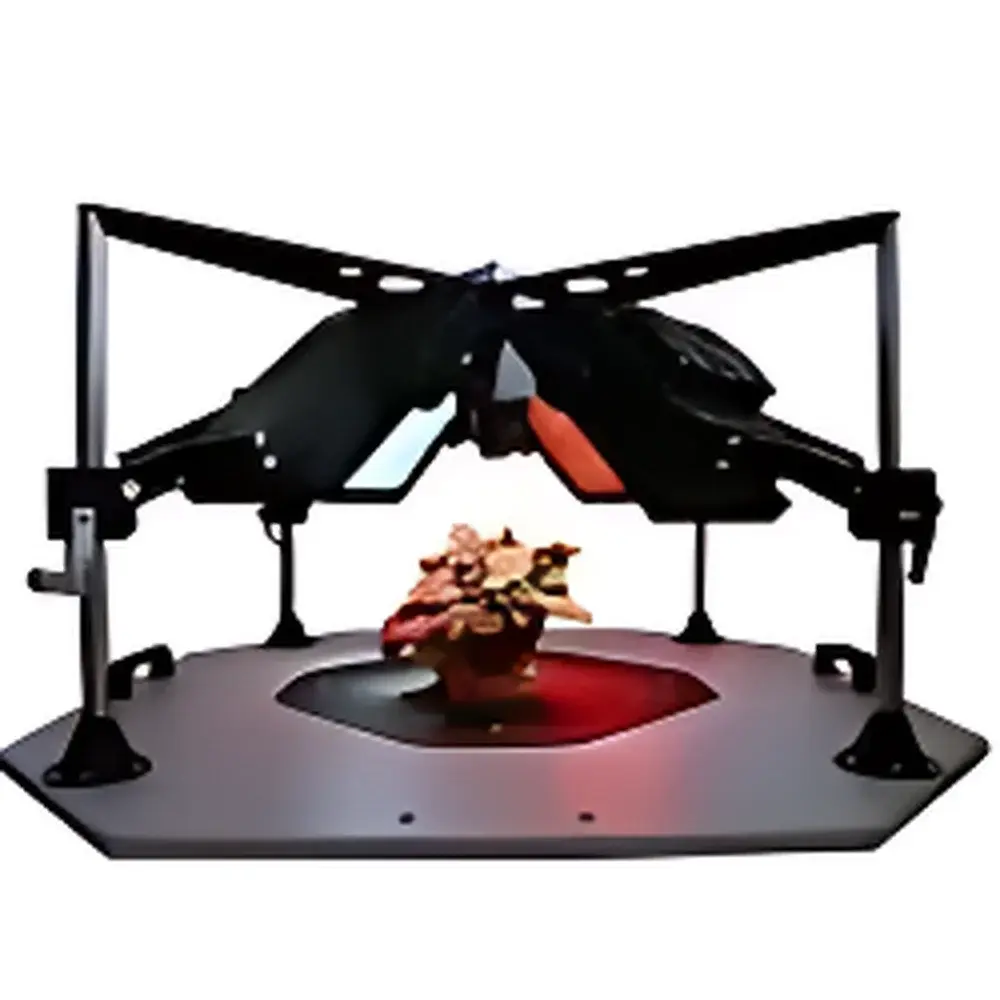
FluorCam Series Chlorophyll Fluorescence Imaging System by PSI
| [Brand | PSI |
|---|---|
| Origin | Czech Republic |
| Model | FluorCam Series |
| Key Features | PAM-modulated chlorophyll fluorescence imaging |
| Sensor Options | Up to 1280×1024 px, 16,000 fps OJIP-capable sensor |
| Imaging Area | 31.5×41.5 mm (portable) to 35×35 cm (large-scale platform) |
| LED Excitation Sources | Customizable multi-wavelength (red, blue, white, UV, far-red) |
| Software | FluorCam v8.x with protocol editor, GLP-compliant audit trail, lifetime free updates |
| Compliance | ASTM E2912-22 (fluorescence imaging standards), ISO 17025 traceable calibration support, FDA 21 CFR Part 11 optional module] |
Overview
The FluorCam Series Chlorophyll Fluorescence Imaging System—developed and manufactured by Photon Systems Instruments (PSI), Czech Republic—is a research-grade, PAM (Pulse-Amplitude Modulation)-modulated fluorescence imaging platform engineered for quantitative, non-invasive, two-dimensional mapping of photosynthetic performance across biological samples. Unlike single-point fluorometers, FluorCam systems capture spatial heterogeneity in chlorophyll *a* fluorescence kinetics at macroscopic (whole-plant, canopy, microalgal cultures) and microscopic (chloroplasts, single cells) scales. The core measurement principle relies on modulated excitation light pulses synchronized with high-speed CCD or sCMOS sensors to isolate photochemical and non-photochemical quenching components while suppressing ambient light interference. This enables robust quantification of parameters such as Fv/Fm, ΦII, NPQ, Rfd, OJIP transient kinetics, QA− reoxidation rates, and multicolor fluorescent protein signals (GFP, YFP, DAPI, etc.) under controlled or field-deployable conditions. As the first commercially viable PAM-based fluorescence imager (Nedbal et al., 2000), FluorCam established the technical foundation for modern plant phenomics and remains the most widely cited instrumentation in peer-reviewed chlorophyll fluorescence literature—over 300 indexed publications from 2019–2021 alone.
Key Features
- PAM-modulated imaging architecture with integrated, proprietary LED excitation panels—fully programmable in intensity, spectral composition (400–780 nm), and pulse timing
- Multi-sensor configuration options: standard high-sensitivity CCD (720×560, 50 fps), high-resolution CCD (1360×1024, 20 fps), or ultra-high-speed sCMOS (1280×1024, up to 16,000 fps) for true OJIP curve acquisition
- Modular optical design supporting interchangeable lenses, filter wheels, and excitation/detection bandpass filters for multichannel fluorescence detection
- Comprehensive protocol library including Fv/Fm, Kautsky induction, fluorescence quenching analysis (50+ derived parameters), light response curves (LC), QA reoxidation, OJIP transient kinetics, NDVI/PAR absorption, and fluorescent protein imaging
- Automated experiment sequencing with user-defined repetition intervals, time-lapse scheduling, and unattended operation—data timestamped and stored with full metadata
- Signal processing dual-mode algorithm: “signal-calculate-then-average” (for high-SNR conditions) and “signal-average-then-calculate” (for low-light or noisy environments)
- Real-time live preview, ROI-based parameter extraction, histogram generation, temporal fluorescence dynamics video export, and Excel-compatible parameter tables
Sample Compatibility & Compliance
FluorCam systems accommodate diverse biological specimens without physical contact or sample preparation: detached leaves, intact seedlings, whole rosettes (e.g., *Arabidopsis thaliana*), crop canopies, bryophytes, lichens, macro- and microalgae, cyanobacterial colonies, coral symbionts, bacterial biofilms, and even chlorophyll-containing marine organisms. The platform supports both laboratory-controlled environments (growth chambers, climate rooms) and semi-field deployments (portable and enclosed configurations with integrated dark-adaptation capability). All hardware and software comply with international standards relevant to scientific instrumentation: ASTM E2912-22 (Standard Guide for Fluorescence Imaging of Biological Samples), ISO/IEC 17025 requirements for calibration traceability, and optional FDA 21 CFR Part 11 compliance via electronic signature and audit-trail modules. Data integrity is maintained through encrypted storage, version-controlled protocol files, and GLP-aligned experimental documentation workflows.
Software & Data Management
The FluorCam software suite (v8.x, Windows-based) provides a unified interface for instrument control, protocol development, real-time visualization, and post-acquisition analysis. Core modules include Live View (real-time fluorescence monitoring), Protocols (graphical drag-and-drop editor for custom measurement sequences), Pre-processing (background subtraction, flat-field correction, motion stabilization), and Results (statistical summary, ROI comparison, false-color parameter mapping, threshold-based segmentation). Advanced features include spectral unmixing for multicolor fluorescent probes, dynamic range optimization per frame, batch processing of multi-experiment datasets, and export to HDF5, TIFF, CSV, and MATLAB formats. Software updates are provided at no cost for the lifetime of the system. PSI also offers remote software validation support and on-site training aligned with ISO/IEC 17025 quality management frameworks.
Applications
FluorCam systems serve as primary tools in plant stress physiology, functional genomics, crop breeding, algal biotechnology, and ecological monitoring. Documented use cases include early detection of abiotic stress responses (salinity, drought, heavy metals, temperature extremes) prior to visible symptom onset; spatial mapping of photosynthetic heterogeneity in mutant lines or transgenic plants; high-throughput screening of germplasm collections for photosynthetic efficiency traits; kinetic profiling of photoprotective mechanisms (NPQ induction/relaxation); correlative analysis of chlorophyll fluorescence with hyperspectral reflectance or gas exchange; and subcellular localization studies using GFP-tagged proteins in combination with chloroplast activity mapping. The FluorCam platform forms the fluorescence imaging core of the PlantScreen phenotyping platforms—the most widely installed automated plant phenomics infrastructure globally.
FAQ
What distinguishes FluorCam from conventional chlorophyll fluorometers?
FluorCam delivers spatially resolved, image-based fluorescence data rather than single-point measurements—enabling detection of intra-leaf, inter-leaf, and inter-plant variability that conventional devices cannot resolve.
Can FluorCam measure non-chlorophyll fluorophores like GFP or DAPI?
Yes—via optional multi-band excitation sources and emission filter sets, FluorCam supports quantitative imaging of GFP, YFP, CFP, RFP, BFP, DAPI, and other exogenous fluorophores in living tissues.
Is OJIP transient kinetics available as an imaging modality?
Yes—only FluorCam systems equipped with the ultra-high-speed sCMOS sensor (16,000 fps) provide true pixel-wise OJIP curve acquisition across the entire field of view.
Does the system support regulatory compliance for pharmaceutical or agricultural R&D?
Optional FDA 21 CFR Part 11 functionality—including electronic signatures, audit trails, and user access controls—is available upon request for GLP/GMP-aligned workflows.
How is calibration maintained over time?
PSI provides NIST-traceable reference standards and annual calibration verification services; internal sensor gain/offset drift compensation is embedded in firmware and applied automatically during acquisition.
Are software updates included after purchase?
Yes—lifetime free software upgrades are included with all FluorCam systems, ensuring continuous compatibility with evolving operating systems and analytical methodologies.





