
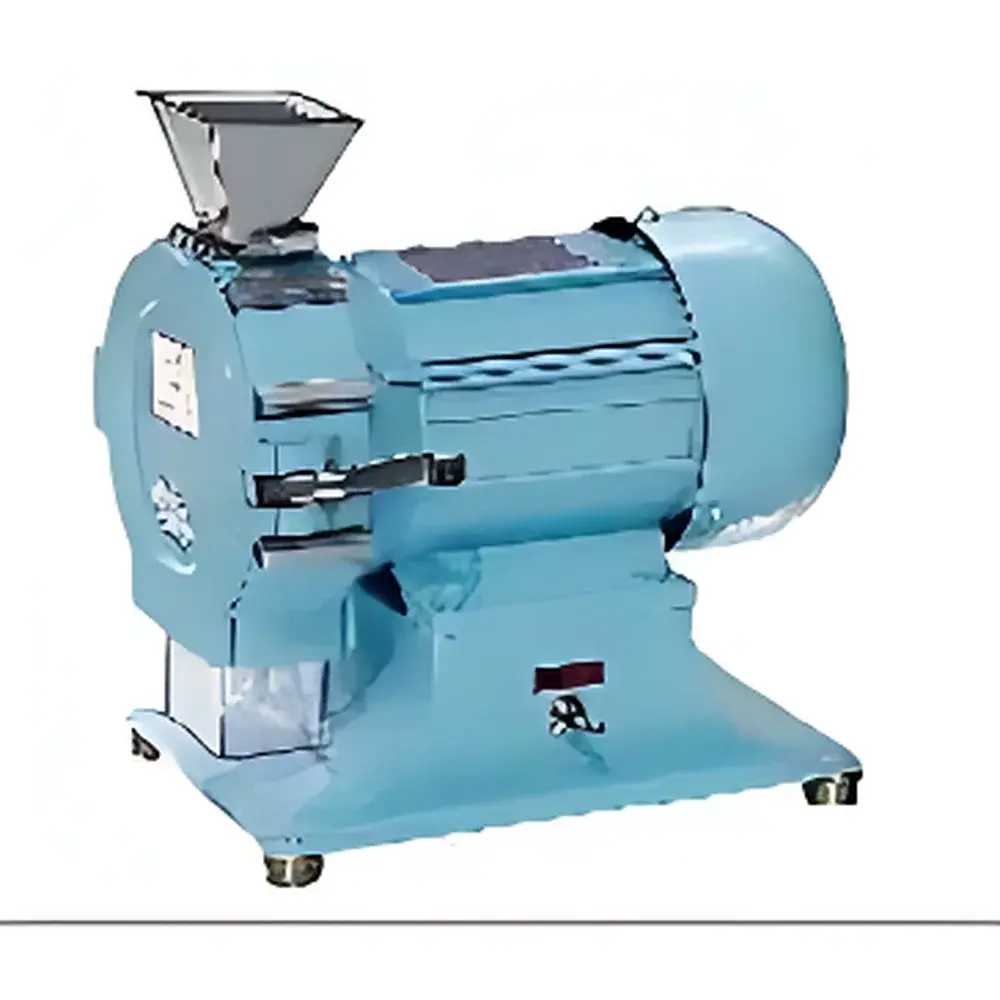
FW-135 Herbal Sample Mill / Laboratory Plant Grinder
| Origin | Shanghai, China |
|---|---|
| Manufacturer Type | Authorized Distributor |
| Country of Origin | PRC |
| Model | FW-135 |
| Power | 200 W, 220 V AC |
| Rated Speed | 10,000 rpm |
| External Dimensions | φ130 × 250 mm |
| Particle Size Range | 60–200 µm |
| Price | USD 215 (FOB Shanghai) |
Overview
The FW-135 Herbal Sample Mill is a benchtop laboratory grinder engineered for consistent, reproducible size reduction of botanical, agricultural, and pharmaceutical dry samples. Designed around a high-speed rotor-stator cutting principle—where a rotating blade engages a fixed counter-blade to generate controlled shear and impact forces—the instrument delivers uniform particle size distribution essential for downstream analytical workflows including moisture determination (ASTM D4442), protein quantification (AOAC 984.13), oil extraction (ISO 659), and elemental analysis (USP ). Its compact footprint and stainless-steel grinding chamber ensure compliance with GLP-aligned sample preparation protocols in QC labs, research institutions, and regulatory testing facilities across agriculture, traditional medicine, food safety, and geological survey applications.
Key Features
- Stainless-steel grinding chamber and cutting assembly—resistant to corrosion and cross-contamination, supporting trace-level analysis and routine cleaning validation.
- Adjustable blade gap mechanism—enables fine-tuning of particle size output for heterogeneous plant matrices (e.g., fibrous roots, oily seeds, or dried leaves) without tooling changes.
- Thermally stable 200 W induction motor—rated for continuous operation at 10,000 rpm with integrated thermal cutoff protection to prevent overheating during extended batch processing.
- Compact cylindrical form factor (φ130 × 250 mm)—designed for space-constrained lab benches and compatible with standard fume hood sashes (minimum 450 mm width).
- UL/CE-compliant electrical architecture—220 V AC input with grounded chassis and double-insulated housing meeting IEC 61000-6-3 EMC requirements.
Sample Compatibility & Compliance
The FW-135 accommodates dry, non-volatile, low-moisture (<12% w/w) botanical materials—including dried herbs, cereal grains (wheat, rice, soybean), medicinal roots (e.g., ginseng, astragalus), mineral soils, and pulverized coal samples. It is not suitable for wet, sticky, or thermolabile substances (e.g., fresh tissue, essential oils, or polymer blends). All contact surfaces meet FDA-recommended 304 stainless-steel standards for food-grade sample handling. The device supports audit-ready documentation per ISO/IEC 17025:2017 Clause 7.2.2 (sample preparation traceability) and aligns with USP guidelines for equipment qualification in compendial testing environments.
Software & Data Management
As a standalone mechanical grinder, the FW-135 operates without embedded firmware or digital interface. However, its deterministic performance enables full integration into LIMS-driven workflows: operators log batch IDs, grinding duration, and post-grinding sieve verification (e.g., ASTM E11 mesh calibration) directly into electronic lab notebooks (ELNs) compliant with 21 CFR Part 11. Optional accessories—including calibrated test sieves (ISO 3310-1, 63–200 µm) and certified reference materials (NIST SRM 1976b for botanical homogeneity)—facilitate IQ/OQ documentation and inter-laboratory method transfer.
Applications
- Preparation of homogenized herbal powder for HPLC fingerprinting (Chinese Pharmacopoeia ChP 2020 Vol. I, Section 1101).
- Routine comminution of cereal grains prior to near-infrared (NIR) spectroscopy-based protein/oil prediction models.
- Soil sample homogenization for heavy metal analysis (EPA Method 6010D) and organic carbon quantification (ISO 14235).
- Particle size standardization in botanical extract validation studies under ICH Q5C stability protocols.
- Supporting pharmacopeial disintegration testing (USP ) via controlled granule size generation from tablet excipients.
FAQ
What types of samples are incompatible with the FW-135?
Samples with moisture content exceeding 12%, high oil content (>15% w/w), or significant elasticity (e.g., fresh stems, rubbery resins) may cause clogging or inconsistent sizing and are not recommended.
Can the FW-135 be validated for GMP-regulated environments?
Yes—when used with documented SOPs, preventive maintenance logs, and periodic performance verification (e.g., sieve analysis of three consecutive batches), it meets basic equipment qualification criteria for Category B ancillary devices under EU Annex 15.
Is replacement blade calibration required after each use?
No—blades are factory-calibrated and require only visual inspection for wear; recalibration is only necessary if measured particle size deviates >10% from baseline sieve data over five consecutive runs.
Does the unit support CE or RoHS certification documentation?
Yes—full declaration of conformity (DoC), RoHS 2011/65/EU test reports, and EMC compliance certificates are supplied with each unit shipment.



