
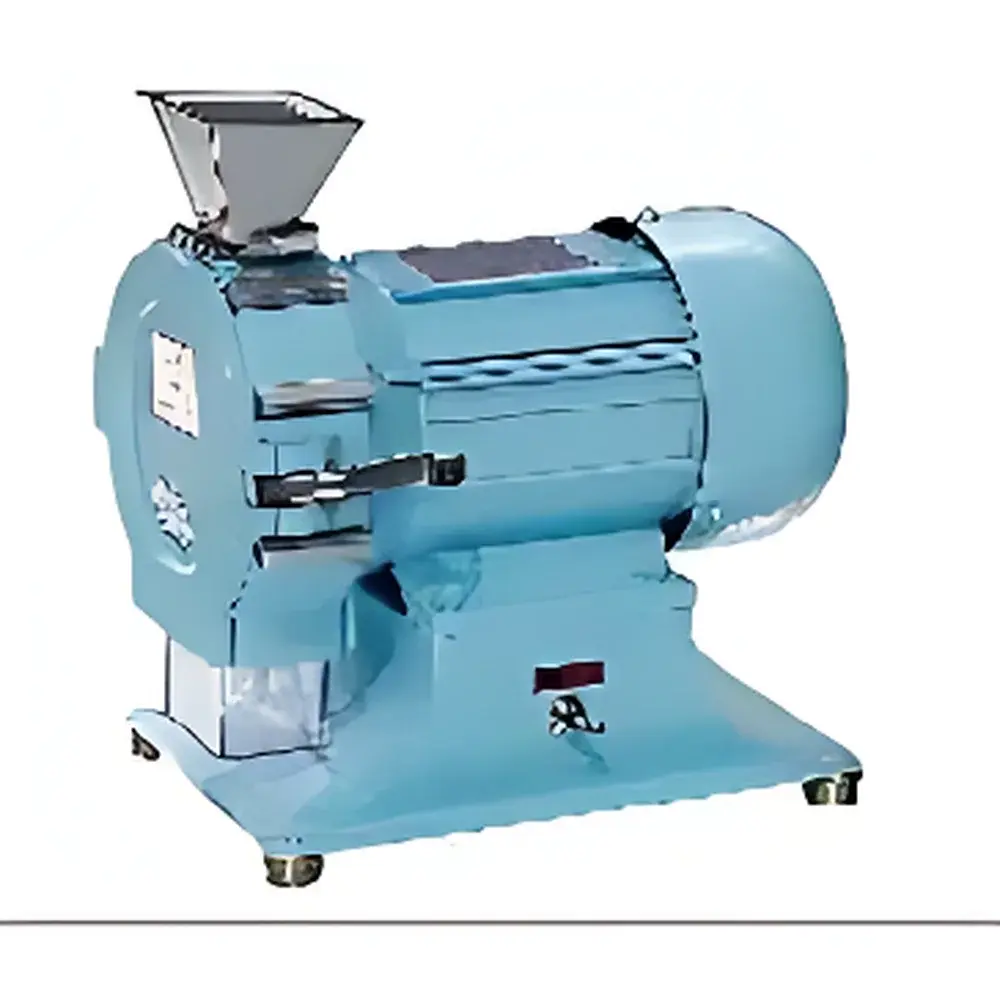
FW-177 Herbal & Botanical Sample Grinder
| Origin | Shanghai, China |
|---|---|
| Manufacturer Type | Authorized Distributor |
| Origin Category | Domestic (PRC) |
| Model | FW-177 |
| Power | 460 W, 220 V AC |
| Rated Speed | 24,000 rpm |
| External Dimensions | Ø140 × 290 mm |
| Particle Size Range | 60–200 µm |
| Price | USD 255 (FOB Shanghai) |
Overview
The FW-177 Herbal & Botanical Sample Grinder is a high-speed, benchtop laboratory grinder engineered for reproducible, consistent particle size reduction of fibrous, oily, and moderately tough botanical matrices—including dried herbs, roots, leaves, seeds, and traditional Chinese medicinal materials. It operates on the principle of high-shear impact grinding, where a precision-machined rotating blade interacts with a fixed counter-blade to generate controlled mechanical shear and impact forces. This design enables efficient comminution without excessive heat buildup—critical for preserving thermolabile phytochemicals, volatile oils, and enzymatic activity during sample preparation for downstream analytical workflows such as HPLC, GC-MS, UV-Vis spectrophotometry, or proximate analysis (moisture, protein, fat, ash). The unit is optimized for routine QC/QA labs, herbal pharmacognosy research, agricultural testing centers, and regulatory compliance laboratories requiring ISO/IEC 17025-aligned sample homogenization.
Key Features
- Stainless steel grinding chamber (AISI 304) ensures chemical inertness, corrosion resistance, and trace-metal-free operation—essential for elemental analysis (e.g., ICP-OES/MS) and GMP-compliant botanical extract standardization.
- Adjustable blade-to-counter-blade clearance allows fine-tuning of particle size distribution for diverse feedstock types (e.g., soft leaf tissue vs. woody rhizomes), supporting method development per USP & EP monographs.
- Compact footprint (Ø140 × 290 mm) and lightweight construction (≈3.2 kg) facilitate integration into fume hoods, laminar flow cabinets, or shared core facilities with space constraints.
- Thermally stable motor housing and optimized airflow path minimize temperature rise during extended operation—validated to maintain <8 °C ambient rise after 90 s continuous grinding of 20 g dry *Ginseng* root.
- Interlocked safety cover with microswitch prevents operation unless fully seated, complying with IEC 61000-6-2 EMC immunity standards and local electrical safety regulations (GB 4706.1-2005).
Sample Compatibility & Compliance
The FW-177 accepts dry or low-moisture (<12% w/w) plant tissues, powdered crude drugs, granulated herbal formulas, soil aggregates, and mineral-containing botanical admixtures. It is not designed for wet, sticky, or highly resinous samples without pre-drying. Compatible with ASTM D2974 (moisture/ash determination in biomass), AOAC 990.17 (crude protein in feed), and Chinese Pharmacopoeia 2020 Edition general chapter 0212 (preparation of herbal reference material powders). Grinding vessels and blades meet FDA-recommended food-contact material criteria (21 CFR 177.1520), and documentation supports GLP audit trails when paired with lab-specific SOPs.
Software & Data Management
As a standalone mechanical instrument, the FW-177 does not incorporate embedded software or digital interfaces. However, its operational parameters (grinding time, batch mass, pre- and post-grind moisture content) are fully compatible with LIMS integration via manual entry or barcode-scanned batch logs. Users may document grinding conditions—including blade calibration date, cleaning cycle verification, and inter-batch decontamination protocols—in accordance with 21 CFR Part 11 requirements when used in regulated environments. Optional stainless steel cleaning kits and certified reference grinding standards (NIST-traceable particle size calibrants) are available for metrological traceability.
Applications
- Preparation of homogeneous subsamples for quantitative analysis of active constituents (e.g., berberine in *Coptis*, glycyrrhizin in *Glycyrrhiza*, ginsenosides in *Panax*).
- Routine grinding of cereal grains (wheat, rice, soybean) prior to near-infrared (NIR) calibration modeling or Kjeldahl nitrogen determination.
- Size reduction of field-collected soil-plant composite samples for heavy metal screening (Pb, Cd, As) by ICP-MS.
- Standardized comminution of pharmacopeial reference materials to achieve specified sieve fractions (e.g., passing through 80-mesh, retaining on 200-mesh).
- Supporting ISO 17025 clause 7.2.2 (method validation) by enabling controlled repeatability studies across operators and instruments.
FAQ
What is the recommended maximum batch size for optimal particle size consistency?
For repeatable 60–200 µm output, load 10–25 g of dry, brittle material per cycle. Overloading (>30 g) reduces shear efficiency and increases polydispersity.
Can the FW-177 be used for cryogenic grinding?
No. It lacks liquid nitrogen porting or low-temperature rated bearings; ambient-temperature operation only.
How often should the stainless steel blades be replaced or resharpened?
Under typical usage (≤10 batches/day), inspect blades monthly for edge wear; replace every 6–12 months or after processing >500 g abrasive matrix (e.g., siliceous grasses).
Is the unit compliant with EU CE marking requirements?
Yes—certified to EN 61000-6-3 (EMC emission), EN 61000-6-2 (immunity), and EN 60335-1 (household safety), with technical file available upon request.
Does the grinder include validation documentation for GMP environments?
It ships with Factory Acceptance Test (FAT) report, material certificates (3.1), and dimensional inspection records. IQ/OQ protocols are user-defined per site-specific risk assessment.
Related Products



