
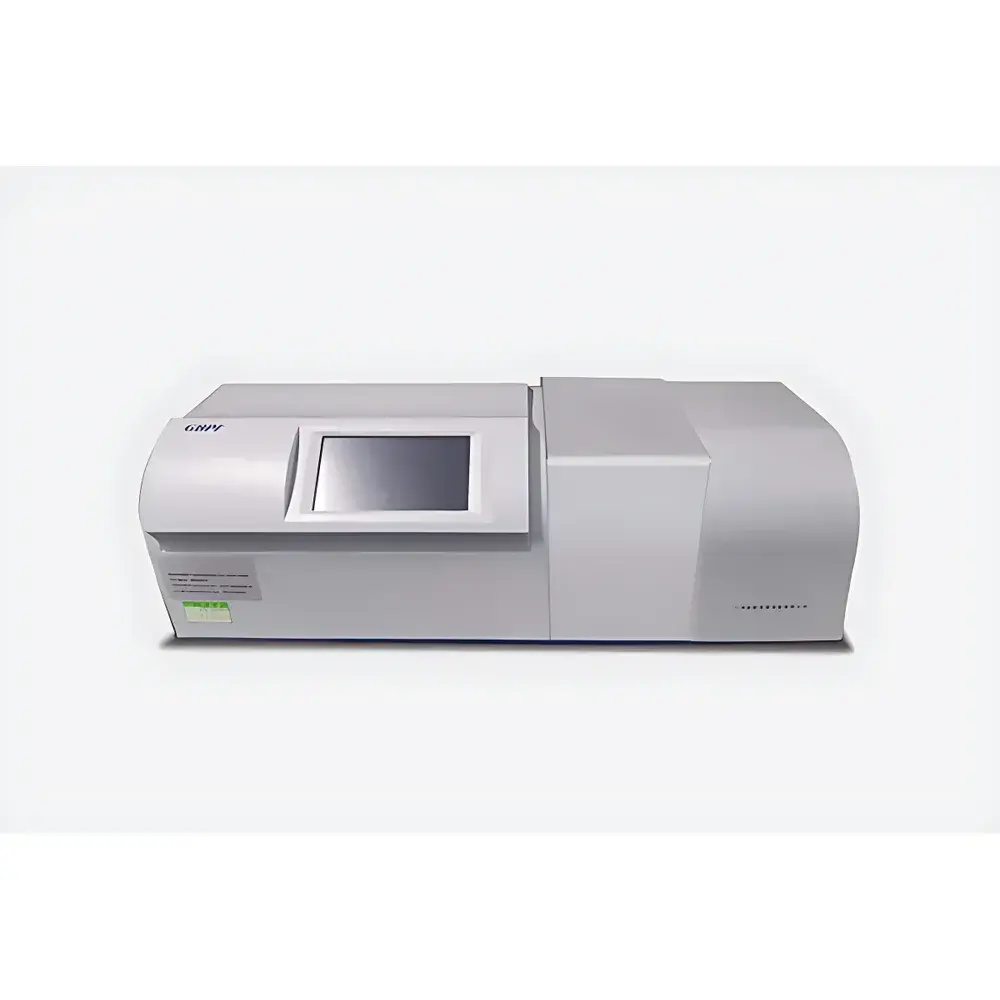
GBPI GB-BF20010A Synthetic Blood Penetration Tester for Medical Face Masks and Protective Apparel
| Brand | GBPI |
|---|---|
| Model | GB-BF20010A |
| Pressure Settings | 3, 5, 7, 14, 20 kPa |
| Test Area | 28.27 cm² (75 mm × 75 mm specimen) |
| Air Supply | Compressed air, regulated to (20 ± 1) kPa |
| Power Supply | AC 220 V, 50 Hz, 100 W |
| Timer Resolution | ±1 s |
| Clamp Torque | 13.5 N·m |
| Retention Mesh | ≥50% open area, ≤5 mm deflection at 20 kPa |
| Construction | Stainless steel test chamber with integrated specimen retention system |
Overview
The GBPI GB-BF20010A Synthetic Blood Penetration Tester is an engineered laboratory instrument designed to quantitatively assess the resistance of medical face masks, surgical gowns, and other personal protective equipment (PPE) fabrics to synthetic blood penetration under controlled hydrostatic pressure. It operates on the principle of static pressure challenge—applying calibrated, sustained pneumatic pressure to a standardized volume of synthetic blood (formulated per ASTM F1670/F1671 specifications) against the outer surface of a conditioned fabric specimen. The test simulates potential exposure scenarios in clinical environments where splashes or sprays of bodily fluids may occur. Unlike dynamic impact methods, this apparatus delivers reproducible, time-stable pressure profiles across five discrete setpoints (3, 5, 7, 14, and 20 kPa), enabling tiered evaluation aligned with performance thresholds defined in regulatory standards such as GB 19083–2010 and ISO 22609. Its sealed stainless-steel test chamber, precision-regulated air supply, and geometrically specified retention mesh ensure mechanical consistency and operator safety during repeated testing cycles.
Key Features
- Stable pneumatic pressure generation: Integrated compressed-air system delivers and maintains pressures from 3 to 20 kPa with ±1 kPa accuracy, independent of ambient facility air infrastructure.
- Dual-function pressure display: Analog pressure gauge provides real-time visual monitoring; digital interface enables precise setting and verification of target pressure values.
- Robust specimen clamping mechanism: High-torque (13.5 N·m) stainless-steel clamp ensures uniform sealing across the full 75 mm × 75 mm test area without localized distortion or leakage.
- Compliant test chamber design: Fully enclosed stainless-steel penetration chamber minimizes aerosol dispersion and facilitates safe handling of synthetic blood simulants.
- Standardized fluid retention mesh: Electro-polished stainless-steel mesh with ≥50% open area and ≤5 mm deflection under 20 kPa load meets dimensional and mechanical requirements specified in GB 19083–2010 Annex B.
- Precision timing control: Digital timer with ±1 second resolution supports standardized exposure durations (e.g., 30 s, 60 s, or user-defined intervals) required for pass/fail assessment.
Sample Compatibility & Compliance
The GB-BF20010A accommodates flat, non-stretch textile specimens up to 75 mm × 75 mm, including melt-blown polypropylene, spunbond-meltblown-spunbond (SMS) laminates, coated nonwovens, and woven barrier fabrics used in ASTM F2100 Level 1–3 masks and ISO 16603-compliant gowns. Specimens must be preconditioned per ISO 139 (standard atmosphere: 23 °C ± 1 °C, 50% RH ± 2%) prior to testing. The instrument fully supports compliance verification against GB 19083–2010 (Chinese standard for medical protective masks), ISO 22609:2002 (protective clothing — resistance to penetration by synthetic blood), and serves as a functional equivalent to the test setup described in ASTM F1670 (resistance to synthetic blood penetration — level 1–4 classification). It does not perform viral or bacterial filtration efficiency (VFE/BFE) testing, nor does it substitute for differential pressure or particle filtration assessments.
Software & Data Management
The GB-BF20010A is a standalone hardware platform with no embedded microprocessor or data logging capability. All operational parameters—including applied pressure, exposure duration, and pass/fail observation—are recorded manually by the operator in accordance with Good Laboratory Practice (GLP) documentation protocols. To support audit readiness, laboratories are advised to integrate test records into validated electronic lab notebooks (ELN) or LIMS systems that provide version-controlled entries, user authentication, and 21 CFR Part 11–compliant electronic signatures. Calibration certificates for the pressure transducer and timer must be maintained on file, traceable to national metrology institutes (e.g., CNAS-accredited providers in China). Routine verification using NIST-traceable deadweight testers is recommended prior to each daily test session.
Applications
- Quality assurance of Type IIR surgical masks during batch release testing.
- Validation of liquid barrier performance in reusable and disposable isolation gowns per ISO 16603 and EN 13795.
- R&D screening of novel hydrophobic coatings or multilayer composite structures intended for enhanced fluid repellency.
- Comparative analysis of material degradation after sterilization (e.g., ethylene oxide, gamma irradiation) or accelerated aging (ISO 11607–1).
- Supporting technical documentation for CE marking, NMPA registration, or FDA 510(k) submissions requiring synthetic blood resistance evidence.
FAQ
What synthetic blood formulation is recommended for use with this tester?
ASTM F1670-compliant synthetic blood (density ~1.04 g/cm³, viscosity ~3.8–4.2 mPa·s at 23 °C) is required. GBPI supplies reference formulations compatible with Chinese regulatory validation requirements.
Is the instrument suitable for testing respirators certified to N95 or KN95 standards?
No. This tester evaluates liquid barrier performance only. N95/KN95 certification requires particulate filtration efficiency (PFE), inhalation/exhalation resistance, and fit testing per GB 2626–2019 or 42 CFR Part 84 — which fall outside this device’s scope.
Can the pressure settings be customized beyond the five standard points?
No. The unit is factory-calibrated for fixed setpoints (3, 5, 7, 14, 20 kPa) to ensure traceability and alignment with GB 19083–2010 Annex B test levels. Custom pressure programming is not supported.
Does the instrument include calibration tools or documentation?
Yes — each unit ships with a calibration certificate for the pressure gauge and timer, valid for 12 months. Users must perform daily zero-checks and periodic verification using external reference standards.
What maintenance is required to ensure long-term measurement integrity?
Monthly cleaning of the stainless-steel chamber and mesh with isopropyl alcohol; annual recalibration of the pressure regulation module by an authorized GBPI service center or accredited third-party metrology lab.







