
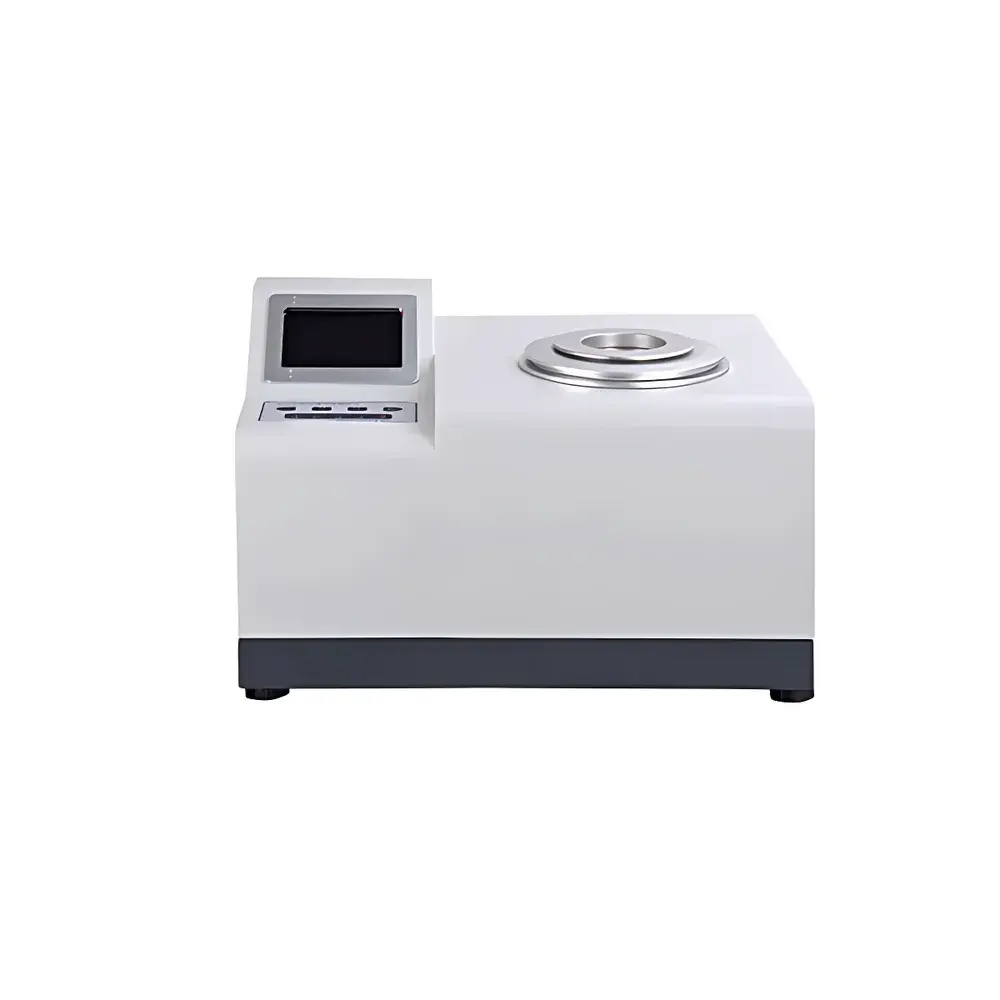
GBPI W301-U Water Vapor Transmission Rate (WVTR) Tester
| Brand | GBPI |
|---|---|
| Model | W301-U |
| Measurement Range | 0.02–10,000 g/m²·day |
| Accuracy | ±0.001 g/m²·day |
| Temperature Range | 15–45 °C (optional 5–50 °C) |
| Temp. Control Precision | ±0.1 °C |
| Humidity Range | 0–20 %RH (dry-cup method) |
| Humidity Control Accuracy | ±2 %RH |
| Sample Thickness | ≤2 mm |
| Sample Diameter | Φ80 mm |
| Effective Test Area | 50.24 cm² |
| Sample Quantity | 1 station (multi-chamber variants available) |
| Compliance Standards | GB 1037, GB/T 16928, ASTM E96, ASTM D1653, TAPPI T464, ISO 2528, DIN 53122-1, JIS Z0208, YBB00092003 |
Overview
The GBPI W301-U Water Vapor Transmission Rate (WVTR) Tester is a gravimetric-based permeation measurement system engineered for precise, repeatable quantification of water vapor transmission through flexible packaging materials—including silicone gel films, plastic films, laminates, coated papers, and pharmaceutical blister foils. Operating on the principle of dynamic gravimetric analysis, the instrument continuously monitors mass change of a desiccant-filled test cell sealed with the specimen under controlled temperature and relative humidity (RH) gradients. This method adheres to the fundamental physical definition of WVTR: the steady-state flux of water vapor per unit area per unit time (g/m²·day), as standardized across major international test protocols.
Key Features
- Integrated embedded operating system with 240,000-color capacitive touchscreen—enables full instrument operation independent of external PC; USB interface supports seamless data synchronization and firmware updates.
- High-stability analytical balance subsystem with microgram-level resolution and active drift compensation, ensuring long-duration measurement integrity over 72+ hour tests.
- Electronically modulated temperature control using intermittent pulse-width modulation (PWM) heating/cooling—achieves ±0.1 °C uniformity across the test chamber and reference zones.
- Dedicated dry-gas mixing humidity control architecture: precise blending of dry nitrogen and saturated humidified gas streams enables stable RH generation from 0–20 %RH (standard dry-cup mode) or extended 10–90 %RH (optional dual-stream configuration).
- Real-time graphical display of WVTR, cumulative mass loss, chamber temperature, and RH—curves are dynamically scalable and exportable in CSV/PNG formats.
- Automated endpoint detection: algorithmic convergence analysis terminates testing when mass-change rate stabilizes within user-defined tolerance thresholds, eliminating subjective manual judgment.
- Password-protected parameter configuration and calibration lockout—supports role-based access control aligned with GLP/GMP documentation requirements.
Sample Compatibility & Compliance
The W301-U accommodates flat, non-porous, and low-permeability specimens up to 2 mm thick, with a standard test area of 50.24 cm² (Φ80 mm). Its mechanical sealing design—featuring precision-machined stainless-steel clamps and proprietary silicone-based sealing compound—ensures leak-tight integrity for low-WVTR materials such as PVDC-coated PET or aluminum-metallized OPP. The system is validated for compliance with 11 globally recognized standards, including ASTM E96 (desiccant and water methods), ISO 2528 (gravimetric cup method), and pharmaceutical packaging specifications YBB00092003. All hardware and software components meet electromagnetic compatibility (EMC) Class B requirements per IEC 61326-1 and are designed for integration into regulated environments requiring audit trails and electronic signature support (21 CFR Part 11-ready via optional software module).
Software & Data Management
GBPI’s proprietary WinWVTR v4.x software provides comprehensive test lifecycle management: method creation, real-time monitoring, statistical post-processing (mean, SD, CV%, confidence intervals), and automated report generation in A4-layout PDF format—including instrument ID, operator ID, calibration history, environmental logs, and raw time-series datasets. Data files are stored in encrypted SQLite databases with immutable timestamps and SHA-256 checksums. Export options include CSV (for LIMS integration), XML (for ELN systems), and image-based curve snapshots. Audit trail functionality records all user actions—parameter edits, calibration events, report exports—with IP address and Windows login context—fully traceable for FDA or EMA inspection readiness.
Applications
- Quality assurance of barrier films used in food packaging (e.g., snack pouches, coffee laminates) under accelerated shelf-life simulation conditions.
- Development validation of medical device packaging per ISO 11607-1, particularly for Tyvek®/foil combinations exposed to sterilization and aging protocols.
- Regulatory submission support for pharmaceutical primary packaging—compliance verification against USP and Ph. Eur. 5.2.12 for moisture-sensitive dosage forms.
- R&D screening of novel biopolymer films (e.g., PLA, PHA, cellulose derivatives) under variable RH/temperature stress profiles.
- Failure analysis of delamination or coating defects in multi-layer structures through comparative WVTR mapping across production batches.
FAQ
What is the difference between the dry-cup and dual-stream humidity configurations?
Standard dry-cup mode uses desiccant to maintain near-zero RH on the test side, suitable for high-barrier materials. Dual-stream mode actively controls both sides of the specimen with independent gas flows—enabling asymmetric RH gradients (e.g., 90 %RH/0 %RH) required by ASTM D1653 and ISO 15106-3.
Can the W301-U test rigid containers or pre-formed packages?
Yes—via optional package-testing accessories, including custom test cells for sachets, blister cards, and small vials. These fixtures maintain identical thermal/hygrometric boundary conditions while adapting to non-planar geometries.
Is calibration traceable to national standards?
All delivered units include NIST-traceable calibration certificates for mass (200 g stainless steel weight), temperature (PT100 probe), and RH (certified humidity generator). On-site recalibration services are available with ISO/IEC 17025-accredited documentation.
How does the system handle ambient environmental fluctuations during long-term tests?
Active chamber isolation, double-wall insulation, and closed-loop feedback control minimize sensitivity to lab HVAC variations. Internal environmental logging records ambient T/RH every 30 seconds—flagging excursions that exceed ±1 °C or ±3 %RH for post-test data qualification review.






