
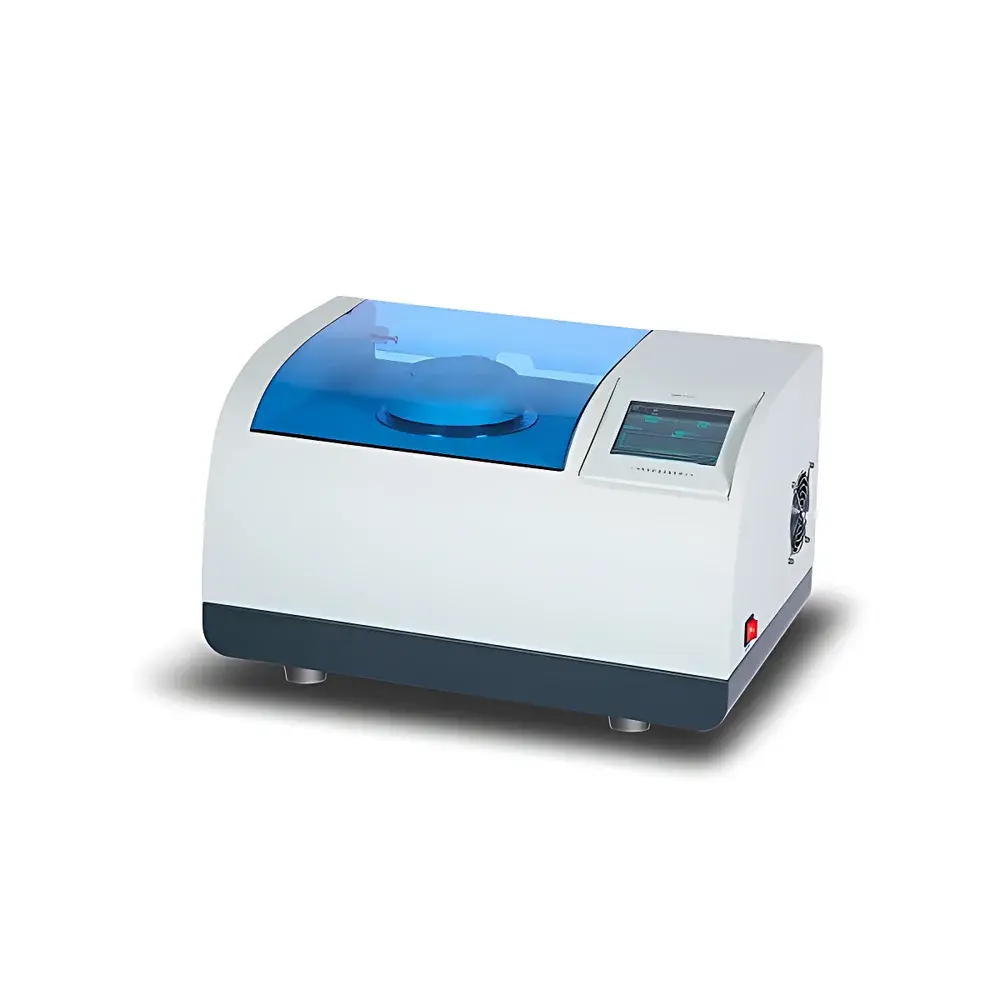
GBPI W401R Water Vapor Transmission Rate (WVTR) Tester for Solar Backsheet and Packaging Materials
| Brand | GBPI |
|---|---|
| Model | W401R |
| Origin | Guangdong, China |
| Manufacturer | GBPI Packaging Instrument Co., Ltd. |
| Testing Range | 0.001–100 g/(m²·24h) |
| Resolution | 0.001 g/(m²·24h) |
| Temperature Control | 15–45 °C (optional up to 60 °C), ±0.1 °C accuracy |
| Humidity Control | 30–90 %RH, ±1 %RH accuracy |
| Test Area | 50.24 cm² (down to 0.785 cm² with optional fixtures) |
| Specimen Size | Ø100 mm, ≤3 mm thickness |
| Carrier Gas | 99.999% N₂, 0.1 MPa min pressure, 5–120 mL/min flow |
| Power | AC 220 V, 50 Hz, 750 W |
| Dimensions | 600 × 400 × 330 mm |
| Weight | 80 kg |
Overview
The GBPI W401R Water Vapor Transmission Rate (WVTR) Tester is a gravimetric-coupled infrared detection system engineered for precise, traceable, and regulatory-compliant measurement of water vapor permeation through barrier materials. It operates on the principle of dynamic carrier gas transport: dry nitrogen sweeps the downstream side of a conditioned test specimen while moisture permeating through the material is carried to a high-stability infrared moisture sensor. The instrument quantifies real-time water vapor concentration in the carrier stream, enabling calculation of WVTR in accordance with standardized cup-based and sensor-based methodologies. Designed specifically for demanding applications in photovoltaic module manufacturing—including solar backsheet qualification—the W401R meets the stringent low-permeation requirements (<0.1 g/m²·24h) critical for long-term PV reliability. Its architecture supports both flat-sheet testing (films, laminates, foils) and container-level evaluation (bottles, pouches, trays) via modular fixtures, making it equally applicable across pharmaceutical packaging, flexible electronics encapsulation, medical device barrier validation, and food-grade laminate development.
Key Features
- High-resolution gravimetric-infrared hybrid detection with 0.001 g/(m²·24h) resolution—capable of characterizing ultra-high-barrier materials including aluminum foil, SiOₓ-coated PET, and fluoropolymer-laminated backsheets.
- Programmable dual-zone climate control: independent PID-regulated temperature (15–45 °C, ±0.1 °C) and humidity (30–90 %RH, ±1 %RH) chambers ensure strict compliance with ISO 15106-2, ASTM F1249, and GB/T 26253 test conditions.
- Modular test area configuration: standard 50.24 cm² aperture (Ø100 mm) with optional mini-fixtures enabling down to 0.785 cm² (Ø10 mm) for small-area or high-gradient samples—essential for R&D of micro-patterned or gradient barrier layers.
- ARM-based embedded control system with 7-inch color touchscreen interface; fully autonomous operation without external PC—supports method storage, real-time curve overlay (temperature, RH, sensor output, calculated WVTR), and on-device report generation.
- GMP-aligned software architecture compliant with FDA 21 CFR Part 11 and EU Annex 11: role-based user access (Administrator, Operator, Reviewer), full audit trail (system, method, run-level), electronic signatures, and immutable data logging.
- Self-diagnostic sensor protection: automatic over-range cutoff prevents saturation-induced drift in the IR moisture detector; modular hardware design enables field-replaceable sensor units and gas-path components.
Sample Compatibility & Compliance
The W401R accommodates rigid and flexible substrates up to 3 mm thick, including polymer films (PET, OPP, PE, PA), metallized and oxide-coated laminates, ceramic-coated foils, rubber elastomers, and composite solar backsheet structures (e.g., PET/PE/EVA tri-layers). Container testing is enabled via optional cradle fixtures for bottles, blister packs, and thermoformed trays—validated per ASTM D3079 for package-level WVTR. Regulatory alignment includes full traceability to national reference standards: certified by China’s National Institute of Metrology (NIM) under GBW(E)130543/4 certified reference materials; compliant with pharmacopoeial standards YBB 00092003-2015 (China), USP , and ISO 15106-2:2005. All calibration and verification procedures follow GLP principles, with documented uncertainty budgets and annual metrological verification paths.
Software & Data Management
GBPI’s proprietary WinWVTR software provides full lifecycle data governance—from method definition and instrument qualification (IQ/OQ) to routine testing and regulatory submission. Test methods are version-controlled and digitally signed; each run generates a timestamped, tamper-evident PDF report containing raw sensor traces, environmental logs, statistical summaries (mean, SD, CV%), and pass/fail determinations against predefined limits. Data resides in an encrypted local SQLite database with optional network backup; export formats include CSV, Excel (.xlsx), and PDF/A-2 for archival. Audit trails record all user actions—including parameter edits, result overrides, and calibration events—with IP address, timestamp, and operator ID. Software updates are digitally signed and validated prior to installation to maintain 21 CFR Part 11 integrity.
Applications
- Solar energy: Quantification of water ingress resistance in PV backsheet materials (TPT, TPE, KPK configurations) per IEC 62788-2-1 and UL 1703 accelerated aging correlation protocols.
- Pharmaceutical packaging: Barrier validation of blister lidding foils, cold-forming sheets, and child-resistant pouches under controlled RH gradients per USP and EP 2.6.27.
- Flexible electronics: Moisture permeation screening of OLED encapsulation films, touch sensor overlays, and battery pouch barriers where <10⁻⁶ g/m²·day thresholds apply.
- Medical devices: WVTR assessment of sterile barrier systems (Tyvek®-laminated pouches, peel-open trays) aligned with ISO 11607-1 and AAMI ST77.
- Food packaging R&D: Comparative analysis of biopolymer coatings, nanocomposite films, and vacuum-metallized structures under varying temperature-humidity stress profiles.
FAQ
What carrier gas is required, and why must it be ≥99.999% pure nitrogen?
Ultra-high-purity nitrogen eliminates background moisture and hydrocarbon interference, ensuring baseline stability and minimizing measurement uncertainty—especially critical below 0.01 g/m²·24h. Compressed air or lower-grade N₂ introduces variable humidity and particulates that degrade sensor longevity and reproducibility.
Can the W401R test curved or non-planar containers without modification?
No. Container testing requires dedicated mechanical fixtures (e.g., bottle cradles, pouch clamps) to ensure uniform seal pressure and defined diffusion path length. Flat-sheet mode cannot be repurposed for 3D geometries without validated adapters.
Is third-party calibration support available for ISO/IEC 17025-accredited labs?
Yes. GBPI collaborates with CNAS-accredited metrology institutes in China and EU-based DAkkS partners for on-site calibration, uncertainty evaluation, and scope extension documentation—fully traceable to SI units via NIM and PTB reference standards.
How does the system handle temperature/humidity ramping during multi-step aging protocols?
The W401R supports programmable multi-segment climate profiles: users define time-dependent setpoints for T and RH, with automatic interpolation and dwell stabilization. Each segment triggers independent data logging and can be linked to conditional stop criteria (e.g., “halt if WVTR exceeds 0.5 g/m²·24h”).
What documentation is provided for 21 CFR Part 11 compliance validation?
A complete validation toolkit is supplied: URS, FRS, DQ/IQ/OQ protocols, traceability matrices, electronic signature workflow diagrams, and pre-populated risk assessments per GAMP 5. All documents are editable Word/PDF templates aligned with FDA inspection expectations.






