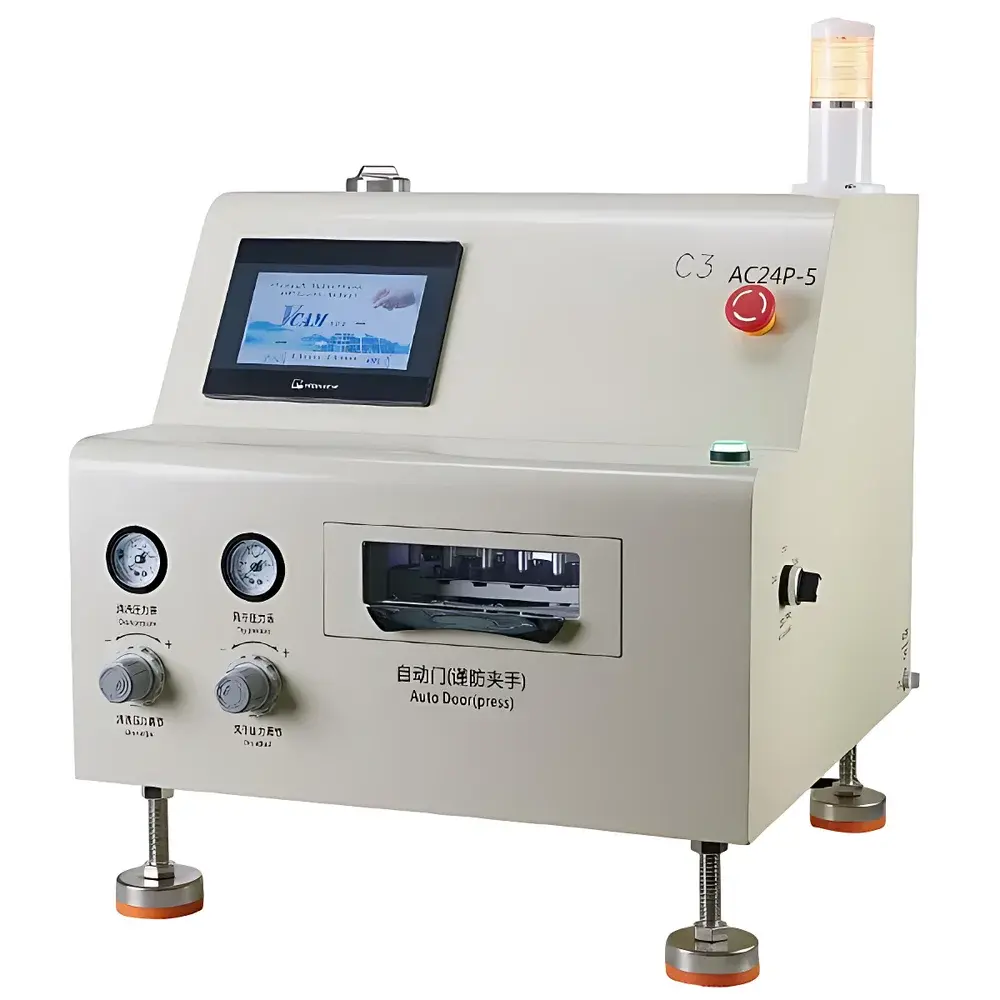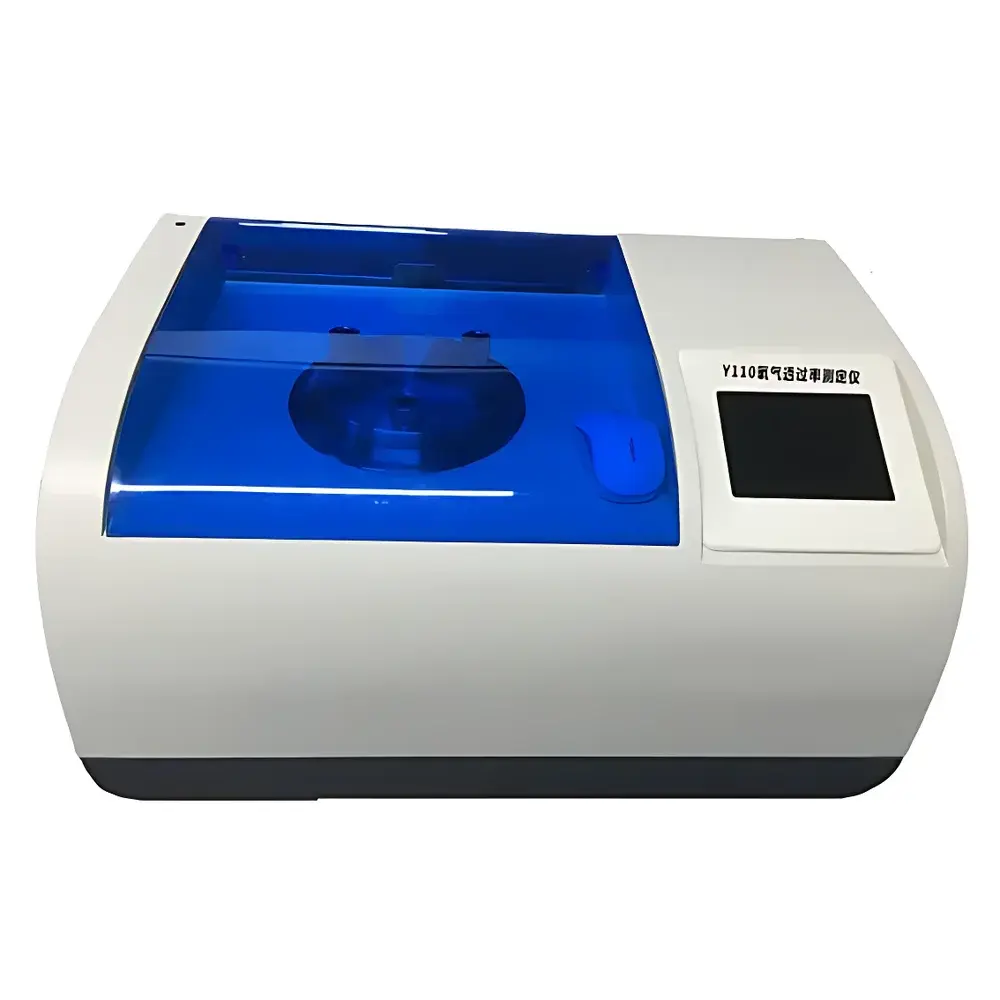
GBPI Y110-bb Oxygen Transmission Rate (OTR) Analyzer – Coulometric Sensor-Based Permeation Tester
| Brand | GBPI |
|---|---|
| Origin | Guangdong, China |
| Manufacturer Type | OEM/ODM Manufacturer |
| Country of Origin | China |
| Model | Y110-bb |
| Price Range | USD 14,000 – 70,000 |
| Test Range | 0.02–16,500 cm³/(m²·24h) (up to 260,000 cm³/(m²·24h) with large-area mask) |
| Measurement Accuracy | 0.001 cm³/(m²·24h) |
| Temperature Control Range | 15–45 °C |
| Temp. Stability | ±0.1 °C |
| Humidity Control Range | 0–90 %RH |
| RH Stability | ±1 %RH |
| Test Area | 50.24 cm² (down to 0.785 cm² with optional fixtures) |
| Specimen Diameter | Φ100 mm |
| Max. Thickness | ≤3 mm |
| Sample Capacity | 1 unit per test |
| Carrier Gas Pressure | ≥0.1 MPa |
| Gas Inlet | Φ3 mm tubing / 1/8″ NPT |
| Dimensions | 600 × 400 × 330 mm |
| Power | 500 W |
| Supply | AC 220 V, 50 Hz |
| Compliance | GB/T 19789–2005, YBB00082003–2015, ASTM D3985, ASTM F2622, ASTM F1927, ASTM F1307, ISO 15105-2, DIN 53380-3, JIS K-7126-B |
Overview
The GBPI Y110-bb Oxygen Transmission Rate (OTR) Analyzer is a precision coulometric sensor-based permeation testing system engineered for quantitative determination of oxygen permeability through flat films, thin sheets, and rigid or flexible packaging containers. It operates on the principle of coulometric detection—where oxygen molecules permeating across a test specimen are carried by a high-purity nitrogen carrier gas stream into a galvanic oxygen sensor. The sensor generates an electrical current proportional to the molar flow rate of O₂, enabling direct calculation of oxygen transmission rate in standardized units (cm³/m²·24h). This method delivers high reproducibility, low detection limits, and intrinsic traceability to national standard reference materials—making it suitable for regulatory-compliant barrier performance evaluation in pharmaceutical, food, medical device, and advanced material R&D laboratories.
Key Features
- Coulometric oxygen sensor with long-term stability and automatic over-range protection to prevent sensor degradation during high-flux testing.
- Integrated dual-gas humidity control system using dry/wet nitrogen blending, achieving ±1 %RH accuracy across 0–90 %RH range without external humidifiers.
- Electromagnetic programmable stepwise temperature control (15–45 °C), eliminating bulky external baths and delivering ±0.1 °C thermal uniformity across the test chamber.
- ARM-based embedded controller enabling standalone operation—no PC required for routine measurements; full data logging and real-time curve visualization retained on-device.
- Modular fixture architecture supporting flat specimens (Φ100 mm, ≤3 mm thick) and container formats (bottles, pouches, trays) via optional adapters—including large-area masks extending upper measurement limit to 260,000 cm³/m²·24h.
- GMP-aligned software with role-based access control (Administrator, Operator, Viewer), full audit trail (system, method, run-level), and 21 CFR Part 11–compatible electronic signatures.
Sample Compatibility & Compliance
The Y110-bb accommodates a broad spectrum of barrier materials: polymer films (LDPE, PET, PP), metallized substrates (AlOx, SiOx, Al foil), laminates, rubber sheets, ceramic wafers, and formed packaging (blister packs, sachets, HDPE bottles, aluminum trays). Its design conforms to globally recognized permeation test standards including ASTM D3985 (coulometric OTR), ASTM F1307 (container OTR), ISO 15105-2 (differential pressure method correlation), and pharmacopeial requirements (YBB00082003–2015 for pharmaceutical primary packaging). All instruments are supplied with GBW(E)130497/8 certified national reference standards for on-site calibration validation, ensuring metrological traceability to China’s National Institute of Metrology (NIM).
Software & Data Management
The Windows-native GBPI OTR Studio software provides intuitive workflow configuration, real-time multi-parameter monitoring (OTR, O₂ concentration, T, RH), and dynamic curve navigation (zoom, pan, overlay). Test methods are fully customizable—users define ramp profiles, dwell times, endpoint criteria, and pass/fail thresholds. Reports comply with GLP/GMP documentation standards: auto-generated PDF/Office exports include instrument ID, operator login, environmental logs, raw sensor output, calibration history, and digital signature fields. Database architecture supports SQL-based querying, trend analysis across batches, and integration with LIMS via ODBC. All data modifications are immutably timestamped and attributed in the audit log.
Applications
This analyzer serves critical quality assurance functions across regulated and industrial sectors: evaluating shelf-life limiting factors in sterile pharmaceutical blister packaging; validating barrier integrity of retort pouches and vacuum-sealed meat trays; characterizing OTR drift in PVDC-coated films under accelerated aging; quantifying edge seal permeability in medical device pouches; assessing moisture-oxygen synergism in OLED encapsulation films; and benchmarking novel nanocomposite membranes for battery separator development. Its sensitivity down to 0.001 cm³/m²·24h enables reliable measurement of ultra-high-barrier materials such as EVOH laminates and atomic-layer-deposited oxide coatings.
FAQ
What sensor technology does the Y110-bb employ?
It uses a coulometric (galvanic) oxygen sensor—electrochemically selective, zero-consumption-of-analyte, and inherently stable over extended operation.
Can the instrument test rigid containers like bottles or jars?
Yes—using the optional container test module, where nitrogen flows internally while ambient air or O₂-enriched gas surrounds the exterior surface.
Is calibration traceable to international standards?
Yes—calibration utilizes GBW(E)130497/8 certified reference films issued by China’s National Quality Supervision Administration, with documented equivalence to NIST SRM 1472.
Does the system support 21 CFR Part 11 compliance?
Yes—the software implements electronic signatures, audit trails, user privilege tiers, and data integrity safeguards aligned with FDA computerized system validation guidance.
What maintenance is required for long-term sensor reliability?
The coulometric sensor requires no routine replacement; periodic verification against reference films every 6 months is recommended, with automated self-diagnostics monitoring baseline drift and response time.
Related Products