
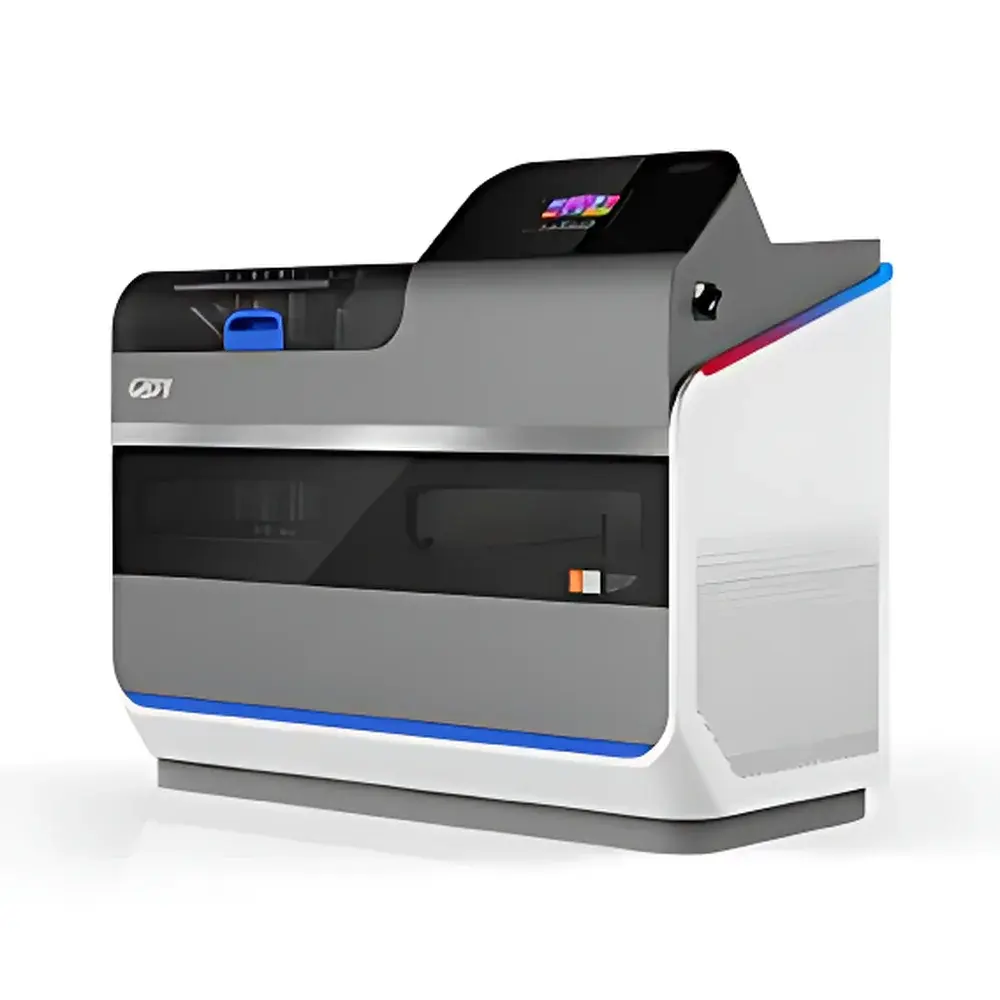
GBPI ZF3800A Fully Automated Total Migration Tester
| Brand | GBPI |
|---|---|
| Model | ZF3800A |
| Origin | Guangdong, China |
| Manufacturer Type | Direct Manufacturer |
| Product Category | Domestic (China-Made) |
| Measuring Range | 0.167–167,000 mg/dm² |
| Resolution | 0.0001 mg/dm² |
| Balance Capacity | 0–200 g |
| Balance Readability | 0.1 mg |
| Water Bath Temp. Control | 68.3–100 °C |
| Heating Chamber Temp. Control | 68.3–117.9 °C |
| Cooling Chamber Temp. Control | <27.5 °C |
| Temperature Accuracy | ±3 °C |
| Sample Capacity | 1–18 independent test positions |
| Gravimetric Constant-Weight Duration | 2.5 h (standard) |
| Evaporating Dish Volume | 0–200 mL |
| Dimensions (L×W×H) | 180 × 90 × 120 cm |
| Power Supply | 220 V, 50 Hz |
| Power Consumption | 1500 W |
Overview
The GBPI ZF3800A Fully Automated Total Migration Tester is an engineered gravimetric system designed for precise determination of non-volatile residue—commonly referred to as total migration—in food contact materials (FCMs) under standardized regulatory conditions. It operates on the principle of controlled solvent evaporation followed by high-accuracy mass measurement of residual solids after sequential drying and cooling cycles until gravimetric constancy is achieved. This method aligns with internationally recognized extraction-based protocols where analytes are transferred from the test specimen into a food-simulating solution (e.g., 3% acetic acid, 10% ethanol, or distilled water), then quantified via mass difference between sample-exposed and blank control solutions. The instrument integrates thermal control, environmental stabilization, closed-loop solvent recovery, and automated gravimetry within a single platform—eliminating manual handling errors and ensuring repeatability required for compliance-driven laboratories.
Key Features
- Dual-Independent Thermal Chambers: Separated heating and cooling zones enable simultaneous temperature ramping and conditioning—reducing cycle time and enhancing throughput. Each chamber maintains stable setpoints with ±3 °C accuracy across operational ranges (water bath: 68.3–100 °C; heating chamber: 68.3–117.9 °C; cooling chamber: <27.5 °C).
- Integrated Water Bath Evaporation System: Features auto-fill, real-time water level detection, and programmable temperature regulation. Includes dual safety interlocks: overtemperature alarm and dry-bath alert to prevent hardware damage or solvent decomposition.
- Closed-Solvent Recovery Architecture: All evaporation occurs in sealed chambers with exhaust routed through a dedicated solvent capture module—ensuring zero atmospheric release and operator exposure reduction per OSHA and EU REACH guidelines.
- Nitrogen-Purged Environment Option: Optional nitrogen gas inlet supports inert-atmosphere drying for oxygen-sensitive or thermally labile residues, improving analytical integrity during volatile removal.
- Negative-Pressure Test Chamber: Vacuum-assisted sealing ensures consistent headspace pressure during evaporation—minimizing convective losses and promoting uniform film formation on evaporating surfaces.
- 18-Position Independent Testing: Each station operates autonomously with individual dish positioning, weight tracking, and endpoint logic—enabling parallel analysis of heterogeneous samples without cross-contamination or data coupling.
- ARM-Based Embedded Control: Touchscreen interface hosts a unified OS managing all subsystems—including water bath actuation, thermal cycling, balance triggering, vacuum sequencing, and data logging—without external PC dependency.
Sample Compatibility & Compliance
The ZF3800A supports diverse FCM substrates including polyolefin films (PE, PP), polystyrene containers, rubber gaskets, epoxy-phenolic coated tinplate, PVC-coated metals, cellulose-based molded trays, and internal lacquers used in beverage cans and condiment packaging. Its methodology conforms to multiple national and pharmacopoeial standards: GB 31604.8–2016 (determination of total migration into food simulants), GB 31604.1–2015 (general principles for migration testing), GB/T 5009.156–2016 (non-volatile residue in food packaging), GB/T 9740–2008 (evaporation residue in chemical reagents), and YBB series pharmaceutical packaging standards (e.g., YBB00342002–2015, YBB00102005–2015). These alignments support audit readiness for GLP, GMP, and ISO/IEC 17025-accredited laboratories conducting routine QC or regulatory submission testing.
Software & Data Management
The embedded software complies with Annex 11 (Computerized Systems) of the EU GMP Guidelines and FDA 21 CFR Part 11 requirements. Access is role-based—administrator, operator, and observer profiles—with granular permission assignment for method editing, report generation, user management, and audit trail viewing. Comprehensive audit trails log every action: system login/logout, method parameter changes, weight value modifications, and report exports—with timestamps, user IDs, and IP addresses. Real-time dashboards display live weight curves, migration kinetics, chamber temperatures, and constant-weight convergence status. Reports export natively to PDF and Microsoft Office formats, preserving traceability metadata and digital signatures where configured. Data integrity is further reinforced through encrypted local storage and optional network backup integration.
Applications
- Quantification of total migration from flexible plastic packaging into aqueous and alcoholic food simulants.
- Validation of barrier performance in multilayer laminates intended for acidic or fatty food contact.
- Quality control of rubber sealing components used in glass jar closures and metal can ends.
- Regulatory testing of epoxy-phenolic coatings applied to steel food cans per GB/T 23949–2009.
- Residue assessment of cellulose pulp-based disposable tableware exposed to hot liquids.
- Pharmaceutical primary packaging evaluation per YBB standards for parenteral vials and syringe barrels.
- Evaporation residue analysis of high-purity solvents and excipients under USP <641> and EP 2.2.27.
FAQ
What regulatory standards does the ZF3800A directly support?
It implements test procedures specified in GB 31604.8–2016, GB 31604.1–2015, GB/T 5009.156–2016, GB/T 9740–2008, GB/T 23949–2009, and YBB-series Chinese Pharmacopoeia standards for food and pharmaceutical packaging.
Can the system operate unattended overnight?
Yes—the ARM-based controller enables fully autonomous execution of multi-step protocols including pre-conditioning, evaporation, drying, cooling, weighing, and endpoint validation without manual intervention.
Is calibration traceable to national metrology institutes?
The integrated analytical balance is factory-calibrated using NIST-traceable 200 g reference weights; users may perform periodic verification using certified masses supplied with the system.
How is solvent safety managed during operation?
All evaporation occurs under negative pressure within hermetically sealed chambers, with vapors condensed and collected in the integrated solvent recovery unit—eliminating ambient emissions and meeting occupational exposure limits (OELs).
Does the software support electronic signatures for regulated environments?
Yes—role-based authentication, biometric-ready login options, and Part 11-compliant audit trails ensure full compliance with electronic record and signature requirements in FDA-regulated facilities.




