
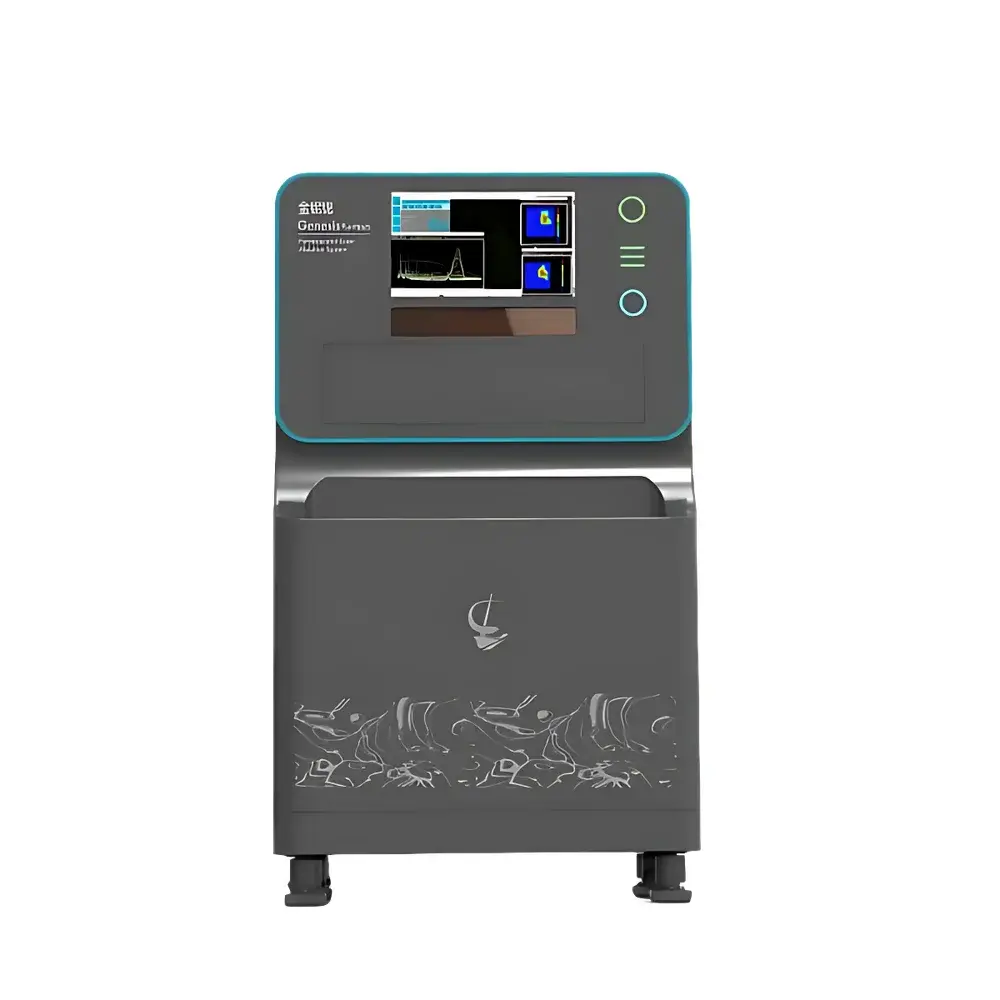
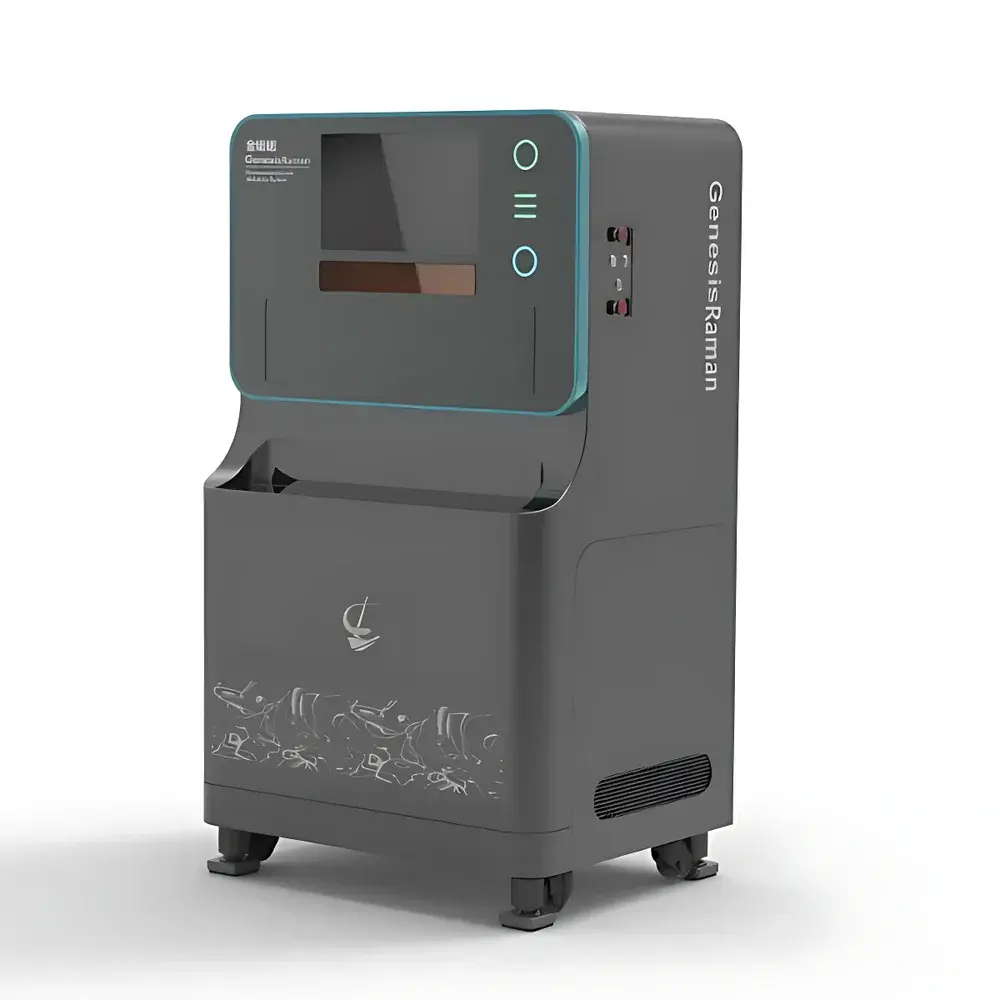
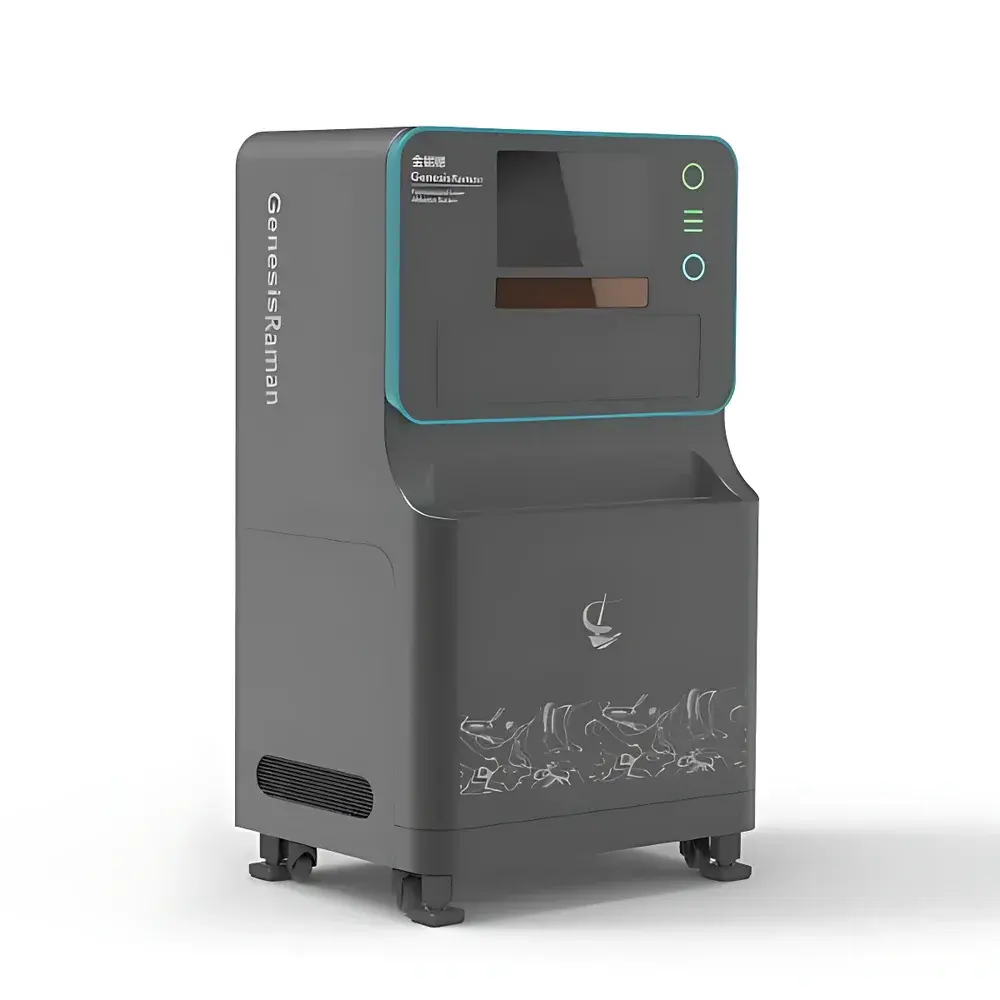
GenesisRaman Lattice Femtosecond Laser Ablation–Confocal Raman Spectroscopy Dual System
| Brand | Chemlab |
|---|---|
| Origin | Shanghai, China |
| Manufacturer Type | Direct Manufacturer |
| Regional Classification | Domestic (China) |
| Model | GenesisRaman |
| Price Range | USD 630,000 – 775,000 |
| Instrument Type | Confocal Micro-Raman Spectrometer |
| Spectral Resolution | ≤2 cm⁻¹ |
| Spatial Resolution | Lateral 1 µm |
| Minimum Wavenumber | 50 cm⁻¹ |
| Spectral Reproducibility | ≤±0.2 cm⁻¹ |
Overview
The GenesisRaman Lattice Femtosecond Laser Ablation–Confocal Raman Spectroscopy Dual System is an integrated analytical platform engineered for high-precision in situ characterization of fluid inclusions and micro-scale geological phases. It combines lattice-pattern femtosecond laser ablation (LA) with confocal micro-Raman spectroscopy and a precision temperature-controlled stage within a single optical path and unified coordinate framework. Unlike conventional sequential or multi-instrument workflows, the GenesisRaman system implements a co-registered, co-aligned architecture where laser ablation, Raman spectral acquisition, and micro-thermometric measurement occur on the same sample position—without physical relocation or re-calibration. The system operates on the principle of confocal spatial filtering to reject out-of-focus signal, enabling depth-resolved Raman mapping with axial resolution down to 2 µm. Its femtosecond ablation module utilizes a 1030 nm or harmonically converted beam (e.g., 515 nm or 343 nm) delivered via a diffractive optical element (DOE) to generate customizable lattice patterns—minimizing thermal diffusion, suppressing matrix-induced fractionation, and enabling controlled volumetric removal of host minerals such as quartz and fluorite without inducing fluid ejection or phase separation.
Key Features
- Co-registered dual-function platform: Simultaneous and sequential operation of lattice-pattern femtosecond LA and confocal Raman spectroscopy under shared XYZ-stage control and optical axis alignment.
- Sub-micron spatial resolution: Lateral resolution ≤1 µm (at 532 nm excitation); axial (depth) resolution ≤2 µm—enabling targeted interrogation of inclusions <10 µm in diameter.
- Z-axis dynamic focusing: Real-time motorized objective positioning synchronized with stage movement to maintain optimal focus during ablation depth profiling and Raman depth scanning.
- Cryogenic ablation mode: Integrated cryo-stage capable of stable operation from −190 °C to +600 °C, permitting low-temperature ablation of volatile-rich fluid inclusions to suppress splashing and preserve stoichiometric fidelity.
- High-fidelity spectral stability: Spectral reproducibility ≤±0.2 cm⁻¹ over 8-hour continuous operation—validated per ISO 8573-1 and ASTM E1840 calibration protocols.
- Low-frequency Raman capability: Extended spectral range down to 50 cm⁻¹—critical for detecting lattice modes, rotational bands, and low-energy phonons in silicate hosts and aqueous phases.
Sample Compatibility & Compliance
The GenesisRaman system is optimized for polished thin sections, doubly polished wafers, and epoxy-mounted mineral grains—particularly quartz, feldspar, fluorite, calcite, and sulfide hosts containing primary or secondary fluid inclusions. It complies with geological standards including ASTM D7348 (microthermometry), ISO/IEC 17025:2017 (testing laboratory competence), and supports GLP-compliant data recording when configured with audit-trail-enabled software. All spectral metadata—including laser power, integration time, grating selection, objective magnification, and temperature setpoint—is embedded in HDF5-formatted raw files, ensuring traceability for regulatory review or inter-laboratory comparison.
Software & Data Management
Control and analysis are managed through Chemlab’s proprietary GenesisControl Suite—a modular application built on Qt/C++ with Python API support. The suite unifies instrument orchestration (laser firing, stage motion, spectrometer acquisition, thermal ramping), real-time spectral preview, multivariate curve resolution (MCR), and inclusion-specific quantification modules (e.g., salinity estimation via ice-melting point depression or halite dissolution temperature). Data export conforms to JCAMP-DX v6.00 and ANDI-MS standards. Audit trails record all parameter modifications, user logins, and file exports in accordance with FDA 21 CFR Part 11 requirements when electronic signatures and role-based access control are enabled.
Applications
- In-situ fluid inclusion thermobarometry: Coupled Raman peak shifts (e.g., H₂O ν₁, CO₂ Fermi diad) and microthermometric freezing/melting data acquired on identical inclusion volumes.
- Host-mineral–fluid interaction studies: Time-resolved Raman monitoring of ablation-induced recrystallization or metastable phase formation at grain boundaries.
- Geochemical fingerprinting: Multi-element LA-ICP-MS integration (via optional interface) with Raman-confirmed inclusion typing to reduce polyphase interference in trace-element quantification.
- Materials science applications: Strain mapping in 2D materials, stress analysis in semiconductor heterostructures, and polymer crystallinity assessment using band deconvolution and peak width correlation.
FAQ
Does the GenesisRaman system support external ICP-MS coupling?
Yes—via standardized vacuum-compatible ablation cell interfaces (CF-63 or ISO-KF40) and time-synchronized TTL triggering for seamless LA-ICP-MS operation.
What calibration standards are supplied with the system?
NIST-traceable silicon (520.7 cm⁻¹), cyclohexane (2847 cm⁻¹ C–H stretch), and sulfur (153 cm⁻¹) reference samples; daily wavenumber calibration routine included in software.
Is cryogenic ablation compatible with all host minerals?
It is validated for quartz, fluorite, calcite, and feldspar; testing reports for mica, garnet, and apatite are available upon request.
How is positional drift corrected during long-duration Raman mapping?
Real-time stage encoder feedback combined with fiducial marker tracking (using optional LED-illuminated crosshair reticle) enables sub-pixel registration accuracy across 10×10 mm² fields.
Can the system perform automated inclusion identification prior to analysis?
Yes—the software includes AI-assisted morphology classification (based on transmitted light + fluorescence + Raman contrast) trained on >12,000 annotated geological inclusion images.




