
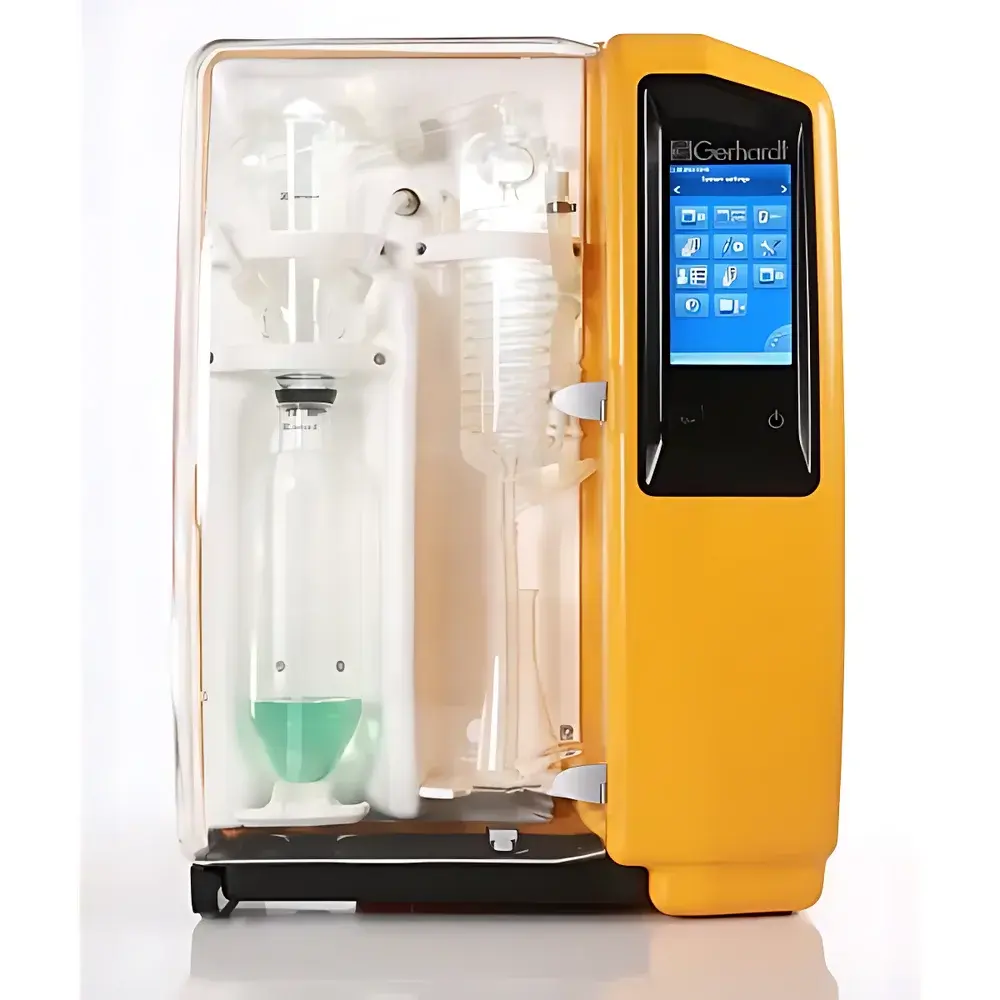
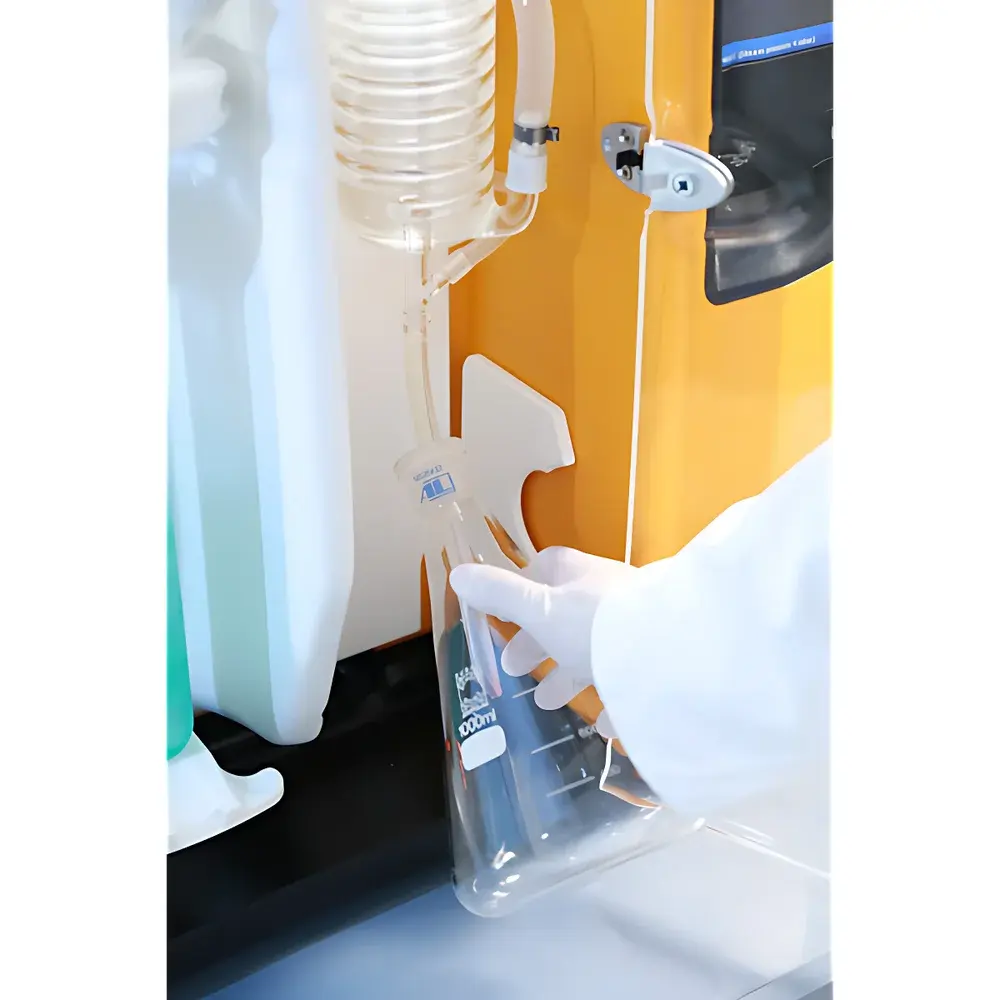
Gerhardt VAPODEST 200 Volatile Phenol Distillation System
| Brand | Gerhardt |
|---|---|
| Origin | Germany |
| Manufacturer | C. Gerhardt GmbH & Co. KG |
| Model | VAPODEST 200 |
| Instrument Type | Benchtop Volatile Phenol Distillation Unit |
| Water Consumption | ~5 L/min |
| Distillation Time | 2–4 min |
| Power Rating | 2200 W |
| Voltage/Frequency | 230 V AC, 50/60 Hz |
| Dimensions (W×D×H) | 527 × 390 × 697 mm |
| Weight | 25 kg |
| Repeatability | ±1% |
| Detection Limit | 0.1 mg |
| Recovery Rate | ≥99.5% |
Overview
The Gerhardt VAPODEST 200 is a benchtop steam distillation system engineered for the precise, automated isolation of volatile phenols from aqueous environmental samples—primarily drinking water, surface water, wastewater, and industrial effluents—prior to colorimetric or spectrophotometric quantification (e.g., 4-aminoantipyrine method per ISO 6439 or EPA Method 420.1). Based on classical steam distillation principles, the VAPODEST 200 generates controllable saturated steam that selectively volatilizes phenolic compounds (e.g., phenol, cresols, xylenols) at near-atmospheric pressure while retaining non-volatile interferences—including humic substances, heavy metals, and suspended solids—in the distillation flask. Its design adheres strictly to the thermodynamic and kinetic requirements of standardized distillation protocols, ensuring compliance with ISO 6439, DIN 38409-11, and ASTM D1783 for phenol recovery. As the entry-level model in the VAPODEST series, the VAPODEST 200 delivers robust performance for laboratories handling moderate sample throughput (up to 20–30 samples per day) without requiring advanced programmability or integrated detection.
Key Features
- Automated reagent addition: Integrated peristaltic pump enables precise, timed delivery of acidifying agents (e.g., H3PO4) and stabilizers prior to distillation—minimizing operator intervention and cross-contamination risk.
- Adjustable steam generation: Steam output is continuously variable from 10% to 100% of maximum capacity, allowing optimization for sample matrix complexity and target analyte volatility.
- Real-time process monitoring: Backlit LCD display provides step-by-step visualization of distillation sequence—including heating phase, steam generation, condensation, and endpoint detection—along with diagnostic codes for immediate troubleshooting.
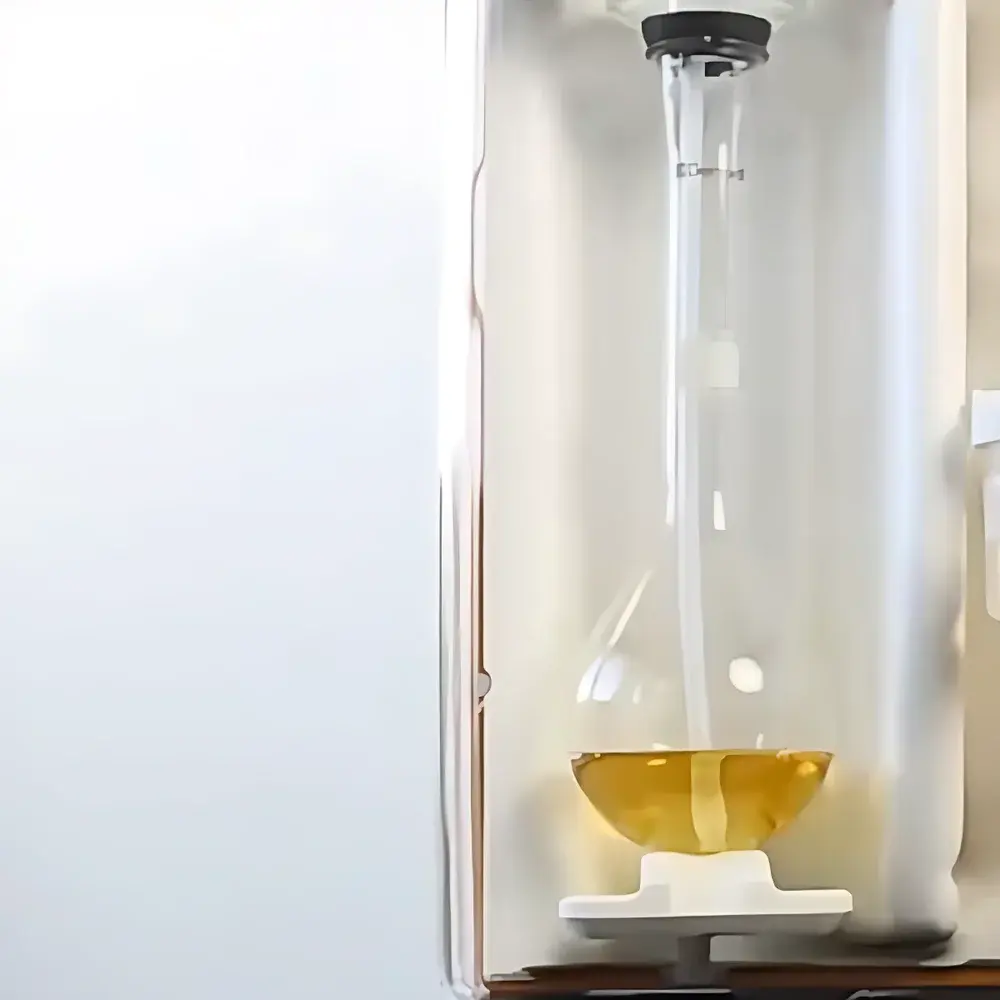
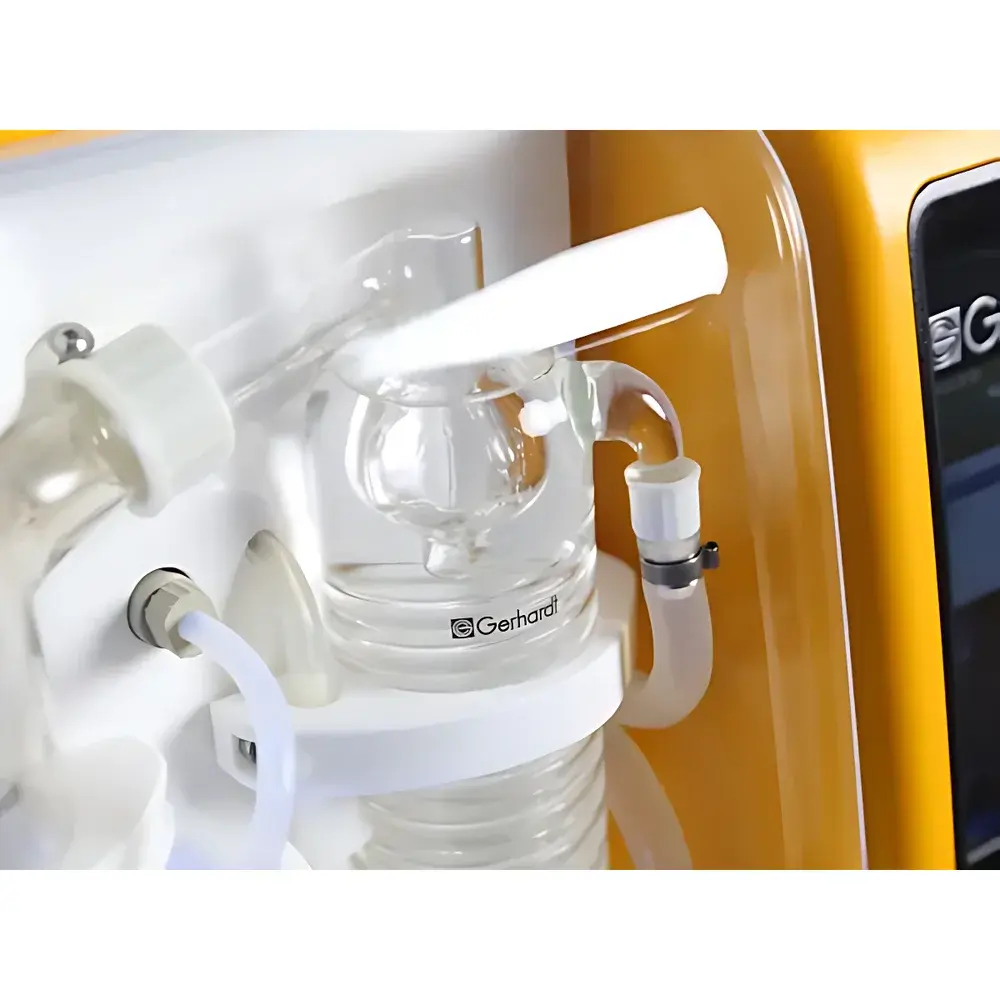
- High-fidelity recovery: Engineered glassware path (including borosilicate distillation flask, steam injector, and cooled condenser) ensures ≥99.5% phenol recovery across pH 2–4 matrices, validated against certified reference materials (CRMs) and spike-recovery studies.
- EN ISO 9001-compliant manufacturing: Every unit undergoes full functional testing and calibration traceable to national standards before shipment; documentation includes factory test reports and CE conformity declarations.
- Durable German engineering: Constructed with corrosion-resistant stainless-steel housing, sealed heating elements, and maintenance-free steam generator—designed for >10 years of continuous operation under GLP-aligned laboratory conditions.
Sample Compatibility & Compliance
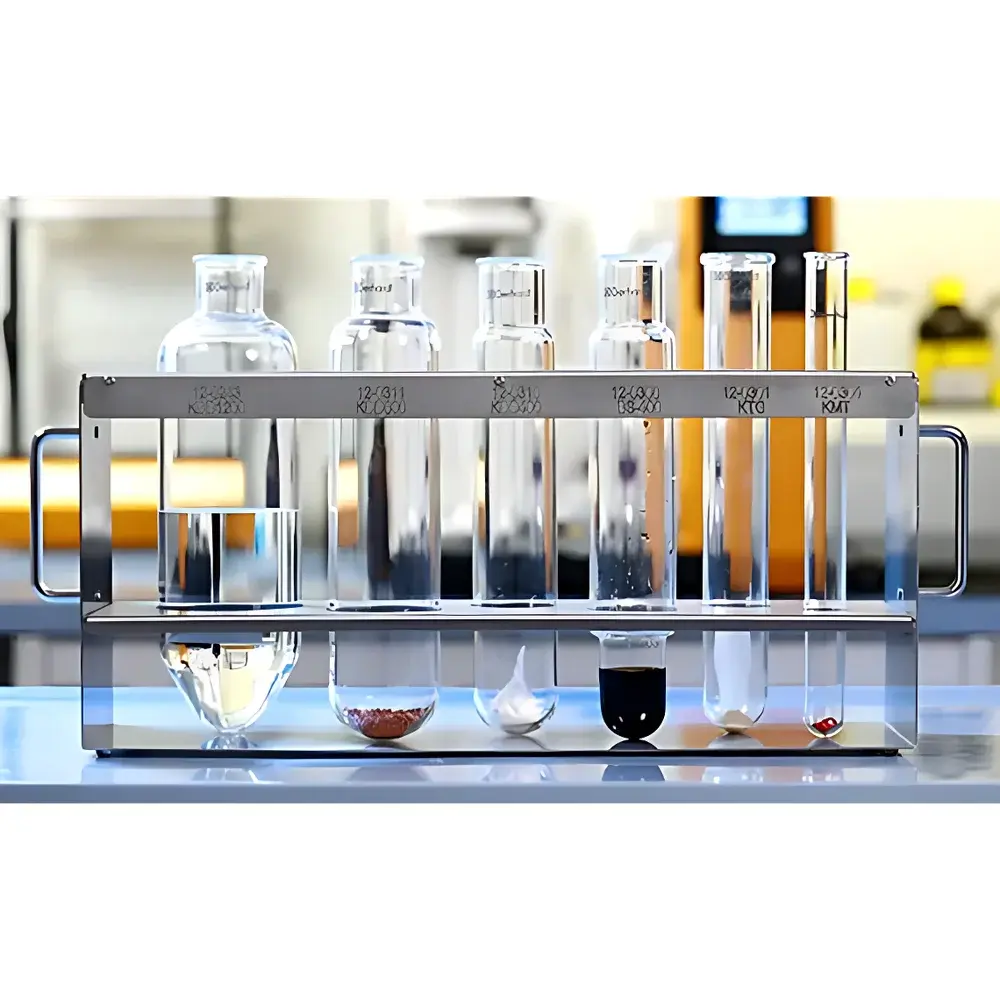
The VAPODEST 200 accepts standard 500 mL or 1000 mL digestion flasks and accommodates sample volumes from 100 mL to 500 mL. It is compatible with acidic, neutral, and mildly alkaline matrices—provided total suspended solids (TSS) remain below 100 mg/L to prevent clogging. The system meets critical regulatory prerequisites for environmental testing laboratories: it supports audit-ready workflows compliant with ISO/IEC 17025:2017 (clause 6.4.3 on equipment verification), fulfills hardware requirements for US EPA Contract Laboratory Program (CLP) Method 420.1, and aligns with EU Water Framework Directive (2000/60/EC) monitoring protocols. While the VAPODEST 200 itself does not generate analytical data, its distillate output is fully compatible with downstream instrumentation satisfying FDA 21 CFR Part 11 requirements when paired with validated spectrophotometers or HPLC systems.
Software & Data Management
The VAPODEST 200 operates via embedded firmware with no external PC dependency. All operational parameters—including steam intensity, heating ramp profile, and hold time—are stored in non-volatile memory and recalled per user-defined method number. The device logs timestamps for each run start/stop event and records up to 100 error codes (e.g., “E07: Low coolant flow”, “E12: Overtemperature alarm”) with persistent memory retention. For laboratories requiring electronic recordkeeping, Gerhardt offers optional RS-232 or USB-to-serial interface modules (sold separately) enabling integration with LIMS platforms via ASCII command protocol. Audit trails—including method version, operator ID input, and distillate volume confirmation—can be exported as CSV for inclusion in GLP/GMP validation dossiers.
Applications
- Regulatory compliance testing for phenol in municipal drinking water supplies (per WHO Guidelines and EU Directive 98/83/EC).
- Wastewater treatment plant (WWTP) influent/effluent monitoring under national discharge permits.
- Industrial hygiene assessments in petrochemical, pharmaceutical, and resin manufacturing facilities.
- Method validation and reference material certification in national metrology institutes.
- Educational use in university environmental chemistry labs for teaching standardized distillation theory and practice.
FAQ
Does the VAPODEST 200 include a built-in detector or spectrophotometer?
No—the VAPODEST 200 is a dedicated distillation unit only. Quantitative analysis requires off-line measurement of the collected distillate using UV-Vis spectrophotometry, HPLC, or GC-MS.
Can it be used for other volatile analytes beyond phenols?
Yes—when validated per method adaptation guidelines (e.g., ISO 5667-3), it supports cyanide (as HCN), formaldehyde, and certain low-boiling amines—but phenol remains its primary certified application.
Is routine maintenance required beyond cleaning the glassware?
Yes—annual inspection of steam generator seals, calibration of temperature sensors, and verification of steam flow rate using gravimetric collection are recommended per Gerhardt’s Maintenance Schedule G-VAPO-200-MS Rev. 4.
What safety certifications does the unit carry?
It bears CE marking per Directive 2014/30/EU (EMC) and 2014/35/EU (LVD), and complies with IEC 61010-1:2010 for laboratory electrical equipment safety.
Is remote diagnostics supported?
Not natively—but with optional communication module and Gerhardt ServiceLink software (v3.2+), authorized service engineers can perform firmware diagnostics and parameter review via secure SSH tunnel.
Related Products







