
Gill HS-100 Research-Grade 3D Ultrasonic Anemometer
| Brand | Gill |
|---|---|
| Origin | United Kingdom |
| Model | HS-100 |
| Instrument Type | Ultrasonic Anemometer |
| Resolution | 0.01 m/s |
| Measurement Range | 0–45 m/s |
| Accuracy | ±1% of reading |
| Operating Temperature | −40 °C to +60 °C |
| Operating Humidity | 0–100% RH |
| Output Frequency | 100 Hz |
| Wind Direction Range | 0–360° |
| Output Format | U/V/W orthogonal velocity components |
| Construction Material | Stainless steel |
| Compliance | Designed for GLP-compliant field deployment and long-term environmental monitoring |
Overview
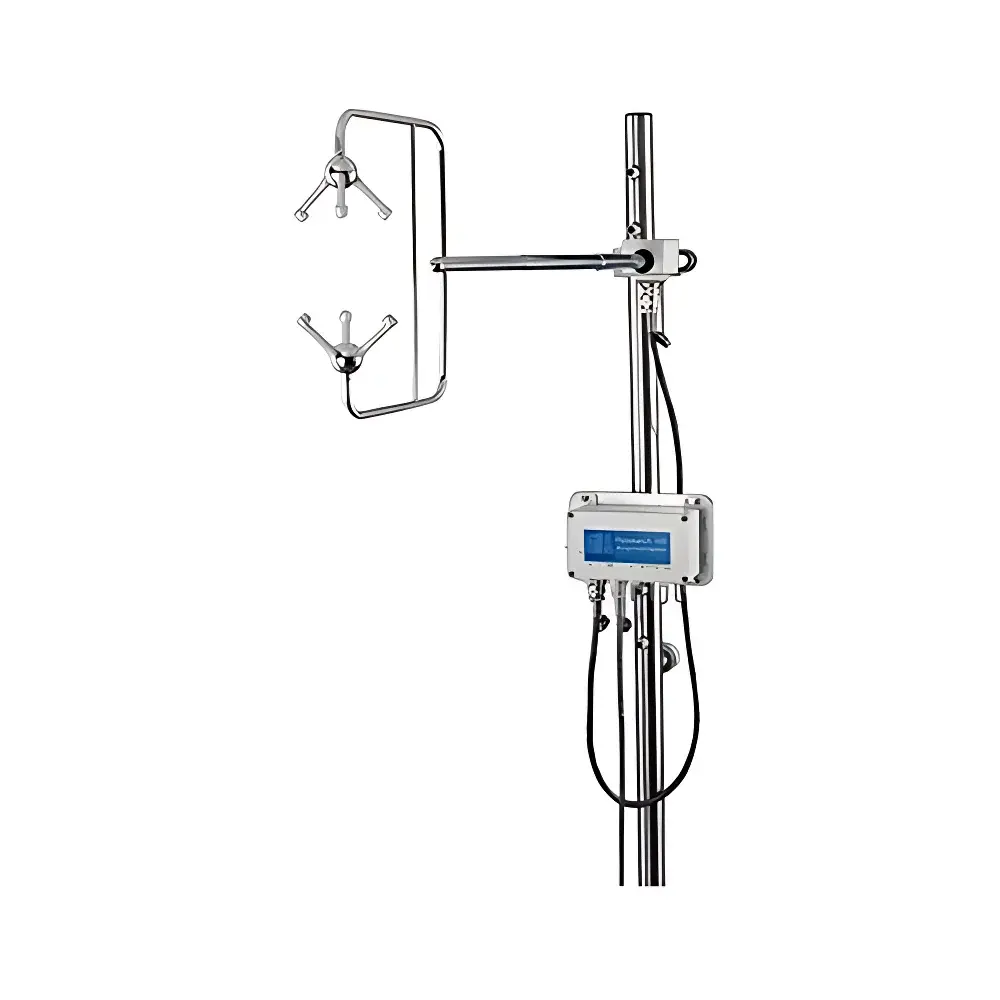
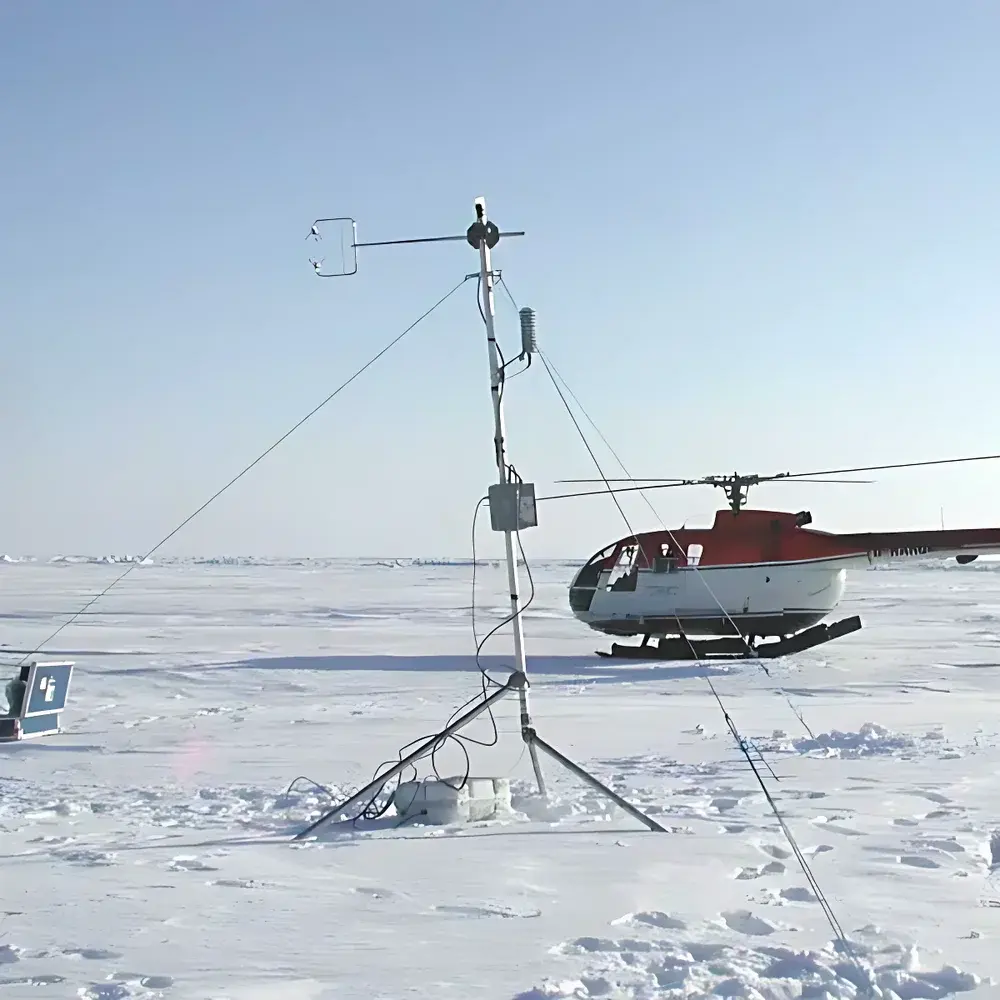
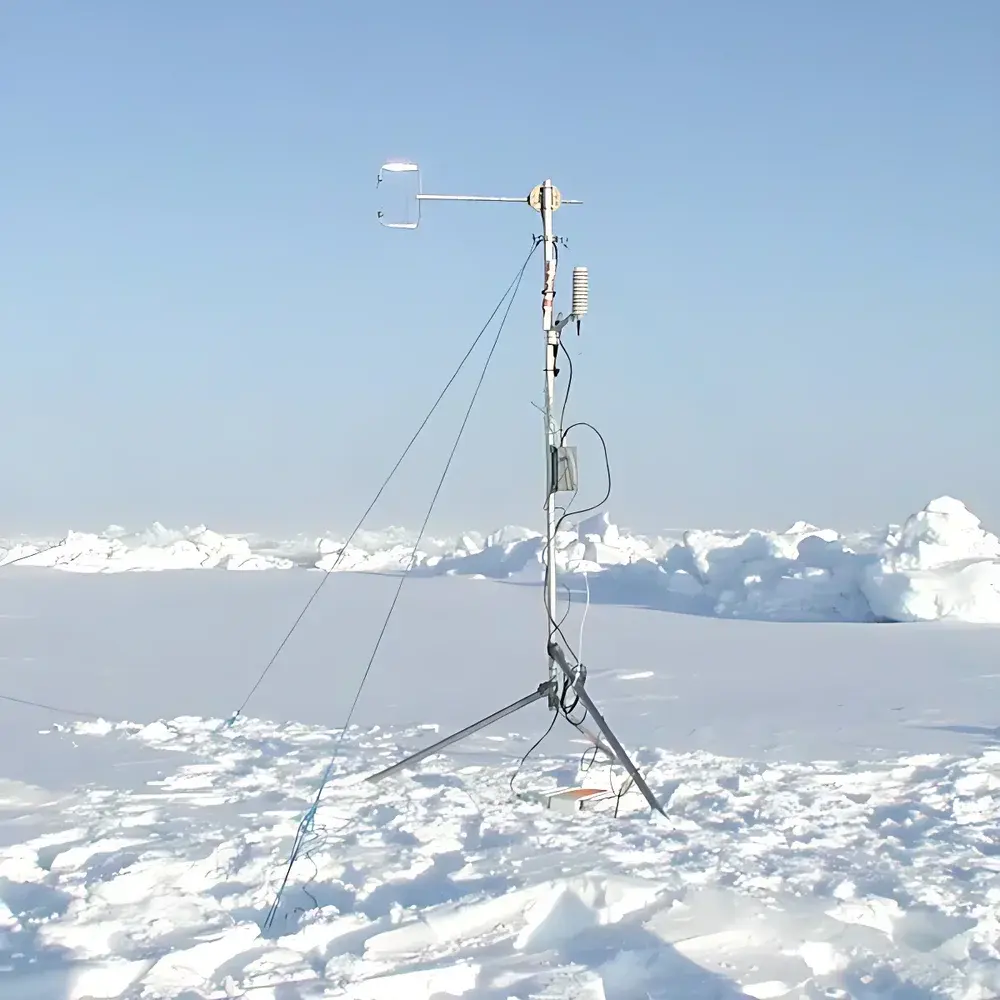
The Gill HS-100 is a research-grade, three-dimensional ultrasonic anemometer engineered for high-fidelity atmospheric turbulence measurement in demanding scientific applications. Utilizing time-of-flight ultrasonic transit-time differential principles, the HS-100 measures orthogonal wind velocity components (U, V, W) without moving parts—eliminating mechanical wear, inertia lag, and directional hysteresis inherent in cup or vane-based systems. Its horizontal head configuration minimizes flow distortion by reducing wake interference from the sensor structure itself, enabling accurate vertical wind velocity quantification critical for eddy covariance flux studies, boundary layer profiling, and surface-atmosphere exchange modeling. With a native sampling rate of 100 Hz, the instrument captures rapid turbulent fluctuations essential for spectral analysis, Reynolds stress computation, and coherent structure identification. The HS-100 is calibrated traceably to NPL (National Physical Laboratory, UK) standards and designed for continuous unattended operation across extreme climatic conditions—from polar tundra to arid deserts and marine offshore platforms.
Key Features
- Horizontal-head transducer geometry optimized to suppress aerodynamic shadowing and streamline flow perturbation around the sensor array
- Stainless-steel construction with IP66-rated housing ensuring corrosion resistance and structural integrity in coastal, agricultural, and industrial environments
- Integrated dual-axis inclinometer enabling real-time tilt correction and precise alignment verification during tower or mast installation
- Simultaneous output of U (east-west), V (north-south), and W (vertical) velocity vectors in ASCII or binary serial protocols (RS-232/RS-485)
- 100 Hz native sampling frequency with internal oversampling and digital low-pass filtering to suppress aliasing above the Nyquist limit
- External electronics box supporting optional Pt100 RTD inputs for concurrent air temperature measurement and analog voltage inputs for auxiliary sensors (e.g., net radiometers, soil heat flux plates)
Sample Compatibility & Compliance
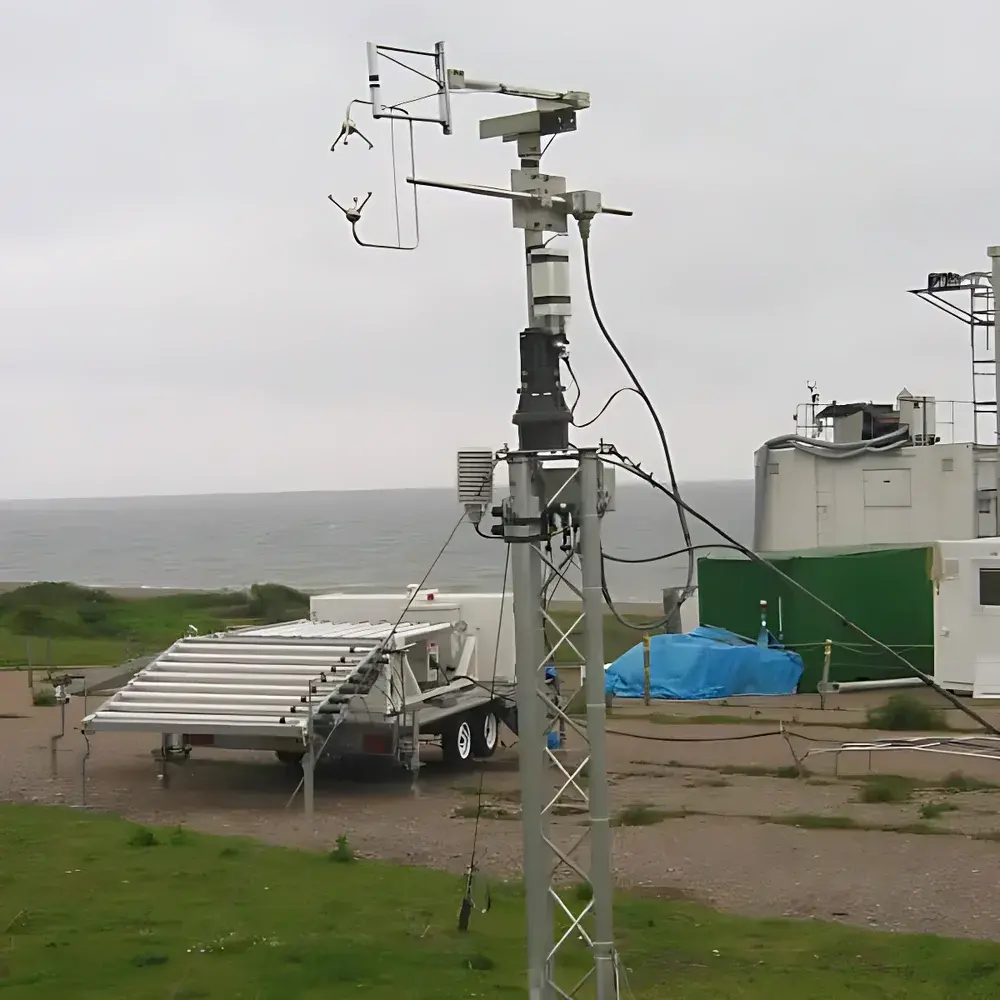
The HS-100 is validated for deployment in heterogeneous terrain—including forest canopies, crop fields, urban canyons, and open-water surfaces—where spatial representativeness and minimal footprint disturbance are prerequisites. Its compact head profile (≤120 mm height) permits mounting within 0.5 m of ground level or vegetation surfaces without inducing significant local flow acceleration. The instrument meets IEC 61326-1:2013 for electromagnetic compatibility and complies with EN 12599:2017 for environmental monitoring instrumentation. Data acquisition workflows align with ISO 16485:2022 (eddy covariance system requirements) and support audit-ready metadata tagging per FAIR (Findable, Accessible, Interoperable, Reusable) data principles. Firmware supports configurable averaging intervals (1–3600 s), spike detection algorithms, and user-defined QC flags compatible with FLUXNET, ICOS, and AmeriFlux network ingestion protocols.
Software & Data Management
The HS-100 interfaces natively with industry-standard dataloggers (Campbell Scientific CR6/CR1000X, Delta-T DL6, Onset HOBO RX3000) via asynchronous serial communication. Gill’s proprietary GillCom software provides firmware update capability, real-time diagnostics (transducer health monitoring, signal-to-noise ratio reporting), and calibration coefficient management. Raw 100 Hz velocity time series are timestamped with microsecond precision using internal temperature-compensated crystal oscillator (TCXO). All outputs include embedded status bits indicating tilt angle validity, transducer fault codes, and ambient temperature thresholds. For regulatory or quality-assured deployments, the system supports external GPS time synchronization and optional 21 CFR Part 11–compliant audit trails when integrated with compliant data acquisition platforms.
Applications
- Eddy covariance flux measurements of CO₂, H₂O, CH₄, and energy exchange in ecosystem-scale carbon cycle research
- Wind resource assessment and turbine wake characterization at onshore and offshore test sites
- Boundary layer meteorology studies including Monin–Obukhov similarity theory validation and stability parameter derivation
- Urban micrometeorology and pollutant dispersion modeling requiring high-temporal-resolution 3D wind vectors
- Marine atmospheric boundary layer profiling from buoys, lighthouses, and fixed-platform installations
- Agricultural micrometeorology—crop evapotranspiration modeling, pesticide drift prediction, and frost risk assessment
FAQ
What is the recommended mounting height for optimal turbulence measurement?
For eddy covariance applications, the HS-100 should be mounted at least 2 m above the displacement height (d) and 10× the surface roughness length (z₀); typical heights range from 2 m (low crops) to 60 m (forests).
Does the HS-100 require periodic recalibration in the field?
No routine field recalibration is required; the instrument is factory-calibrated with NPL-traceable reference standards. Annual verification against a portable calibration rig is recommended for GLP/GMP compliance.
Can the HS-100 operate in freezing fog or heavy rain?
Yes—the transducers feature hydrophobic coating and active acoustic self-cleaning algorithms that mitigate raindrop attenuation and ice accumulation effects up to 10 mm/h precipitation intensity.
Is analog voltage output available for legacy data loggers?
Yes—the external electronics box provides isolated 0–5 VDC or 4–20 mA outputs for U, V, W, and temperature channels, configurable via DIP switches.
How is tilt correction applied to the raw velocity data?
The built-in inclinometer continuously measures pitch and roll angles; onboard firmware applies real-time orthogonal transformation to project measured velocities onto true geographic axes (East/North/Up).







