
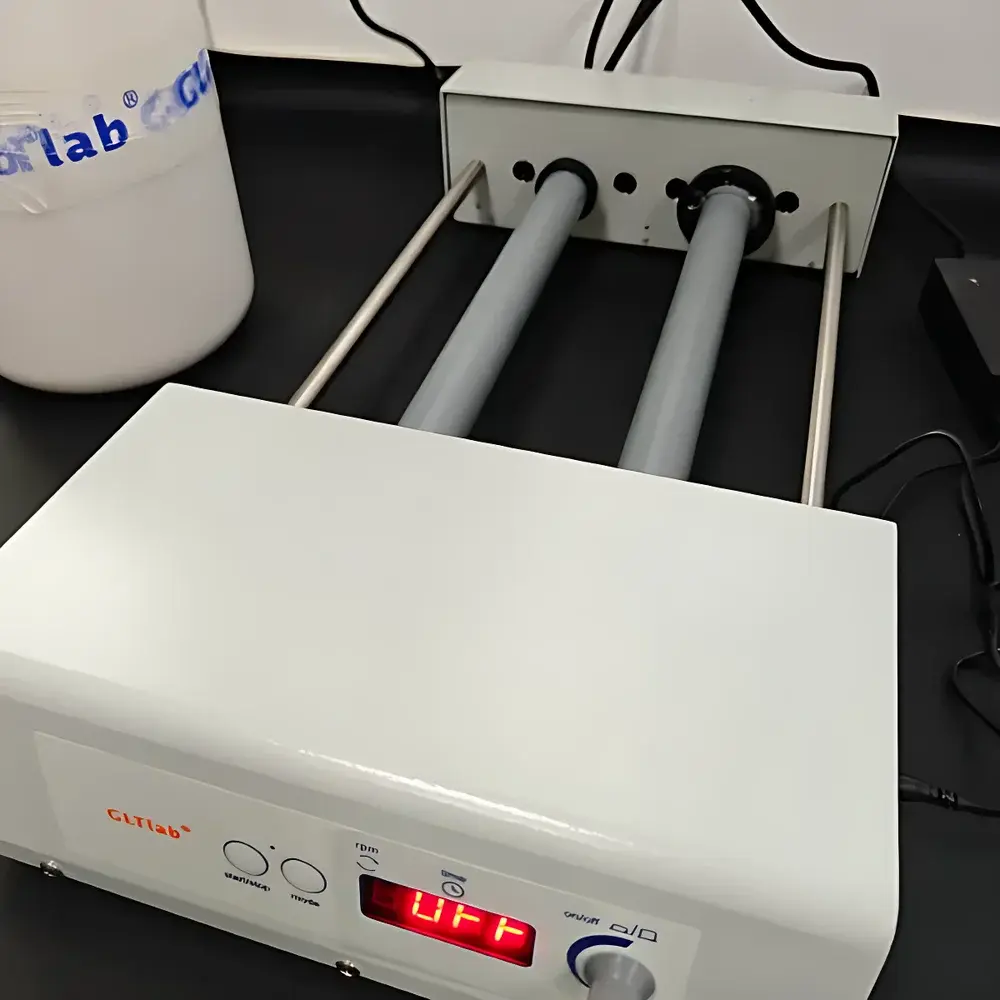
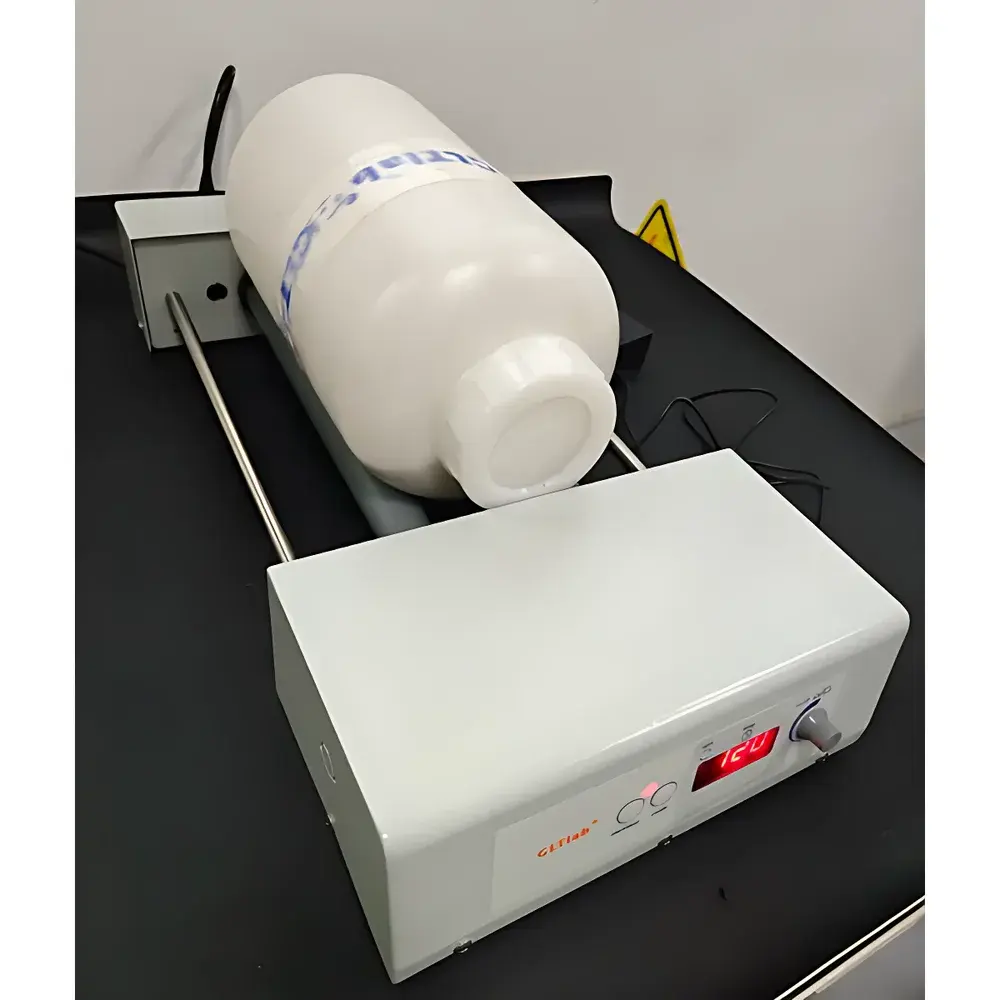
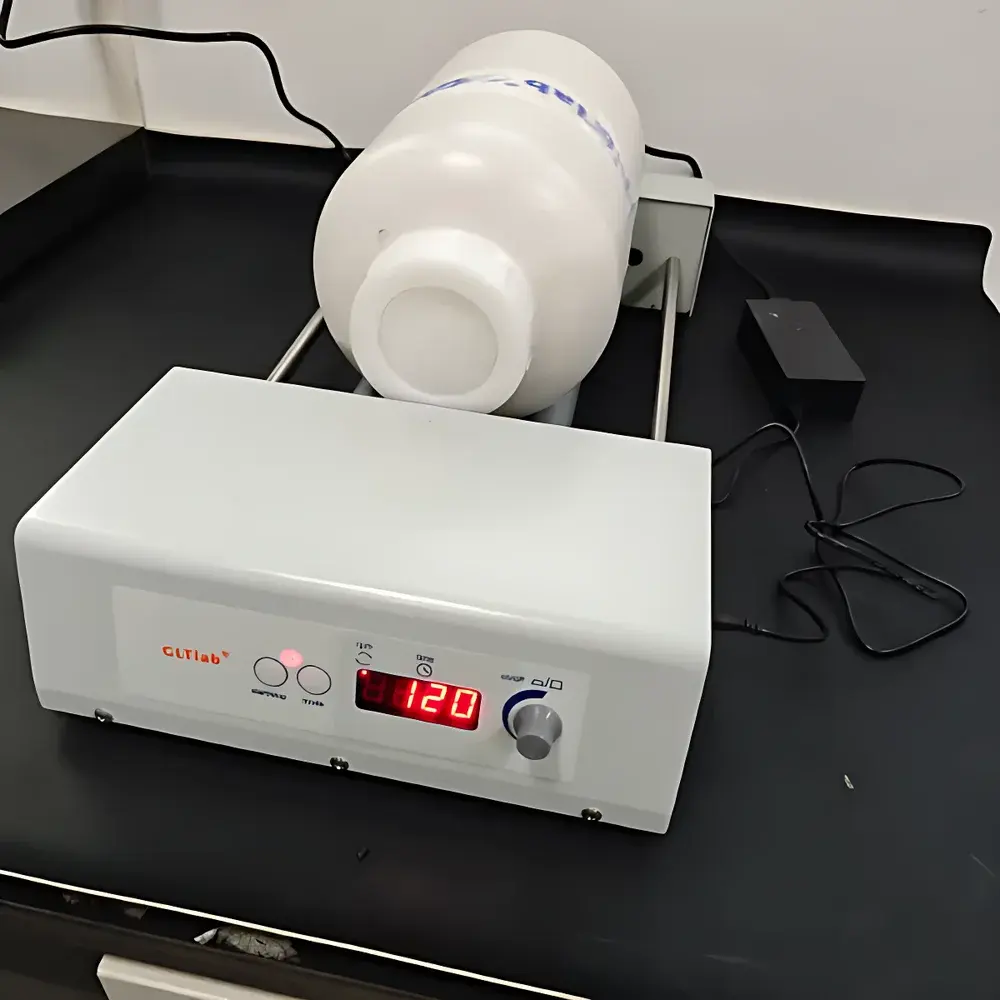
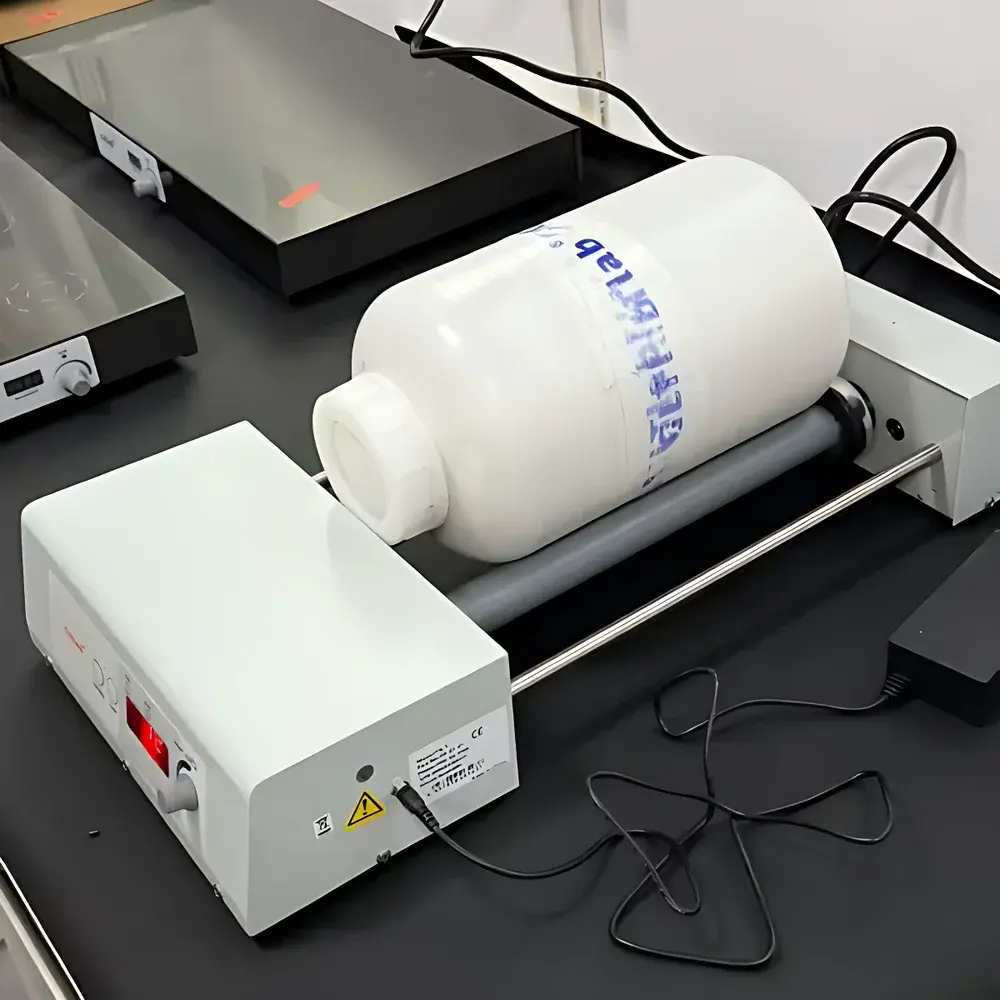
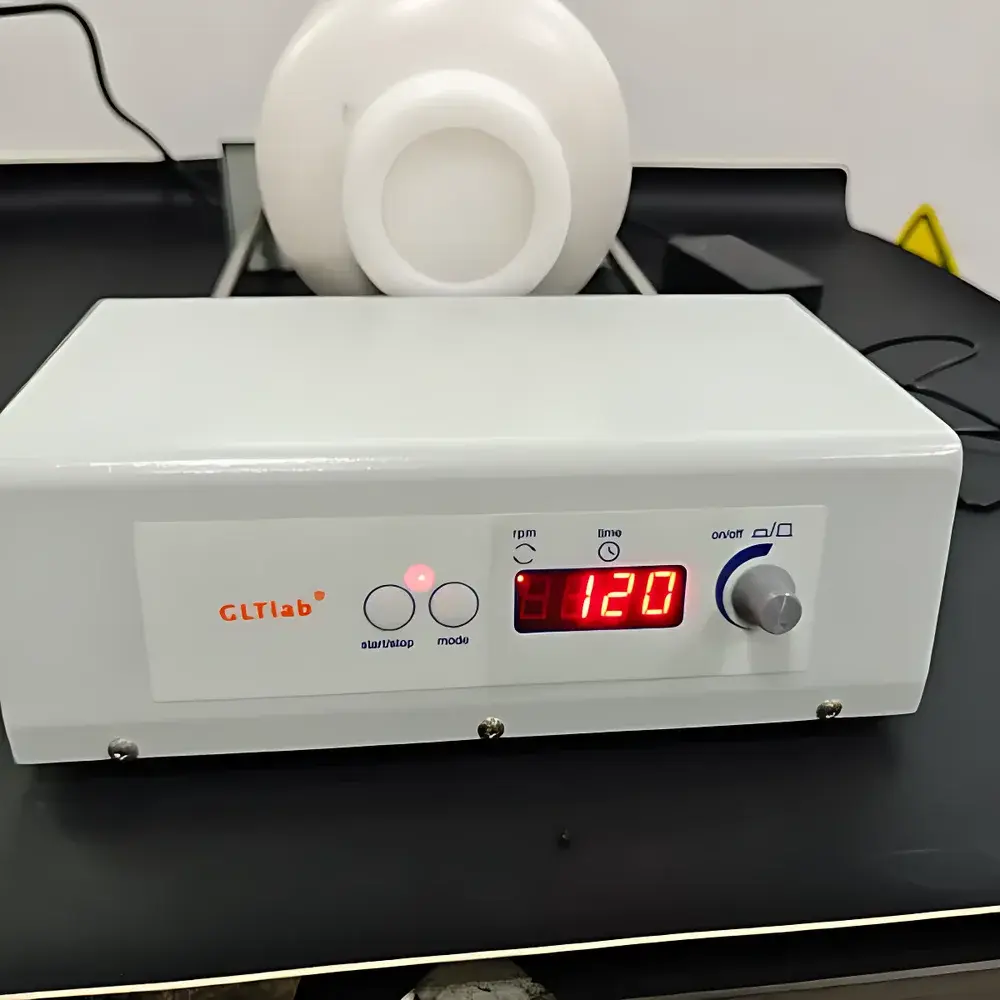
GLTlab MTR-5L Dual-Axis Roller Mixer / Roller Bottle Incubator
| Brand | GLTlab |
|---|---|
| Origin | Guangdong, China |
| Manufacturer Type | Direct Manufacturer |
| Product Category | Domestic |
| Model | MTR-5L |
| Instrument Type | Mixing & Homogenization Equipment |
| Timer Range | 1 sec – 200 h |
| Oscillation Speed | 5–300 rpm |
| Oscillation Angle | 15° |
| Number of Shaking Plates | 2 |
| Power Supply | DC 12 V / 5 A or 19 V / 5 A (included) |
| Construction | Stainless Steel Chassis (Standard) |
| Dimensions (W×D×H) | 552 × 286 × 98 mm |
| Max Single-Bottle Capacity | 5 L |
| Control Interface | Digital LCD Display |
| Motion Modes | Continuous Rolling Only (Dual-Axis Synchronized) |
Overview
The GLTlab MTR-5L Dual-Axis Roller Mixer is an engineered solution for gentle, consistent, and scalable sample agitation in life science and bioengineering laboratories. Designed around a dual-axis synchronized rolling mechanism—distinct from orbital shakers or vortex mixers—the MTR-5L applies controlled angular displacement (±15°) to cylindrical vessels mounted on two parallel stainless steel rollers. This motion induces laminar fluid shear and low-shear tumbling, ideal for sensitive biological suspensions—including mammalian cell cultures, blood components, viral vectors, and viscous biopolymer solutions—without inducing foaming, phase separation, or mechanical damage. Unlike single-axis rollers, the dual-axis architecture ensures balanced torque distribution, minimizing vibration transmission to incubators or cold rooms where the unit is frequently deployed. Its compact footprint (552 × 286 × 98 mm) enables integration into CO₂ incubators (with optional high-temp-rated wiring), refrigerated workstations, and biosafety cabinets—supporting GLP-compliant workflows requiring temperature-stable mixing.
Key Features
- Dual-axis synchronized roller drive system delivering uniform rotational torque and eliminating eccentric wobble under load
- Stainless steel chassis (AISI 304 standard) as standard—engineered for corrosion resistance in humid, acidic, or alkaline environments common in extraction and bioprocessing labs
- Adjustable speed range: 5–300 rpm with ±1 rpm resolution; programmable timer from 1 second to 200 hours with auto-shutdown
- Two independently mountable roller plates (340 × 30 mm each), accommodating up to one 5 L bottle or multiple smaller vessels (e.g., 10 × 50 mL tubes)
- DC-powered operation (12 V / 5 A or 19 V / 5 A) ensuring electromagnetic compatibility (EMC) and thermal safety inside temperature-controlled enclosures
- LED digital display with real-time rpm and remaining time feedback; no moving dials or analog potentiometers to degrade over time
- Modular roller geometry—compatible with custom mandrels for non-standard vessel diameters (e.g., glass bioreactors, PETG culture bottles)
Sample Compatibility & Compliance
The MTR-5L supports a broad range of sample types: whole blood and plasma fractions, hydrogels, nanoparticle suspensions, polymer precursor blends, and solid–liquid slurries used in battery cathode slurry preparation. Its low-shear profile meets ASTM D4703 (Standard Practice for Preparation of Plastics Specimens for Testing) and ISO 8573-1 (compressed air purity)–aligned cleanliness requirements when operated in cleanroom-adjacent settings. The stainless steel construction complies with FDA-recommended material specifications for equipment contacting pharmaceutical intermediates (per USP Analytical Instrument Qualification). While not certified for IEC 61000-6-2/6-3 immunity/emission, its DC architecture inherently reduces RF noise—critical for co-location with sensitive detection systems (e.g., fluorescence plate readers or microplate-based ELISA platforms).
Software & Data Management
The MTR-5L operates as a standalone instrument without proprietary software dependencies. All parameters are set locally via front-panel controls; no USB, Bluetooth, or Ethernet interface is included—intentionally omitting connectivity to reduce validation burden in regulated environments. For labs requiring audit trails, external data loggers (e.g., Omega OM-DAQPRO-5300) may be connected to the analog tachometer output (0–5 V DC proportional to rpm). The timer function supports repeat-cycle protocols (e.g., “roll 30 min → pause 10 min” repeated ×24) via manual re-initiation—sufficient for long-term suspension culture maintenance per ISO/IEC 17025 clause 7.8.2 on method validation.
Applications
- Roller bottle-based adherent cell expansion (e.g., CHO, HEK293) in serum-free or low-serum media
- Homogenization of high-viscosity battery electrode slurries (NMC, LFP) prior to coating trials
- Extraction of extracellular vesicles via magnetic bead–assisted rolling adsorption (no centrifugation required)
- Rehydration and dispersion of lyophilized proteins or nucleic acid complexes
- Accelerated stability testing of emulsions and colloidal dispersions under controlled agitation
- Incubator-integrated mixing for anaerobic microbiome culture enrichment (e.g., fecal microbiota transplantation prep)
FAQ
Can the MTR-5L operate inside a CO₂ incubator at 37 °C and 5% CO₂?
Yes—its sealed DC motor, stainless steel housing, and absence of vented electronics permit continuous operation in standard humidified incubators. Confirm cable gland integrity if using extended-length power cords.
Is the 15° oscillation angle adjustable?
No—the angle is mechanically fixed to ensure reproducible shear profiles across batches; variable-angle designs compromise roller alignment and increase bearing wear.
Does the unit support bidirectional rotation reversal?
No—it performs unidirectional rolling only; bidirectional reversal is omitted to prevent inertial stress on vessel seals and minimize micro-vibration transmission.
What maintenance is required beyond routine cleaning?
None—brushless DC motors and sealed ball bearings eliminate lubrication needs; wipe chassis with 70% ethanol or 0.1% NaOH solution after use in corrosive applications.
How does stainless steel construction impact thermal management during prolonged runs?
AISI 304’s thermal conductivity (16.2 W/m·K) dissipates heat more effectively than aluminum or coated steel, preventing localized hot spots near motor housings—even at 300 rpm for >48 h continuous duty.




