
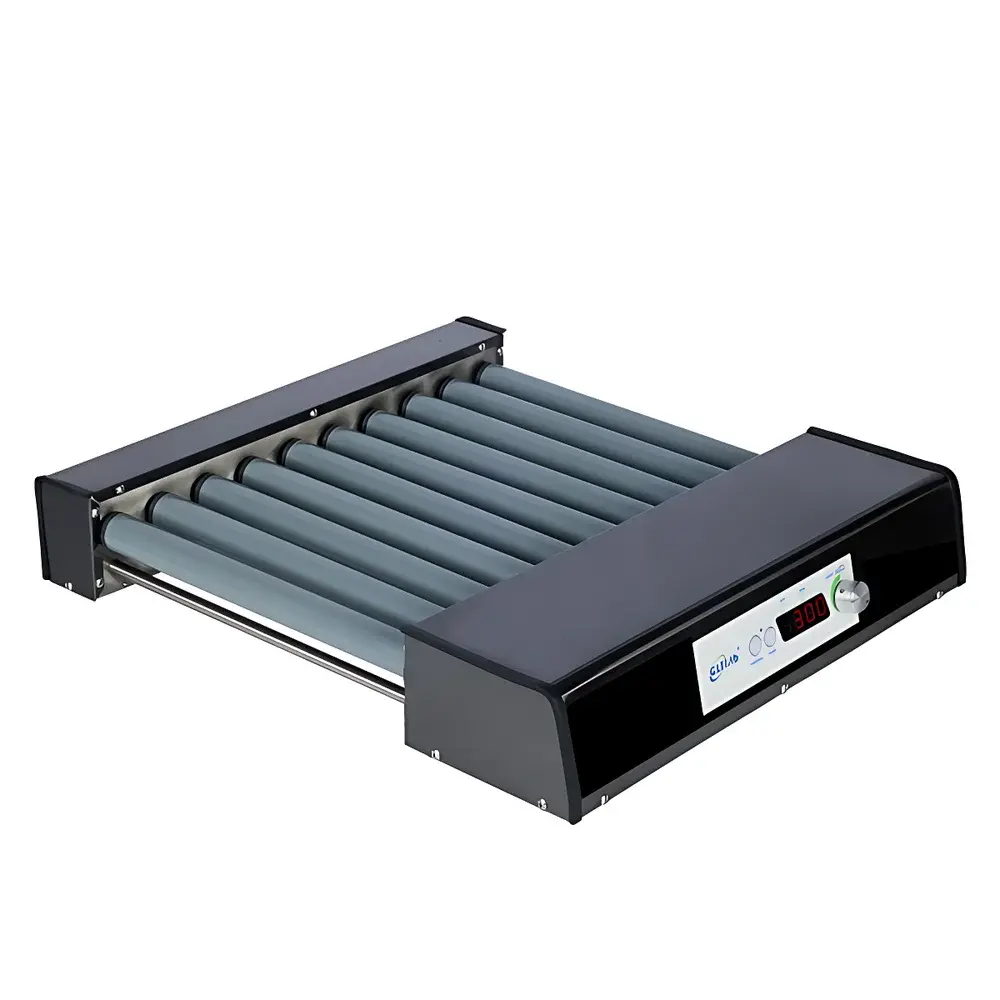
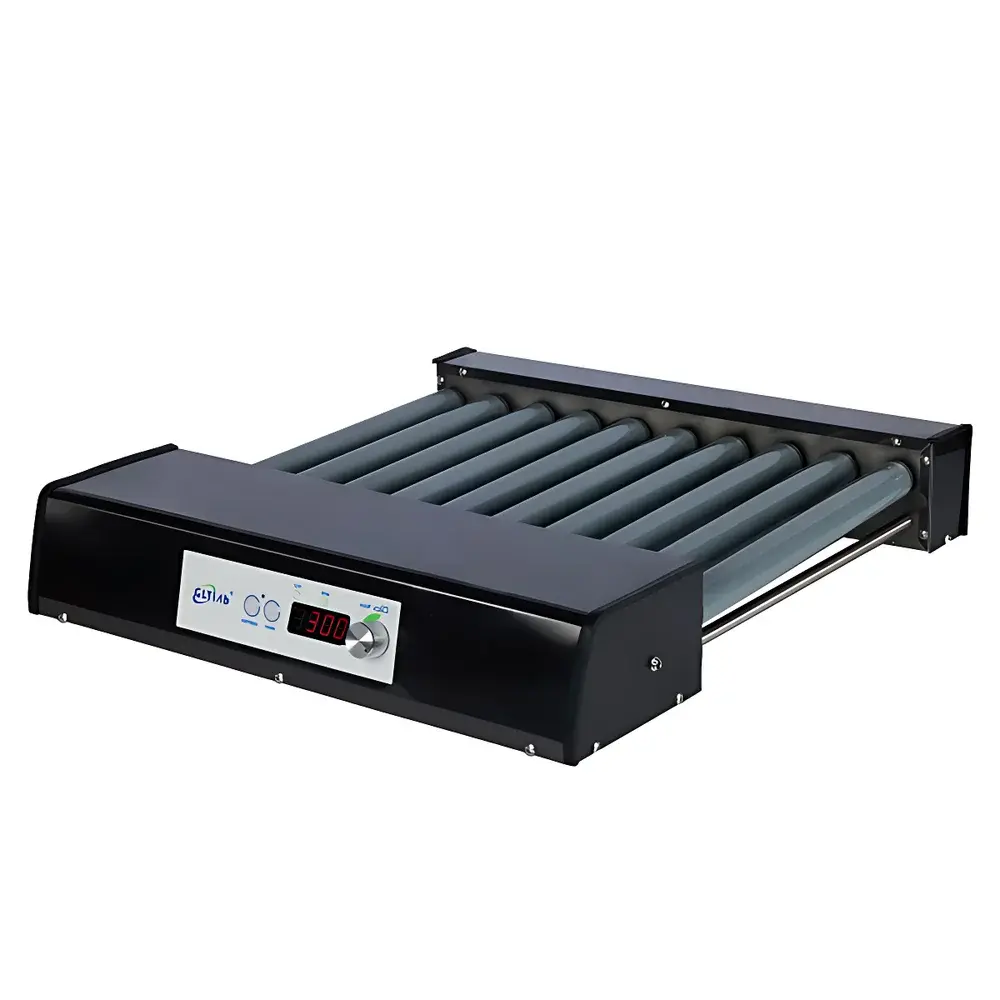
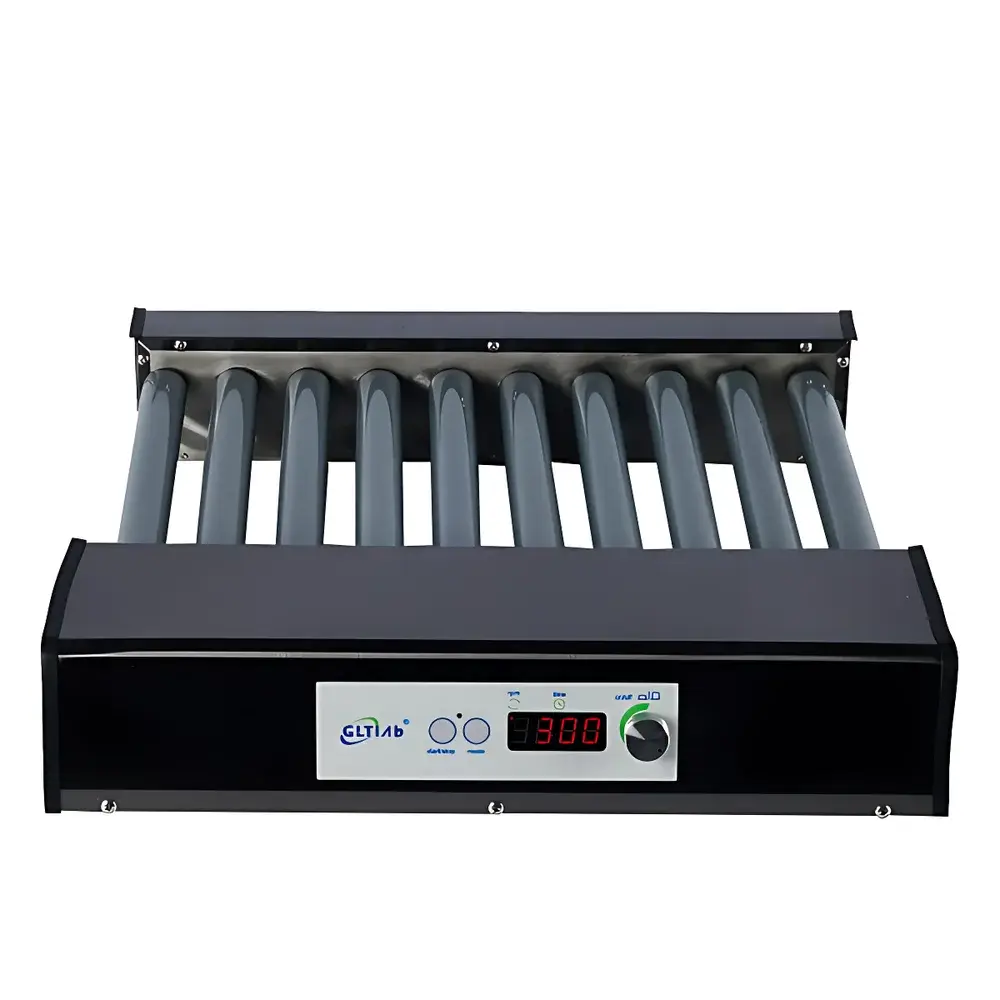
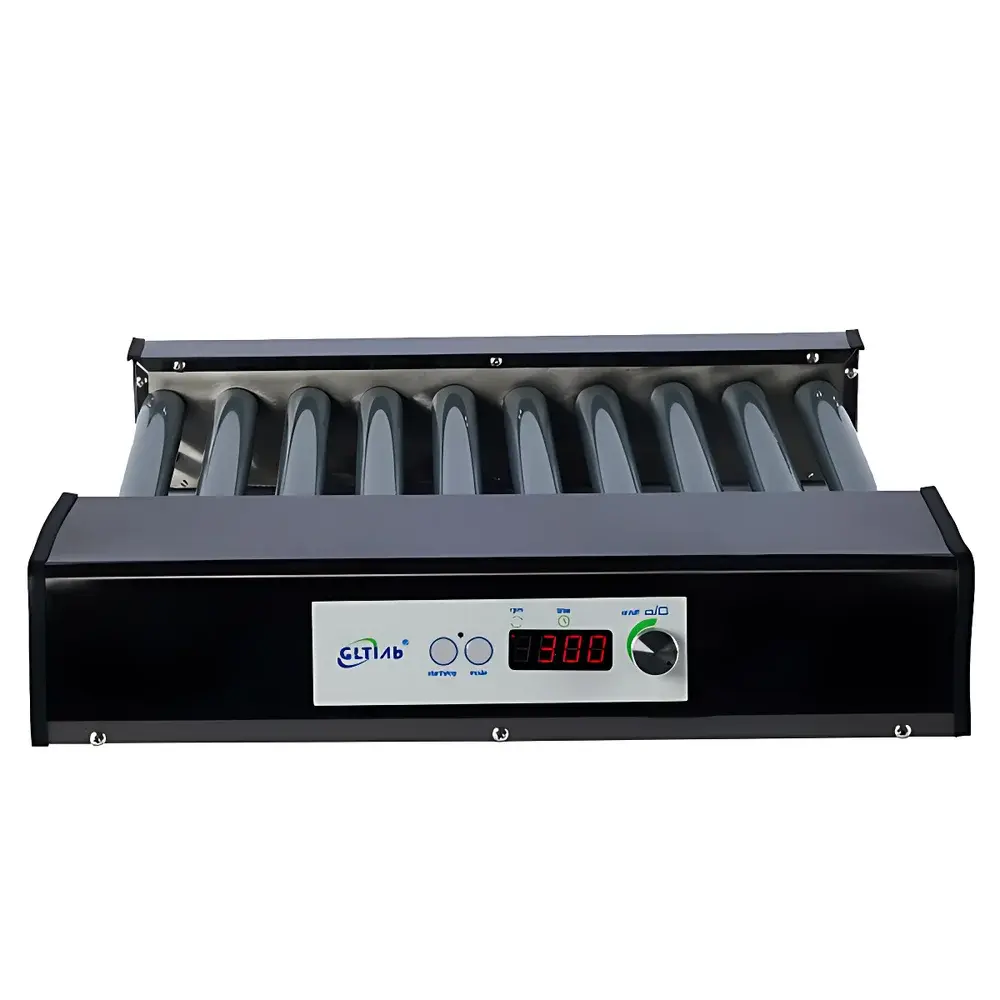
GLTlab TR-10A Stainless Steel Digital Roller Mixer
| Brand | GLTlab |
|---|---|
| Origin | Guangdong, China |
| Manufacturer Type | Direct Manufacturer |
| Product Category | Domestic |
| Model | TR-10A |
| Instrument Type | Mixing & Homogenization Equipment |
| Timer Range | 1 s to 200 h |
| Oscillation Frequency | 5–300 rpm |
| Temperature Control Range | 0–50 °C |
| Number of Roller Shafts | 10 |
| Construction Material | Electropolished 316 Stainless Steel Body |
| Power Supply | DC 12 V, 5 A |
| Direction Reversal Interval | 1–15 min |
| Display | LED |
| Operating Mode | Continuous Rolling + Programmable Rocking Motion |
| Optional Configurations | Custom shaft length (standard: 340 × 30 mm), extended speed range (up to 1000 rpm), single- or dual-direction rolling |
Overview
The GLTlab TR-10A Stainless Steel Digital Roller Mixer is an engineered solution for precise, low-shear homogenization of viscous, particulate-laden, and phase-separated samples in life science, bioprocessing, and advanced materials R&D laboratories. Based on Couette-type rotational mixing mechanics, the TR-10A employs ten independently aligned, motor-driven stainless steel roller shafts that rotate synchronously at programmable speeds (5–300 rpm) while optionally reversing direction at user-defined intervals (1–15 min). This dual-mode operation—continuous rolling combined with controlled rocking motion—ensures uniform sample agitation without foaming, sedimentation, or thermal degradation, making it especially suitable for blood banking, cell culture suspension, antibody conjugation, polymer dispersion, and slurry-based battery electrode formulation.
Key Features
- Electropolished 316 stainless steel chassis and roller assembly—engineered for long-term resistance to corrosion from organic solvents, acidic/basic reagents (pH 1–14), high-humidity incubators, and cold-room environments (0–50 °C operational range).
- Digital microcontroller with LED interface enables precise timer setting from 1 second to 200 hours, real-time rpm monitoring, and non-volatile memory for up to 10 user-defined protocols.
- Low-noise DC brushless motor drive ensures stable torque delivery across the full speed range and eliminates electromagnetic interference with adjacent analytical instruments.
- Modular roller geometry: standard 340 mm × 30 mm shafts accommodate common laboratory tubes (12–50 mL), centrifuge bottles (up to 250 mL), and custom cylindrical vessels; optional extended-length shafts (500 mm × 100 mm) available for large-volume mixing.
- Integrated safety logic prevents unintended startup after power interruption and includes overcurrent protection and thermal cut-off at ≥65 °C internal ambient.
Sample Compatibility & Compliance
The TR-10A supports a broad spectrum of sample types—including whole blood, plasma, bacterial lysates, hydrogels, ceramic slurries, lithium-ion cathode precursors, and microcarrier-based suspension cultures—without cross-contamination or surface adsorption. Its inert stainless steel surfaces comply with ISO 13485 cleanability requirements and meet material compatibility standards referenced in USP for pharmaceutical contact surfaces. The device operates within Class II biosafety cabinet footprints and is certified for use inside CO₂ incubators and refrigerated storage units (−20 °C to +50 °C ambient). While not intrinsically rated for hazardous locations, its sealed electronics and absence of spark-generating components enable safe deployment in GMP-compliant QC labs following FDA 21 CFR Part 11-aligned documentation practices.
Software & Data Management
The TR-10A operates as a standalone instrument with no proprietary software dependency. All parameter inputs and runtime logs are stored locally in non-volatile EEPROM with timestamped audit trails (date/time, rpm, duration, direction cycles). For integration into automated workflows, optional RS-485 serial output (Modbus RTU protocol) permits remote control and data logging via LabVIEW, Python-based SCADA systems, or LIMS platforms. Firmware updates are performed via USB-C interface using signed binary packages, ensuring traceability and integrity per IEC 62304 Software Lifecycle requirements.
Applications
- Blood bank processing: gentle resuspension of sedimented RBCs and platelet concentrates without hemolysis.
- Biopharmaceutical development: mixing of monoclonal antibody formulations with polysorbate stabilizers to prevent interfacial denaturation.
- Materials science: homogenization of Ni-rich NMC cathode slurries prior to slot-die coating, minimizing agglomerate formation and improving electrode uniformity.
- Molecular diagnostics: efficient binding of magnetic beads to nucleic acids during automated extraction protocols where mechanical shear must be minimized.
- Microbiology: maintenance of aerobic/anaerobic microbial suspensions during long-term growth kinetics studies under temperature-controlled conditions.
FAQ
Can the TR-10A operate inside a CO₂ incubator at 37 °C and 5% CO₂?
Yes—the unit is rated for continuous operation at ambient temperatures up to 50 °C and has been validated for stability under humidified CO₂ atmospheres without condensation ingress or electrical fault.
Is calibration required before first use or periodically?
No factory calibration is needed; the stepper-motor-driven shaft rotation delivers ±0.5% speed accuracy across the 5–300 rpm range, verified per ISO 17025-accredited metrology reports available upon request.
What tube sizes are compatible with the standard 340 × 30 mm rollers?
Standard configuration accommodates 12–50 mL conical tubes, 15–250 mL centrifuge bottles, and 10–100 mL glass vials with round or oval cross-sections; custom roller grooves can be machined for non-standard geometries.
Does the stainless steel construction affect electromagnetic compatibility (EMC) near sensitive detectors?
No—the fully shielded DC motor driver and grounded chassis suppress radiated emissions below CISPR 11 Group 1 limits, permitting co-location with mass spectrometers, PCR cyclers, and microplate readers.
How does the TR-10A compare to orbital shakers for viscous sample mixing?
Unlike orbital shakers—which generate turbulent shear and air entrainment—the TR-10A applies laminar, wall-driven flow ideal for shear-sensitive biologics and high-viscosity (>10,000 cP) dispersions where stratification must be avoided.





