
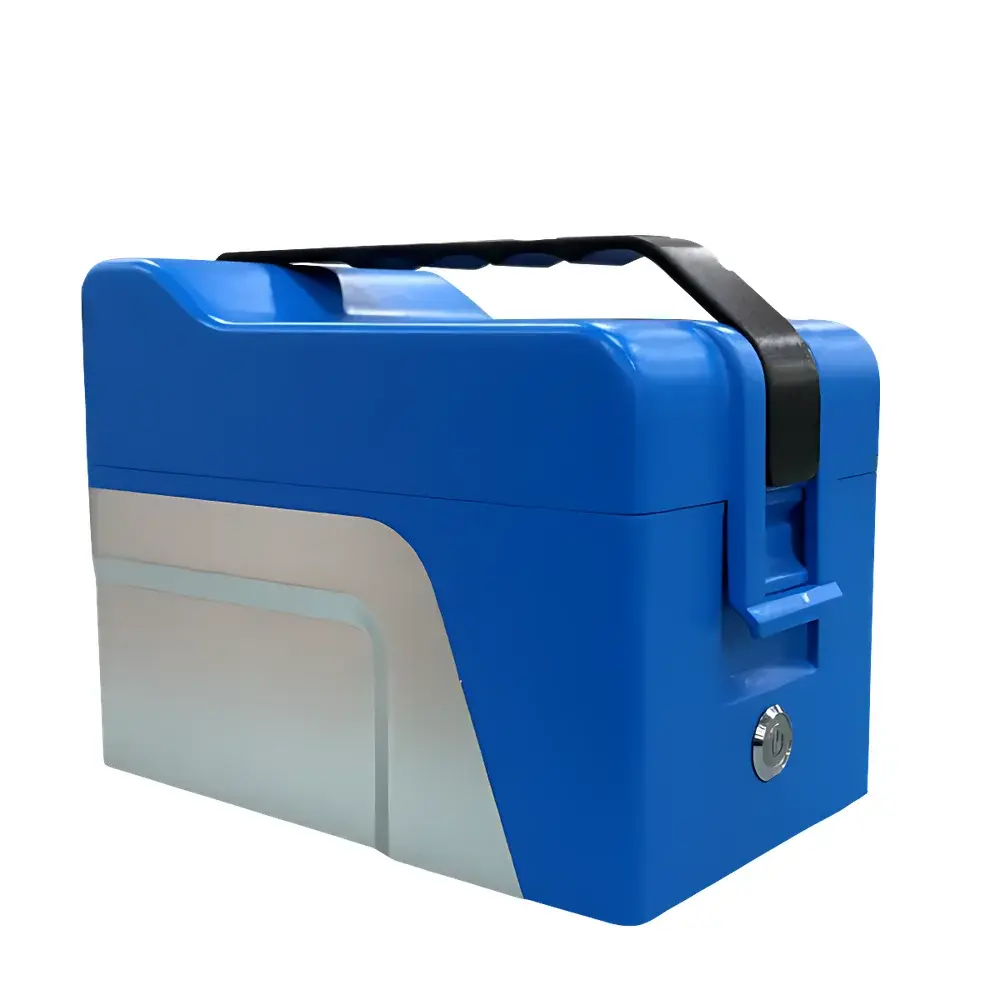
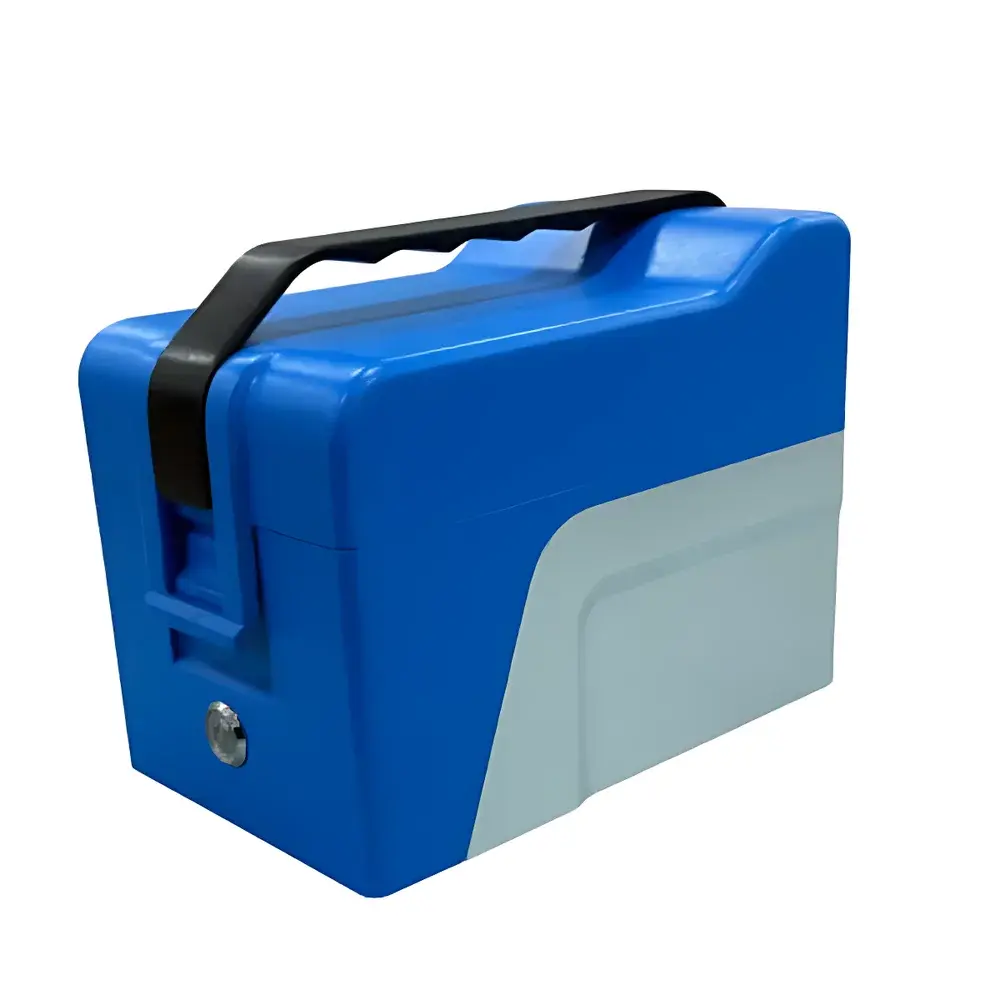
SOOHOW VS800 Portable Kinematic Viscosity Tester
| Brand | SOOHOW INSTRUMENT |
|---|---|
| Origin | Jiangsu, China |
| Manufacturer Type | Manufacturer |
| Country of Origin | China |
| Model | VS800 |
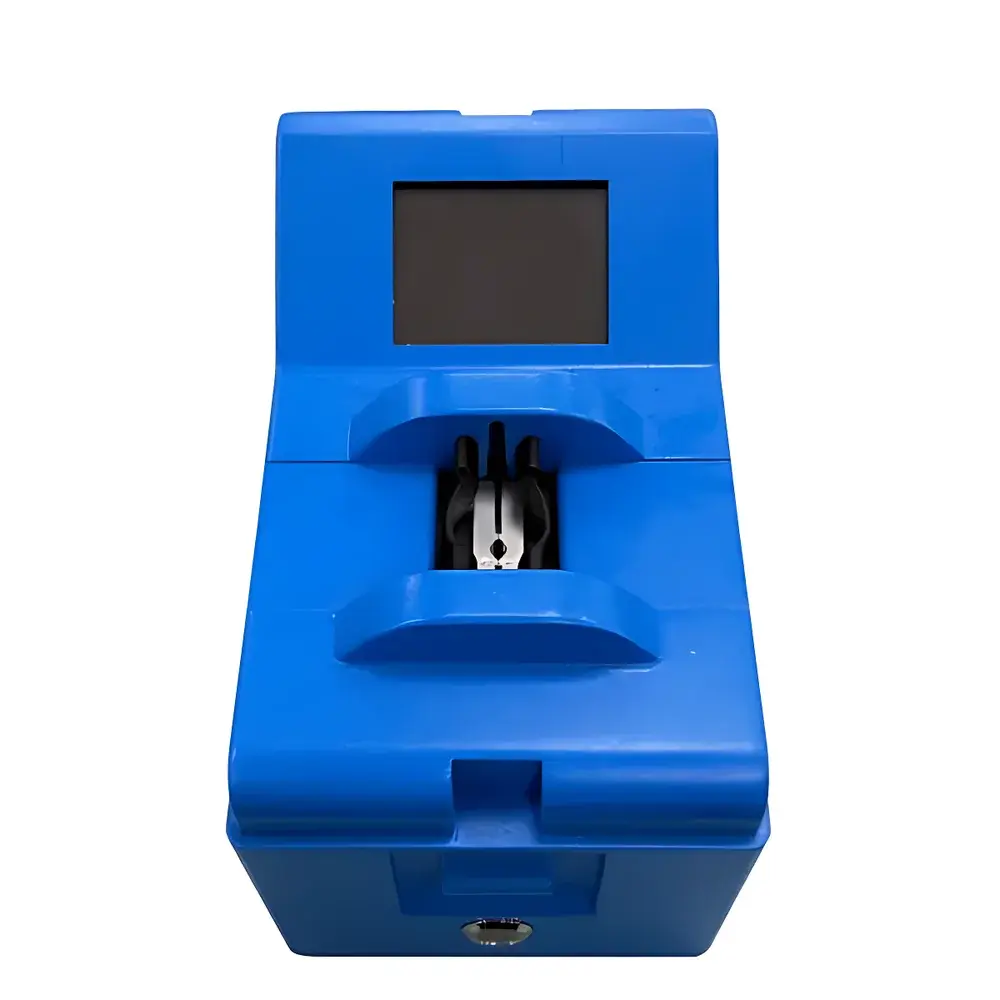
| Display | 2.8-inch LED, 320×240 pixels |
| Input | 4-wire resistive touchscreen |
| Interface | USB |
| Battery | 24 V, 2600 mAh rechargeable |
| Sample Cell | Hinged capillary cell |
| Sensor | Through-beam photoelectric sensor |
| Embedded Software | Onboard firmware with data logging |
| Data Storage | Internal memory (up to 1000 test records) |
| Viscosity Range | 10–350 cSt @ 40 °C |
| Accuracy | ≤ ±3% of reading |
| Repeatability | RSD ≤ ±3% |
| Standard Compliance | ASTM D8092 |
| Typical Test Temperature | 40 °C (thermostatically controlled) |
| Power Supply | DC 24 V adapter |
| Dimensions | 201 × 119 × 155 mm (L×W×H) |
| Weight | 1.5 kg |
| Sample Volume | 60 µL |
Overview
The SOOHOW VS800 Portable Kinematic Viscosity Tester is a field-deployable, capillary-based instrument engineered for precise kinematic viscosity measurement of petroleum-based fluids under ASTM D8092. Unlike traditional U-tube viscometers requiring fixed-temperature baths and manual timing, the VS800 integrates thermostatic control, optical flow detection, and embedded timing logic into a handheld platform. It operates on the principle of gravity-driven laminar flow through a calibrated capillary tube, where kinematic viscosity (ν) is derived from the efflux time (t) and instrument-specific calibration constants (C): ν = C × t. The device maintains a stable 40 °C measurement temperature via integrated Peltier-assisted thermal regulation—eliminating dependence on external oil baths or ambient conditions. Its design targets real-time, on-site assessment of lubricants, hydraulic oils, fuel blends, and used engine oils without sample dilution, filtration, or solvent handling.
Key Features
- Hinged capillary sample cell enabling rapid loading, visual inspection, and residue-free cleaning using non-abrasive wipes—no solvents or disassembly required
- Through-beam photoelectric sensor system with high signal-to-noise ratio for unambiguous meniscus detection across transparent, opaque, and heavily sooted samples
- Minimal sample requirement of only 60 µL—preserves system oil level integrity during in-service lubricant monitoring
- Embedded temperature-controlled measurement at 40 °C, compliant with ISO 3104 and ASTM D445/D8092 reference conditions
- Rechargeable 24 V / 2600 mAh battery supporting >8 hours of continuous operation; DC input compatible with vehicle power systems (12–24 V)
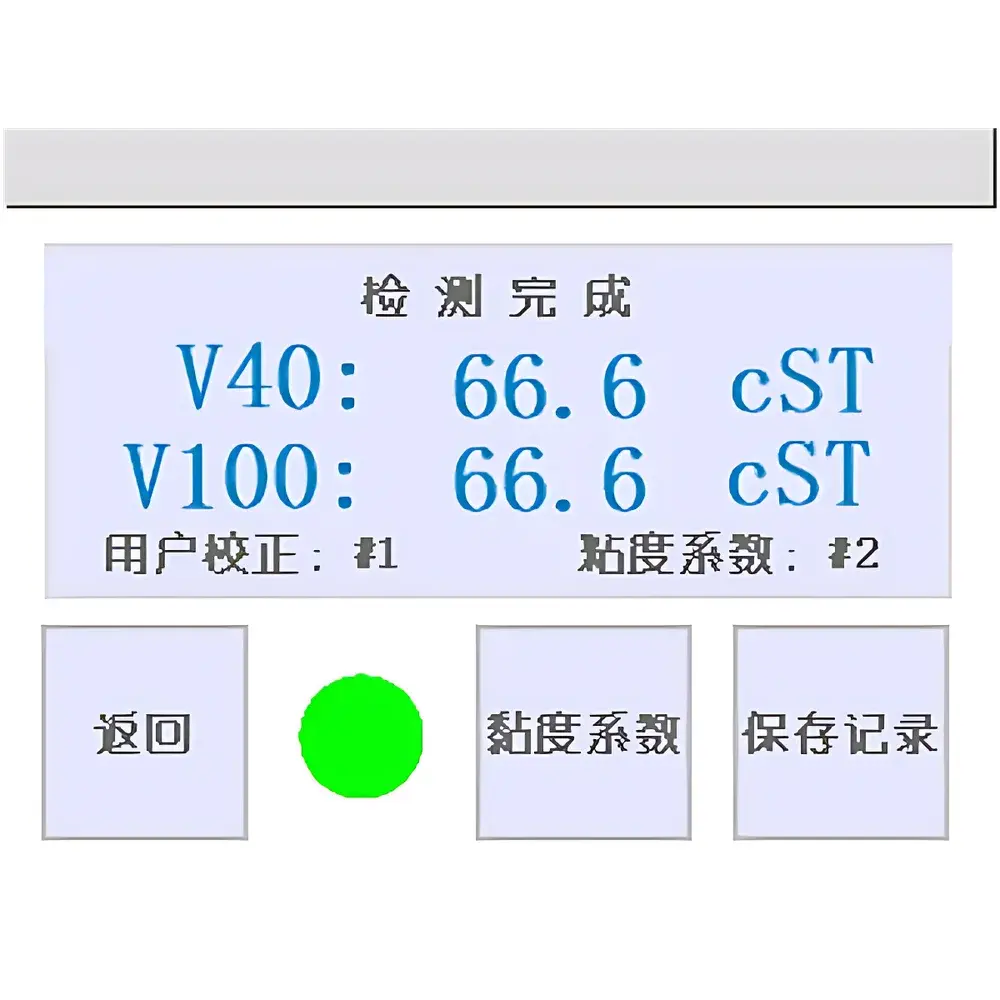
- 2.8-inch resistive touchscreen interface with intuitive icon-driven navigation and on-device pass/fail flagging based on user-defined limits
- No consumables beyond standard volumetric pipettes (e.g., 100 µL positive-displacement pipette)—reducing lifecycle cost and hazardous waste generation
Sample Compatibility & Compliance
The VS800 accepts undiluted, unfiltered petroleum liquids regardless of chromaticity or particulate load—including dyed turbine oils, asphaltene-rich residual fuels, soot-laden diesel engine oils, and thermally degraded gear oils. Its optical detection architecture does not rely on light transmission; instead, it detects meniscus passage via beam interruption, making it insensitive to sample color or turbidity. All measurements conform to ASTM D8092 (“Standard Test Method for Kinematic Viscosity of Transparent and Opaque Liquids by Automated Capillary Viscometer”), which permits use of automated timing and temperature control in lieu of manual stopwatch methods. The instrument’s calibration traceability follows NIST-traceable reference oils (e.g., Cannon-Manning standards), and its repeatability (RSD ≤ ±3%) meets internal QC requirements for field-grade viscosity verification per ISO/IEC 17025-accredited laboratories.
Software & Data Management
Onboard firmware provides full audit trail functionality: each test record stores timestamp, ambient temperature, battery voltage, efflux time, calculated viscosity, operator ID (optional), and pass/fail status. Data are stored in non-volatile memory (max. 1000 entries) with cyclic overwrite protection. Export occurs via USB mass-storage mode as CSV files—compatible with LIMS integration, Excel analysis, and trending dashboards. No proprietary drivers or cloud dependency: exported tables include columns for Sample ID, Test Date/Time, Temperature (°C), Efflux Time (s), Viscosity (cSt), and Instrument Serial Number. Firmware supports field-upgradable calibration coefficients and language localization (English, Spanish, Arabic).
Applications
- Field-based lubricant health monitoring on mining haul trucks, offshore drilling rigs, and marine propulsion systems
- Quality assurance of incoming base oils and finished lubricants at refinery loading racks and distribution terminals
- Preventive maintenance validation in wind turbine gearboxes and hydroelectric plant turbines
- On-vessel verification of bunker fuel viscosity prior to injection—supporting IMO 2020 sulfur compliance workflows
- Teaching labs and vocational training centers requiring portable, low-hazard viscosity instrumentation aligned with ASTM curriculum standards
FAQ
Does the VS800 require calibration with certified reference oils before each use?
No. Factory calibration is performed using NIST-traceable reference standards. Users may perform optional verification checks at intervals defined by internal SOPs or ISO 5725-2 guidelines.
Can the instrument measure viscosity at temperatures other than 40 °C?
The VS800 is optimized and certified for 40 °C operation per ASTM D8092. It does not support variable-temperature testing.
Is the hinged capillary cell resistant to corrosion from acidic or chlorinated samples?
The capillary tube is borosilicate glass; the housing is anodized aluminum. Avoid prolonged exposure to strong mineral acids or chlorine-based solvents.
How is temperature stability maintained during extended field use in high-ambient environments?
The Peltier module actively cools or heats the sample cell block, maintaining ±0.1 °C stability over ambient ranges of 5–45 °C.
Does the USB export support direct connection to a laboratory information management system (LIMS)?
Yes—CSV output is LIMS-agnostic and maps directly to standard viscosity data fields without middleware or conversion tools.






