
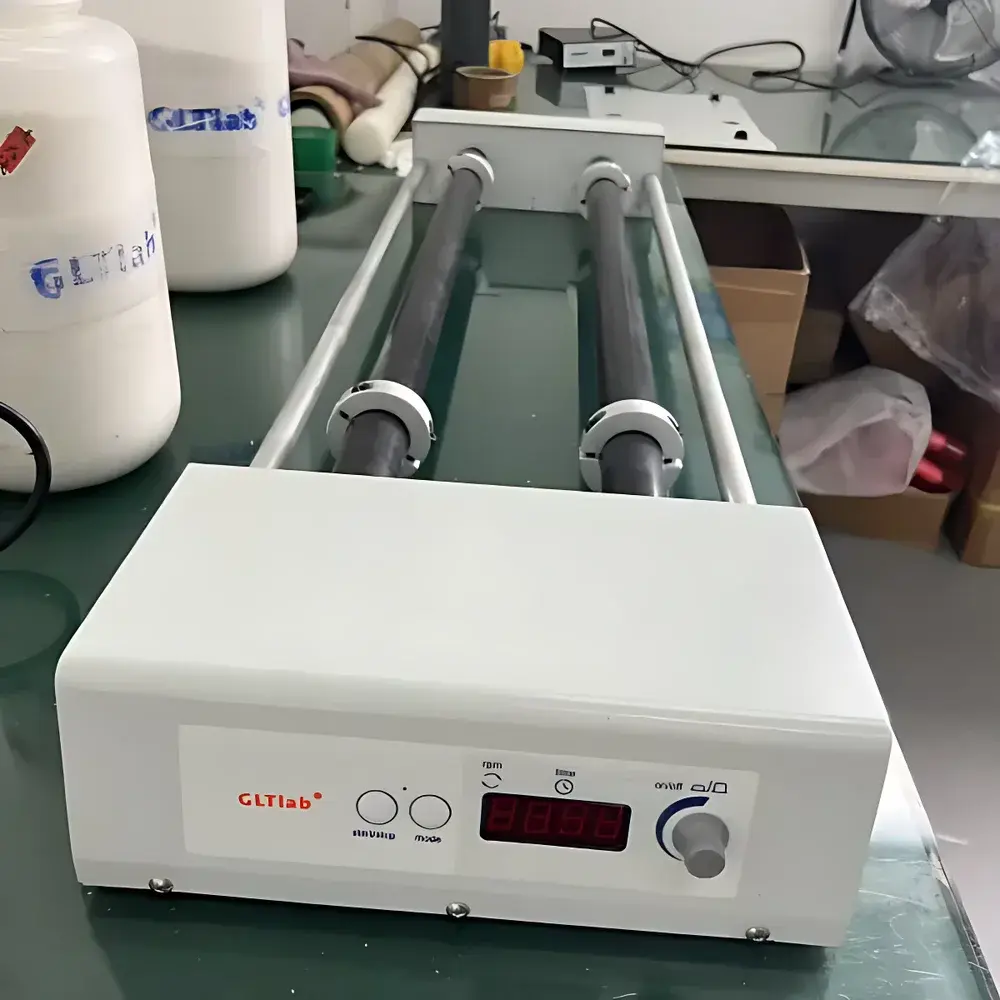
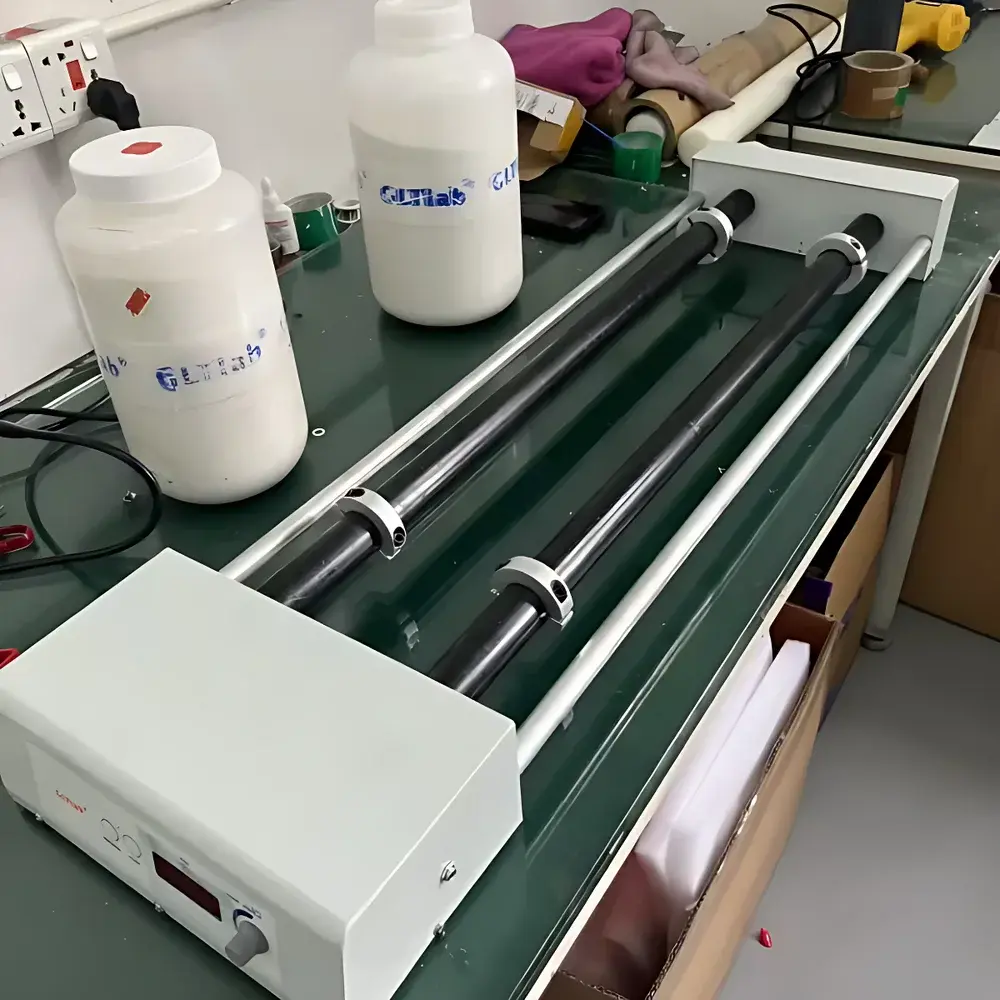
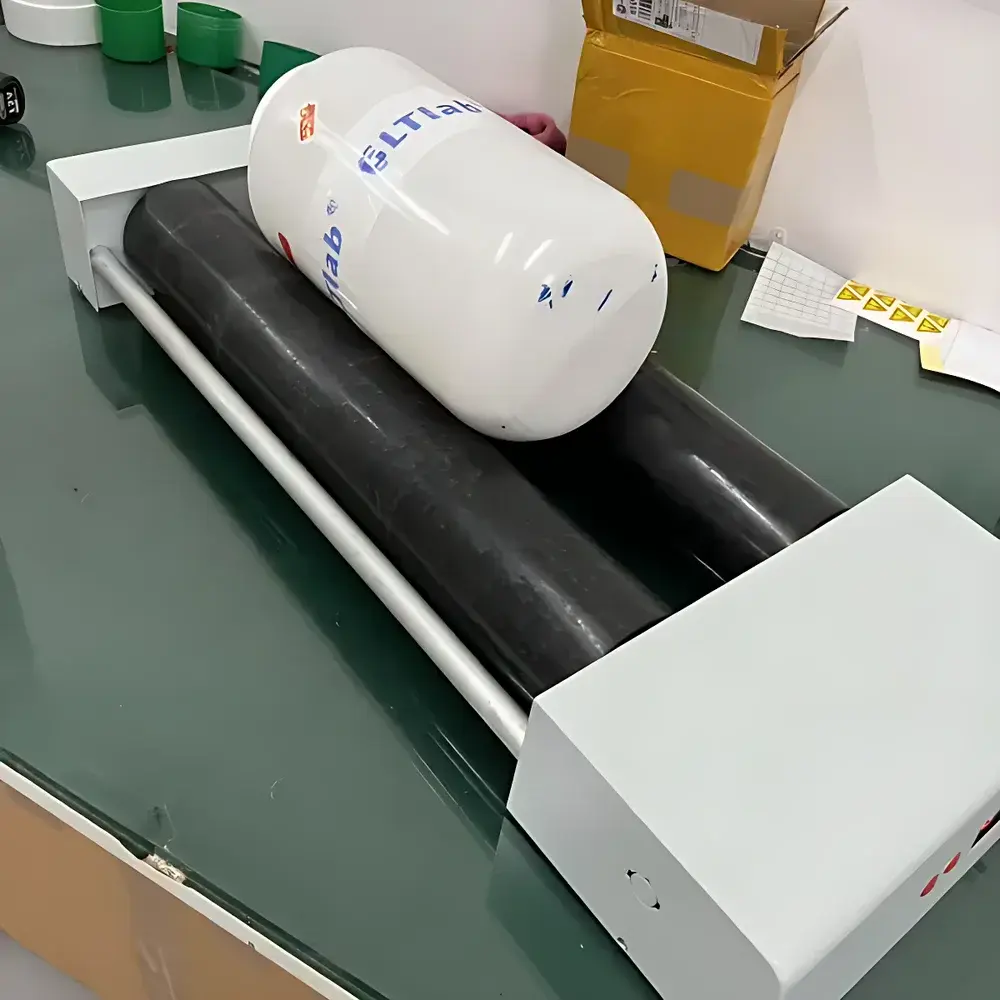
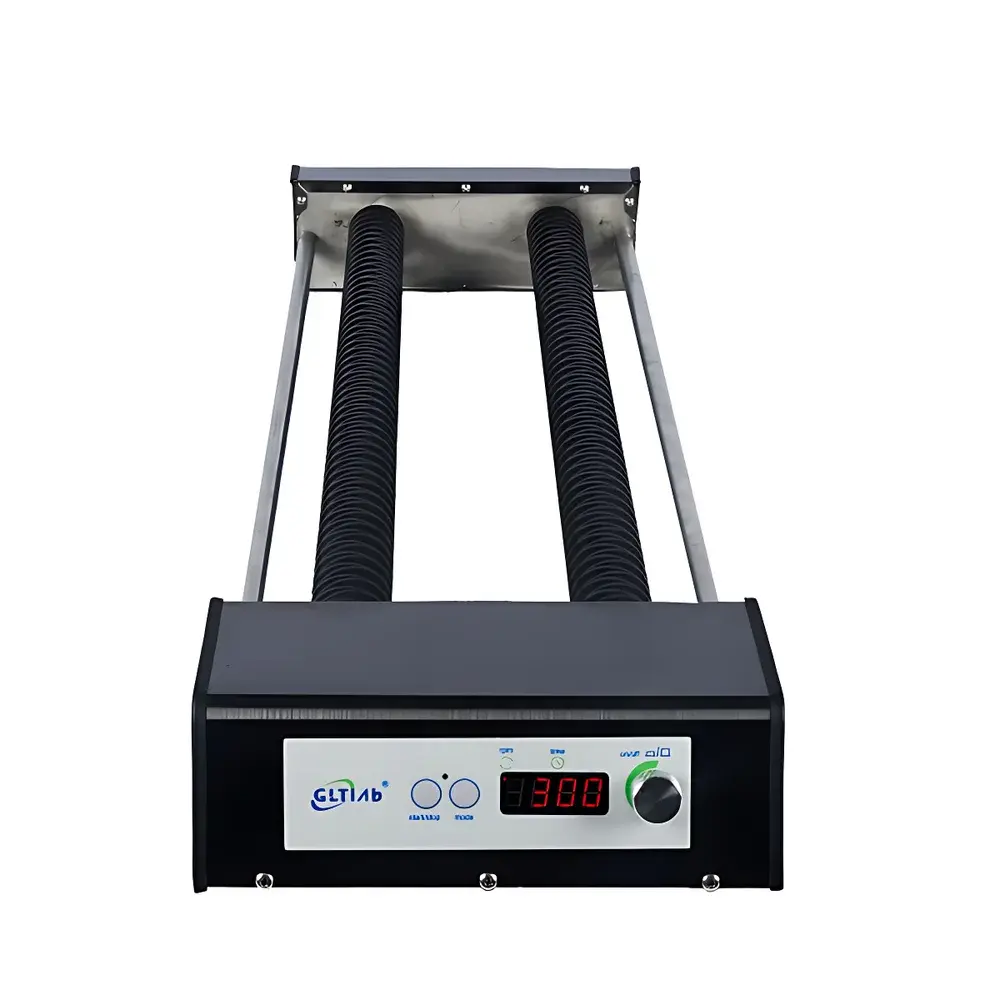
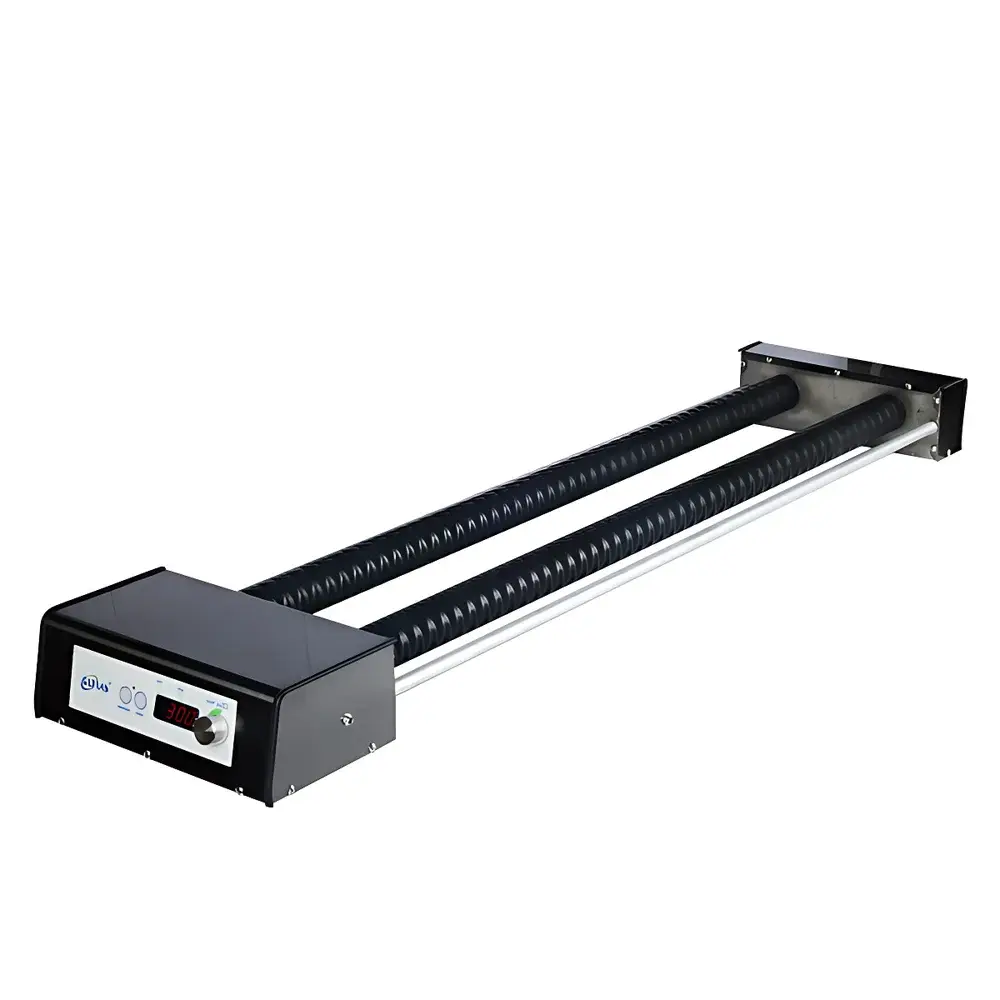
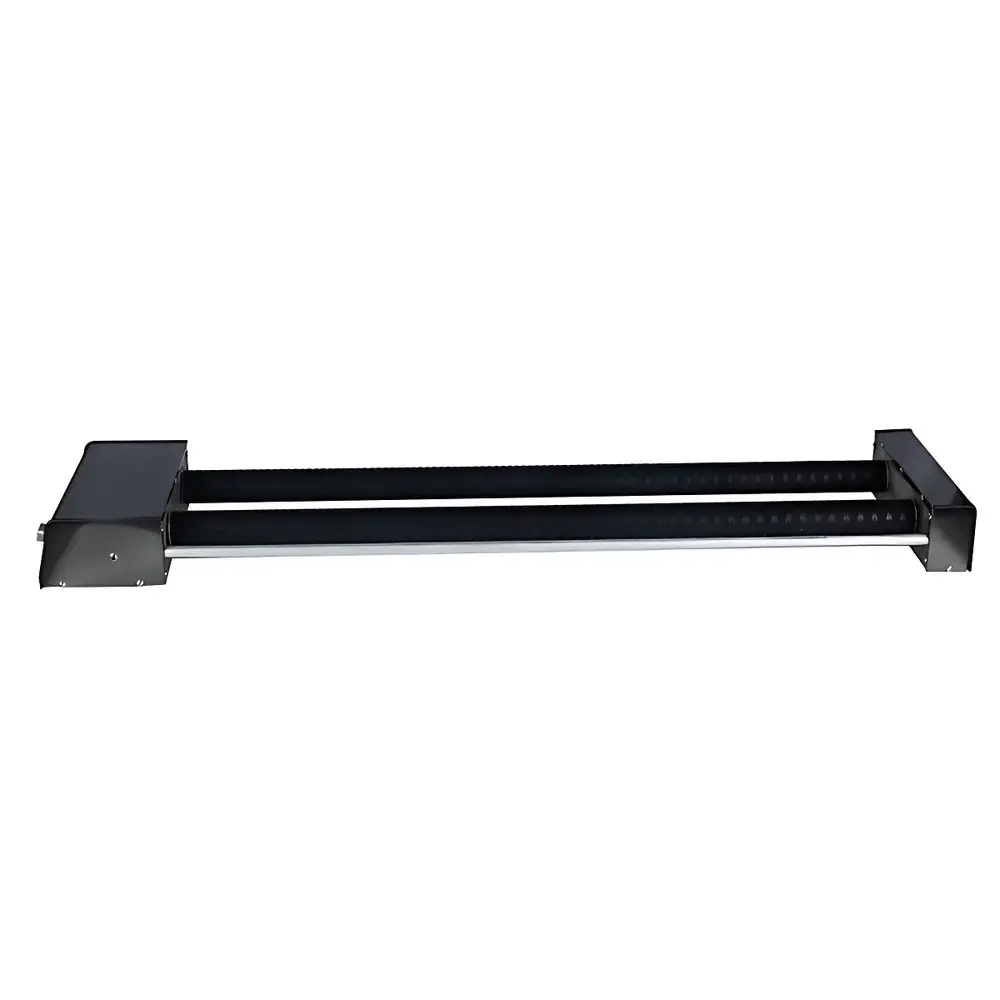
GLTLab TR-1C Customizable Roller Mixer / Roller Bottle Incubator
| Brand | GLTLab |
|---|---|
| Origin | Guangdong, China |
| Manufacturer Type | Direct Manufacturer |
| Country of Origin | China |
| Model | TR-1C |
| Price | USD 720 (FOB Guangdong) |
| Roller Length Custom Range | 20–100 cm |
| Roller Diameter Custom Range | 2–10 cm |
| Speed Range | 1–1500 rpm |
| Load Capacity per Roller | 10–100 kg |
| Timer Range | 1 s – 200 h |
| Display | Digital LED Control Panel |
| Roller Spacing | 15 cm |
| Control System | Microprocessor-Based Numerical Control (NC) |
Overview
The GLTLab TR-1C is a microprocessor-controlled, fully customizable roller mixer and roller bottle incubator engineered for precise, low-shear rotational mixing across diverse laboratory and industrial R&D environments. Operating on the principle of controlled axial rotation—where samples mounted on cylindrical rollers undergo continuous, uniform tumbling—the TR-1C delivers reproducible mixing kinetics without vortexing, sedimentation, or thermal stratification. Unlike orbital shakers or vortex mixers, this system maintains sample integrity during extended-duration protocols (up to 200 hours), making it especially suitable for sensitive biological suspensions, heterogeneous powder formulations, and gas–liquid equilibration processes. Its robust mechanical architecture supports variable roller geometry and load configurations, enabling adaptation to application-specific physical constraints—from compact benchtop anode slurry preparation in battery labs to large-scale coating maturation in polymer R&D facilities.
Key Features
- Microprocessor-based numerical control with high-resolution digital LED display for real-time monitoring of speed, time, and operational status
- Adjustable roller length (20–100 cm) and diameter (2–10 cm) to accommodate vials, bottles, cylinders, and custom vessels
- Wide speed range (1–1500 rpm) with ±1 rpm stability under full load, ensuring consistent shear input across viscosity gradients
- Scalable load capacity (10–100 kg per roller), validated for static and dynamic loading conditions per ISO 14644-1 Class 8 cleanroom-compatible mounting
- Precision timer with resolution down to 1 second and maximum duration of 200 hours, supporting unattended overnight and multi-day protocols
- Fixed 15 cm center-to-center roller spacing optimized for mechanical stability, thermal uniformity, and ergonomic access during loading/unloading
- Modular frame design fabricated from electropolished stainless steel (AISI 304), compliant with ISO 8573-1 for particulate and corrosion resistance in humid or solvent-rich atmospheres
Sample Compatibility & Compliance
The TR-1C accommodates a broad spectrum of container types—including glass and polypropylene bottles (5 mL to 5 L), stainless steel pressure cylinders (up to 10 L), and custom-machined reaction tubes—without requiring clamps or adapters. Its low-vibration drive system minimizes particle agglomeration in nanomaterial dispersions (e.g., graphene oxide slurries) and preserves magnetic bead integrity in separation assays. The unit meets general-purpose electrical safety requirements per IEC 61010-1:2010 and electromagnetic compatibility standards per EN 61326-1:2013. While not certified for medical device manufacturing, its traceable calibration logs and configurable audit trail support GLP-compliant documentation when integrated into validated lab workflows per OECD Principles of Good Laboratory Practice.
Software & Data Management
The TR-1C operates via embedded firmware with no external PC dependency; however, optional RS-485 serial interface (available upon request) enables integration into centralized lab automation systems (LIMS/ELN). All parameter settings—including speed setpoint, elapsed time, and cycle count—are retained in non-volatile memory during power interruption. For regulated environments, users may implement manual logbook entries aligned with FDA 21 CFR Part 11 Annex 11 expectations through timestamped operator sign-offs and version-controlled SOPs. Firmware updates are performed locally via USB port using signed binary packages provided by GLTLab technical support.
Applications
- Anode slurry homogenization for lithium-ion battery electrode development (e.g., LiCoO₂ + conductive carbon + PVDF binder in NMP)
- Graphene and MXene nanosheet dispersion stabilization in aqueous and organic media
- Magnetic bead-based immunoassay incubation with controlled rotation to prevent aggregation and enhance binding kinetics
- Inkjet ink formulation and pigment suspension aging studies under inert atmosphere
- Crosslinker distribution in UV-curable resin pre-mixes prior to photopolymerization
- Paint and coating “ripening” protocols to assess thixotropic recovery and pigment settling behavior
- High-pressure gas cylinder cleaning via solvent-assisted rolling agitation
- Gas dissolution and mass transfer rate studies in sealed reactors (e.g., CO₂ absorption in amine solutions)
FAQ
Can the TR-1C be used in a Class B cleanroom environment?
Yes—its sealed motor housing, stainless steel construction, and absence of lubricant-exposed surfaces meet ISO 14644-1 Class 8 particulate limits when installed with appropriate air filtration.
Is speed calibration traceable to national standards?
Calibration certificates (traceable to CNAS-accredited metrology labs) are available as an add-on service; base units ship with factory verification reports.
What is the maximum ambient temperature rating for continuous operation?
The unit is rated for continuous duty at ambient temperatures up to 40 °C and relative humidity ≤80% non-condensing.
Does GLTLab provide OEM branding or API-level integration support?
OEM labeling, custom UI skins, and Modbus RTU protocol documentation are available under NDA for qualified partners.
How is mechanical overload protection implemented?
An integrated current-sensing circuit triggers automatic shutdown if torque exceeds 120% of nominal rating for >3 seconds, preventing gearmotor damage.



