
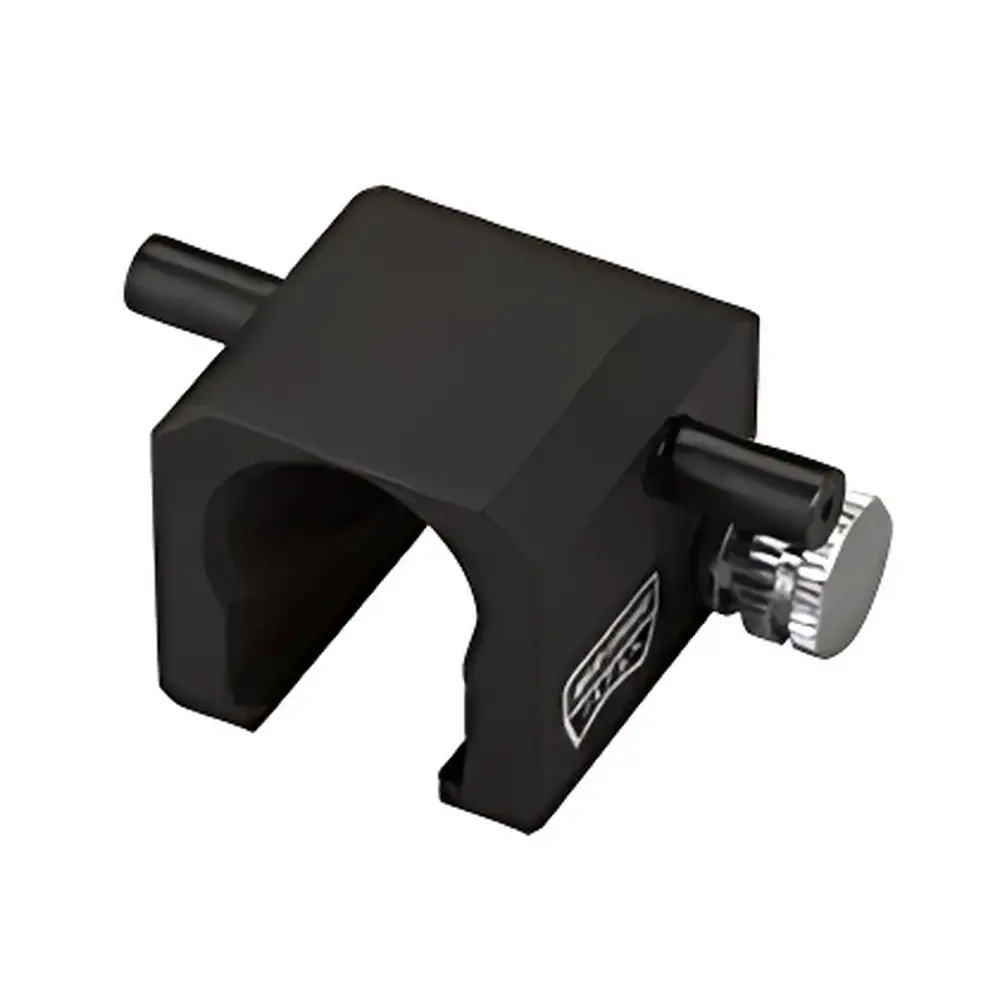
GM-3 Anesthetic Mask for Rats – Narishige
| Brand | Narishige |
|---|---|
| Origin | Japan |
| Model | GM-3 |
| Dimensions | W22 × D35 × H19 mm |
| Weight | 18 g |
| Anesthetic Gas Port OD | Ø4 mm |
| Material | Biocompatible, Non-Toxic Polymer |
| Intended Species | Rats (Rattus norvegicus) |
| Reusable | Yes |
| Regulatory Status | Research-Use-Only (RUO), Compliant with ISO 10993-5 Cytotoxicity Guidelines |
Overview
The GM-3 Anesthetic Mask for Rats is a precision-engineered, species-specific inhalation anesthesia interface developed by Narishige (Japan) for controlled and reproducible delivery of volatile anesthetics—such as isoflurane or sevoflurane—in rodent neuroscience, pharmacology, and preclinical imaging studies. Unlike generic or multi-species masks, the GM-3 employs anthropometric data derived from adult Sprague-Dawley and Wistar rat craniofacial morphology to achieve optimal seal integrity over the nares and oral cavity without occluding the eyes or exerting pressure on the vibrissae. Its operation relies on laminar gas flow dynamics within a low-dead-volume chamber (≤0.8 mL), minimizing rebreathing and enabling rapid induction and recovery kinetics. Designed strictly for laboratory research use under IACUC- or AAALAC-accredited protocols, the GM-3 integrates seamlessly into standard small-animal anesthesia systems equipped with calibrated vaporizers and scavenging units.
Key Features
- Species-optimized geometry: Contoured nasal bridge and tapered mandibular recess ensure passive sealing without straps, tape, or manual stabilization—reducing stress-induced catecholamine release during induction.
- Ultra-low mass (18 g) and compact footprint (22 × 35 × 19 mm): Eliminates head-loading artifacts in fMRI, PET, or electrophysiology setups where animal positioning must remain stable for extended acquisition windows.
- Standardized Ø4 mm outer-diameter gas inlet/outlet ports: Compatible with Tygon® E-3603, PharMed® BPT, and other USP Class VI-certified tubing; supports both unidirectional and bidirectional flow configurations.
- Autoclavable and chemical-resistant construction: Manufactured from medical-grade polyetherimide (PEI) meeting ISO 10993-5 cytotoxicity and ISO 10993-10 sensitization requirements; withstands repeated cycles of ethylene oxide sterilization or 70% ethanol immersion.
- Integrated gas dispersion channel: Prevents turbulent jetting of anesthetic vapor onto mucosal surfaces, mitigating local irritation and ensuring homogeneous gas mixing prior to inhalation.
Sample Compatibility & Compliance
The GM-3 is validated for use with rats weighing 200–500 g (typically 8–16 weeks old). It is not suitable for mice, hamsters, or juvenile rats (<150 g), due to disproportionate facial scaling. Each unit undergoes 100% dimensional inspection per JIS B 7153:2018 metrological standards and carries a serialized traceability label compliant with MDR Annex II requirements for RUO devices. While not CE-marked for clinical application, its material biocompatibility dossier supports GLP-compliant toxicology studies per OECD Test Guideline 407 and FDA Guidance for Industry: “Nonclinical Laboratory Studies — Good Laboratory Practice for Tests in Support of Human Drugs and Biologics.” Documentation includes full extractables profile (USP ) and residual catalyst analysis (ICP-MS).
Software & Data Management
As a passive hardware interface, the GM-3 requires no embedded firmware or software integration. However, it is routinely deployed in conjunction with digital anesthesia delivery platforms—including Kent Scientific’s SurgiVet VIP™ 3000, VetEquip’s Isoflurane Vaporizer Controller, and custom LabVIEW-based closed-loop systems—that log real-time vapor concentration (via inline IR sensors), flow rate (mass flow controllers), and physiological parameters (ECG, SpO₂, temperature). All associated experimental metadata—including mask lot number, sterilization cycle logs, and usage frequency—are tracked via institutional ELN systems (e.g., LabArchives, Benchling) to satisfy ALF/AAALAC audit trails and 21 CFR Part 11 electronic record integrity requirements.
Applications
- Functional neuroimaging: Stable head immobilization during awake or anesthetized fMRI, allowing sub-100 µm spatial resolution without motion artifact.
- In vivo electrophysiology: Low-profile design enables simultaneous craniotomy access and mask retention during chronic electrode implantation or optogenetic stimulation.
- Longitudinal metabolic phenotyping: Repeated daily anesthesia for PET/MRI scans over ≥14-day study periods with consistent anesthetic depth (as confirmed by pedal reflex suppression latency).
- Cardiovascular pharmacodynamics: Paired with Doppler echocardiography to assess acute drug effects under standardized anesthetic conditions (0.5–2.0% isoflurane).
- Developmental toxicology: Age-stratified dosing studies where precise anesthetic titration minimizes confounding hypothermia or respiratory depression.
FAQ
Is the GM-3 compatible with isoflurane vaporizers from non-Narishige manufacturers?
Yes—the Ø4 mm port conforms to ISO 8536-4 tubing interface specifications and has been verified with Datex-Ohmeda, Dräger, and Matrx vaporizers.
Can the GM-3 be used for spontaneous breathing or only with mechanical ventilation?
It supports both modes; however, for ventilated protocols, we recommend pairing it with a low-resistance inline CO₂ absorber (e.g., Amsorb® Plus) to maintain normocapnia.
How many sterilization cycles can the GM-3 withstand before replacement?
Accelerated aging tests indicate ≥50 autoclave cycles (121°C, 15 psi, 20 min) or ≥200 ethanol wipes without measurable dimensional drift (>±0.05 mm) or surface microcracking.
Does Narishige provide validation documentation for GMP-regulated studies?
Upon request, Narishige supplies a Certificate of Conformance (CoC), material composition report, and ISO 10993 test summary—sufficient for inclusion in IND-enabling study protocols.
Is there a dedicated cleaning protocol to prevent cross-contamination between animals?
We recommend a three-step process: (1) rinse with deionized water, (2) soak 10 min in 70% ethanol, (3) air-dry in laminar flow hood—validated to reduce bacterial load by >6-log₁₀ (per ASTM E2197).






