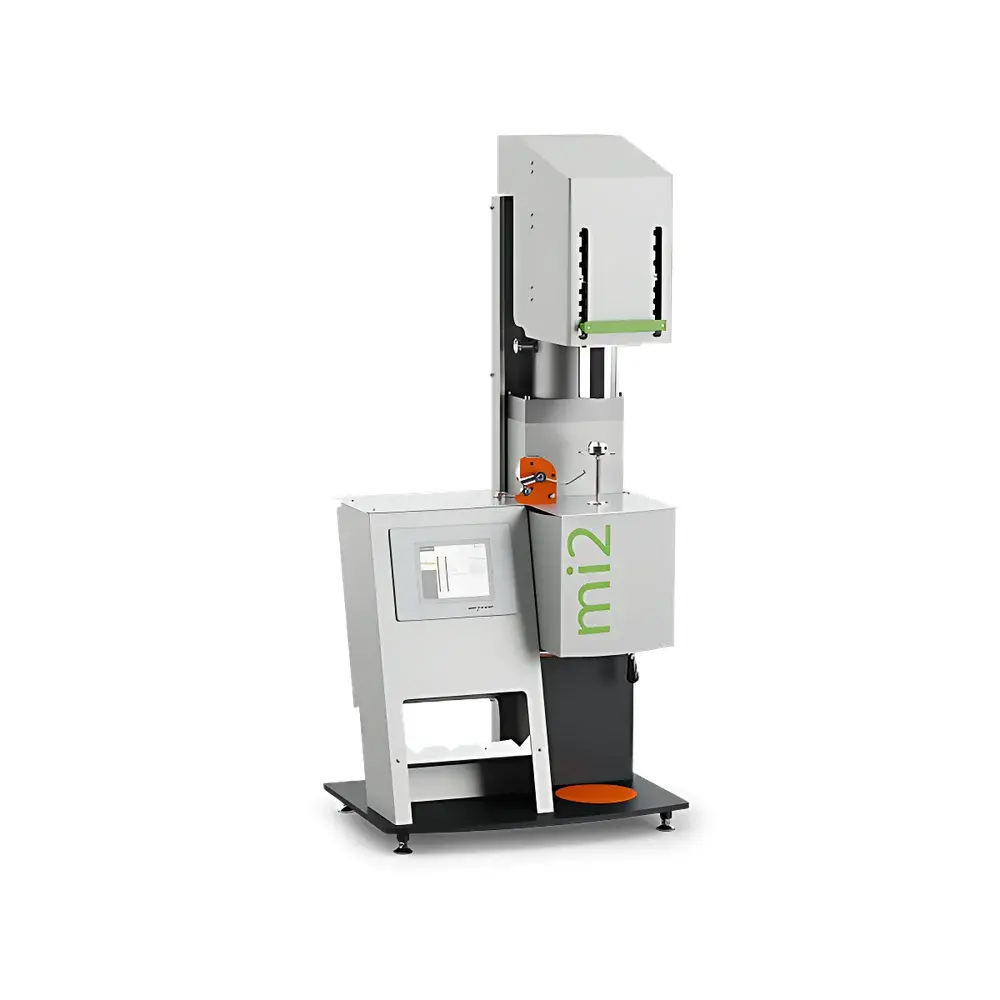
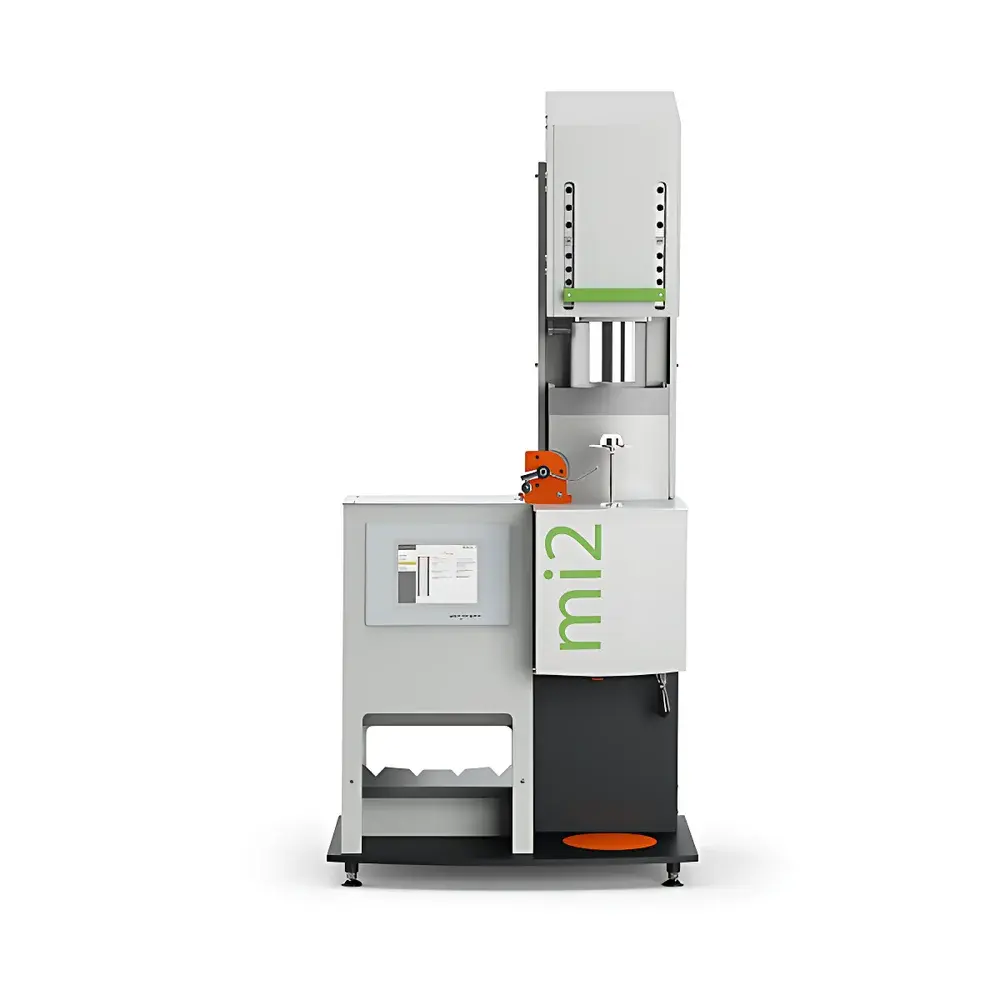
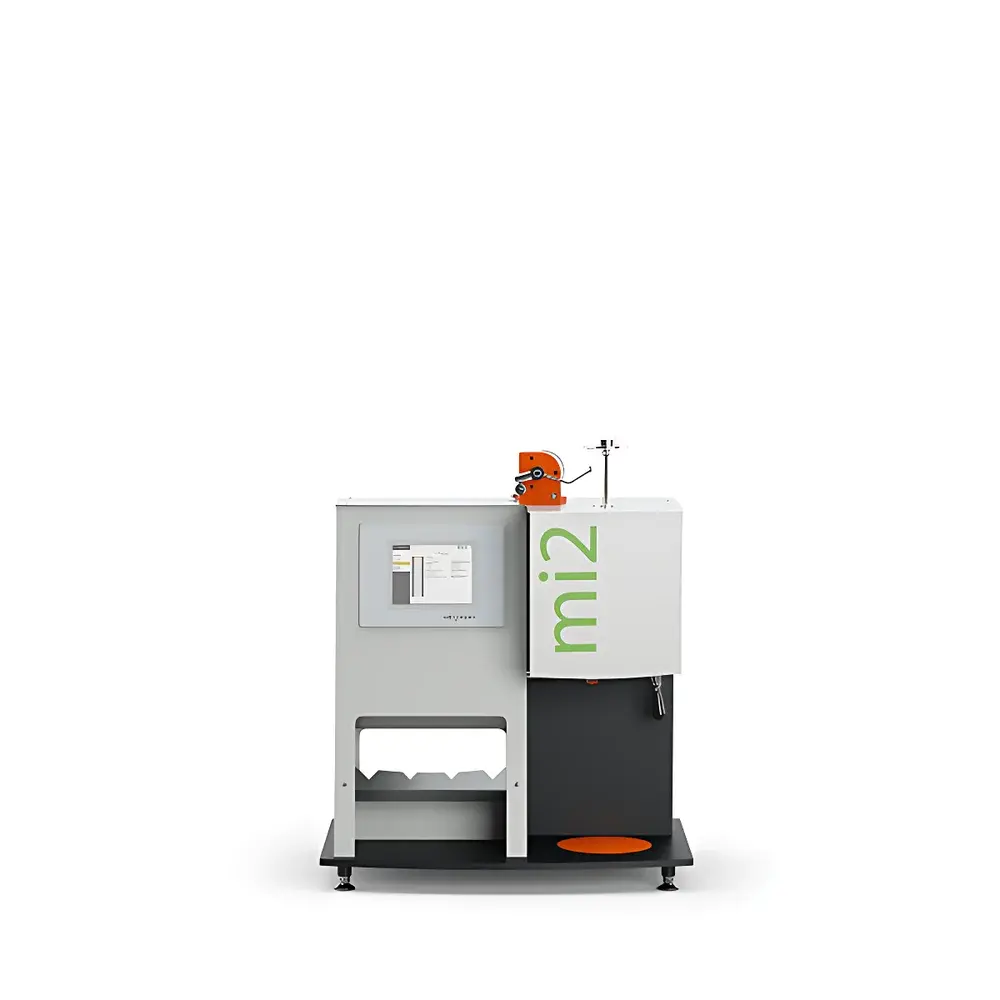
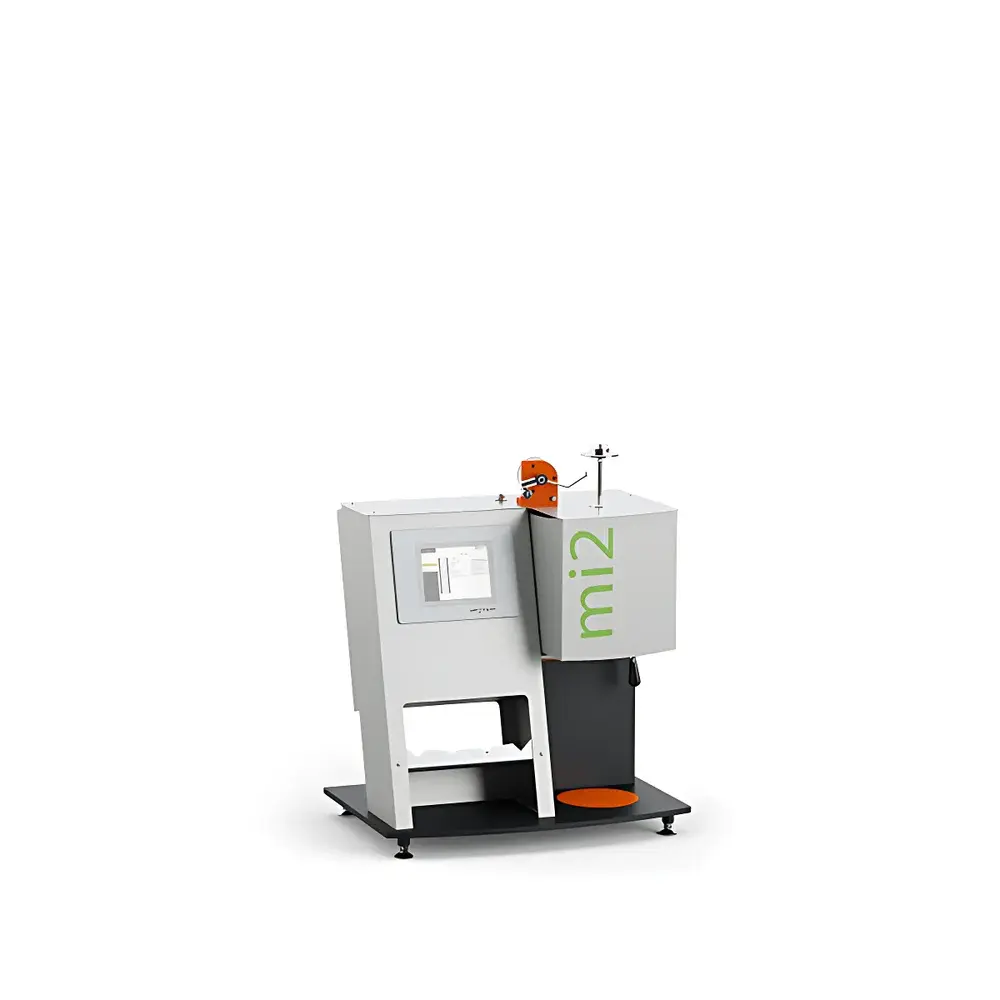
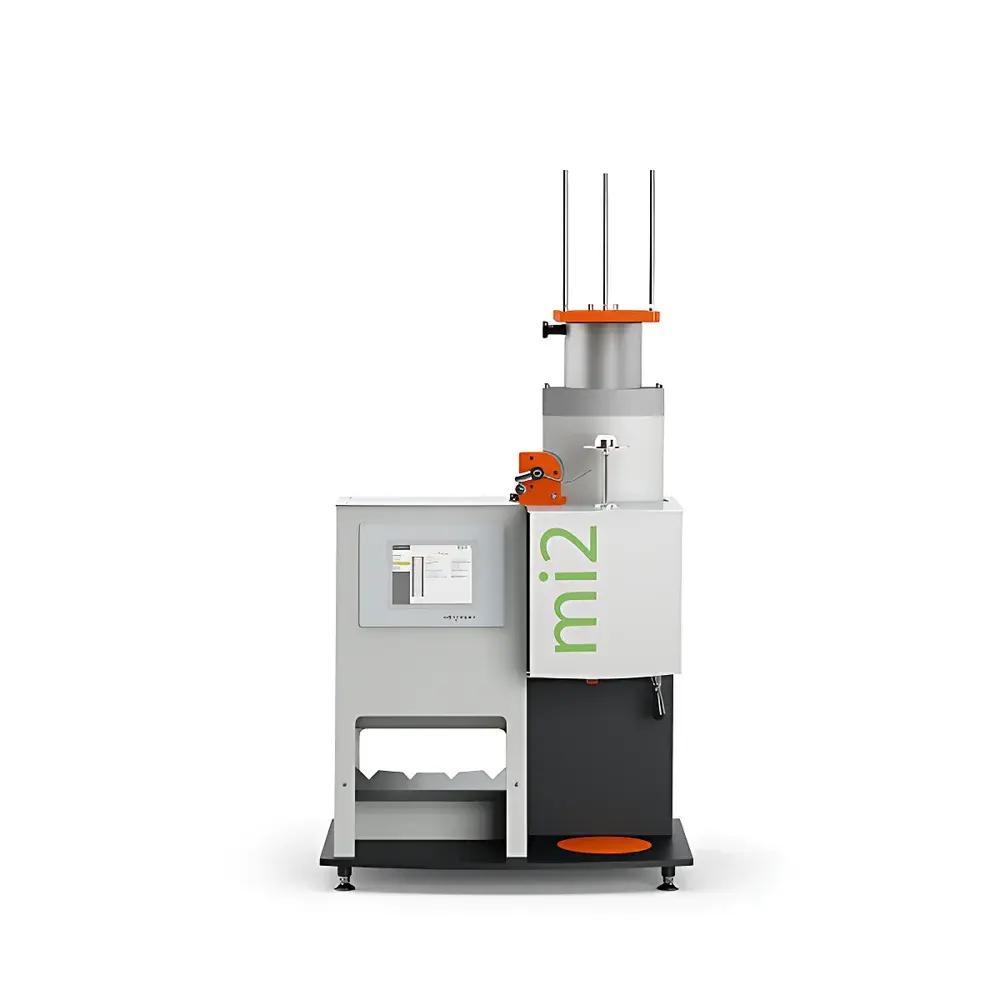
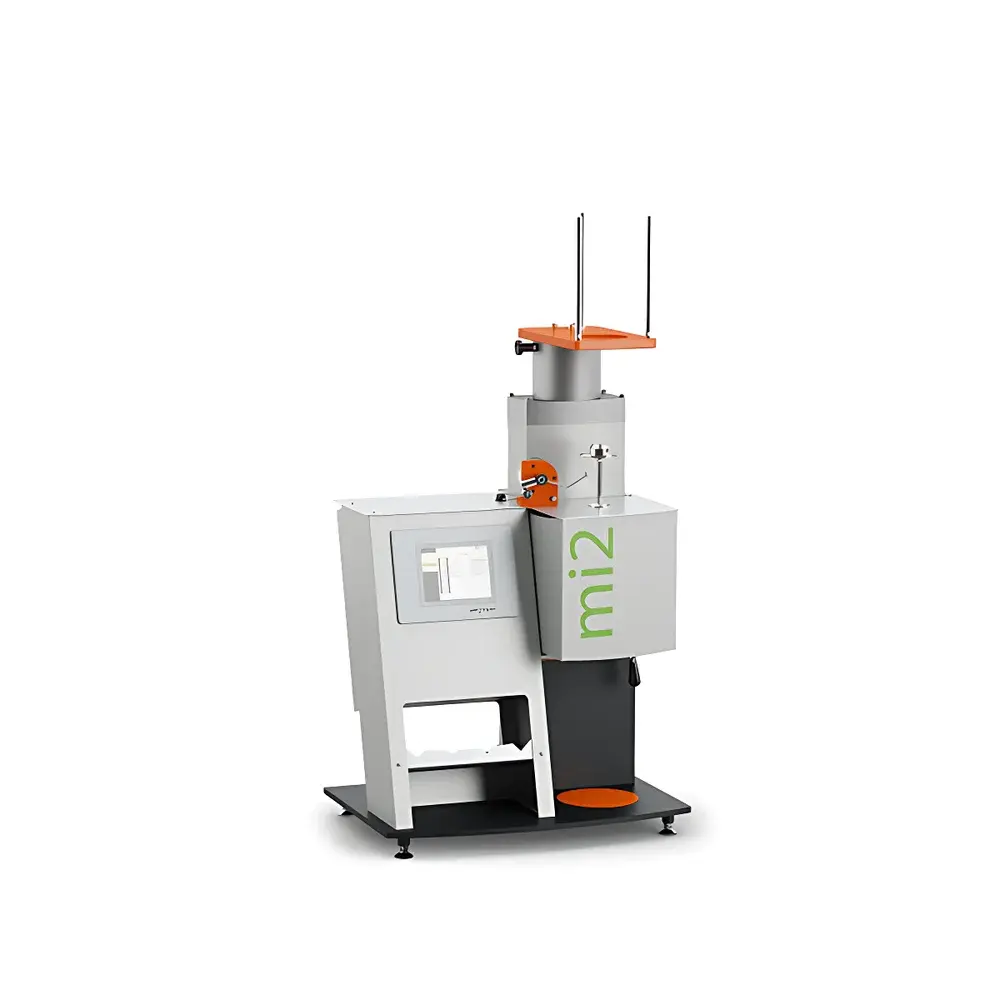
Goettfert MI2 Series Melt Flow Indexer
| Brand | Goettfert |
|---|---|
| Origin | Germany |
| Model | MI2 Series (MI2.1, MI2.2, MI2.3) |
| Standards Compliance | ISO 1133, ASTM D1238 (Methods A, B, C), ASTM D3364 |
| Cylinder Bore Diameter | 9.555 ± 0.010 mm |
| Piston Diameter | 9.474 ± 0.007 mm |
| Die Capillary | 2.095 ± 0.005 mm × 8.00 ± 0.025 mm (Tungsten Carbide) |
| Temperature Range | 60–400 °C |
| Temp. Stability | < ±0.1 °C (over time) |
| Temp. Accuracy | ±0.01 °C (60–320 °C), ±0.1 °C (320–400 °C) |
| Load Masses | 1.20, 2.16, 3.8, 5.0, 10.0, 21.6 kg (±0.5 % tolerance) |
| Timer Resolution | 0.001 s |
| Display | 5.7″ full-color touchscreen |
| Connectivity | Ethernet (LIMS-ready), dual USB ports |
| Multi-unit Control | Up to 4 units per PC |
Overview
The Goettfert MI2 Series Melt Flow Indexer is a precision-engineered instrument for the standardized determination of melt mass-flow rate (MFR) and melt volume-flow rate (MVR) of thermoplastic polymers under defined temperature and load conditions. Based on the fundamental principle of extrusion rheometry—where molten polymer is forced through a standardized capillary die under gravitational or applied load—the MI2 Series delivers high reproducibility in compliance with ISO 1133-1/-2 and ASTM D1238 (Methods A, B, and C), as well as ASTM D3364 for low-viscosity materials. Its modular architecture enables progressive automation—from manual QC-grade operation (MI2.1) to fully automated multi-load testing (MI2.3)—without compromising measurement integrity or thermal stability. The system’s core components—including the tungsten carbide capillary die, precision-machined piston and barrel assembly, and ultra-stable PID-controlled heating zone—are engineered to minimize axial and temporal temperature gradients, ensuring metrological traceability across the full operational range of 60–400 °C.
Key Features
- Modular configuration options: MI2.1 (single-load manual operation), MI2.2 (motorized piston lift for safe handling of ≥5 kg masses), and MI2.3 (fully automated 8-position weight carousel eliminating manual load changes)
- 5.7-inch full-color capacitive touchscreen interface with intuitive navigation, real-time graphical feedback, and on-device result storage
- High-resolution timer with 0.001 s resolution and independent validation circuitry for unambiguous flow-time recording
- Thermal architecture optimized for minimal axial temperature deviation: < ±0.2 °C over 0–70 mm at 60–400 °C; validated per ISO 1133 Annex B and ASTM D1238 Section 7.2
- Dual USB ports supporting direct data export to USB flash drives and connection to label or thermal printers for audit-compliant hardcopy output
- Ethernet interface compliant with TCP/IP protocols—enables seamless integration into laboratory information management systems (LIMS) without proprietary middleware or host PC dependency
- Multi-instrument control capability: a single Windows-based workstation can concurrently manage up to four MI2 units via Goettfert’s MIControl software suite
Sample Compatibility & Compliance
The MI2 Series accommodates a broad spectrum of thermoplastic resins—including polyolefins (PP, PE), engineering plastics (PA, PC, POM), fluoropolymers (PTFE, PVDF), and filled or reinforced compounds—provided they exhibit sufficient thermal stability within the operating temperature window. All configurations meet the dimensional and material specifications mandated by ISO 1133 (capillary bore: 2.095 ± 0.005 mm; length: 8.00 ± 0.025 mm; tungsten carbide construction) and ASTM D1238 (barrel ID: 9.555 ± 0.010 mm; piston OD: 9.474 ± 0.007 mm). Calibration traceability follows DIN EN ISO/IEC 17025 requirements, with factory-certified load verification (±0.5 % tolerance) and temperature uniformity mapping documented per unit. Optional nitrogen purge kits support inert-atmosphere testing for oxidation-sensitive polymers, while heated die inserts extend applicability to low-viscosity elastomers and thermoplastic vulcanizates (TPVs).
Software & Data Management
Goettfert’s MIControl software provides a secure, configurable platform for method definition, test execution, raw data logging, and report generation. It supports user-level access control, electronic signatures, and full audit trail functionality aligned with FDA 21 CFR Part 11 and EU Annex 11 requirements. All measurement events—including temperature ramp profiles, load application timestamps, cut intervals, and calculated MFR/MVR values—are time-stamped with microsecond precision and stored in encrypted binary format. Export formats include CSV (for statistical analysis in JMP or Minitab), PDF (with embedded digital signature), and XML (for LIMS ingestion). The system logs all operator actions, parameter modifications, and calibration events in an immutable sequence, satisfying GLP and GMP documentation standards for regulated polymer manufacturing environments.
Applications
- Quality control of incoming polymer resin batches against supplier specifications and internal release criteria
- R&D evaluation of molecular weight distribution shifts induced by thermal degradation, shear history, or additive incorporation
- Process validation for extrusion and injection molding operations where melt viscosity directly impacts fill balance and weld line strength
- Regulatory submission support for medical-grade polymers (e.g., ISO 10993-12 extractables assessment) and automotive material approvals (e.g., VDA 277, GMW16219)
- Long-term stability studies tracking MFR drift during accelerated aging under controlled humidity and temperature
- Correlation of MFR with mechanical properties (e.g., tensile strength, impact resistance) using multivariate regression models
FAQ
What standards does the MI2 Series fully comply with?
ISO 1133-1 (gravimetric MFR), ISO 1133-2 (volumetric MVR), ASTM D1238 (Methods A, B, C), and ASTM D3364 (low-viscosity thermoplastics). Full compliance documentation—including dimensional certification, temperature uniformity reports, and load verification certificates—is supplied with each unit.
Can the MI2 be integrated into a centralized LIMS without dedicated PCs?
Yes. The built-in Ethernet port supports direct TCP/IP communication with LIMS servers using standard MODBUS TCP or custom RESTful API endpoints. No local PC or Goettfert software is required for basic result transmission.
Is automatic melt cutting available for all MI2 configurations?
The optional Auto-Cut module is compatible with all MI2 variants but requires MI2.2 or MI2.3 hardware for synchronized timing and actuation. It supports programmable cut intervals, dual-cut mode for MVR calculation, and thermal compensation for filament diameter variation.
How is temperature uniformity verified during installation qualification (IQ)?
Goettfert provides a certified IQ protocol including axial temperature profiling using NIST-traceable miniature PT100 probes at five positions (0, 20, 40, 60, 70 mm from die entry), with acceptance criteria per ISO 1133 Annex B.
What maintenance intervals are recommended for the tungsten carbide die and barrel?
Under normal use (≤500 tests/year), annual inspection and cleaning with Goettfert-approved solvents is sufficient. Die replacement is recommended after 2,000–3,000 test cycles or upon detection of >0.01 mm bore wear measured via optical profilometry.