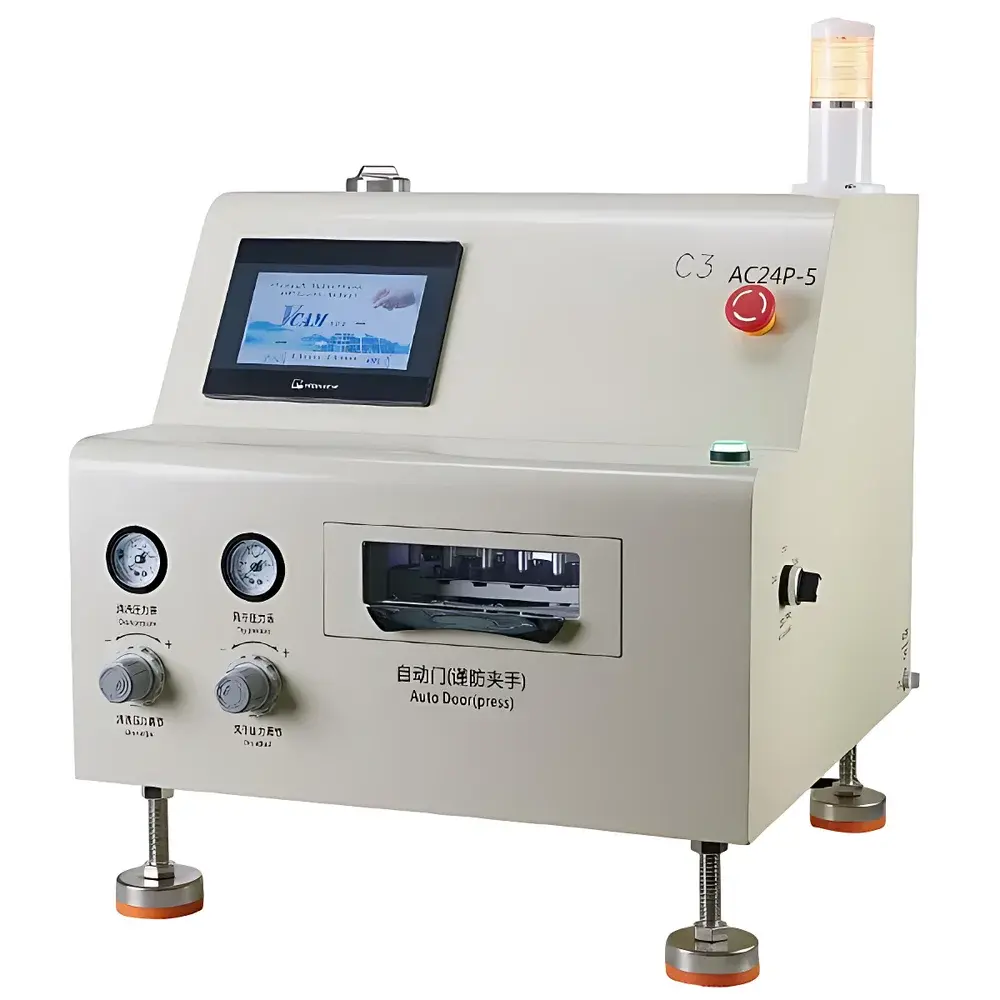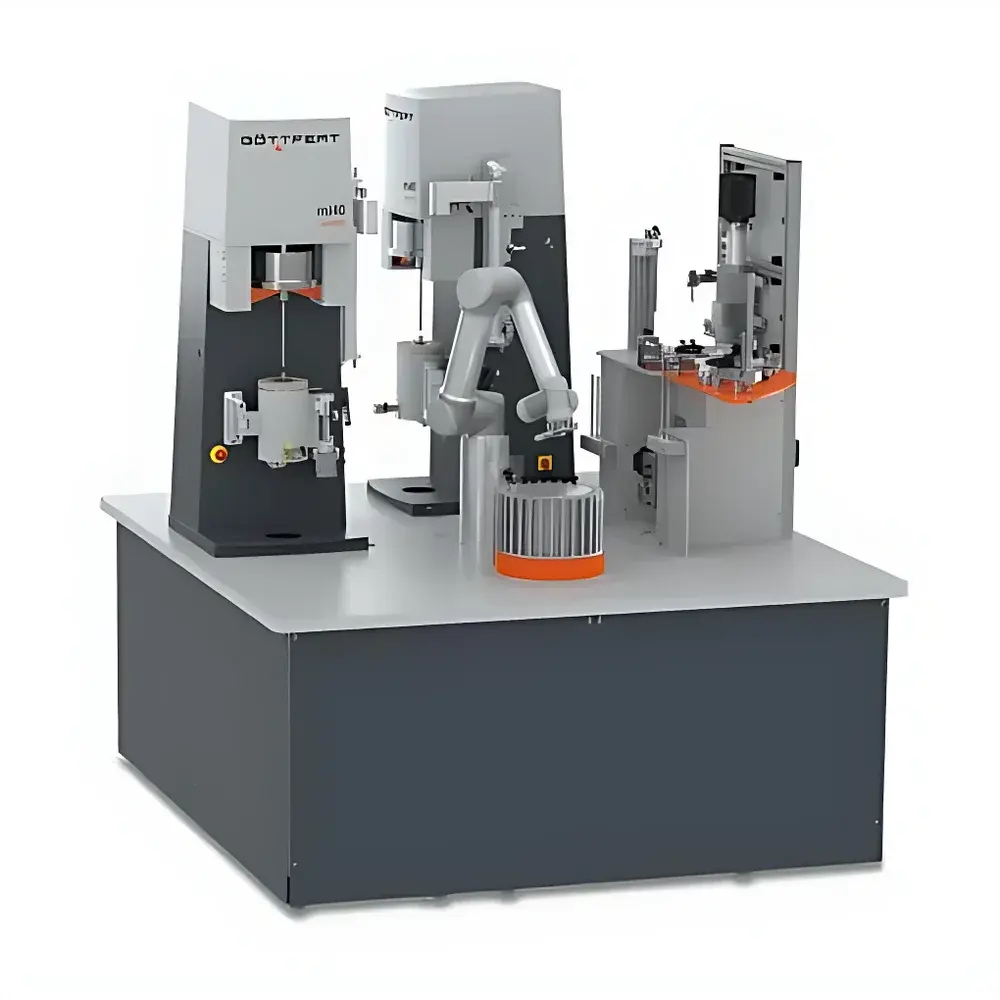
Goettfert MI40-AUTO Automated Melt Flow Indexer
| Brand | Goettfert |
|---|---|
| Origin | Germany |
| Model | MI40-AUTO |
| Compliance Standards | ISO 1133, ASTM D1238, ASTM D3364 |
| Automation Level | Fully automated with robotic sample handling, auto-loading, auto-cleaning |
| Measurement Types | Melt Volume Rate (MVR) and Melt Mass Rate (MFR) |
| Configuration | Modular, scalable platform supporting linear or circular instrument layouts |
| Target Materials | Thermoplastics, engineering resins, filled polymers, biopolymers |
| Software | Integrated control with audit trail, user access levels, and data export compliant with GLP/GMP requirements |
Overview
The Goettfert MI40-AUTO is a fully automated, high-precision melt flow indexer engineered for unattended, standards-compliant characterization of thermoplastic polymer melt behavior. Based on the fundamental principle of capillary rheometry—measuring extrudate mass or volume under defined temperature, load, and die geometry—the MI40-AUTO executes standardized melt index (MFR/MVR) determinations per ISO 1133-1 & -2, ASTM D1238 (Procedure A and B), and ASTM D3364. Unlike semi-automated or manual systems, the MI40-AUTO integrates a programmable robotic arm that autonomously performs sample loading, preheating, piston actuation, extrudate cutting, weight measurement (via integrated precision balance), and post-test barrel cleaning—enabling continuous 24/7 operation without operator intervention. Its architecture is purpose-built for industrial quality control laboratories requiring traceable, reproducible, and auditable polymer rheological data across shifts and production batches.
Key Features
- Fully automated workflow: Robotic arm handles sample insertion, piston positioning, extrudate collection, gravimetric weighing, and hot-zone barrel cleaning—eliminating manual handling variability and thermal exposure risks.
- Modular platform design: Supports integration of multiple MI units or hybrid configurations with capillary rheometers (e.g., Rheotester series), enabling parallel testing and cross-correlation of MFR with shear-rate-dependent viscosity data.
- Flexible physical layout: Configurable as linear or circular arrangements to optimize lab floor space and accommodate throughput demands—from single-shift QC to multi-line production monitoring.
- Standards-aligned hardware: Precision-machined stainless-steel barrels and dies conforming to ISO 1133 Annex A specifications; temperature control stability ±0.2 °C over operating range (150–450 °C); load application accuracy ±0.5 % of set value.
- Robust thermal management: Dual-zone heating with independent PID control ensures uniform axial temperature profiles and minimizes thermal gradients across the capillary die region.
Sample Compatibility & Compliance
The MI40-AUTO accommodates a broad spectrum of thermoplastic materials—including polyolefins (PP, PE), engineering plastics (PA6, PC, PBT), thermoplastic elastomers (TPEs), filled compounds (glass-, mineral-, or carbon-fiber reinforced), and bio-based resins (PLA, PHA). Each test sequence adheres strictly to the procedural requirements of ISO 1133 (determination of MFR/MVR at specified temperatures and loads), ASTM D1238 (for both low- and high-flow materials), and ASTM D3364 (for polyethylene specifically). The system supports optional calibration kits traceable to NIST or PTB reference materials and maintains full compliance with GLP and GMP documentation requirements—including electronic signatures, user-level permissions, and time-stamped audit trails meeting FDA 21 CFR Part 11 expectations for regulated environments.
Software & Data Management
The MI40-AUTO operates via Goettfert’s proprietary WinRHEO software platform, designed for laboratory informatics integration. It provides real-time monitoring of all process parameters (temperature, load, piston displacement, extrudate mass), automatic calculation of MFR (g/10 min) and MVR (cm³/10 min), and statistical reporting (mean, SD, CV%, trend charts). Raw data and metadata—including operator ID, calibration status, environmental conditions, and instrument firmware version—are stored in encrypted SQLite databases. Export formats include CSV, PDF reports (with digital signature), and XML for LIMS or MES connectivity. Audit logs record every user action, parameter change, and system event—ensuring full data integrity and regulatory readiness.
Applications
This system serves critical functions across polymer R&D, compounding, and manufacturing: incoming raw material verification against supplier specifications; in-process batch release testing during extrusion or injection molding; stability assessment of recycled resin streams; formulation development for melt-processability optimization; and long-term aging studies tracking thermal degradation effects on flow behavior. Its automation capability makes it especially valuable in high-volume production facilities where consistent, operator-independent data is required for IATF 16949 or ISO 9001 compliance, as well as in contract testing labs serving automotive, medical device, and packaging sectors subject to stringent material certification protocols.
FAQ
Does the MI40-AUTO support both MFR and MVR measurements?
Yes—simultaneously and automatically. The integrated balance captures extrudate mass for MFR, while piston displacement sensors calculate volumetric output for MVR, both derived from the same test run.
Can the system be validated for use in regulated pharmaceutical or medical device manufacturing?
Yes—when deployed with documented IQ/OQ/PQ protocols, calibrated reference materials, and enabled 21 CFR Part 11 features (electronic signatures, audit trail, role-based access), it meets validation requirements for polymer components used in Class II/III devices.
Is third-party LIMS integration supported?
Yes—via standard ODBC drivers and configurable API endpoints, enabling bidirectional data exchange with major laboratory information management systems.
What maintenance intervals are recommended for uninterrupted 24/7 operation?
Barrel and die inspection every 200 tests; robotic arm lubrication every 6 months; annual full calibration with certified weights and temperature probes; firmware updates applied per Goettfert release schedule.