
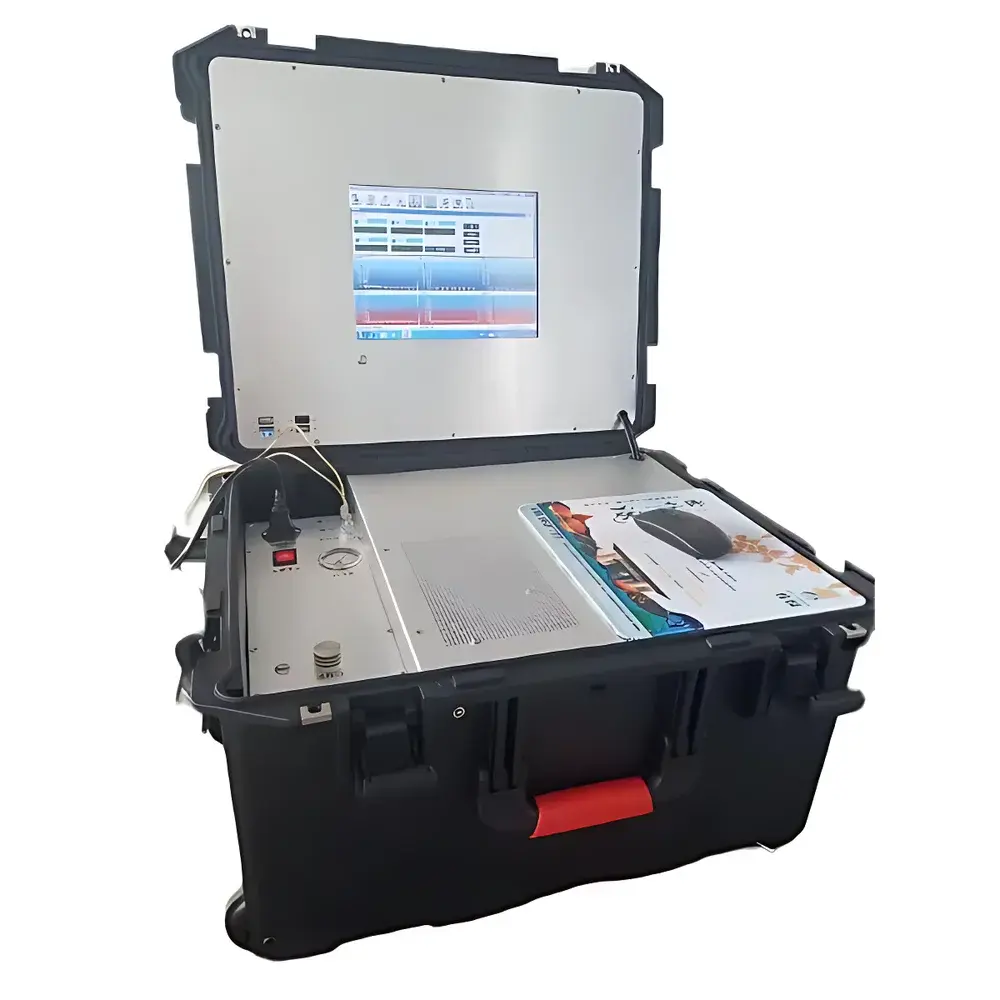
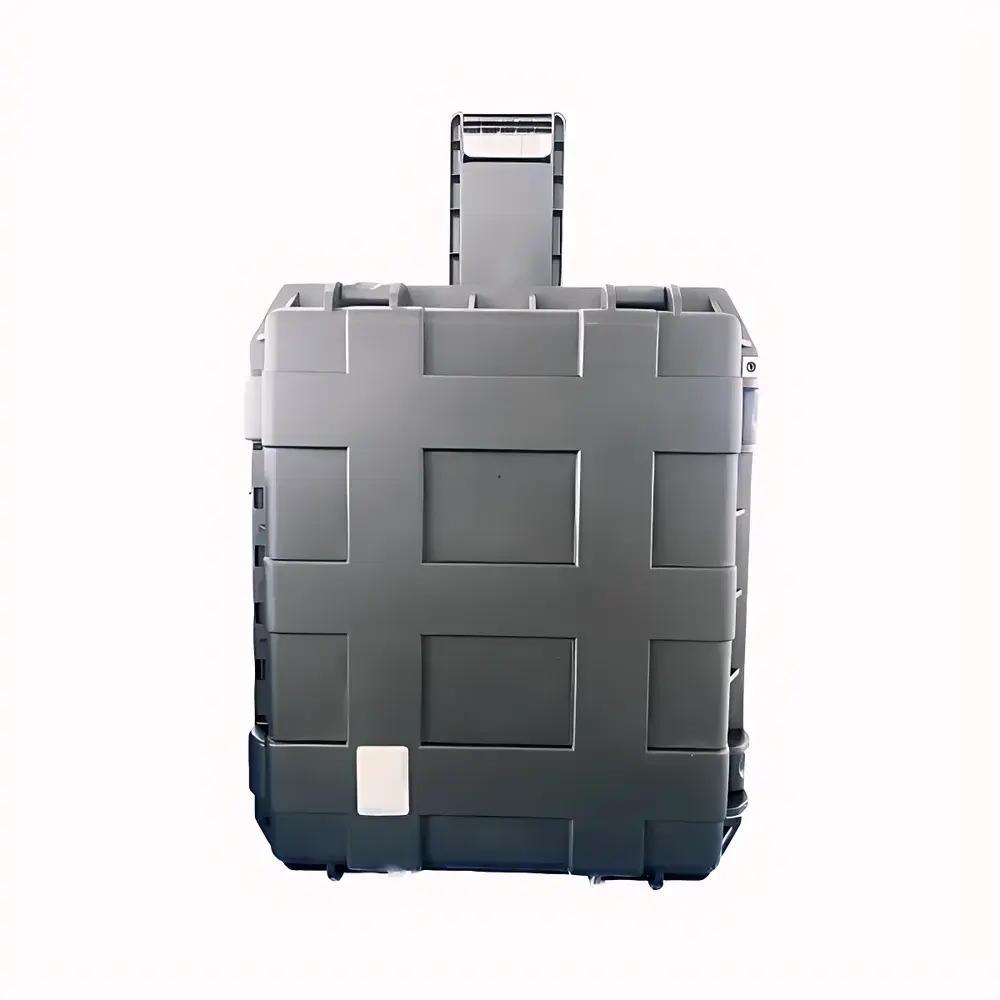
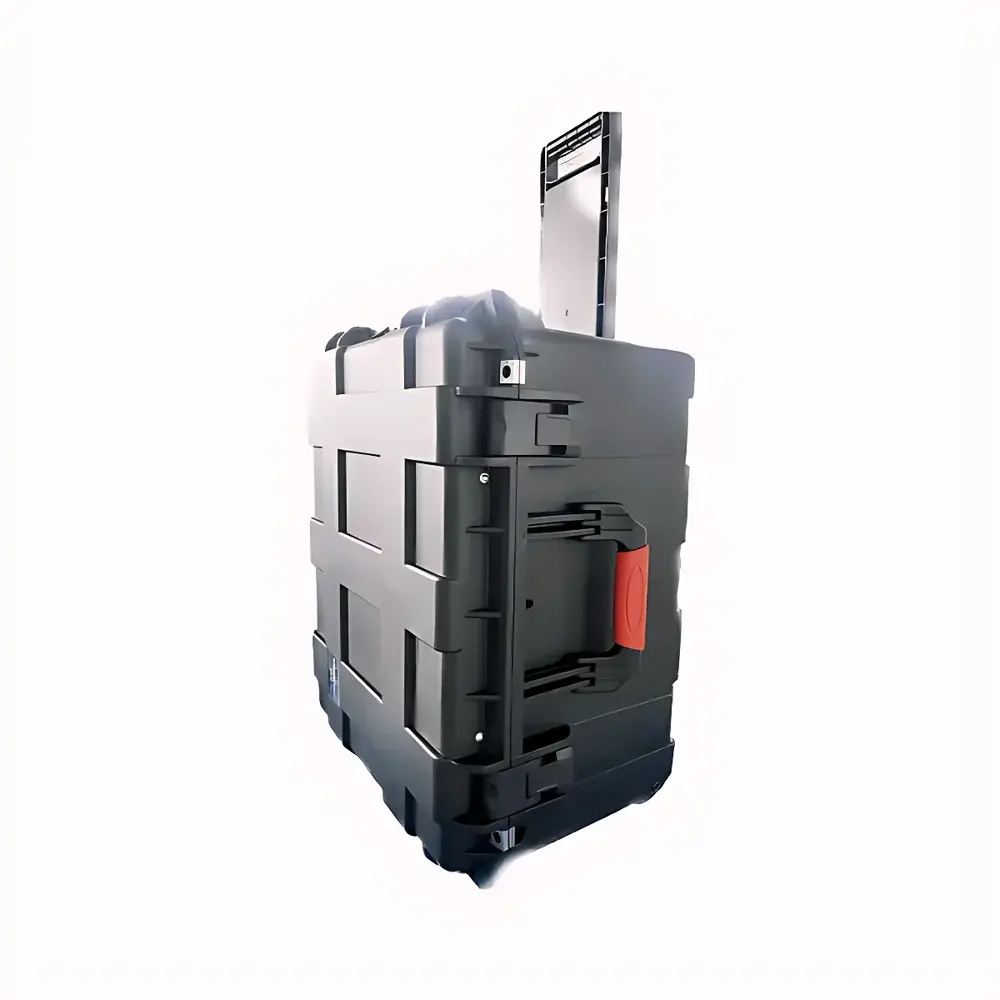
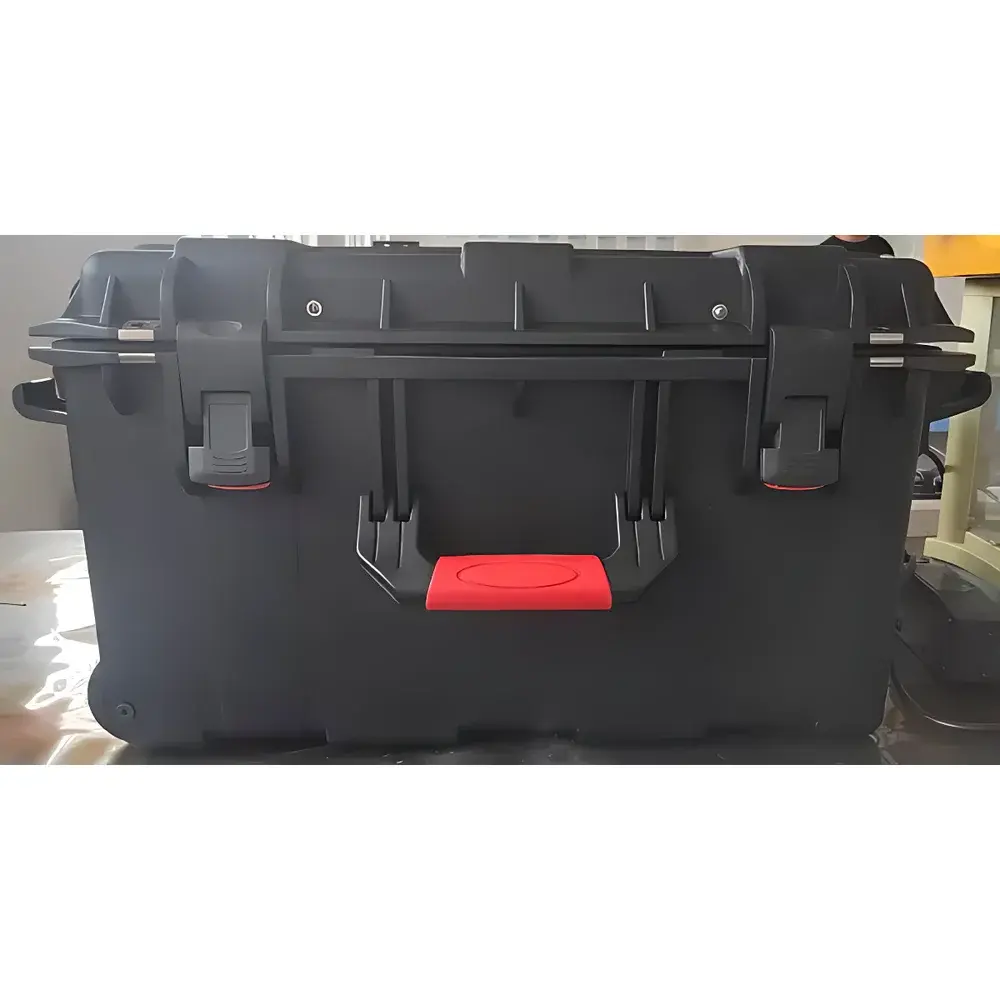
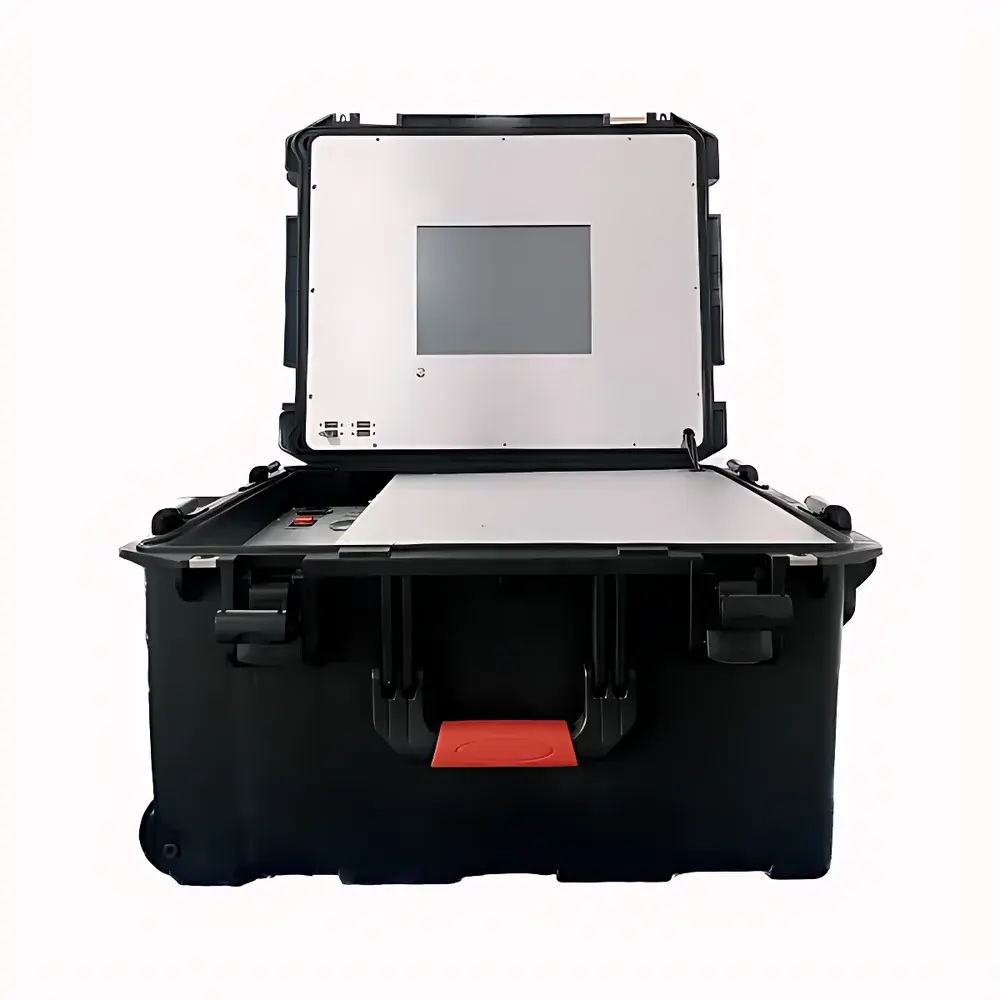
Golden Promise GC-8890SD Portable Gas Chromatograph for Transformer Oil Dissolved Gas Analysis
| Brand | Golden Promise |
|---|---|
| Model | GC-8890SD |
| Origin | Shandong, China |
| Weight | 60 kg |
| Dimensions (L×W×H) | 565 × 505 × 500 mm |
| Detection Limit | ≤1×10⁻¹² g/s (n-C₁₆, FID) |
| Connectivity | 10/100M Ethernet (IEEE 802.3) |
| Column Oven Temp Range | 5–400 °C (0.1 °C increment, ±0.1 °C stability) |
| Max Heating Rate | 40 °C/min (programmable up to 20 steps) |
| Cooling Rate | ≤3 min (200 → 100 °C) |
| Detector Options | FID, TCD (configurable) |
| Power Supply | 220 V ±10%, 50 Hz ±0.5 Hz, 2500 W max |
Overview
The Golden Promise GC-8890SD is a purpose-engineered portable gas chromatograph designed exclusively for dissolved gas analysis (DGA) in power transformer insulating oil. It operates on the principle of capillary or packed-column gas chromatography with dual-detector capability (FID and TCD), enabling simultaneous quantification of nine key fault gases—H₂, O₂, N₂, CO, CO₂, CH₄, C₂H₄, C₂H₆, and C₂H₂—in a single injection. Its architecture integrates full electronic pneumatic control (EPC) for carrier gas flow and pressure, coupled with a 10-port valve system for automated backflushing and column switching. This configuration eliminates manual intervention, ensures retention time reproducibility <0.05 min, and delivers robust separation of acetylene (C₂H₂) within shortened cycle times—critical for early detection of arcing faults in high-voltage equipment. The instrument meets the functional requirements of IEC 60599, ASTM D3612, and DL/T 722–2014, supporting compliance-driven workflows in utility substations, mobile diagnostic labs, and preventive maintenance fleets.
Key Features
- Full remote bidirectional control via Ethernet (IEEE 802.3), enabling real-time parameter adjustment, method upload/download, and spectral processing from a centralized PC or laptop—even across WAN-connected sites.
- Digital pneumatic control system with three operational modes: constant flow, constant pressure, and split injection—each configurable per channel with 0.1 psi resolution and ±0.02 psi repeatability.
- 6-zone independent temperature control (oven, detectors, valves, injectors, transfer lines, auxiliary zones), each with ±0.1 °C accuracy and programmable 20-step ramp profiles (0.1–40 °C/min).
- Integrated auto-ignition and flame-out detection for FID, reducing operator dependency and enhancing safety during unattended operation.
- Optimized dual-column thermal program: one column for permanent gases (H₂, O₂, N₂), another for hydrocarbons (CH₄–C₂H₂), achieving baseline separation of C₂H₂ at 120:1.
- Touchscreen HMI (7-inch capacitive LCD) with optional PC-based control—both interfaces support identical method libraries, audit trails, and user-level permissions (admin/operator/guest).
Sample Compatibility & Compliance
The GC-8890SD accepts standard 10 mL headspace vials (ASTM D3612-compliant sampling) and supports direct connection to commercial oil degassing units (e.g., vacuum extraction, ultrasonic agitation, or equilibrium diffusion systems). It is validated for use with mineral insulating oils meeting IEC 60296 specifications. All hardware and firmware conform to electromagnetic compatibility (EMC) standards IEC 61326-1 and electrical safety standard IEC 61010-1. Data integrity complies with ALCOA+ principles; audit trail logging, electronic signatures, and user-access controls align with FDA 21 CFR Part 11 readiness when deployed with validated software configurations. Routine calibration verification follows ISO/IEC 17025 guidelines using certified reference gas mixtures traceable to NIST SRMs.
Software & Data Management
The dedicated DGA workstation employs a 24-bit USB data acquisition card (±2 V input range, 1 µV resolution) and implements automated interference-triggered acquisition—detecting baseline disturbances to initiate injection and data capture without manual start commands. It provides comprehensive diagnostic reporting including IEC 60599 three-ratio coding, Duval triangle analysis, Rogers ratio interpretation, and Dornenburg fault classification. Historical trend visualization plots concentration vs. time for individual gases across multiple sampling events, with overlay capability for comparative fleet-wide analysis. All raw chromatograms, processed results, calibration logs, and system suitability reports are stored in a relational SQLite database with SHA-256 hashing for tamper-evident archiving. Export formats include CSV, PDF (customizable templates), and XML (for integration with SCADA or CMMS platforms).
Applications
- On-site dissolved gas monitoring in 110 kV–1000 kV transformer banks during routine maintenance or post-fault investigation.
- Mobile laboratory deployment for rapid response to gas-in-oil anomalies reported by online DGA sensors (e.g., HYDRAN, GE MGA).
- Verification testing of oil reclamation efficacy following vacuum dehydration or clay filtration processes.
- Calibration and validation of fixed online GC systems used in substation automation networks.
- Research-grade characterization of aging byproducts (e.g., furanic compounds, low-molecular-weight hydrocarbons) when configured with appropriate columns and detectors.
FAQ
Is the GC-8890SD suitable for field use in outdoor substations?
Yes—it is engineered for ambient operation between 5–35 °C and ≤85% RH, with shock-absorbing chassis mounting and EMI-hardened electronics. Its 60 kg mass and integrated carrying handles facilitate transport in utility service vehicles.
Does the system support GLP/GMP-compliant audit trails?
When operated with the validated DGA workstation and enabled user authentication, it maintains immutable records of all method changes, calibration events, result approvals, and detector status transitions—fully traceable to individual operators.
Can the instrument quantify CO₂ and moisture simultaneously?
CO₂ is routinely quantified via TCD; moisture (H₂O) requires optional PLOT-Q or alumina column configuration and TCD optimization—not included in base DGA setup but available as an upgrade path.
What is the typical analysis cycle time for a full 9-gas DGA run?
Under standard conditions (100 °C oven, 30 mL/min He carrier), total runtime is 18.5 minutes—including valve switching, backflush, and detector stabilization—with C₂H₂ eluting at 6.18 ± 0.03 min.
How is calibration maintained across extended deployments?
The system supports multi-point external standard calibration (5–100 ppmv), internal standard correction (e.g., CH₃Cl), and automatic retention time locking (RTL) using n-hexane or ethane markers—ensuring long-term quantitative fidelity without daily recalibration.






