

Graywolf AdvancedSense XM Mobile Air Quality Monitoring System
| Brand | Graywolf |
|---|---|
| Origin | Beijing, China |
| Manufacturer Type | Authorized Distributor |
| Country of Origin | Domestic (China) |
| Model | AdvancedSense XM |
| Detection Medium | Gases |
| Detectable Parameters | TVOC, HCHO, CO₂, SO₂, O₃, NO₂, O₂, NO, NH₃, CO, Cl₂, H₂S, H₂, HCN, F₂, HCl, PH₃, HF, AsH₃, C₂H₄O, SiH₄, ClO₂, COCl₂, B₂H₆ (20+ gases selectable) |
| Particle Measurement | PM₂.₅, PM₁₀, TSP (0.3–25 µm, 6-channel configurable) |
| Meteorological Parameters | Air velocity (hot-wire & pitot tube), volumetric flow (m³/min), static/differential pressure, temperature (ambient, surface, liquid, thermocouple), relative/humid/absolute/specific/wet-bulb humidity |
Overview
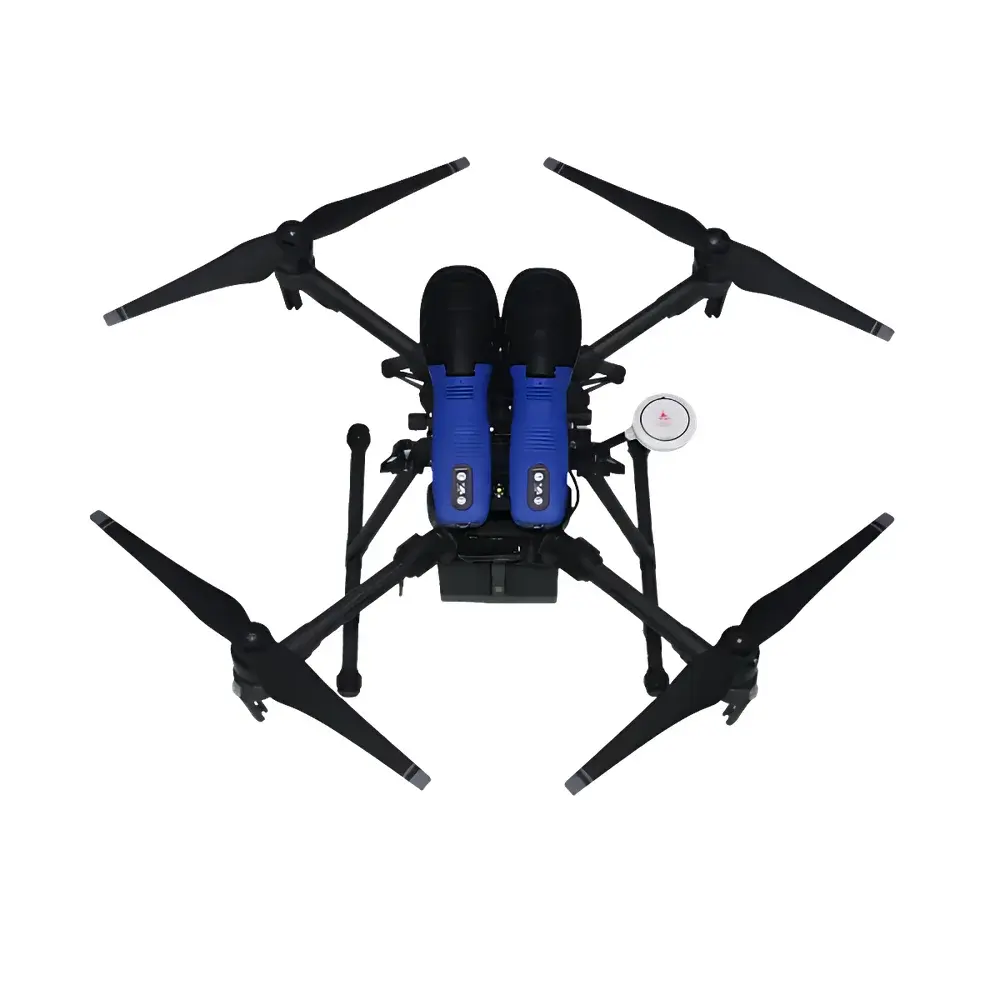
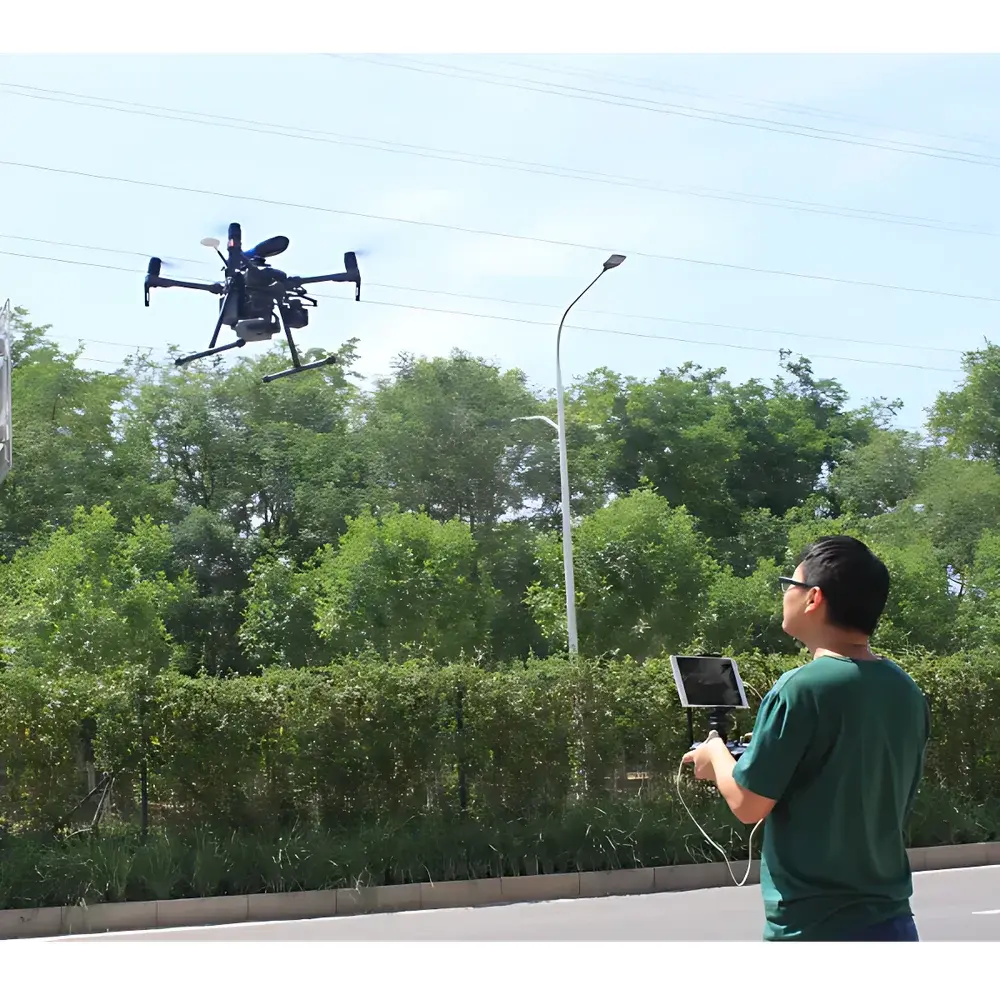
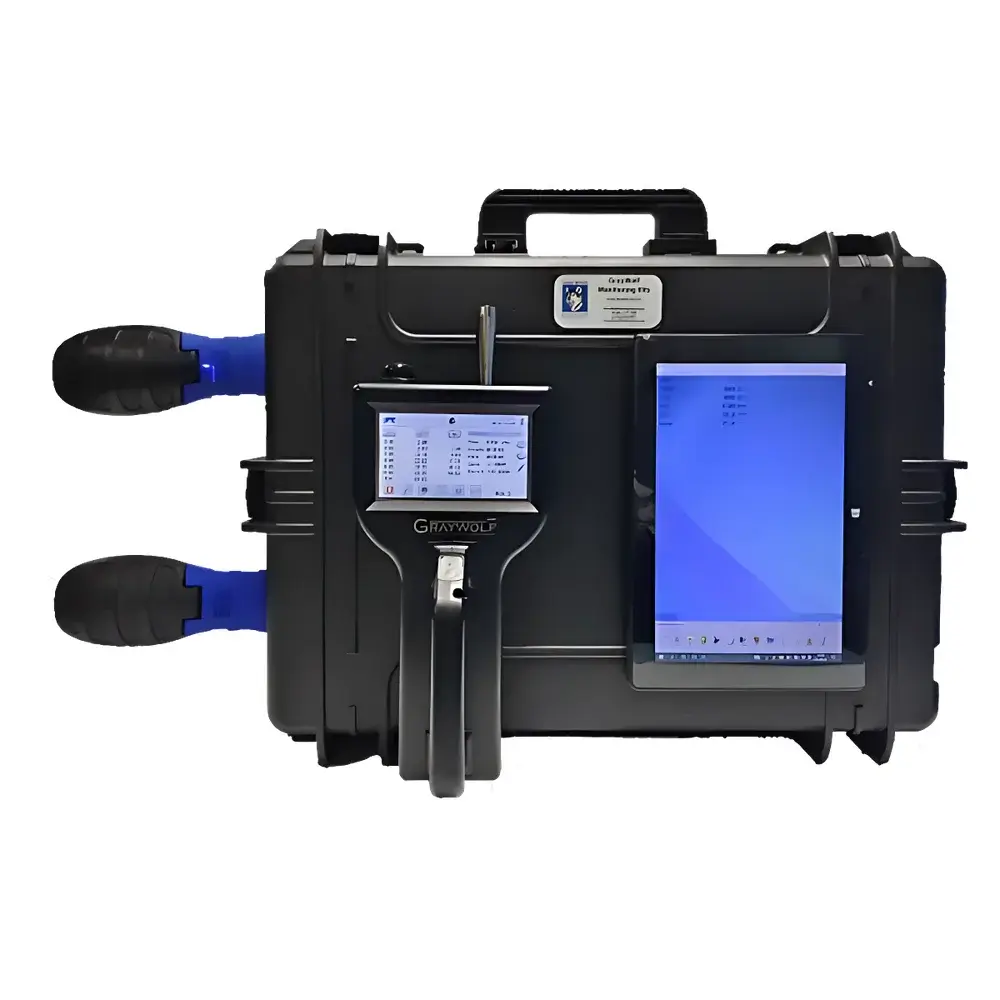
The Graywolf AdvancedSense XM Mobile Air Quality Monitoring System is a modular, field-deployable environmental sensing platform engineered for high-fidelity, real-time measurement of gaseous pollutants, particulate matter, and meteorological parameters across diverse operational contexts—including unmanned aerial vehicle (UAV)-mounted surveys, vehicle-integrated mobile monitoring, and temporary ground-based stations. At its core lies the Graywolf proprietary Wolf OS embedded computing architecture, which integrates sensor fusion, on-device data processing, and multi-modal annotation capabilities into a single compact host unit. Unlike conventional portable gas analyzers limited to fixed parameter sets or basic logging, the AdvancedSense XM implements a true plug-and-play sensor ecosystem: each probe—whether electrochemical, NDIR, PID, or optical particle counter—is digitally calibrated, hot-swappable, and auto-recognized by the host. The system operates on first-principles measurement methodologies: electrochemical cells for toxic gases (e.g., Cl₂, H₂S, NO₂), non-dispersive infrared (NDIR) for CO₂ and hydrocarbons, photoionization detection (PID) for TVOC and formaldehyde, and laser scattering with size-classified optical detection for PM₂.₅/PM₁₀/TSP. This architecture enables trace-level detection (sub-ppb for select gases), low-drift operation over extended deployments, and compliance-ready data integrity through timestamped, audit-trail-enabled acquisition.
Key Features
- Modular sensor architecture supporting simultaneous measurement of ≥20 target gases—including TVOC, HCHO, CO₂, SO₂, O₃, NO₂, NH₃, H₂S, CO, Cl₂, and specialty compounds such as AsH₃, SiH₄, and B₂H₆—with units configurable in ppm, ppb, µg/m³, mg/m³, or % volume.
- Six-channel optical particle counter with user-definable size bins (0.3–25 µm), delivering both number concentration and mass concentration (µg/m³) for PM₂.₅, PM₁₀, and TSP in accordance with ISO 25242 and EN 12341.
- Integrated meteorological suite: hot-wire and pitot-tube anemometry, differential/static pressure transducers, and multi-sensor hygrometry (relative, absolute, specific, wet-bulb, and dew-point humidity) with NIST-traceable calibration documentation.
- Wolf OS real-time operating system with embedded 1.2 GHz dual-core ARM processor, 2 GB RAM, and 32 GB eMMC storage—enabling on-device spectral analysis, baseline drift correction, and event-triggered sampling without external hardware.
- Full multimodal annotation: synchronized text, voice memos, annotated sketches, geotagged photographs, and time-stamped video clips—all embedded directly into measurement files with cryptographic hashing for chain-of-custody integrity.
- Comprehensive alarm management: independently configurable high/low warning and alarm thresholds per parameter, with visual, audible, and haptic alerts plus optional SMS/email notification via cellular modem add-on.
Sample Compatibility & Compliance
The AdvancedSense XM is validated for ambient air, indoor workplace atmospheres, industrial stack effluents (diluted), and emergency response zones (e.g., chemical spill perimeters, fire aftermath). All gas sensors meet IEC 61000-4 electromagnetic compatibility standards; particulate modules conform to ISO 29463-3 for filter penetration testing and EN 15267-3 for continuous emission monitoring system (CEMS) equivalence. Data acquisition complies with EPA Method TO-15 (VOCs), Method 320 (formaldehyde), and ISO 7213 (CO₂). For regulated environments, the system supports 21 CFR Part 11-compliant electronic signatures and audit trails when used with WolfSense PC software under validated IT infrastructure. Calibration records—including span/gas certificates, zero-air verification logs, and sensor lifetime tracking—are stored internally and exportable in PDF/A-1 format for GLP/GMP audits.
Software & Data Management
WolfSense PC software (Windows 10/11) provides full post-processing capability: time-series alignment across heterogeneous sensors, statistical summary (min/max/mean/std dev), outlier detection via Grubbs’ test, and customizable report generation compliant with ISO 17025 Annex A.5. Data exports include CSV, Excel (.xlsx), PDF reports with embedded plots (XY, histogram, scatter matrix), and XML files compatible with EPA’s AERMOD and CALPUFF modeling inputs. Field data synchronization uses AES-256 encrypted Wi-Fi or USB-C transfer; no cloud dependency ensures data sovereignty for government and defense users. Firmware updates are delivered via signed OTA packages verified against Graywolf’s public key infrastructure.
Applications
- Urban air quality mapping via UAV-mounted payloads for spatial interpolation of NO₂ and PM₂.₅ gradients across traffic corridors and industrial boundaries.
- Rapid-response hazmat assessment using vehicle-mounted systems equipped with Cl₂, HF, and PH₃ sensors for perimeter monitoring during chemical incidents.
- Indoor environmental quality (IEQ) auditing in hospitals and laboratories—tracking formaldehyde off-gassing from new furnishings alongside CO₂-driven ventilation efficacy metrics.
- Long-term unattended monitoring at brownfield sites, where solar-charged battery operation (up to 72 h) and IP65-rated enclosures enable seasonal deployment without infrastructure.
- Emission verification at small-scale combustion sources (e.g., biomass boilers), leveraging simultaneous O₂, CO, and NOₓ measurements to calculate excess air and combustion efficiency.
FAQ
Can the AdvancedSense XM be operated without a laptop or tablet?
Yes—the embedded Wolf OS host functions autonomously with touchscreen interface, onboard storage, and real-time visualization. External computers are optional for advanced analysis.
Is sensor cross-interference compensated in real time?
Yes—Wolf OS applies manufacturer-provided interference matrices and adaptive baseline algorithms during acquisition, with correction coefficients updated during each calibration cycle.
How is traceability maintained for regulatory reporting?
Each measurement file contains embedded digital signatures, sensor serial numbers, calibration expiration dates, and GPS timestamps; WolfSense PC generates FDA 21 CFR Part 11–compliant audit logs with operator ID and action history.
What is the maximum continuous operation time on internal battery?
With all sensors active and display on, runtime is 8 hours; with display off and sampling interval set to 5-minute cycles, runtime extends to 72 hours using the optional high-capacity LiFePO₄ pack.
Are third-party sensors supported?
No—only Graywolf-certified probes with digital authentication chips are recognized by Wolf OS to ensure metrological integrity and firmware compatibility.
Related Products







