
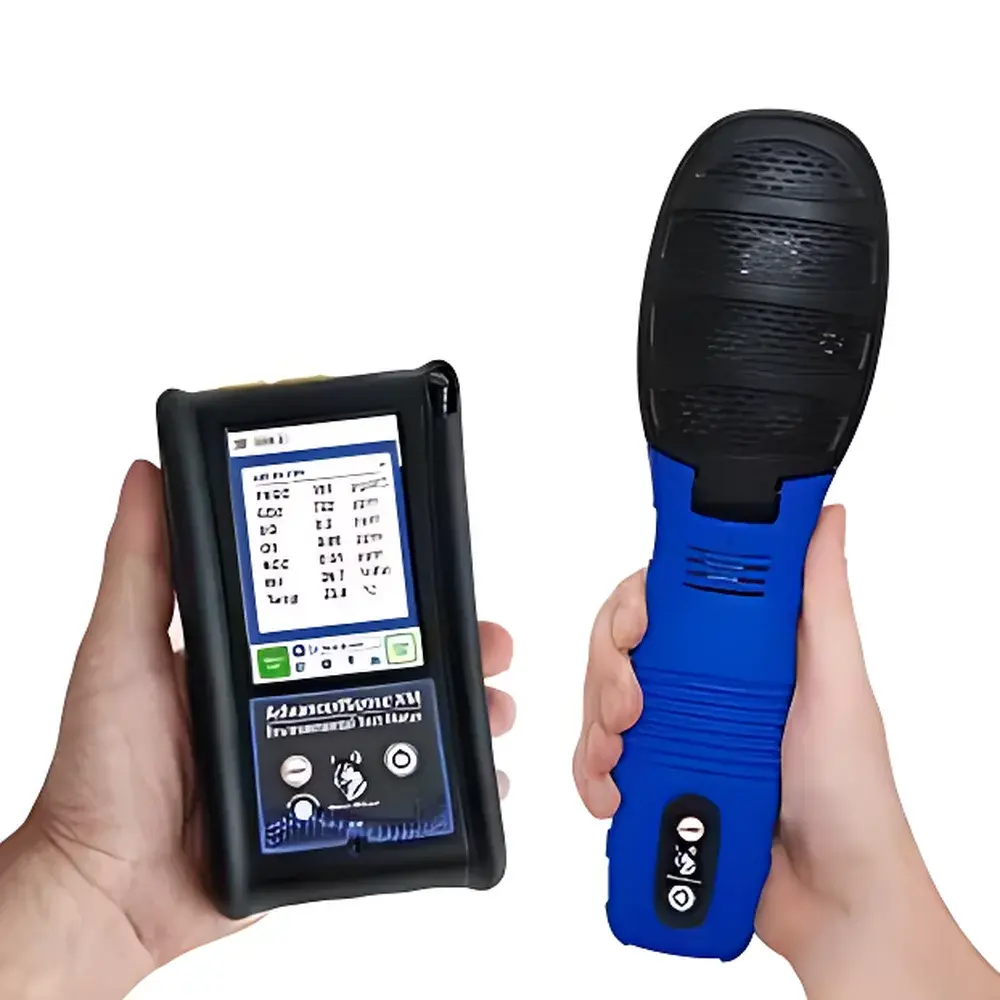
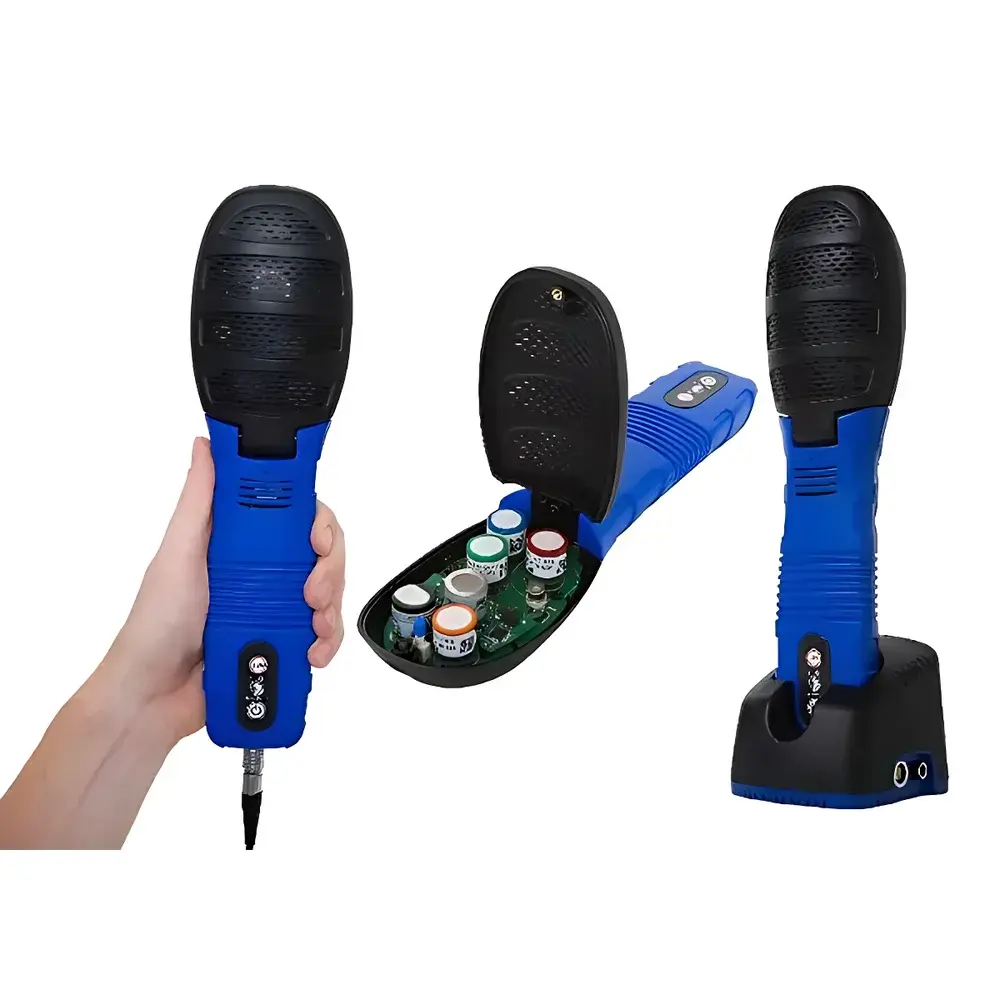
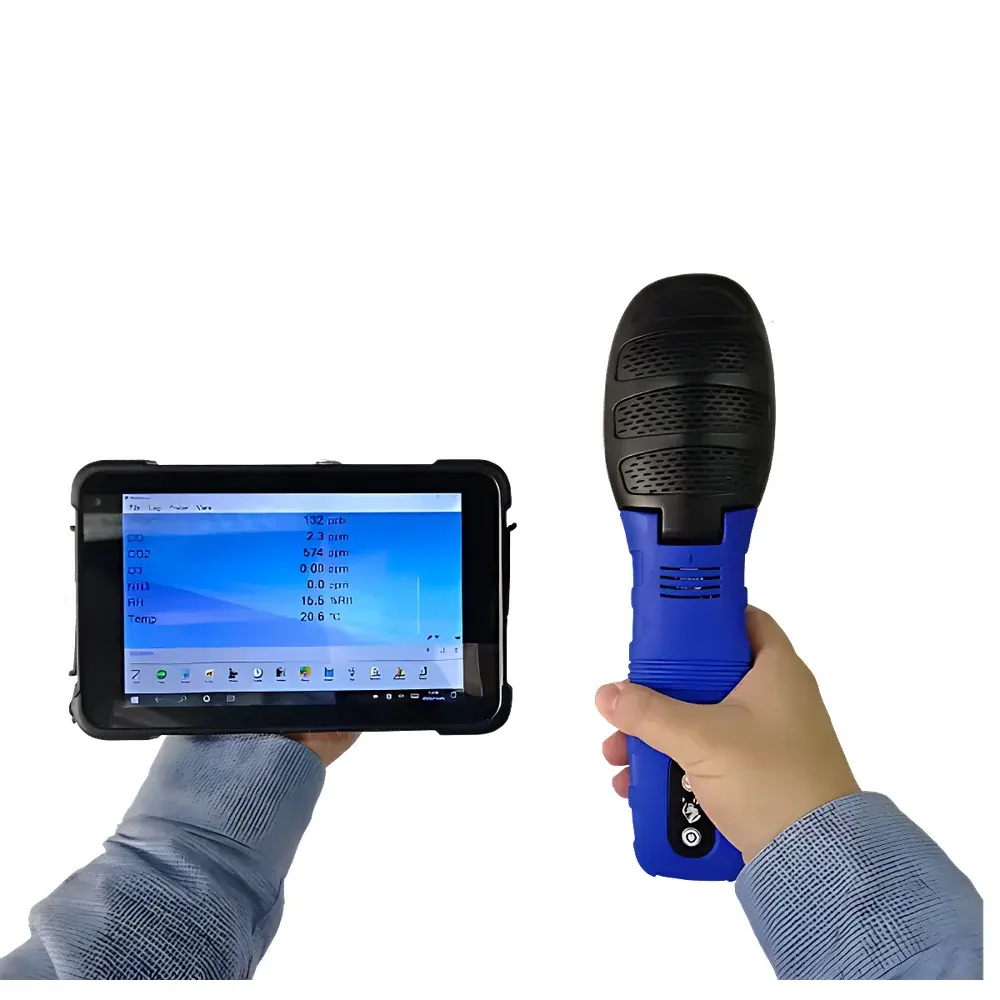
Graywolf DSII-8 Portable Multi-Gas Analyzer
| Brand | Graywolf |
|---|---|
| Model | DSII-8 |
| Type | Portable Ambient Air Quality Monitor |
| Detectable Gases | TVOC, HCHO, NH₃, CO, CO₂, NO, NO₂, O₃, SO₂, H₂S, Cl₂, H₂, HCN, F₂, HCl, PH₃, HF, AsH₃, C₂H₄O (EtO), SiH₄, ClO₂, CCl₂OOCℓ₂, B₂H₆ (20+ gases) |
| Response Time (90%) | < 60 s |
| Detection Limit | 1 ppb |
| Gas Units | mg/m³, µg/m³, ppm, ppb, % vol |
| Operating System | Wolf OS |
| Data Logging | Onboard storage with timestamped records |
| Probe Interface | Modular hot-swappable sensor bays |
| Compliance | Designed for ASTM D6245, ISO 16000-23, EN 13725, and EPA Compendium Method TO-15 support |
Overview
The Graywolf DSII-8 Portable Multi-Gas Analyzer is an engineered field-deployable instrument designed for real-time and time-integrated ambient air quality assessment. Based on electrochemical, photoionization (PID), and non-dispersive infrared (NDIR) sensing architectures—depending on the installed probe—the DSII-8 delivers trace-level quantification across a broad spectrum of volatile organic compounds (VOCs), inorganic toxic gases, and common combustion byproducts. Its modular architecture enables simultaneous acquisition of up to 20 independent parameters—including temperature, relative humidity, differential pressure, airflow velocity, and multi-gas concentration—within a single handheld platform. The system operates under Wolf OS, a deterministic embedded operating system optimized for low-power, high-reliability environmental data acquisition in uncontrolled field conditions. Unlike fixed-station analyzers, the DSII-8 maintains laboratory-grade reproducibility (±2% full-scale typical for calibrated NDIR channels; ±5% for electrochemical sensors per ISO 12032) while meeting portability requirements for industrial hygiene surveys, IAQ audits, and emergency response scenarios.
Key Features
- Modular probe interface supporting hot-swappable sensors—no tooling or firmware reflash required for probe replacement or expansion.
- Simultaneous measurement of ≥20 parameters via synchronized analog/digital signal acquisition with 16-bit ADC resolution and auto-ranging gain control.
- On-device annotation capability: embed text notes, voice memos (WAV, 16-bit/44.1 kHz), and geotagged JPEG images directly into time-stamped data records.
- Configurable gas concentration units (ppb, ppm, mg/m³, µg/m³, % vol) with automatic stoichiometric conversion based on molecular weight and reference temperature/pressure.
- Internal rechargeable Li-ion battery providing ≥12 hours continuous operation at 1 Hz sampling; optional external power input (12–24 V DC) for extended monitoring campaigns.
- Ruggedized IP54-rated enclosure with anti-static coating, operating range: −10 °C to +50 °C, 0–95% RH non-condensing.
Sample Compatibility & Compliance
The DSII-8 is validated for use with ambient air, indoor workplace atmospheres, and duct-stream sampling (when paired with certified isokinetic probes). All factory-calibrated sensors comply with traceability requirements per ISO/IEC 17025:2017 through NIST-traceable reference standards. Gas detection modules meet EN 45544-1 (electrochemical), EN 14181 (PID), and IEC 61000-4-3 (EMC immunity) specifications. The device supports audit-ready data integrity workflows aligned with GLP and OSHA 29 CFR 1910.120 compliance frameworks. Optional firmware upgrade enables 21 CFR Part 11-compliant electronic signatures and audit trail logging for regulated environments.
Software & Data Management
Data export occurs via USB-C or Bluetooth 5.0 to Graywolf’s proprietary WolfView desktop software (Windows/macOS), which provides automated calibration validation reports, drift correction algorithms, and statistical process control (SPC) charting. Raw binary files (.wlf) retain full metadata—including sensor serial numbers, calibration dates, zero/span history, and environmental compensation coefficients—for third-party analysis in MATLAB, Python (pandas), or LabVIEW. Cloud synchronization (optional subscription) enables secure TLS 1.3-encrypted upload to private AWS S3 buckets with role-based access control and ISO 27001-aligned infrastructure.
Applications
- Indoor Air Quality (IAQ) assessments per ASHRAE Standard 62.1 and WHO indoor air guidelines.
- Occupational exposure monitoring compliant with ACGIH TLVs® and OELs across manufacturing, pharmaceutical cleanrooms, and wastewater treatment facilities.
- Post-remediation verification following mold, fire, or chemical spill events (e.g., EtO sterilization residuals, chlorine leaks).
- Urban micro-environmental screening for NO₂, O₃, and PM₂.₅ co-location studies in conjunction with particulate matter modules.
- Educational fieldwork and EPA Region-led community air monitoring initiatives requiring portable, interoperable instrumentation.
FAQ
What calibration standards are supported for field verification?
NIST-traceable span gases (certified to ISO 6141) and zero-air generators meeting ISO 8573-1 Class 1 purity requirements are recommended. Onboard zero-check functionality supports automated baseline drift correction every 24 hours.
Can the DSII-8 operate in explosive atmospheres?
No. The DSII-8 is not intrinsically safe (IS) rated. For hazardous area deployment, only ATEX/IECEx-certified external sampling systems with explosion-proof enclosures may be used upstream of the analyzer inlet.
Is remote firmware update capability available?
Yes—via signed OTA packages delivered over encrypted Bluetooth or USB, with cryptographic signature verification and rollback protection to ensure system integrity.
How is sensor cross-sensitivity managed during multi-gas measurement?
Wolf OS applies proprietary multivariate interference compensation matrices derived from empirical gas challenge testing across 120+ binary and ternary gas mixtures, documented in the Instrument Validation Report (IVR) supplied with each unit.
Does the device support regulatory reporting formats such as EPA Form 30B or ISO 14001 Annex A.4?
Yes—WolfView includes configurable report templates compliant with EPA Method TO-15 QA/QC documentation, ISO 14001 Clause 9.1.1 monitoring records, and EU Directive 2008/50/EC Annex IX summary tables.
Related Products







