
Great Wall SHB-III/IIIA/IIIS/IIG Series Circulating Water Vacuum Pump
| Brand | The Great Wall |
|---|---|
| Origin | Henan, China |
| Manufacturer Type | Direct Manufacturer |
| Country of Origin | China |
| Model | SHB-III / IIIA / IIIS / IIG |
| Instrument Type | Circulating Water Vacuum Pump |
| Product Type | Oil-Free Vacuum Pump |
| Maximum Vacuum Degree | 0.098 MPa (20 mbar) |
| External Dimensions | 385 W × 280 D × 420 H mm |
| Weight | 9.5 kg |
| Power | 180 W |
| Supply Voltage | 220 V~, 50 Hz |
| Circulating Water Flow Rate | 7 L/min |
| Pump Air Flow Rate | 80 L/min |
| Single-Head Suction Rate | 10 L/min |
| Circulating Water Head | 10 m |
| Water Tank Capacity | 15 L |
| Operating Temperature Range | 5–35 °C |
| Relative Humidity Limit | ≤70% |
| IP Rating | IP20 |
| Pollution Degree | Class 2 |
Overview
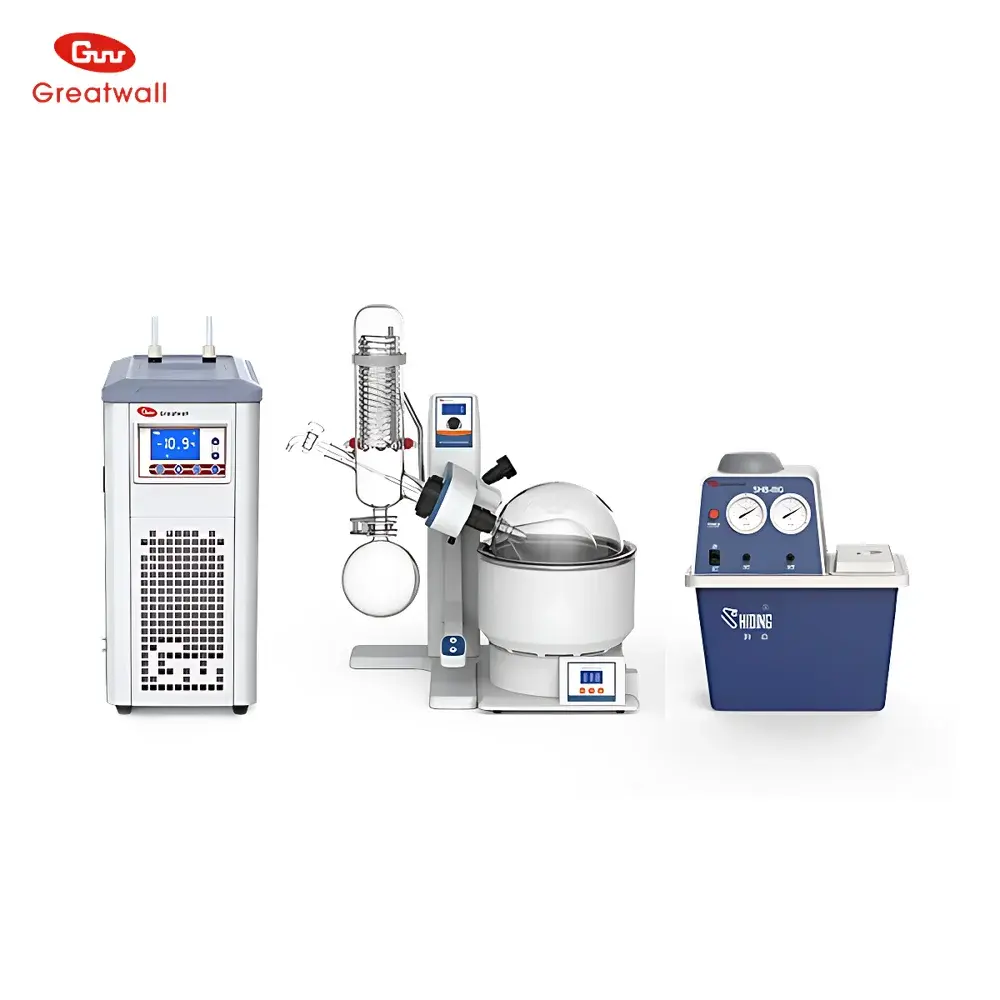
The Great Wall SHB-III/IIIA/IIIS/IIG Series Circulating Water Vacuum Pump is an oil-free, water-cooled vacuum source engineered for continuous, stable negative-pressure generation in laboratory environments. It operates on the principle of water-jet aspiration—where pressurized circulating water passes through a venturi-shaped ejector, inducing a pressure differential that draws ambient air or process gas into the system. This hydrodynamic vacuum generation mechanism eliminates the need for lubricating oils, ensuring contamination-free operation critical for applications in analytical chemistry, pharmaceutical processing, and life science research. Designed for integration into rotary evaporation, vacuum distillation, crystallization, lyophilization support, and reduced-pressure filtration workflows, the pump delivers consistent vacuum performance up to 0.098 MPa (20 mbar) while maintaining low thermal drift and minimal vibration transmission. Its sealed, recirculating water loop reduces consumable dependency and aligns with sustainable lab infrastructure goals.
Key Features
- Oil-free, water-mediated vacuum generation ensures compatibility with moisture-sensitive and chemically reactive samples—no risk of oil backstreaming or hydrocarbon contamination.
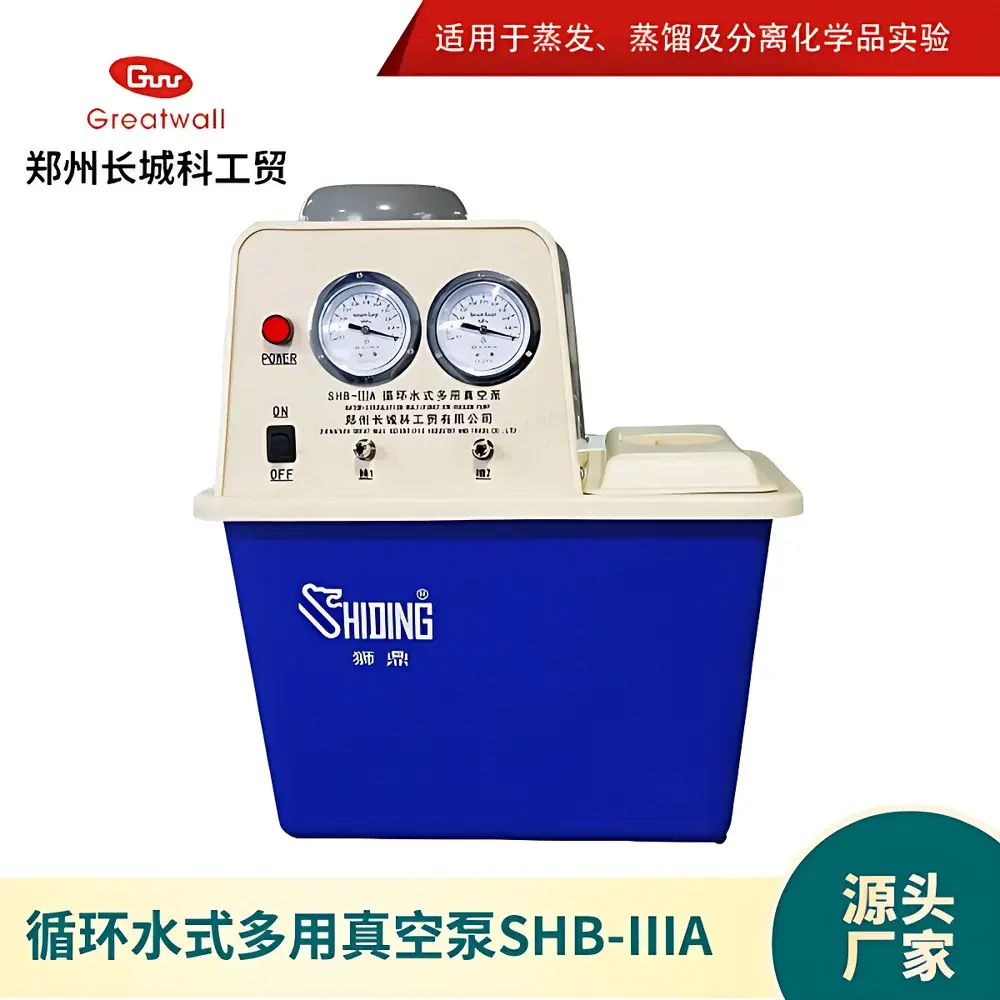
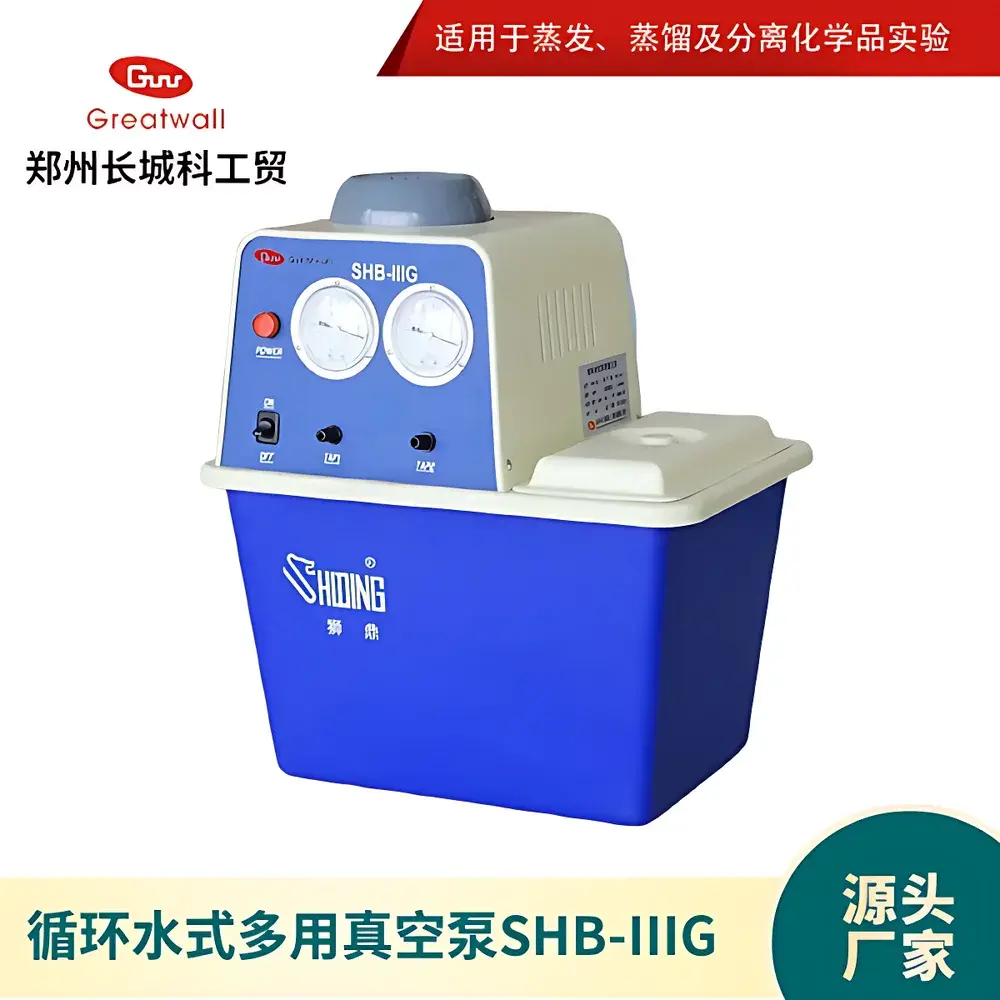
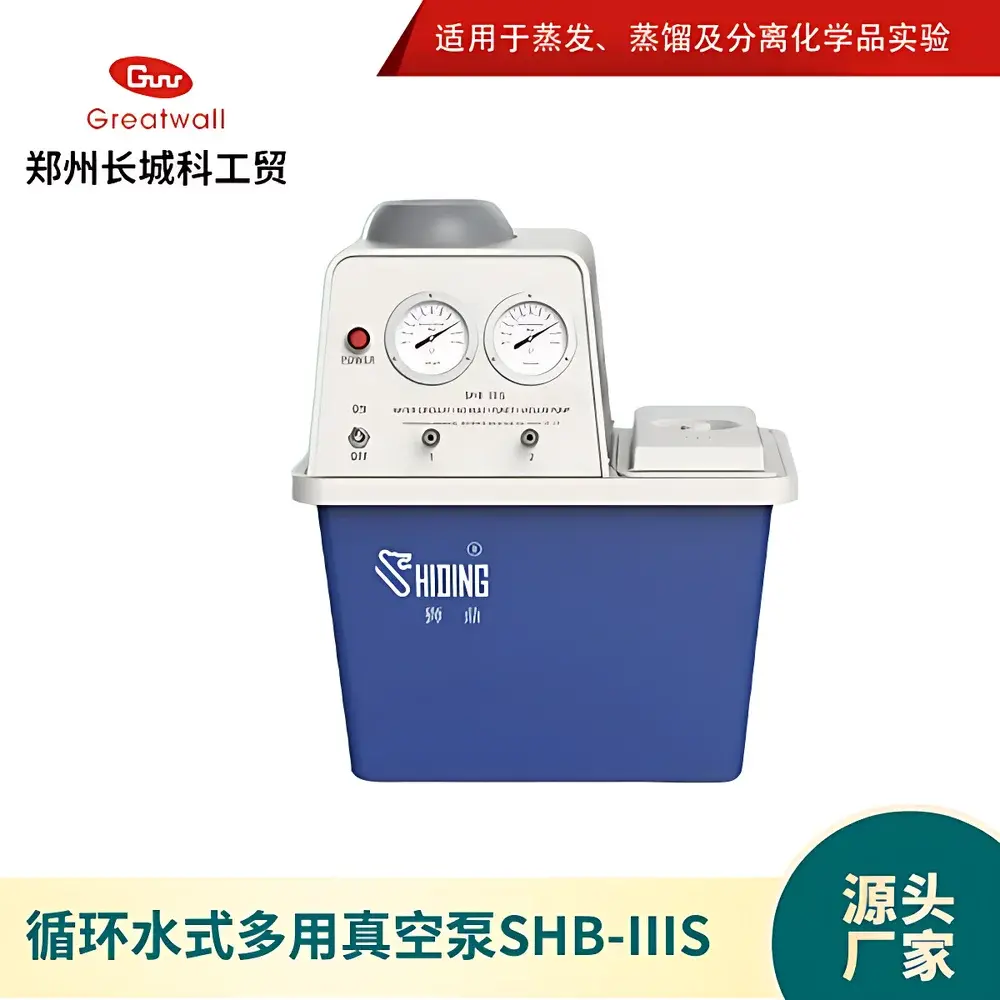
- Dual independent suction ports with individual vacuum gauges enable simultaneous or isolated operation of two instruments, improving workflow flexibility without cross-contamination.
- Integrated anti-cavitation fluid silencer minimizes dissolved gas entrainment in the circulating water, enhancing ultimate vacuum stability and reducing operational noise to <55 dB(A) at 1 m distance.
- Corrosion-resistant wetted materials tailored per model: SHB-III features 304 stainless steel pump body and impeller; SHB-IIIA uses polypropylene (PP) construction for enhanced chemical resistance; SHB-IIIS combines stainless steel structural components with PA66 impeller; SHB-IIG employs copper-PTFE coated nozzles and PP housing for aggressive solvent compatibility.
- Fluoroelastomer (FKM) shaft seals and 304 stainless steel motor shaft ensure long-term sealing integrity under continuous duty cycles and thermal cycling between 5–35 °C.
- Check valves installed in internal gas pathways prevent backflow of water or condensate into connected apparatus during power interruption or shutdown.
Sample Compatibility & Compliance
The SHB series supports vacuum-dependent unit operations involving aqueous, organic, and mildly corrosive solvents—including acetone, ethanol, ethyl acetate, and dilute acids/bases—provided operating temperatures remain within the specified 5–35 °C ambient range. All models meet IEC 61000-6-3 (EMC emission limits) and IEC 61000-6-2 (immunity requirements) for laboratory equipment. The IP20 enclosure rating complies with IEC 60529 for protection against solid objects >12.5 mm and non-dripping liquids—suitable for controlled indoor lab environments. While not certified to ISO 9001 or GLP/GMP out-of-the-box, the pump’s traceable material specifications, dual-gauge monitoring, and mechanical interlocks support audit-ready documentation when integrated into validated systems adhering to USP , ASTM E2500, or FDA 21 CFR Part 11-compliant data acquisition platforms.
Software & Data Management
This is a stand-alone electromechanical vacuum source with no embedded firmware, touchscreen interface, or digital connectivity. Vacuum level monitoring is performed via analog Bourdon-tube gauges calibrated to ±1.5% FS per ASME B40.100. For integration into automated labs, external pressure transducers (e.g., capacitance manometers with 4–20 mA or RS485 output) may be plumbed in-line downstream of either suction port. When paired with SCADA or LIMS-compatible controllers, real-time vacuum logging, alarm thresholds, and trend analysis become feasible—supporting compliance with ALCOA+ data integrity principles in regulated environments.
Applications
- Routine support for rotary evaporators (up to 5 L capacity) requiring stable 20–100 mbar vacuum control during solvent removal.
- Vacuum-assisted gravity filtration of biological suspensions, precipitates, or particulate-laden reaction mixtures using Buchner or Hirsch funnels.
- Sub-atmospheric drying of heat-labile compounds in desiccators or vacuum ovens where oil-free conditions are mandated.
- Gas scavenging in Schlenk line pre-vacuum stages or inert atmosphere glovebox antechambers.
- Low-vacuum degassing of polymer solutions, adhesives, or coating formulations prior to casting or curing.
FAQ
Is this pump suitable for use with volatile organic solvents?
Yes—provided the selected model matches solvent compatibility (e.g., SHB-IIIA for chlorinated solvents; SHB-IIG for halogenated or acidic vapors). Always verify material resistance using the provided wetted parts matrix before installation.
What maintenance is required to sustain rated vacuum performance?
Daily: Check water level and temperature; weekly: inspect silicone/fluoroelastomer tubing for swelling or cracking; quarterly: clean ejector nozzle and check valve with deionized water; annually: replace circulating water and verify gauge calibration.
Can the pump operate continuously for 24/7 applications?
Yes—the 180 W induction motor is rated for S1 continuous duty, and the closed-loop water circulation enables unattended operation up to 8 hours; extended runtime requires active water cooling or chiller integration to maintain ≤30 °C sump temperature.
Does it comply with international electrical safety standards?
It conforms to GB 4706.1 (China’s adoption of IEC 60335-1) for household and similar electrical appliances, including dielectric strength testing, grounding continuity, and creepage/clearance requirements appropriate for Class I laboratory equipment.
How is vacuum stability affected by ambient temperature fluctuations?
Vacuum depth declines approximately 0.5–1.2 mbar per 1 °C rise above 25 °C due to increased water vapor pressure; optimal stability is achieved with inlet water temperature maintained at 15–20 °C via recirculating chiller or tap-water temperature regulation.



