
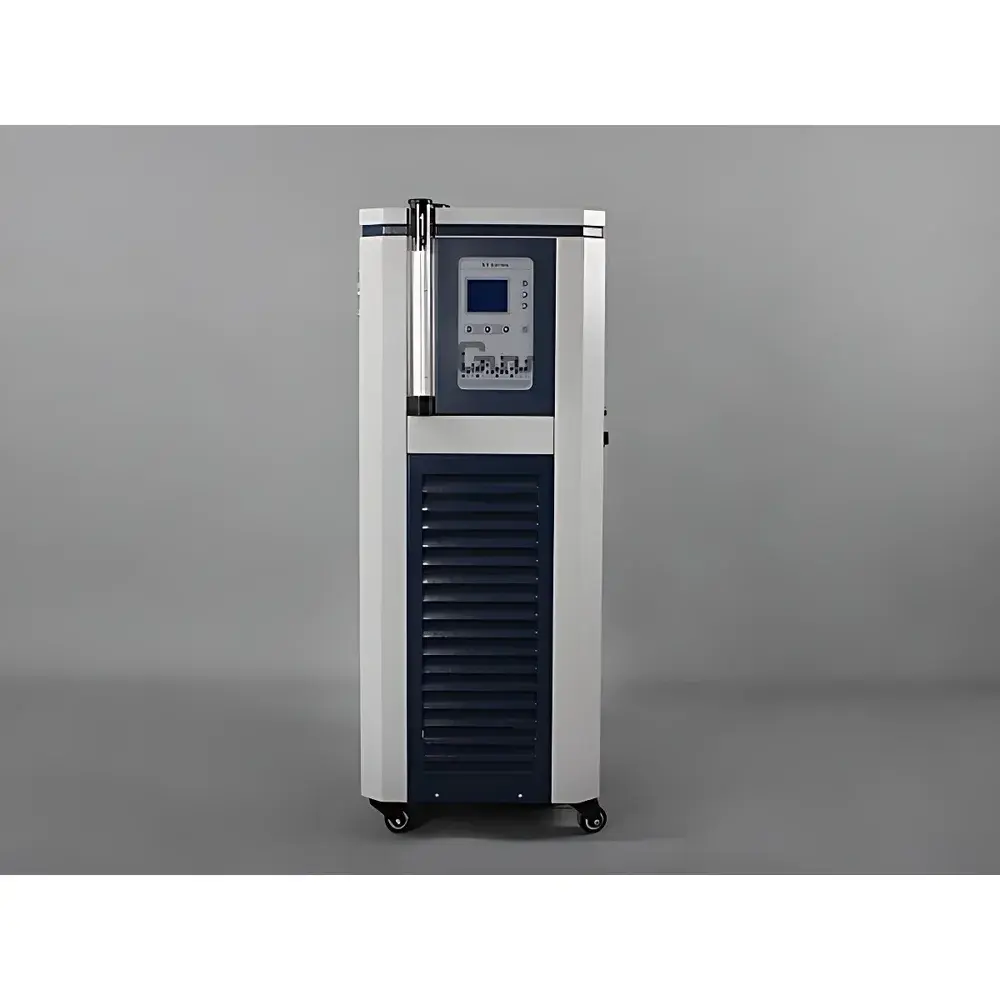
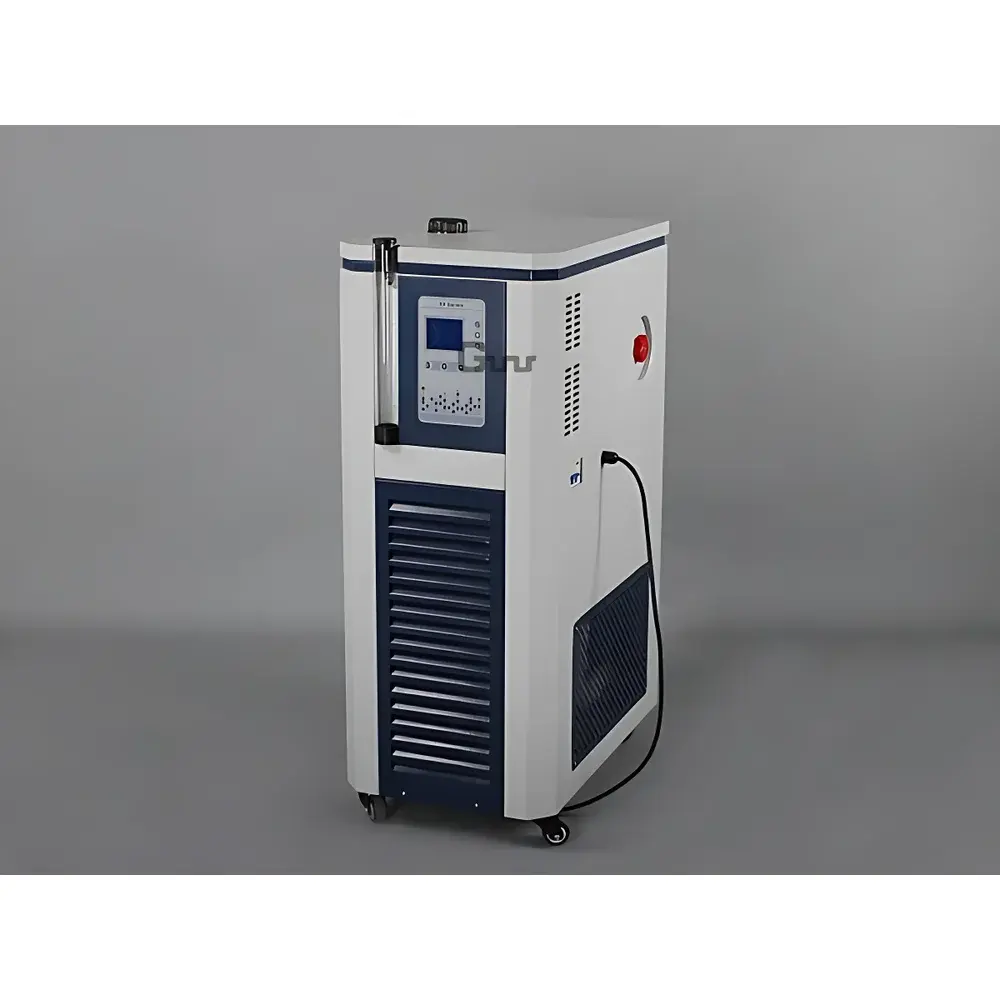
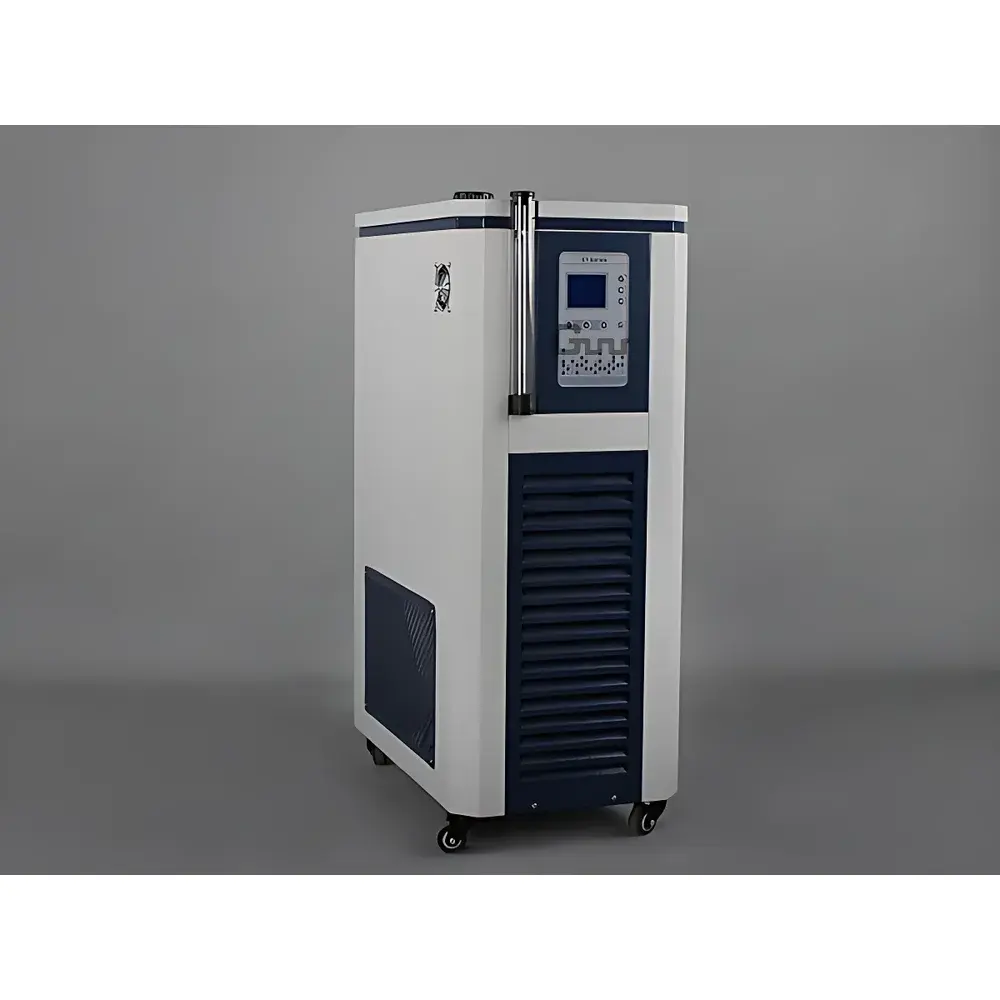
The Great Wall SY-20-160 High-Temperature Circulating Bath
| Brand | The Great Wall |
|---|---|
| Origin | Henan, China |
| Manufacturer Type | Direct Manufacturer |
| Country of Origin | China |
| Model | SY-20-160 |
| Heating Medium | Thermal Oil |
| Temperature Range | +5 °C above ambient to 160 °C |
| Temperature Stability | ±0.5 °C |
| Max. Flow Rate | 42 L/min |
| Max. Pressure | 2.8 bar |
| Circulation Pump Power | 370 W |
| Heating Power | 3 kW |
| Total Power Consumption | 3.37 kW |
| External Cooling Coil | Integrated (water-cooled) |
| Reservoir Capacity | 9 L |
| Power Supply | 220–240 V~, 50 Hz |
| IP Rating | IP20 |
| Pollution Degree | 2 |
| Dimensions (W×D×H) | 430×690×1075 mm |
| Weight | 60 kg |
| Safety Protections | Independent overtemperature, earth-leakage, thermal overload, overcurrent, and phase-sequence protection |
| Liquid Level Monitoring | Visual indicator |
Overview
The Great Wall SY-20-160 High-Temperature Circulating Bath is an engineered thermal management system designed for precise, stable, and safe temperature control of external reaction vessels in laboratory and pilot-scale process environments. It operates on the principle of forced convection circulation: an electrically heated thermal oil bath serves as the heat transfer medium, which is continuously circulated via a high-capacity magnetic-drive pump through insulated tubing to jacketed reactors, calorimeters, or other externally coupled equipment. Unlike open-bath systems, the SY-20-160 employs a fully sealed closed-loop architecture—minimizing thermal fluid degradation by preventing oxidation, volatilization, and moisture absorption from ambient air. This design directly contributes to extended service life of synthetic or mineral-based heat transfer oils (e.g., Dowtherm A, Therminol VP-1), reducing maintenance frequency and operational cost over time. Its operational range spans from +5 °C above ambient up to 160 °C, with a certified stability of ±0.5 °C under steady-state conditions—a performance level validated across load variations typical in pharmaceutical synthesis, catalytic hydrogenation, and polymerization workflows.
Key Features
- Hermetically sealed circulation loop ensures long-term thermal fluid integrity and eliminates need for frequent replacement or purification
- Dual-mode thermal regulation: integrated electric heating (3 kW) combined with an internal water-cooled coil for active cooling—enabling rapid temperature ramping and fine-tuned stabilization, especially critical between 25 °C and 60 °C where self-heating dominates
- Independent safety circuitry including overtemperature cutoff (hardware-latched), earth-leakage detection (30 mA sensitivity), thermal overload relay, electronic overcurrent protection, and phase-sequence monitoring—fully compliant with IEC 61000-6-2/6-4 EMC requirements
- Real-time visual liquid level indicator located on front panel, calibrated for 9 L reservoir capacity; enables immediate verification prior to system startup and during extended operation
- Rugged industrial-grade construction: stainless steel fluid path components, reinforced polyamide housing, and IP20-rated electrical compartment suitable for controlled laboratory environments (pollution degree 2 per IEC 60664-1)
- Standardized R2¾ (22 mm) NPT-compatible external circulation ports with integrated quick-connect fittings for leak-resistant hose coupling
Sample Compatibility & Compliance
The SY-20-160 is compatible with a broad spectrum of externally jacketed equipment—including glass reactor vessels (1–50 L), stainless steel autoclaves, falling-film evaporators, and analytical calorimeters—provided inlet/outlet port dimensions and pressure ratings align with its 2.8 bar maximum system pressure. It supports use with standard industrial heat transfer fluids meeting ASTM D6722 (specification for synthetic organic heat transfer fluids) and ISO 6743-12 (classification L-QB/L-QC). While not intrinsically rated for hazardous area installation (e.g., ATEX Zone 1), its earth-leakage and phase-protection features meet essential safeguards required under EU Machinery Directive 2006/42/EC. For regulated environments, the unit’s deterministic safety logic and non-volatile fault logging support alignment with GLP documentation practices and basic GMP temperature traceability requirements when paired with external data loggers.
Software & Data Management
The SY-20-160 operates via a dedicated microprocessor-based controller with LED display and tactile membrane keypad—designed for robustness rather than network connectivity. It does not feature built-in Ethernet, USB, or RS-485 interfaces; however, analog 0–10 V or 4–20 mA output signals (optional add-on) can be configured for integration into centralized SCADA or DCS platforms. Temperature setpoint, real-time bath temperature, and status alarms (e.g., “LOW FLUID”, “OVERTEMP”) are continuously displayed. All safety events trigger non-resettable latching until manual intervention—ensuring audit-ready event capture without reliance on software-based logging. For laboratories requiring 21 CFR Part 11 compliance, third-party validated data acquisition systems (e.g., LabVIEW-based DAQ with electronic signature modules) may be deployed in parallel to record timestamps, setpoints, and measured temperatures at user-defined intervals.
Applications
- Controlled-temperature synthesis of active pharmaceutical ingredients (APIs) requiring sustained 120–160 °C conditions under inert atmosphere
- Exothermic reaction quenching via rapid cooldown using auxiliary chilled water supply to the integrated coil
- Calibration and validation of temperature sensors (RTDs, thermocouples) across extended ranges per ISO/IEC 17025 procedures
- Thermal aging studies of polymer composites and battery electrolytes under accelerated isothermal conditions
- Support of rotary evaporation systems requiring precise condenser jacket temperature control to optimize solvent recovery efficiency
FAQ
What types of thermal fluids are compatible with the SY-20-160?
Synthetic aromatic or alkylated biphenyl-based heat transfer oils (e.g., Dowtherm J, Marlotherm SH) and high-flash-point mineral oils meeting ASTM D6722 Class L-QB are recommended. Glycol-water mixtures are not supported due to vapor pressure and thermal stability limitations above 100 °C.
Can the unit maintain temperature at 50 °C without external cooling water?
No. At setpoints between ambient +5 °C and 60 °C, the internal water-cooled coil must be supplied with ≤25 °C cooling water to counteract resistive heating and achieve ±0.5 °C stability.
Is remote monitoring or control possible?
Not natively. Optional analog signal outputs (0–10 V / 4–20 mA) enable connection to PLCs or data loggers, but no native Modbus, Ethernet/IP, or cloud interface is provided.
What is the maximum allowable backpressure from the external reactor system?
The circulation pump is rated for continuous operation up to 2.8 bar (40.6 psi) static pressure. Exceeding this may impair flow rate, induce cavitation, or trigger pressure-related fault shutdowns.
Does the unit include calibration documentation?
Factory calibration certificates for temperature sensor (PT100) and safety cutouts are provided upon request. Full metrological traceability to national standards requires third-party calibration using accredited labs (e.g., ISO/IEC 17025).



