
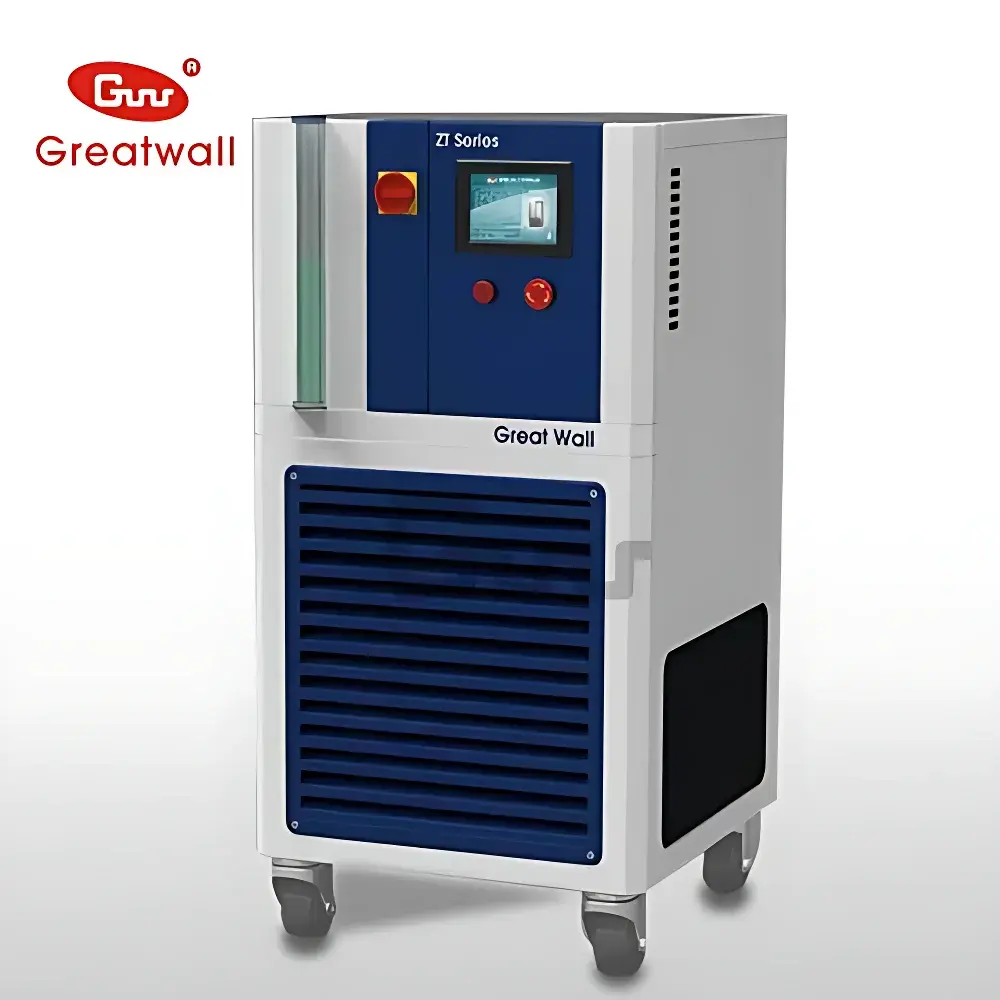
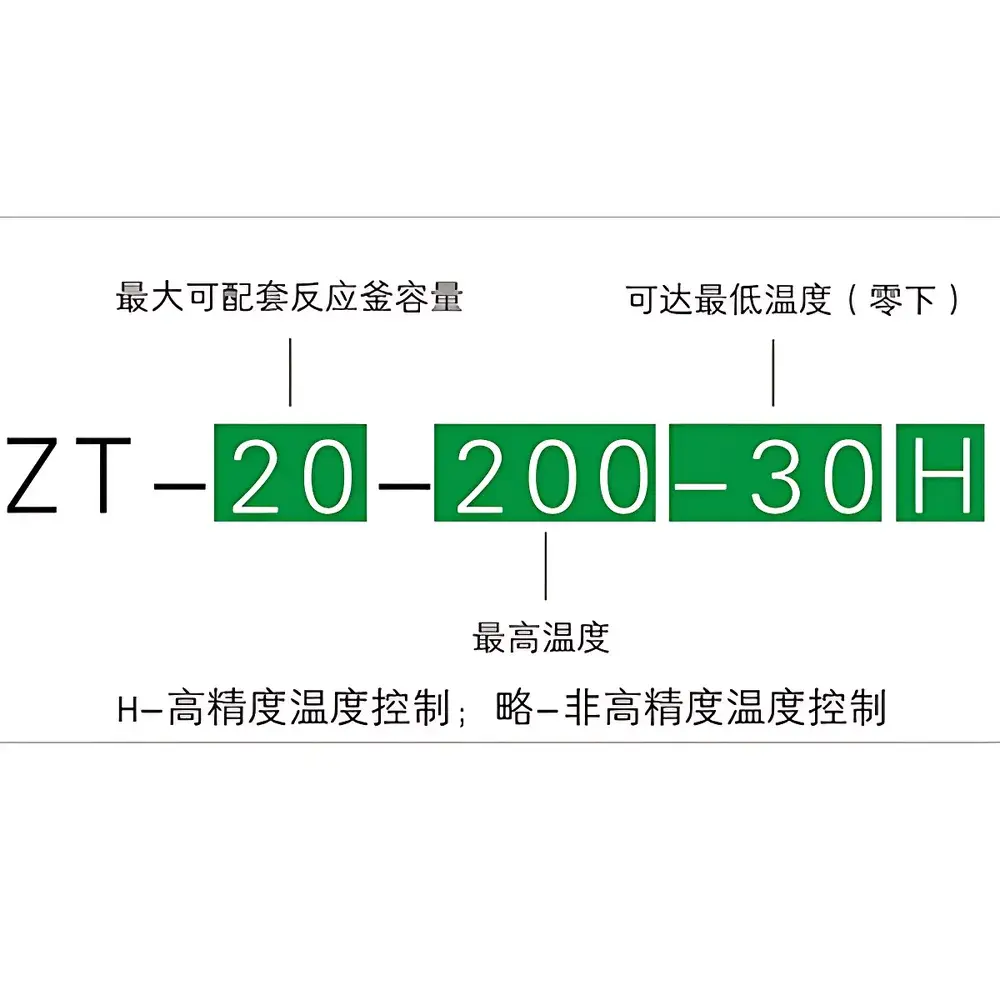
The Great Wall ZT-100-200-30H Closed-Loop Refrigerated & Heated Circulator
| Brand | The Great Wall |
|---|---|
| Origin | Henan, China |
| Manufacturer Type | Direct Manufacturer |
| Instrument Type | Integrated Circulator |
| Cooling Method | Air-Cooled |
| Temperature Range | −30 °C to +200 °C |
| Refrigeration Capacity | 2.5 kW (at −30 °C) to 8.2 kW (at +200 °C) |
| Temperature Stability | ±0.5 °C |
| Circulation Pump Pressure | 1.5 bar |
| Circulation Flow Rate | 90 L/min |
| Bath Volume | 20 L |
| Operating Mode | Continuous Duty |
| Heating Power | 12 kW |
| Total Power Consumption | 18 kW |
| Power Supply | 3-phase, 380 V, 50 Hz |
| Dimensions (L×W×H) | 1175 × 875 × 1720 mm |
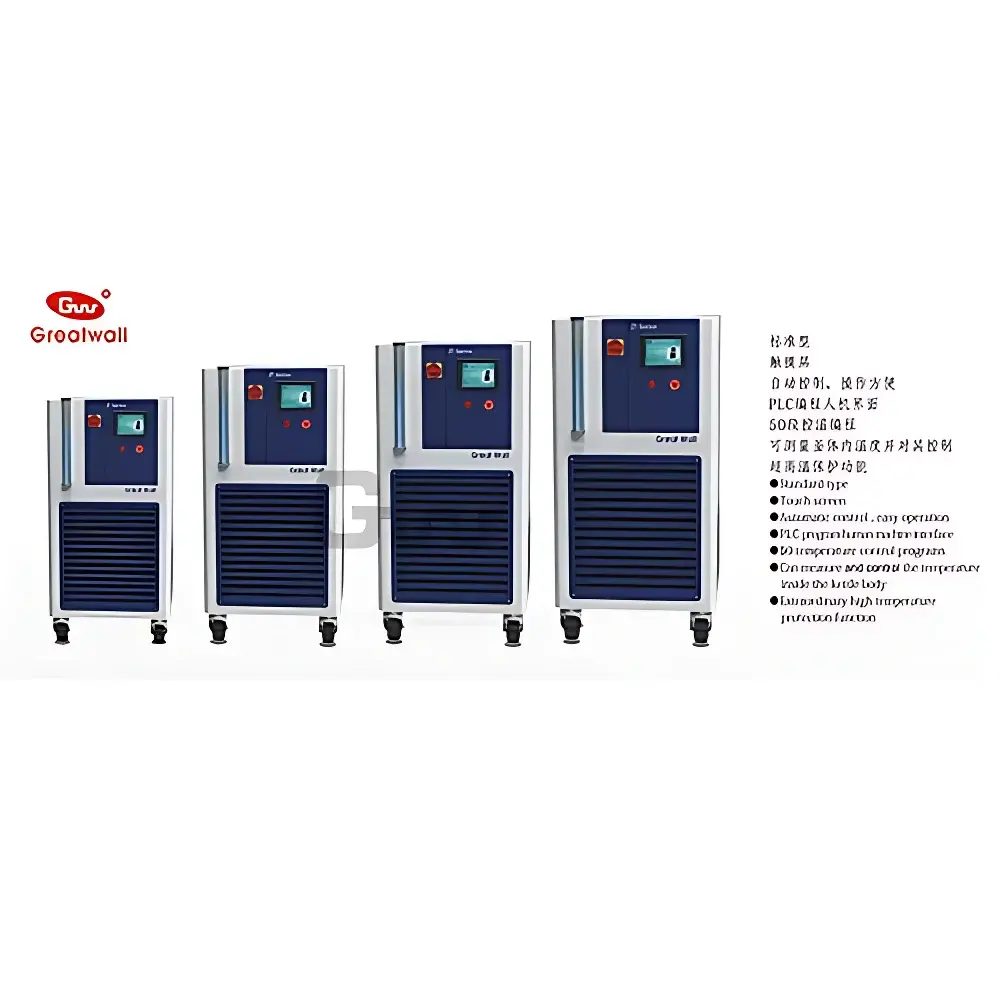
| Display | 5.7″ TFT Color Touchscreen |
| Control Algorithm | Fuzzy Logic + PID |
| Programmable Profiles | 120 programs, up to 100 segments each |
| Communication Interface | RS485 or optional Ethernet |
| Language Support | English / Chinese selectable |
| Safety Protections | Overtemperature, overcurrent, overload, phase loss, leakage, delayed startup, low-level fluid detection |
| Heat Exchanger | Fully Brazed Plate-Type |
| Pump Type | Hermetically Sealed Magnetic Drive Circulation Pump |
| Fluid Compatibility | Synthetic heat-transfer fluids (e.g., silicone oil, glycol-water mixtures) |
| Enclosure Rating | IP20 |
Overview
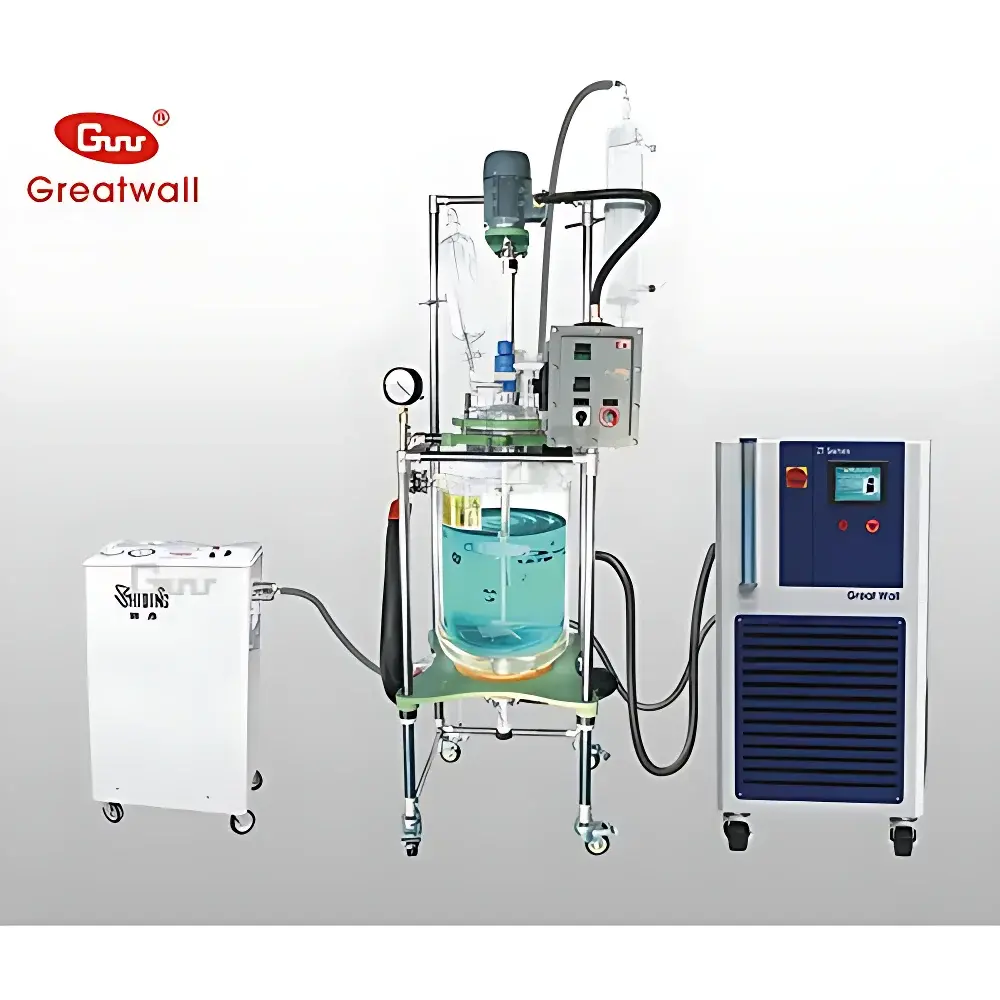
The Great Wall ZT-100-200-30H is an integrated, air-cooled closed-loop refrigerated and heated circulator engineered for precise, dynamic temperature control across demanding laboratory and pilot-scale industrial applications. Unlike open-bath chillers or standalone heaters, this system employs a fully sealed circulation loop—minimizing fluid degradation, oxidation at elevated temperatures, and moisture ingress or ambient condensation at sub-zero setpoints. Its dual-mode thermal architecture integrates independent refrigeration, heating, and pre-cooling subsystems, enabling seamless transitions between −30 °C and +200 °C without manual intervention or external fluid exchange. The unit operates continuously under load, delivering stable thermal output to external process equipment—including jacketed reactors, distillation columns, material test chambers, vacuum enclosures, and semiconductor thermal platforms—via a high-flow, high-pressure magnetic-drive circulation pump. Designed for compliance with fundamental engineering safety standards (IEC 61000-6-2/6-4, EN 61010-1), the ZT-100-200-30H supports reproducible process validation in regulated environments where thermal traceability and operational reliability are critical.
Key Features
- Fully hermetic circulation loop with magnetic-drive pump: Eliminates seal leakage across the entire operating range; compatible with synthetic heat-transfer media including methyl silicone oil and polyalkylene glycol blends.
- Triple-subsystem architecture: Independent refrigeration, electric heating, and pre-cooling circuits allow uninterrupted operation during rapid ramping or hold cycles—no thermal cross-talk or recovery delay.
- High-efficiency brazed plate heat exchanger: Compact footprint, >92% thermal transfer efficiency, corrosion-resistant stainless steel construction suitable for long-term exposure to organic thermal fluids.
- Advanced dual-algorithm temperature control: Combines fuzzy logic for transient response with adaptive PID tuning to maintain ±0.5 °C stability—even under variable external heat loads or ambient fluctuations.
- Programmable thermal profiles: Supports up to 120 user-defined programs, each with 100 programmable segments; enables complex ramp-hold-cool sequences required for ASTM D341 viscosity calibration, USP environmental simulation, or ICH Q5C stability testing.
- Intuitive 5.7″ TFT touchscreen interface: Dual-language (English/Chinese) UI with real-time graphical trend display of bath temperature, load temperature (via optional external probe input), and system status flags.
- Comprehensive safety suite: Includes fluid level monitoring with audible/visual alert, overtemperature cutoff (hardware + software redundant), earth leakage protection, three-phase imbalance detection, and timed soft-start to prevent compressor surge.
Sample Compatibility & Compliance
The ZT-100-200-30H is compatible with standard laboratory thermal fluids meeting ISO 6743-12 (class QD/QE) specifications—including silicone oils (e.g., DC200 series), polyalphaolefins (PAOs), and inhibited ethylene glycol–water mixtures (up to 60% concentration). It interfaces seamlessly with jacketed glass reactors (e.g., 5–50 L double/triple-layer vessels), stirred tank reactors, calorimeters, and environmental test chambers via standardized 1/2″–3/4″ BSP or NPT ports. While not certified to FDA 21 CFR Part 11 out-of-the-box, its audit-ready data logging (with timestamped event records, parameter changes, and alarm history) supports GLP/GMP-aligned validation when deployed with qualified third-party software. The unit complies with CE marking requirements under the Low Voltage Directive (2014/35/EU) and EMC Directive (2014/30/EU); full technical documentation—including electrical schematics, fluid compatibility charts, and IQ/OQ protocol templates—is provided for integration into facility qualification processes.
Software & Data Management
The onboard controller logs all critical parameters—including setpoint, actual bath temperature, external load temperature (if configured), pump speed, compressor duty cycle, and alarm events—with 1-second resolution and internal storage capacity for ≥30 days of continuous operation. Data export is supported via USB flash drive (CSV format) or RS485 Modbus RTU for integration into SCADA or LIMS platforms. Optional Ethernet connectivity enables remote monitoring and control through secure HTTP-based web interface (TLS 1.2), supporting role-based access and session timeout. All configuration changes and manual overrides are time-stamped and recorded in an immutable audit trail, satisfying basic ALCOA+ principles (Attributable, Legible, Contemporaneous, Original, Accurate) for non-critical thermal process documentation.
Applications
- Temperature control of jacketed chemical reactors during exothermic/endothermic synthesis (e.g., Grignard reactions, hydrogenations, polymerizations).
- Calibration and verification of viscometers, rheometers, and DSC instruments requiring stable thermal ramps from −30 °C to +200 °C.
- Thermal cycling of electronic components and PCB assemblies per JEDEC JESD22-A104.
- Stability testing of pharmaceutical formulations per ICH Q1A(R2) guidelines (long-term, accelerated, intermediate conditions).
- Controlled cooling of rotary evaporators and short-path distillation systems to prevent bumping or solvent decomposition.
- Material characterization workflows—including tensile testing, DMA, and TMA—where specimen temperature must be held within ±0.5 °C during mechanical loading.
- Pre-conditioning of sensors, optical components, and MEMS devices prior to metrology or functional testing.
FAQ
What thermal fluids are recommended for operation at +200 °C?
Synthetic silicone oils with flash points >300 °C (e.g., Dow Corning DC200 Fluid 50 cSt) or thermally stable PAOs meeting ISO-L-QD classification are validated for continuous use at 200 °C. Mineral oils are not recommended above 130 °C.
Can the ZT-100-200-30H cool below −30 °C?
No—the system’s refrigeration circuit is rated for a minimum setpoint of −30 °C at standard ambient (25 °C). Lower temperatures require cascade or cryogenic configurations not supported by this model.
Is external temperature feedback supported for cascade control?
Yes—via optional PT100 input channel; the controller accepts a second sensor signal (e.g., reactor jacket outlet) to implement load-side temperature regulation with adjustable offset and derivative suppression.
What maintenance intervals are specified for the compressor and heat exchanger?
Annual inspection of refrigerant charge and brazed plate integrity is recommended; no scheduled oil changes are required—hermetic scroll compressors use sealed lubrication systems.
Does the unit support 21 CFR Part 11-compliant electronic signatures?
Not natively—the embedded controller lacks user authentication, electronic signature capture, or audit trail encryption. Integration with validated third-party MES/LIMS software is required for full Part 11 compliance.



