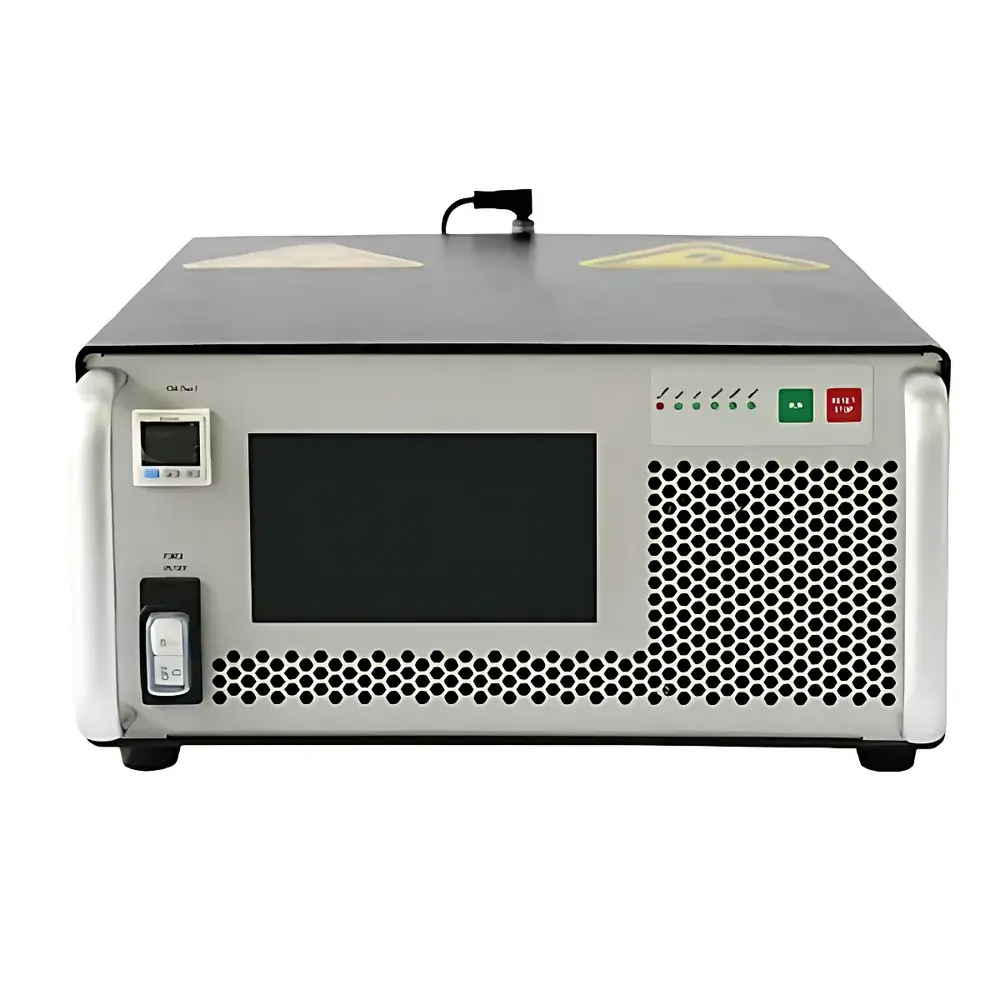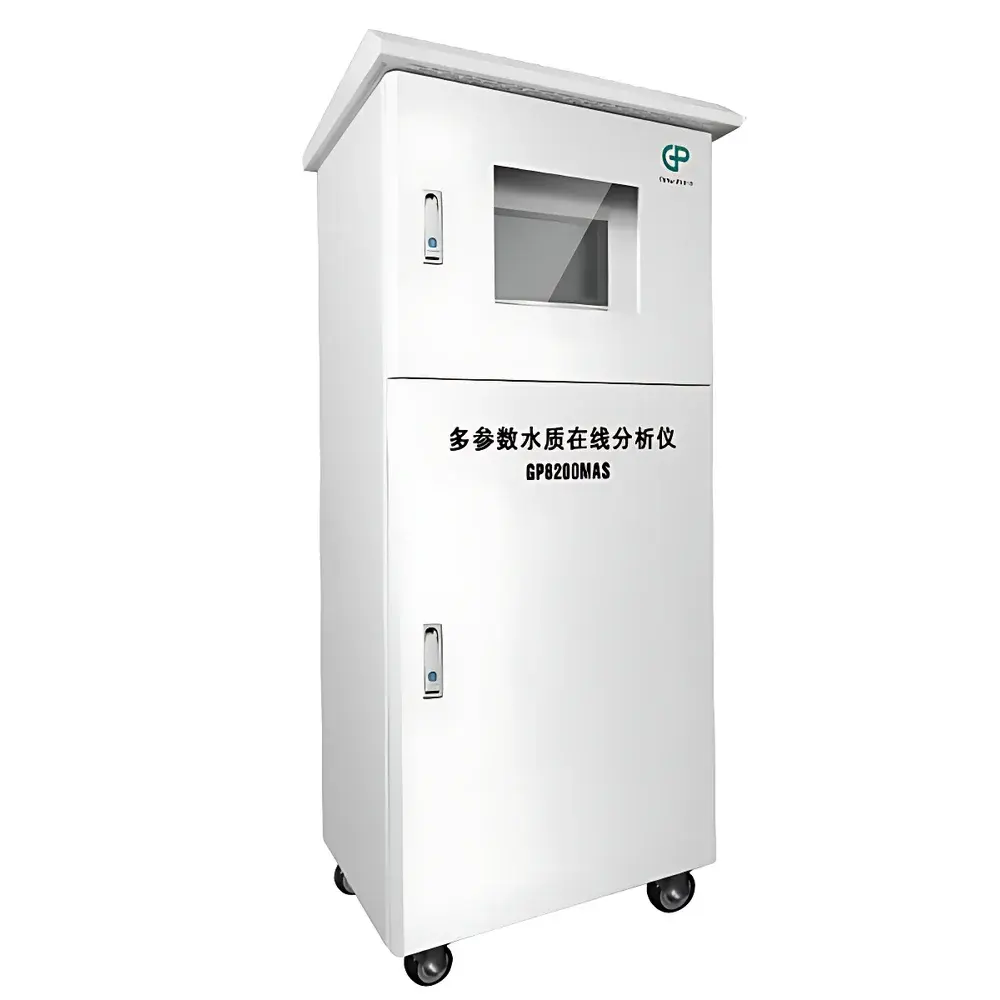
GreenPrima GP8200MAS Multi-Parameter Water Quality Analyzer
| Brand | GreenPrima |
|---|---|
| Origin | Shanghai, China |
| Manufacturer Type | Manufacturer |
| Country of Origin | China |
| Model | GP8200MAS |
| Price | Upon Request |
| pH Range | -2.00–16.00 pH, Res: 0.01 pH, Acc: ±0.01 pH |
| Free Chlorine Range | 0–2.000 / 0–20.00 ppm, Res: 0.001 / 0.01 ppm, Acc: ±0.001 / ±0.01 ppm |
| Turbidity Range | 0–1000 NTU, Res: 0.0001 NTU (adjustable), Acc: ±2% R or ±0.02 NTU (<40 NTU), ±5% R (≥40 NTU) |
| Conductivity Range | 0.00–2000 mS/cm, Res: 0.01 mS/cm, Acc: ±1% FS |
| Dissolved Oxygen Range | 0.00–20.00 ppm, Res: 0.01 ppm, Acc: ±0.01 ppm |
| ORP Range | -2000–+2000 mV, Res: 1 mV, Acc: ±1 mV |
| Temperature Range | 0–100 °C, Res: 0.1 °C, Acc: ±0.1 °C |
| Temp Compensation | -10–130 °C (NTC10K/PT1000, manual/auto) |
| Output Options | 4–20 mA (up to 8 channels), RS485 (Modbus RTU), Ethernet, GPRS (China Mobile/Unicom/Telecom), Wi-Fi |
| Relay Outputs | 8 × SPST, 5 A @ 250 VAC / 30 VDC |
| Display | 10-inch capacitive touchscreen, Chinese UI |
| Enclosure Rating | IP65 |
| Dimensions | 1300 × 600 × 400 mm (customizable) |
| Power | AC 200 V / 20 W or DC 24 V / 15 W (solar compatible) |
| Optional | Sample pump module, DTU for cloud telemetry, GoPu Cloud Platform integration (web, WeChat Mini Program, iOS/Android app, SMS/email alerts) |
Overview
The GreenPrima GP8200MAS Multi-Parameter Water Quality Analyzer is an industrial-grade, modular online analyzer engineered for continuous, real-time monitoring of critical water quality parameters in secondary water supply systems, potable water distribution networks, and municipal water infrastructure. Built on a robust, field-proven architecture, the system employs independent sensor channels for each measured parameter—ensuring electrical and chemical isolation, eliminating cross-talk, and guaranteeing measurement integrity under dynamic hydraulic and chemical conditions. Its core measurement principles include potentiometric pH sensing with NTC10K or PT1000 temperature compensation, amperometric free chlorine detection with optional pH-based compensation algorithms, nephelometric turbidity measurement compliant with ISO 7027 and EPA Method 180.1, conductometric conductivity analysis with automatic cell constant correction, polarographic dissolved oxygen sensing with temperature and salinity compensation, and redox potential (ORP) measurement via stable reference electrode coupling. Designed for unattended operation in harsh environments, the GP8200MAS supports extended deployment without reagent consumption—eliminating operational waste, maintenance downtime, and secondary contamination risks associated with wet-chemistry analyzers.
Key Features
- Modular sensor architecture: Each parameter (pH, free chlorine, turbidity, conductivity, DO, ORP, temperature) operates through a dedicated, electrically isolated measurement channel—enabling flexible configuration and fault containment.
- Reagent-free operation: No chemical dosing, zero consumables, and no liquid waste generation—fully aligned with ISO 14001 environmental management requirements and reducing total cost of ownership over 5+ years.
- Intelligent auto-compensation: Adaptive temperature compensation across all electrochemical sensors; configurable pH compensation for free chlorine measurements to maintain accuracy across variable alkalinity and pH conditions.
- Industrial-grade human-machine interface: 10-inch high-brightness capacitive touchscreen with intuitive Chinese-language navigation, context-sensitive help, and multi-level user access control (operator, technician, administrator).
- Comprehensive I/O flexibility: Standard RS485 Modbus RTU; optional 4–20 mA analog outputs (up to 8 channels); dual-band GPRS (China Mobile/Unicom/Telecom), Wi-Fi 802.11 b/g/n, and 10/100 Mbps Ethernet for hybrid connectivity.
- Eight programmable SPST relays: Configurable as alarm triggers, pump controls, or valve actuators—with 5 A switching capacity at 250 VAC or 30 VDC—supporting local SCADA interlocks and fail-safe responses.
- IP65-rated enclosure: Dust-tight and protected against low-pressure water jets; suitable for indoor and semi-outdoor mounting in pump stations, rooftop tanks, and metering kiosks.
Sample Compatibility & Compliance
The GP8200MAS is validated for continuous flow-through analysis of potable water, secondary distribution water, and treated municipal supply—meeting performance benchmarks defined in GB/T 5750.5–2023 (Chinese Standard for Drinking Water Quality Testing), CJJ/T 271–2017 (Technical Code for Secondary Water Supply Monitoring), and ISO 5667-22 (Water quality — Sampling — Guidance on sampling of drinking water). Sensor modules comply with CE electromagnetic compatibility (EN 61326-1) and low-voltage directives (2014/35/EU). While not certified to US EPA or NSF/ANSI 61 for product listing, its measurement methodologies are traceable to NIST-traceable reference standards via factory calibration certificates (ISO/IEC 17025 accredited calibration available upon request). The system supports audit-ready data logging with timestamped records, meeting GLP-aligned documentation requirements for municipal utility QA/QC programs.
Software & Data Management
Data from the GP8200MAS is managed through the optional GoPu Cloud Platform—a secure, TLS 1.2 encrypted SaaS solution accessible via web browser, iOS/Android native applications, or WeChat Mini Program. The platform provides real-time dashboards, historical trend visualization (up to 10-year retention), automated report generation (PDF/CSV), and configurable alarm logic (threshold, rate-of-change, duration-based). All user actions—including calibration events, parameter changes, and relay activations—are logged with immutable timestamps and operator IDs, satisfying basic FDA 21 CFR Part 11 electronic record requirements when deployed with role-based authentication and audit trail enablement. Local data storage (microSD, up to 32 GB) ensures continuity during network outages, with automatic synchronization upon recovery. Remote firmware updates and configuration push are supported via HTTPS-based OTA protocols.
Applications
- Secondary water supply monitoring in high-rise residential and commercial buildings—ensuring compliance with GB 17051 hygienic standards at point-of-use.
- Real-time quality assurance in municipal water distribution zones, supporting pressure zone management and leak-induced contamination detection.
- Performance verification of disinfection systems (chlorination, UV, ozone) through synchronized free chlorine, ORP, and pH trending.
- Early-warning detection of biofilm formation or sediment resuspension via turbidity spikes coupled with conductivity and DO anomalies.
- Integration into building management systems (BMS) and utility SCADA networks via Modbus TCP or OPC UA (via gateway).
- Remote monitoring of solar-powered rural water kiosks using DC 24 V input and GPRS fallback connectivity.
FAQ
Is the GP8200MAS certified to NSF/ANSI 61 or WRAS for drinking water contact?
No. It is designed and tested per Chinese national standards (GB/T 5750, CJJ/T 271) and carries CE marking for EMC and safety. Third-party certification to NSF/ANSI 61 or WRAS requires separate application and testing by an accredited body.
Can the system operate without external power for extended periods?
Yes. With optional DC 24 V input and integrated solar charge controller support, it can sustain operation using photovoltaic panels and battery banks—ideal for off-grid booster stations.
How often does the system require calibration?
pH and ORP sensors typically require verification every 7–14 days in stable environments; free chlorine and DO sensors may need weekly span checks depending on water matrix complexity. Auto-calibration is not supported—manual two-point calibration is performed via touchscreen interface.
Does the GoPu Cloud Platform support API integration with enterprise MES or ERP systems?
Yes. RESTful JSON APIs are available under commercial licensing, enabling bidirectional data exchange with SAP, Siemens Desigo, Honeywell Experion, and custom middleware platforms.
What is the maximum distance between the analyzer and remote sensors?
Standard analog sensors (pH, ORP, DO) support cable runs up to 100 m with shielded twisted-pair; digital turbidity and conductivity sensors use RS485 and support distances up to 1,200 m with proper termination and grounding.
Related Products