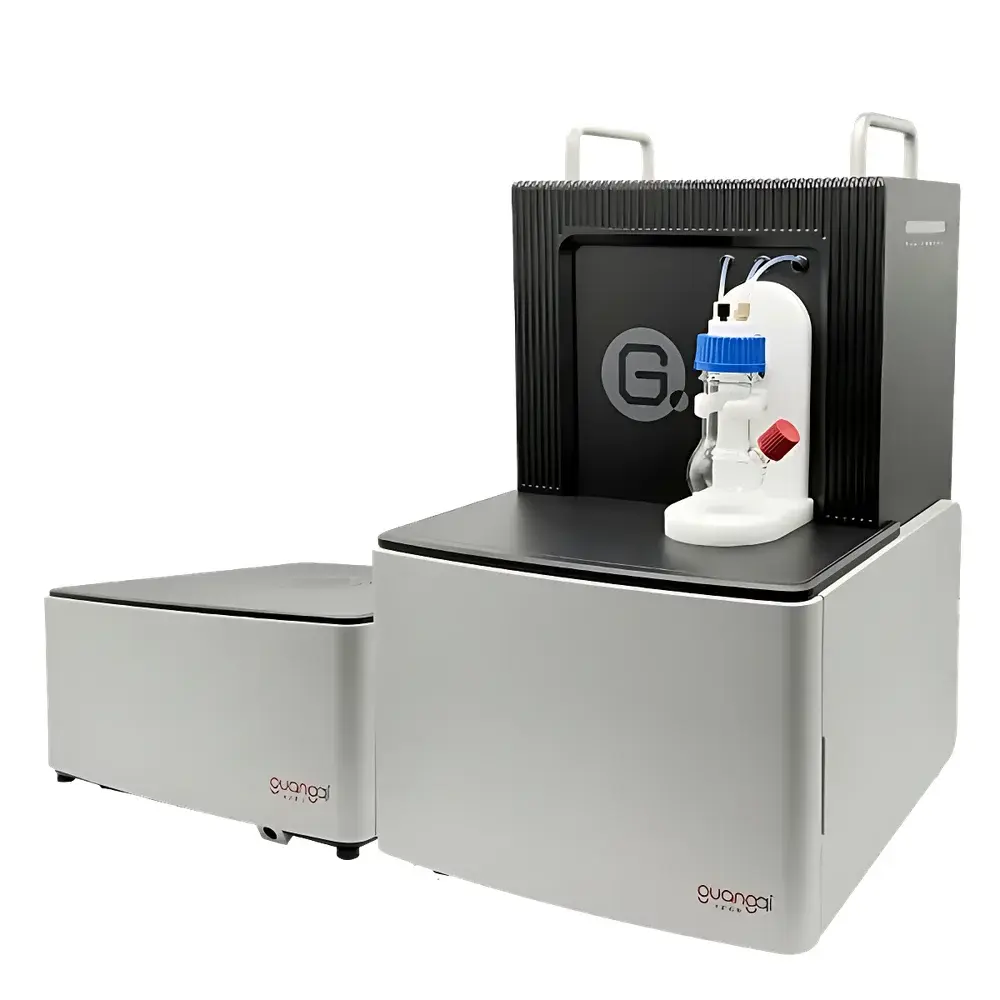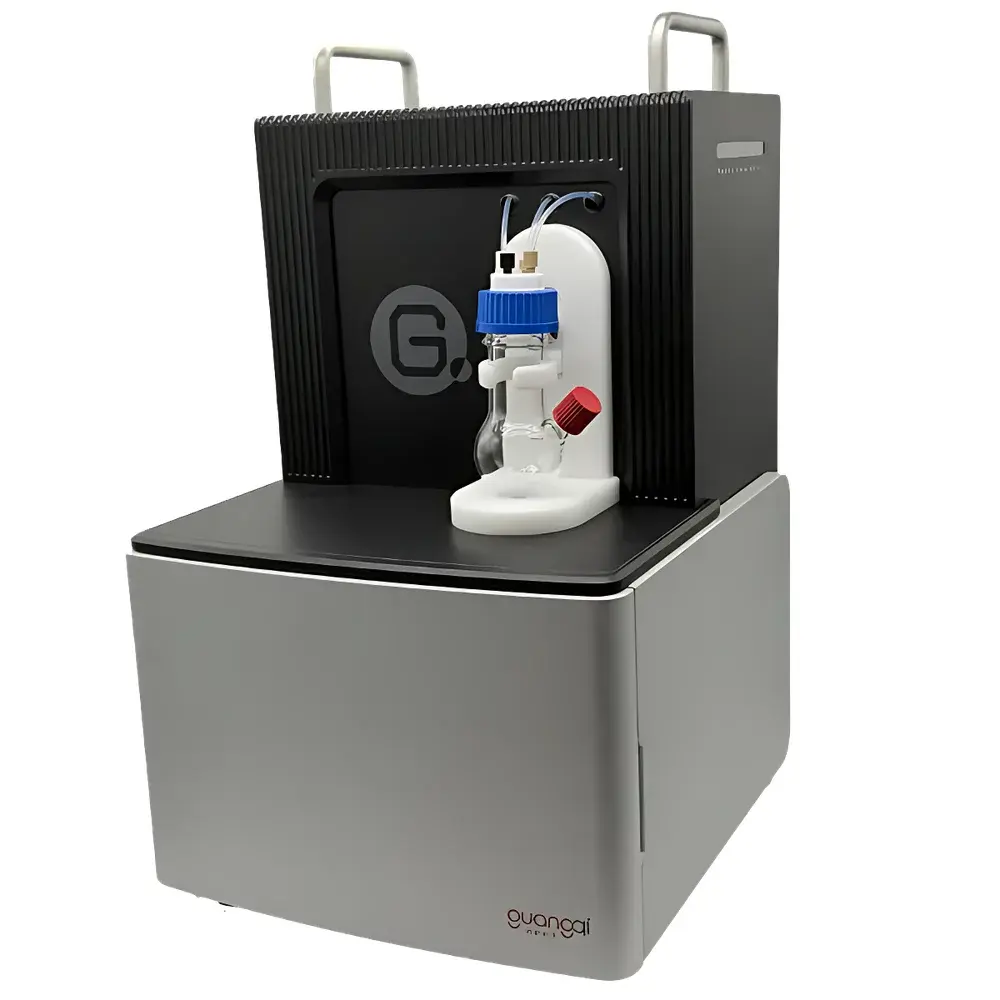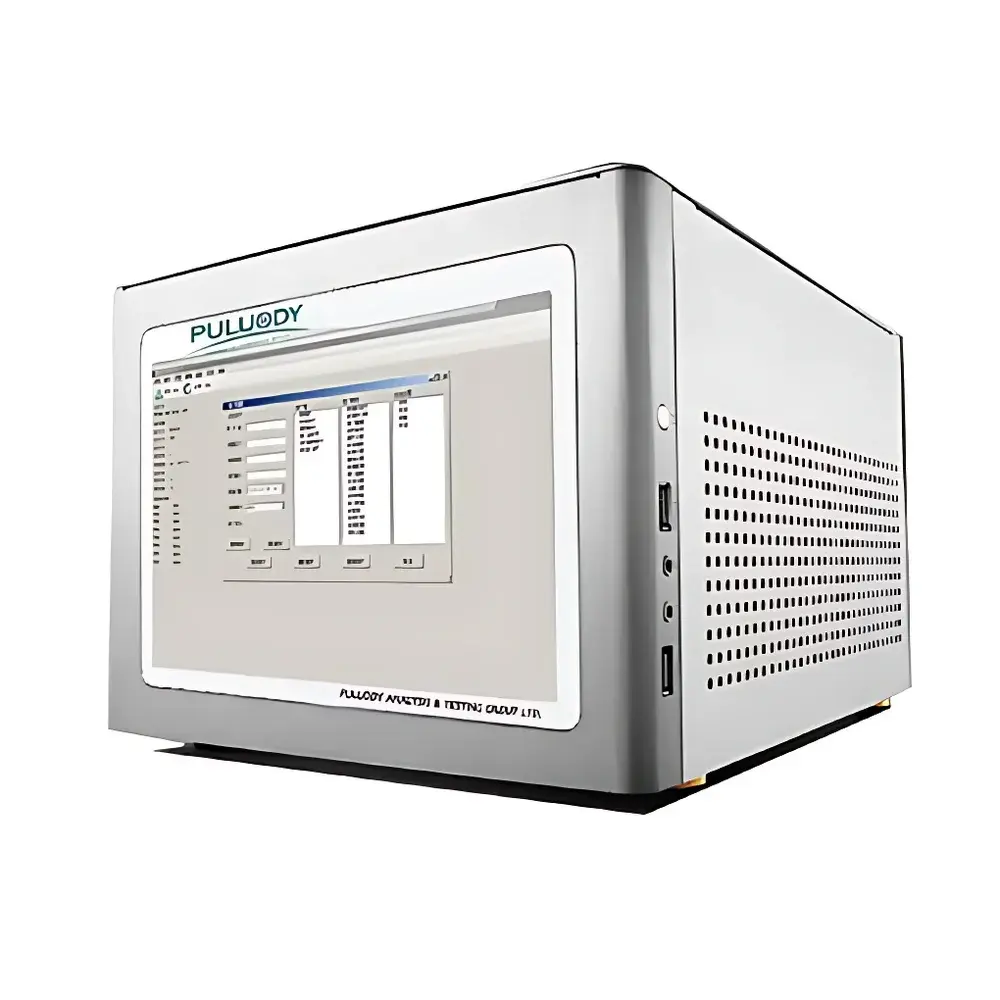
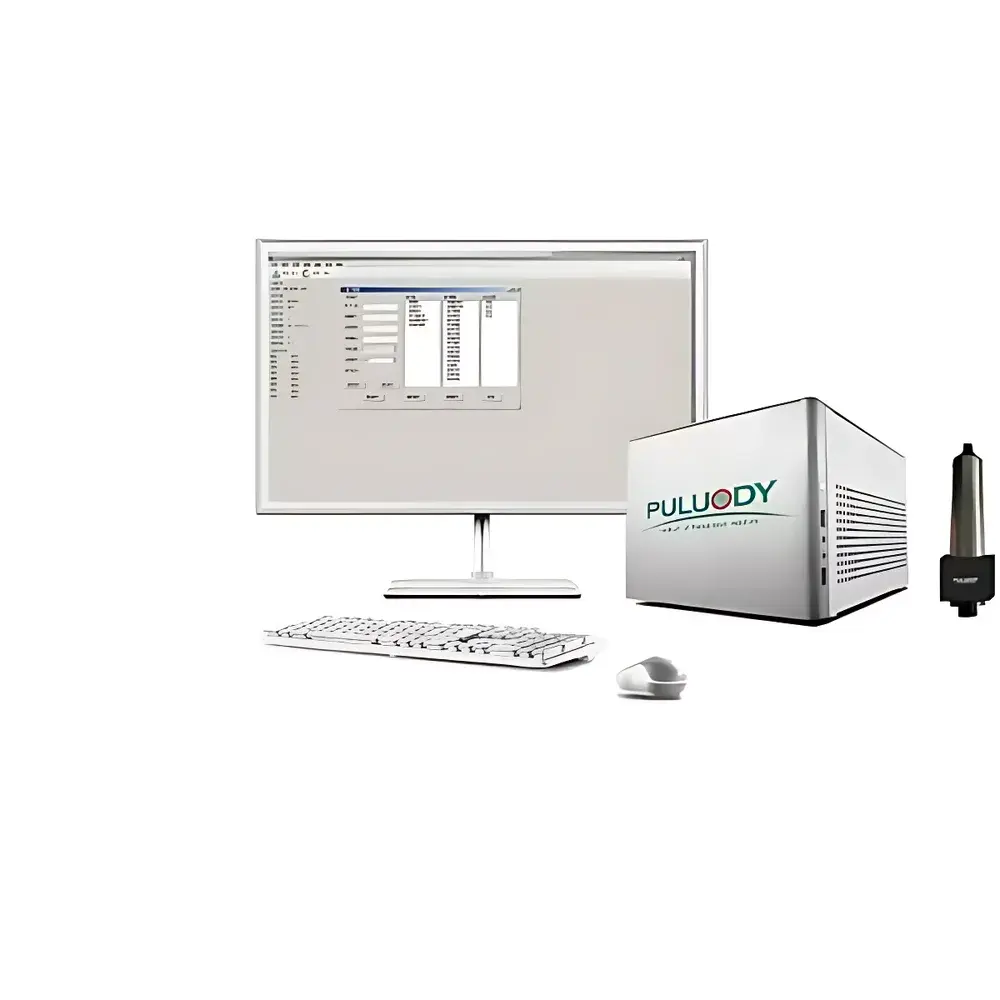
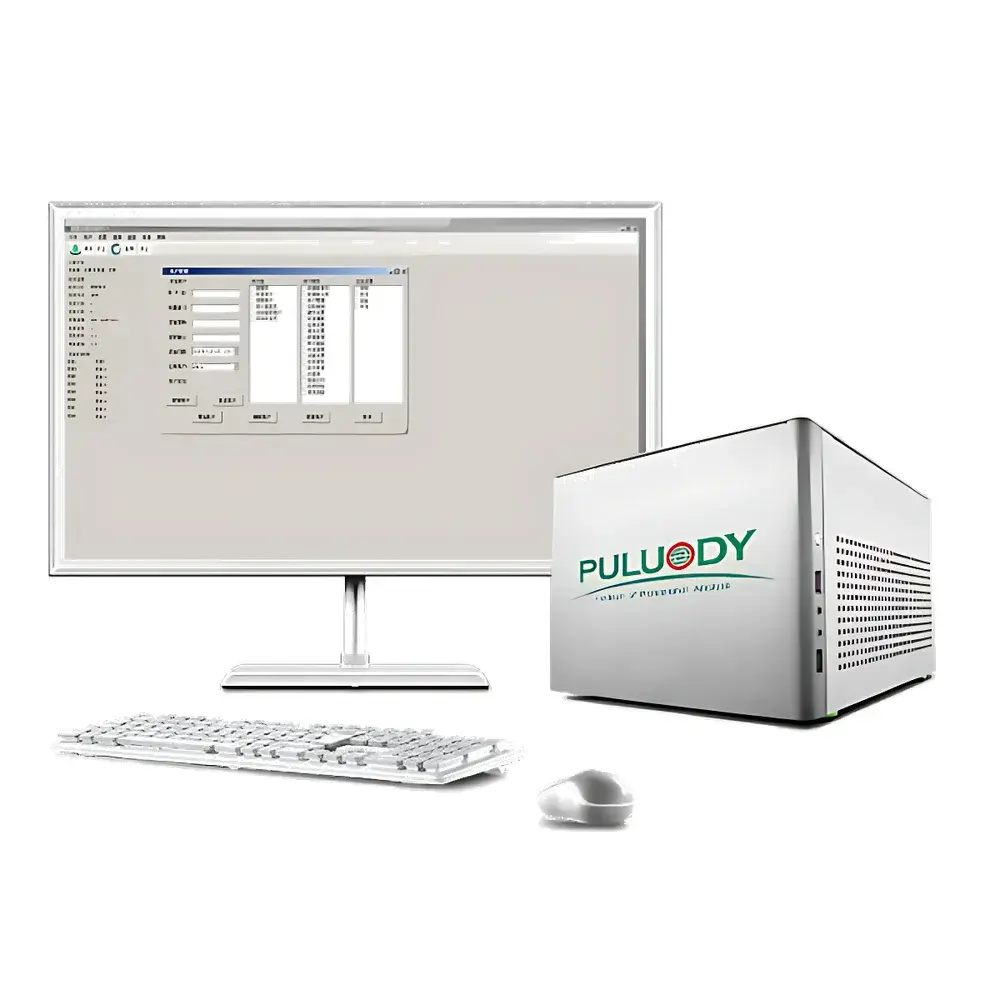

PULUODY PMT-2801 Dual-Laser Nanoparticle Counter for Liquid Media
| Brand | PULUODY |
|---|---|
| Model | PMT-2801 |
| Detection Principle | Dual-laser light scattering (narrow-beam, 8th-generation) |
| Particle Size Range | 0.1–0.5 µm (standard) |
| Accuracy | ±3% typical |
| Sampling Precision | <±1% |
| Coincidence Limit | ≤2.5% at 1000 particles/mL |
| Flow Control | Precision piston pump + electromagnetic flow regulation |
| Compliance | USP <788>, EP 2.9.19, BP, ChP 2015/2020, GB 8368, ISO 21501-4, JJG 1061 |
| Data Output | 4–20 mA analog interface |
| Power Input | 100–265 VAC, 50–60 Hz |
| Software | PULUODY V8.3 Integrated Analysis & Calibration Suite (PC + touchscreen GUI) |
| Operating Interface | Color LCD touch screen + optional wireless keyboard/mouse |
Overview
The PULUODY PMT-2801 Dual-Laser Nanoparticle Counter is an engineered solution for high-sensitivity particulate contamination monitoring in ultra-pure and process-critical liquid media within semiconductor manufacturing and advanced materials production. Utilizing an 8th-generation dual-laser narrow-beam optical detection architecture, the instrument achieves robust signal-to-noise discrimination for sub-micron particles—specifically optimized for the 0.1–0.5 µm range—where traditional single-wavelength counters exhibit diminished resolution and increased coincidence error. Its core measurement principle relies on Mie scattering theory under precisely controlled laminar flow conditions, with real-time pulse-height analysis enabling accurate sizing and counting of non-volatile insoluble particles suspended in aqueous and organic solvents alike. Designed to meet the stringent cleanliness requirements of front-end semiconductor fabrication—including wafer cleaning baths, CMP slurries, photoresist solvents, and ultrapure water (UPW) distribution loops—the PMT-2801 supports both online integration into closed-loop process lines and offline benchtop verification workflows.
Key Features
- Dual-laser excitation system (650 nm + 405 nm) with independent photodetector channels for enhanced refractive index sensitivity and improved differentiation between organic aggregates and inorganic debris.
- Integrated precision metering piston pump and electromagnetic flow regulator ensuring volumetric repeatability better than ±1% across variable viscosity ranges (0.8–5 cP).
- Real-time coincidence correction algorithm validated per ISO 21501-4 Annex D, maintaining ≤2.5% counting error at concentrations up to 1000 particles/mL (for 0.3 µm latex standards).
- Modular sensor head design compatible with sanitary tri-clamp (1.5″) and NPT threaded process connections, supporting IP65-rated in-line installation without bypass loops.
- Calibration traceability to NIST-traceable polystyrene latex (PSL) standards and certified reference materials per JJG 1061 national metrology guidelines.
- Dedicated hardware isolation between measurement electronics and calibration firmware modules to prevent software-induced bias during GLP/GMP audits.
Sample Compatibility & Compliance
The PMT-2801 is validated for use with deionized water (≥18.2 MΩ·cm), SC1/SC2 cleaning solutions, hydrogen peroxide blends, dilute HF formulations, photoresist developers, and low-viscosity polymer solutions (<10 cP). It complies with pharmacopeial standards including USP , EP 2.9.19, BP Appendix XVI, and ChP 2015/2020 for injectable-grade liquid quality control. For semiconductor applications, its performance aligns with SEMI F57-0318 (Particle Counting in Ultrapure Water) and JEDEC JESD22-A114 for microcontamination assessment in wafer fab environments. All firmware and data handling protocols support 21 CFR Part 11-compliant electronic signatures and audit trail generation when deployed in regulated cleanroom QA/QC laboratories.
Software & Data Management
PULUODY V8.3 Analysis Suite provides dual-mode operation: a standalone PC-based application for deep statistical analysis (including trend charts, histogram overlays, and batch comparison reports), and an embedded touchscreen GUI for rapid pass/fail verification. The software enforces strict separation between calibration parameters (locked behind administrator credentials) and routine test configurations—ensuring metrological integrity during multi-shift operations. Raw pulse data is stored in vendor-neutral CSV format with timestamped metadata (ISO 8601), while summary reports export directly to PDF with embedded digital signatures. Optional iPad integration enables remote viewing of live particle concentration trends via secure TLS 1.2 encrypted Wi-Fi link, with configurable alarm thresholds triggering visual, audible, and relay-based notifications upon exceedance.
Applications
The PMT-2801 serves as a primary monitoring tool across multiple critical stages of semiconductor device fabrication: continuous UPW loop surveillance upstream of point-of-use filters; real-time tracking of post-CMP rinse efficiency; quantification of residual catalyst particles in epitaxial growth precursors; and validation of nano-filtration membrane integrity in chemical delivery systems. Beyond semiconductors, it supports quality assurance in pharmaceutical sterile filtration validation, nanomaterial synthesis QC, and microfluidic device cleanliness certification. Its ability to resolve particles down to 0.1 µm(c) makes it suitable for detecting early-stage aggregation in colloidal dispersions used in OLED encapsulation and advanced packaging substrates.
FAQ
What particle size standards are supported for calibration?
The instrument accepts NIST-traceable PSL standards from 0.1 µm to 100 µm, with factory calibration performed using 0.3 µm and 5.0 µm reference spheres per ISO 21501-4.
Can the PMT-2801 be integrated into a SCADA system?
Yes—via isolated 4–20 mA analog output with configurable scaling, or through Modbus TCP/IP communication using optional industrial Ethernet module.
Is GMP-compliant audit trail functionality available?
Yes—V8.3 software includes full 21 CFR Part 11 compliance with user-level access controls, electronic signature capture, and immutable event logging.
Does the system require periodic recalibration?
Annual calibration verification is recommended per ISO/IEC 17025 guidelines; field recalibration can be performed using onboard reference suspension and automated alignment routines.
How is sample carryover minimized during sequential measurements?
The fluidic path employs chemically inert PFA tubing, self-flushing valve manifolds, and programmable purge cycles (0.5–5 mL volume) between samples to reduce cross-contamination risk below 0.01%.