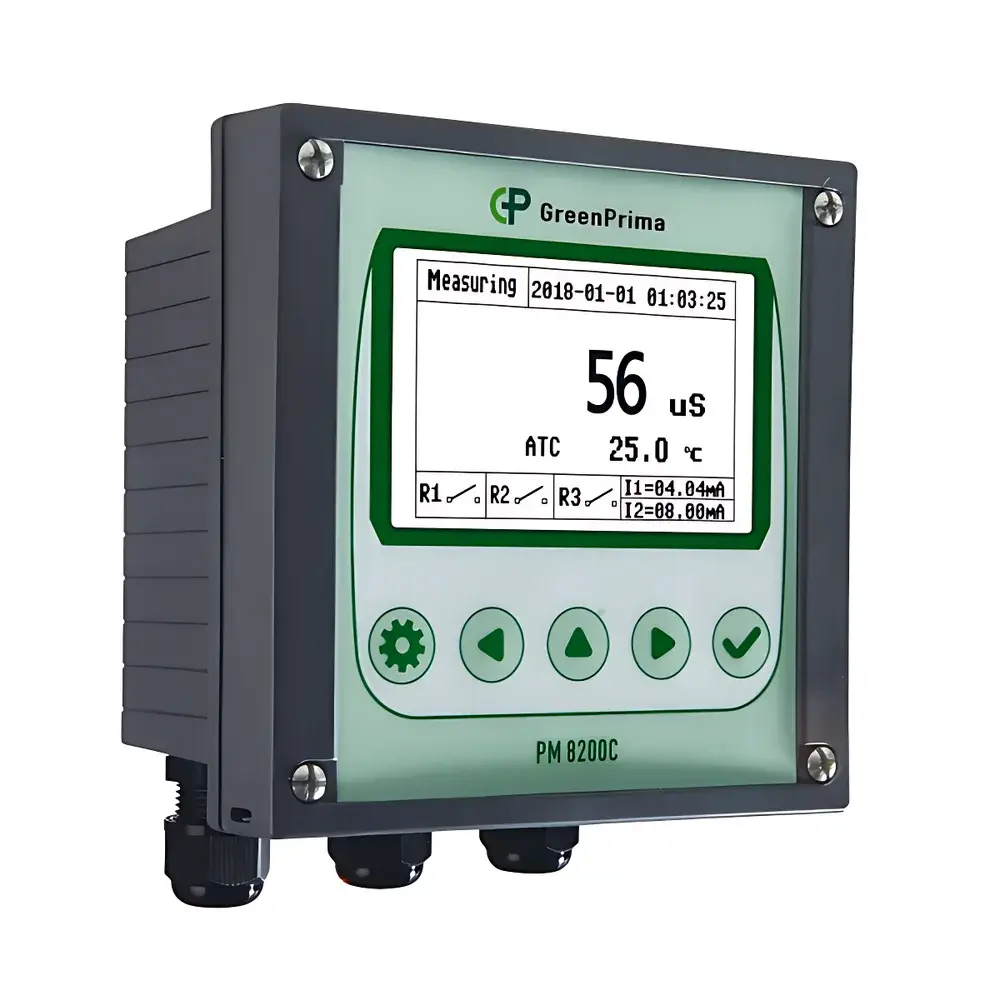
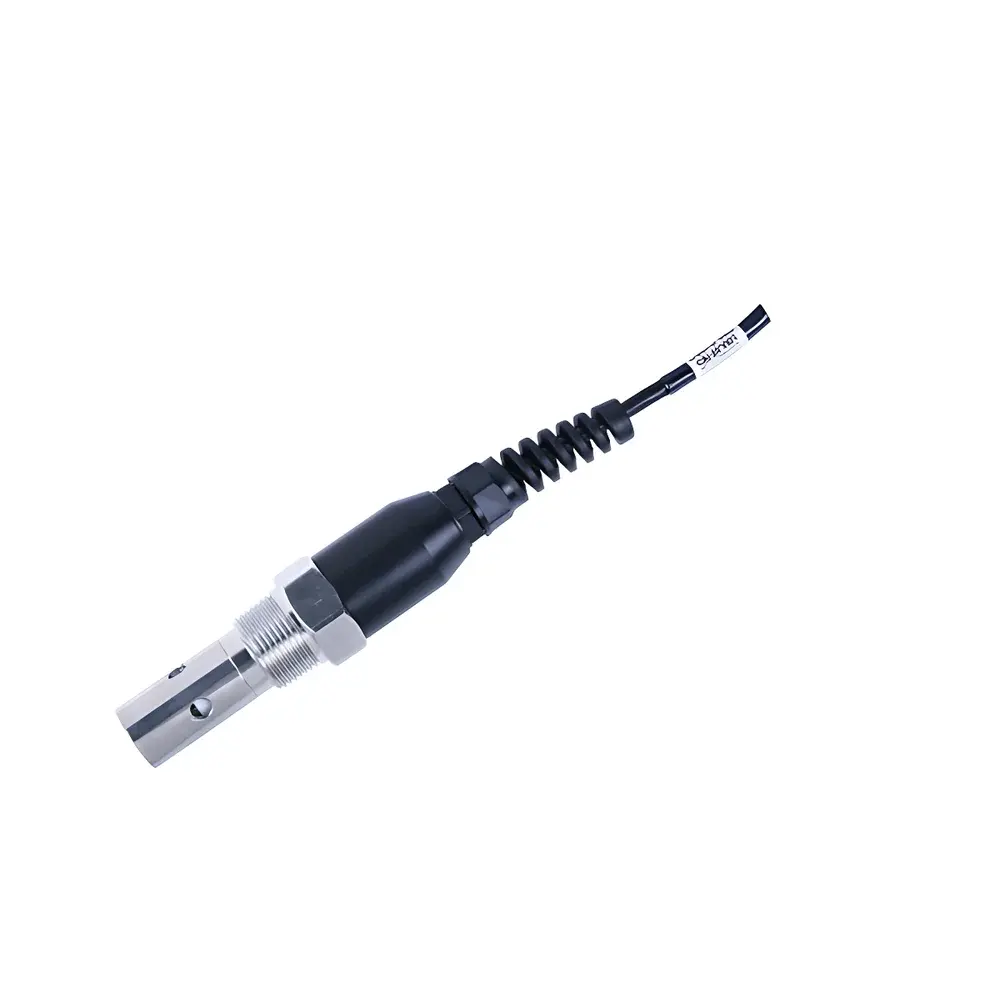
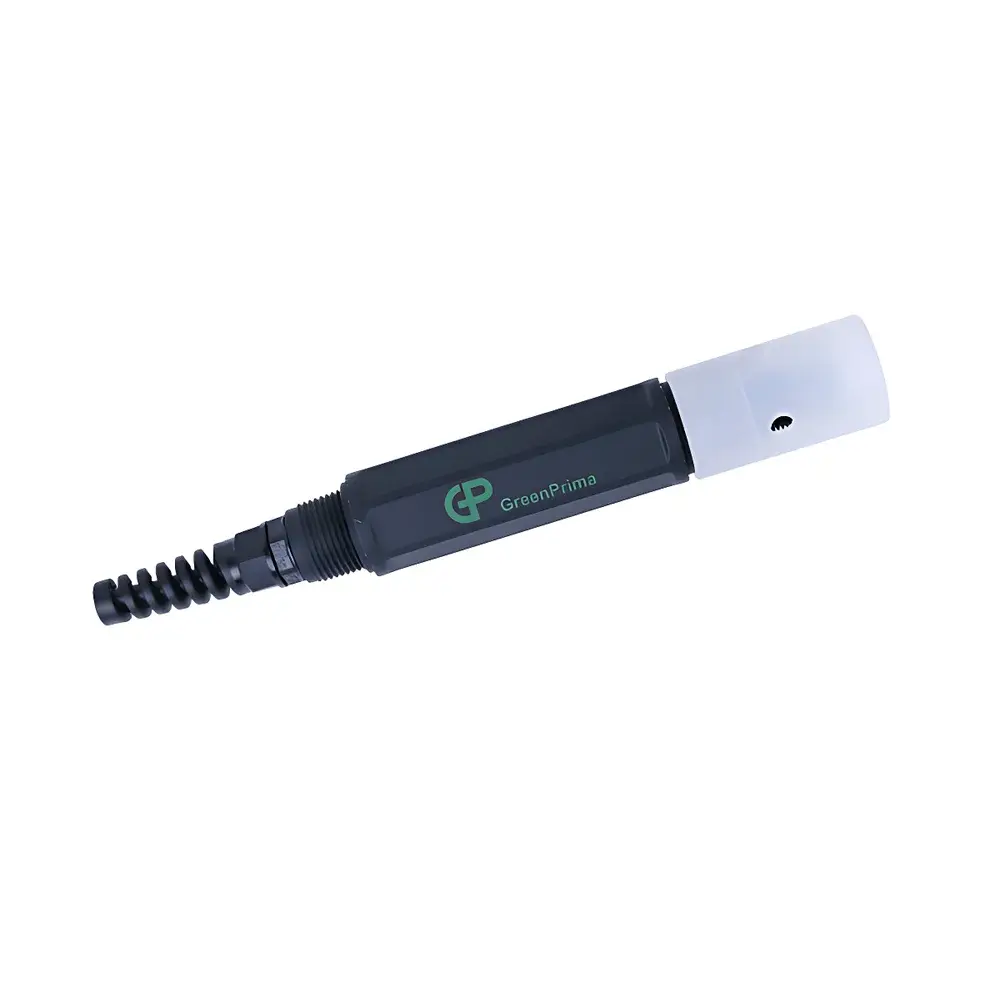
GreenPrima PM8200C Online Conductivity Analyzer
| Brand | GreenPrima |
|---|---|
| Model | PM8200C |
| Measurement Parameters | Conductivity (0.00–2000 mS/cm), Salinity (0.00–78.00 ppt), TDS (0–120,000 ppm) |
| Accuracy | ±1% F.S. for all parameters |
| Temperature Compensation Range | −10 to 130 °C (NTC10K or PT1000 sensor support) |
| Display | Backlit graphical LCD with adjustable contrast |
| Data Storage | 600,000 records with timestamped query capability |
| Output | Dual isolated 4–20 mA (max. 500 Ω, 0.1% F.S.), RS485 Modbus RTU |
| Relay | One multifunction relay (cleaning control, periodic alarm, fault alarm) |
| Power Supply | 90–260 VAC, 50/60 Hz or optional 24 VDC |
| Enclosure Rating | IP65 |
| Dimensions | 144 × 144 × 106 mm (panel cutout: 138 × 138 mm) |
| Weight | 0.86 kg |
| Electrode Compatibility | Bsens310–350 series (K = 0.01 to 10 cm⁻¹, IP68, Ti alloy or graphite body, 3/4″ NPT or 1/2″ NPT) |
Overview
The GreenPrima PM8200C Online Conductivity Analyzer is an industrial-grade, microprocessor-controlled instrumentation system engineered for continuous, real-time monitoring of electrical conductivity, salinity, and total dissolved solids (TDS) in liquid process streams. Based on the fundamental principle of conductometric measurement—wherein conductivity is derived from the solution’s ability to carry electric current under a known applied voltage—the PM8200C delivers stable, repeatable readings across a broad dynamic range (0.00–2000 mS/cm). Its modular architecture supports interchangeable electrode sensors (Bsens310–350), enabling seamless adaptation from ultra-pure water (0–20.00 µS/cm) to high-salinity seawater (up to 200 mS/cm). Integrated automatic temperature compensation (ATC) using either NTC10K or PT1000 thermistors ensures measurement fidelity across operating temperatures from −10 °C to 130 °C—critical for applications subject to thermal transients in boiler feedwater, desalination brine, or chemical reaction loops.
Key Features
- High-reliability electronics featuring imported ICs and surface-mount technology (SMT) assembly for long-term stability under industrial EMI conditions
- IP65-rated die-cast aluminum enclosure with full gasket sealing—suitable for humid, dusty, or splash-prone environments including outdoor mounting
- Large backlit dot-matrix LCD display with user-adjustable contrast; shows conductivity, temperature, time stamp, relay status, and diagnostic indicators simultaneously
- Bilingual (English/Chinese) menu navigation—designed for multilingual engineering teams without requiring firmware reconfiguration
- Configurable auto-dimming: backlight deactivates after three minutes of no keypress, reducing power consumption in unattended installations
- Comprehensive data logging: stores up to 600,000 timestamped measurements internally with chronological search and export-ready retrieval
- Dual isolated 4–20 mA analog outputs—each independently scalable and assignable to conductivity, temperature, or calculated TDS/salinity values
- RS485 serial interface compliant with Modbus RTU protocol (slave mode), supporting integration into DCS, SCADA, and PLC-based control systems
- Multifunction relay output configurable for scheduled electrode cleaning cycles (interval: 0.1–1000 h; duration: 1–1000 s), threshold alarms, or system fault signaling
Sample Compatibility & Compliance
The PM8200C accommodates five standardized sensor variants (Bsens310–350), each optimized for specific conductivity ranges and process chemistries. Electrode constants span K = 0.01 to K = 10 cm⁻¹, with materials selected for corrosion resistance: titanium alloy bodies (Bsens310–340) for aggressive oxidizing media (e.g., chlorine-laden cooling water, caustic soda solutions), and graphite-bodied Bsens350 for highly conductive wastewater streams where fouling resistance is paramount. All sensors feature IP68 submersion rating, 5 bar pressure tolerance, and standard 3/4″ NPT (or 1/2″ NPT for Bsens350) mechanical mounting. The analyzer meets electromagnetic compatibility requirements per IEC 61326-1 (industrial environment) and conforms to functional safety principles aligned with IEC 61508 SIL 2 for basic process monitoring tasks. While not certified for hazardous areas, its design supports deployment in non-classified zones adjacent to Class I Div 2 locations when paired with appropriate barrier systems.
Software & Data Management
Data integrity and traceability are ensured through embedded timestamped logging and non-volatile memory architecture. The internal database retains 600,000 records with millisecond-resolution timestamps—enabling retrospective analysis of conductivity excursions, cleaning efficacy, or seasonal drift trends. Export is supported via Modbus RTU polling by supervisory software (e.g., Ignition, WinCC, or custom Python/Node-RED scripts). No proprietary PC software is required; configuration is performed locally via front-panel keys or remotely via Modbus register writes. Audit trails are maintained for critical parameter changes (e.g., calibration constants, ATC settings, relay logic), satisfying GLP-aligned documentation requirements for regulated industries such as pharmaceutical water systems (USP ) and food-grade CIP validation. Firmware updates are delivered via USB or Modbus-initiated field download—no hardware replacement needed.
Applications
The PM8200C serves as a core analytical node in continuous quality assurance workflows across multiple sectors. In power generation, it monitors condensate purity in turbine cycles and demineralizer effluent conductivity to prevent corrosion-induced tube failures. Within chemical and fertilizer plants, it controls acid/base dosing in neutralization reactors and verifies rinse water quality during batch vessel cleaning. Metallurgical operations deploy it for electrolyte concentration management in electroplating baths and leach solution monitoring in hydrometallurgical circuits. Municipal and industrial wastewater treatment facilities use it for influent screening, membrane integrity verification in UF/RO systems, and discharge compliance tracking against local regulatory thresholds (e.g., EPA 40 CFR Part 136). Beverage and biopharma users apply it for PW/DI water loop surveillance per EU GMP Annex 1 and ISO 22000 hygiene protocols.
FAQ
What electrode constant (K-value) should I select for my application?
Select K = 0.01 cm⁻¹ for ultrapure water (e.g., semiconductor rinse tanks), K = 0.1–1 cm⁻¹ for municipal drinking water or boiler feed, and K = 10 cm⁻¹ for seawater, brine, or concentrated process liquors.
Does the PM8200C support FDA 21 CFR Part 11 compliance?
While the device itself does not provide electronic signature or role-based access control, its audit-trail-capable configuration registers and immutable timestamped logs serve as foundational elements for Part 11–compliant validation when integrated into a validated SCADA or MES platform.
Can the instrument perform automatic calibration?
No—calibration requires manual introduction of certified standard solutions (e.g., KCl 0.01 M, 0.1 M) and adjustment via the setup menu; however, calibration history and deviation logs are retained.
Is the 24 VDC power option intrinsically safe?
The 24 VDC variant operates at SELV (Safety Extra-Low Voltage) levels but is not IS-certified; additional barriers or galvanic isolators must be installed for Zone 0/1 deployments.
How frequently should the electrode be cleaned?
Cleaning interval depends on fouling potential: every 2–4 hours for activated sludge streams; weekly for purified water loops; monthly for low-fouling cooling tower make-up—configurable via the relay timer function.
Related Products